
ECHINACEA
CONEFLOWER
Echinacea comes from the Greek word echinos meaning hedgehog or sea-urchin in reference to the spiny central cone.

Echinacea purpurea
A Closer Look at Echinacea
Beauty, Biodiversity, and What to Plant
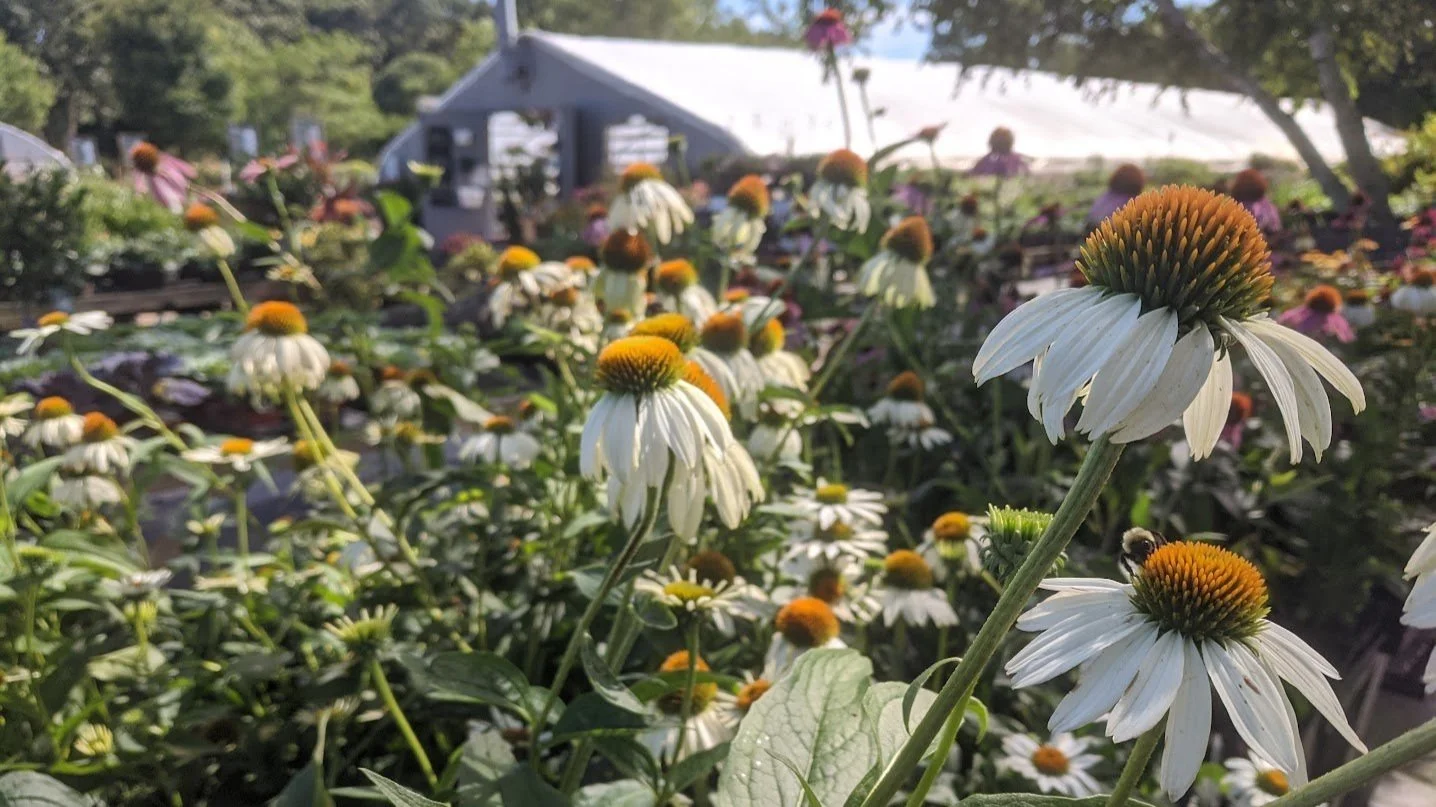
Walk through any summer garden center and it’s hard to miss the bright, joyful flowers of Echinacea, from the vibrant magenta to fiery oranges to soft whites. Beyond their colorful appeal, coneflowers are adaptable and are pollinator magnets.
Native Coneflowers
At our nursery, we grow several species of North American Native Echinacea from seed, including:
Echinacea purpurea: classic purple coneflower
Echinacea pallida: pale, drooping petals
Echinacea paradoxa: a rare yellow species
Starting plants from seed introduces new genetic combinations, which increases the plant’s ability to adapt to changing conditions and resist disease. These North American natives offer long-term benefits to pollinators, wildlife, and the resilience of the garden itself. Native color palettes are more limited, primarily pinks and yellows, but their ecological value is profound. They are long-lived, drought-tolerant (once established), and deeply rooted in local ecosystems.
Echinacea White Swan

Echinacea Sombrero Salsa & Sangrita
Hybrid Coneflowers
Coneflower cultivars are mostly derived from Echinacea purpurea and have been carefully bred for color, size, and form. At the nursery you can find Echinacea in shades of:
Reds (Salsa Red)
Oranges (Adobe Orange)
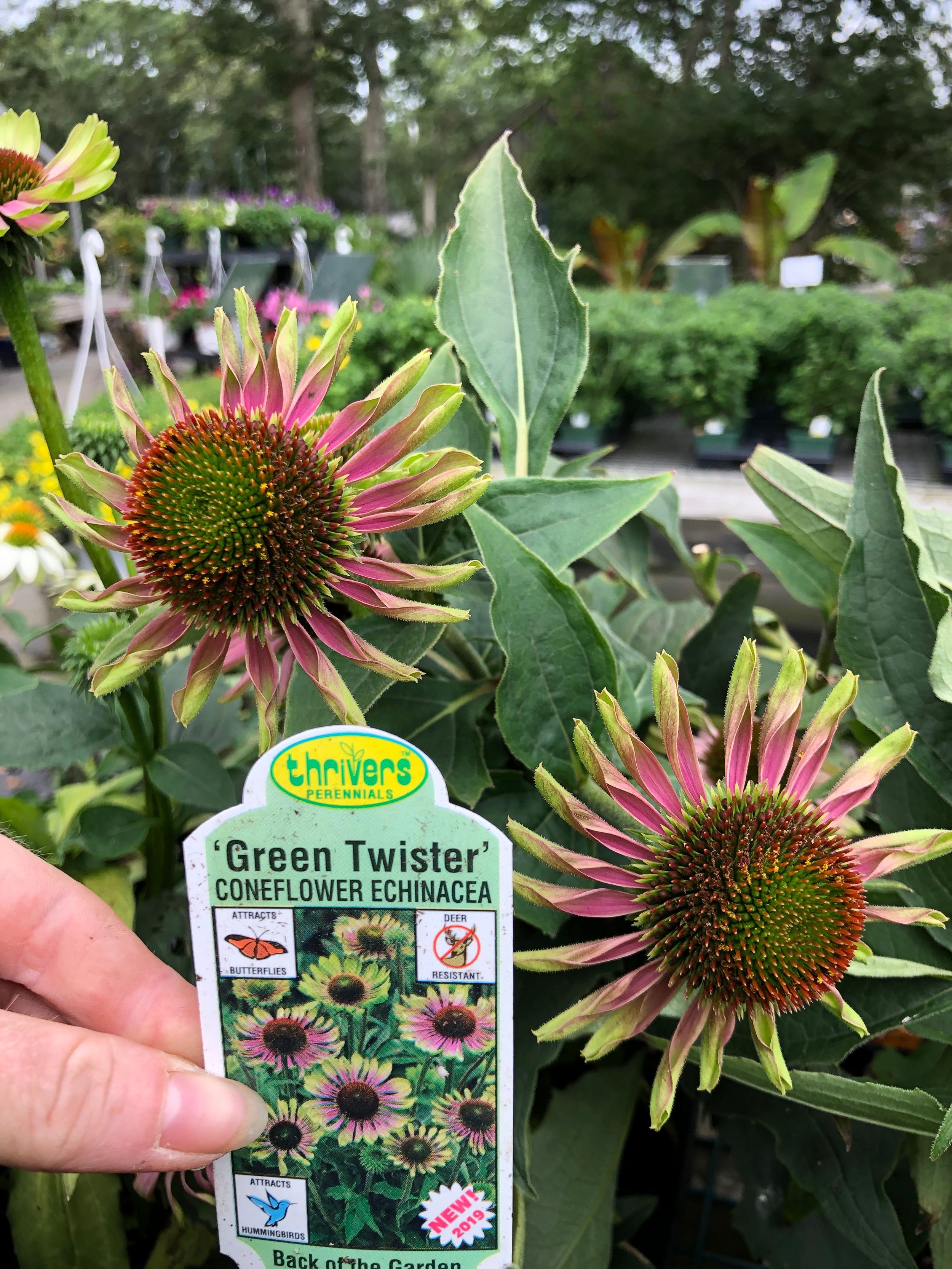
Greens (Green Twister)
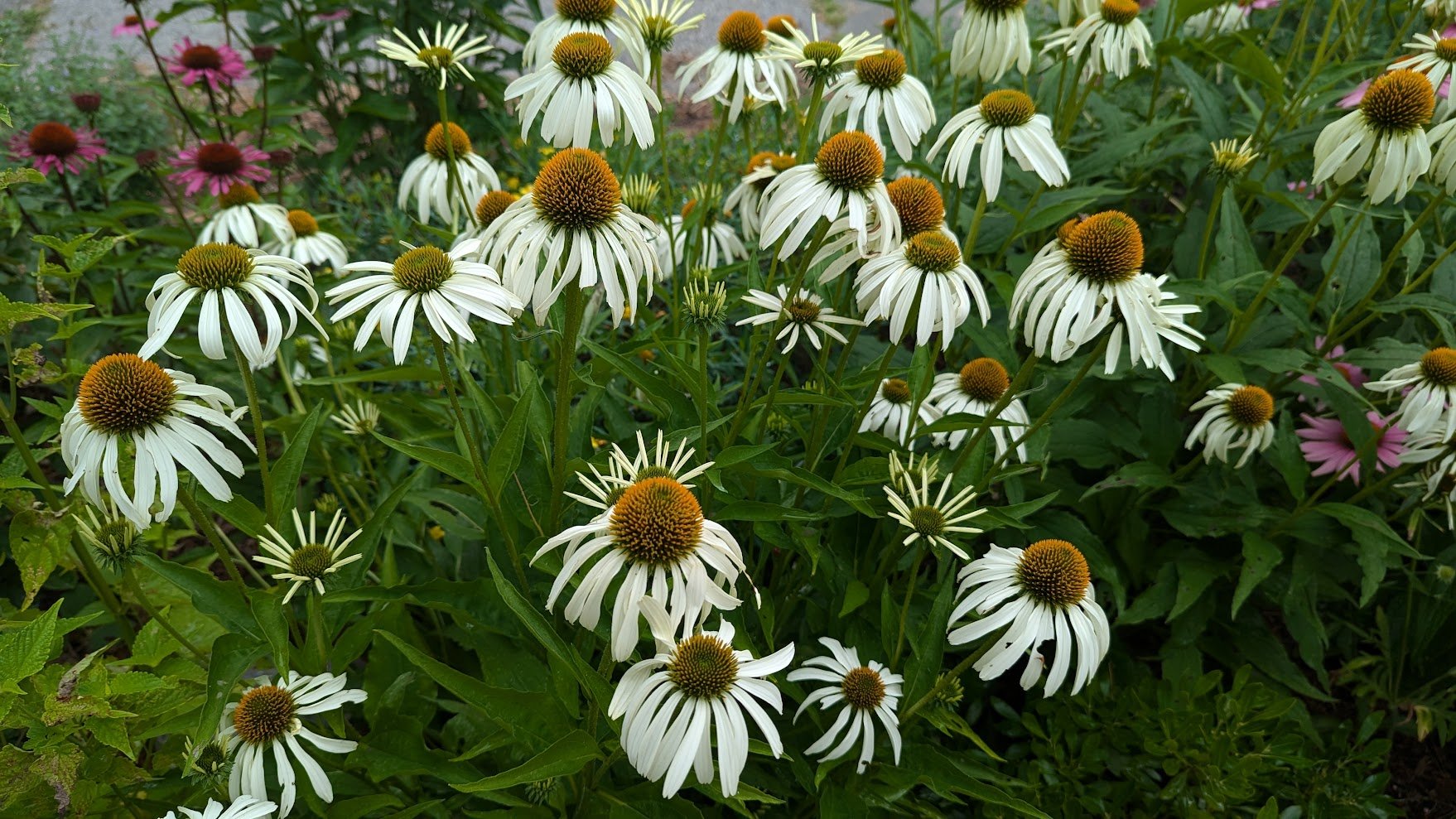
Whites (White Swan)
We sell countless hybrids that the horticultural industry has created from mostly Echinacea purpurea. Hybrids are typically propagated asexually through cuttings or tissue culture to maintain consistency in appearance. This can make them less genetically diverse, and potentially less adaptable, especially under stress from disease or climate extremes. When carefully sited and well-maintained, they’re a stunning and reliable part of any garden design.
Coneflowers come in a rainbow of colors!






****************
ECHINACEA AVAILABLE AT VINEYARD GARDENS
*If food for pollinators is your number one reason for planting Echinacea, either plant the native species. The doubles are not believed to be good food for pollinators. Many of the doubles are sterile and produce no seed.

USES
Pollinator Magnet: Coneflowers attract a wide variety of butterflies, bees, birds, and other beneficial pollinators, making them a valuable addition to any ecological garden.
Winter Interest & Wildlife Support: Leave the spent flower heads standing through winter. Their seed-filled cones provide an important food source for birds, especially finches. In early spring, simply cut the stems back to the ground to encourage fresh growth.
Medicinal Tradition: Long used in herbal medicine, Echinacea is believed to support the immune system and may help reduce the duration of colds and flu. Their distinctive blooms are often associated with healing and wellness in both gardens and apothecaries.

GROWING CONDITIONS
A hardy herbaceous perennial, Echinacea is native to the Midwestern prairies of the United States and thrives in a wide range of conditions.
Adaptable and resilient, it tolerates drought, heat, humidity, and even poor soils once established.
Best grown in full sun with average to dry, well-drained soil, it doesn’t need rich soil to flourish.
Coneflowers are low-maintenance and rarely troubled by pests or disease. They require little to no fertilizer.
Expect a vibrant display of blooms in mid-summer, with some varieties continuing into fall.