
Bold & Tropical
HIBISCUS
Nothing brings a dramatic, bold energy to the landscape quite like the stunning, dinner-plate blooms of the Hibiscus.
With over 100 species in the Malvaceae (Mallow) family, these plants are known for their vibrant color and tropical flair. Because of their warm-climate origins, they are often some of the last perennials to emerge, but they reward us with a spectacular show of blooms from mid to late summer.
We grow and carry three distinct types of hibiscus: Annual/Tropical, Perennial/Hardy, and Shrubs, along with other popular ornamental cousins in the Malva family, like Hollyhocks (Alcea) and Sidalcea.
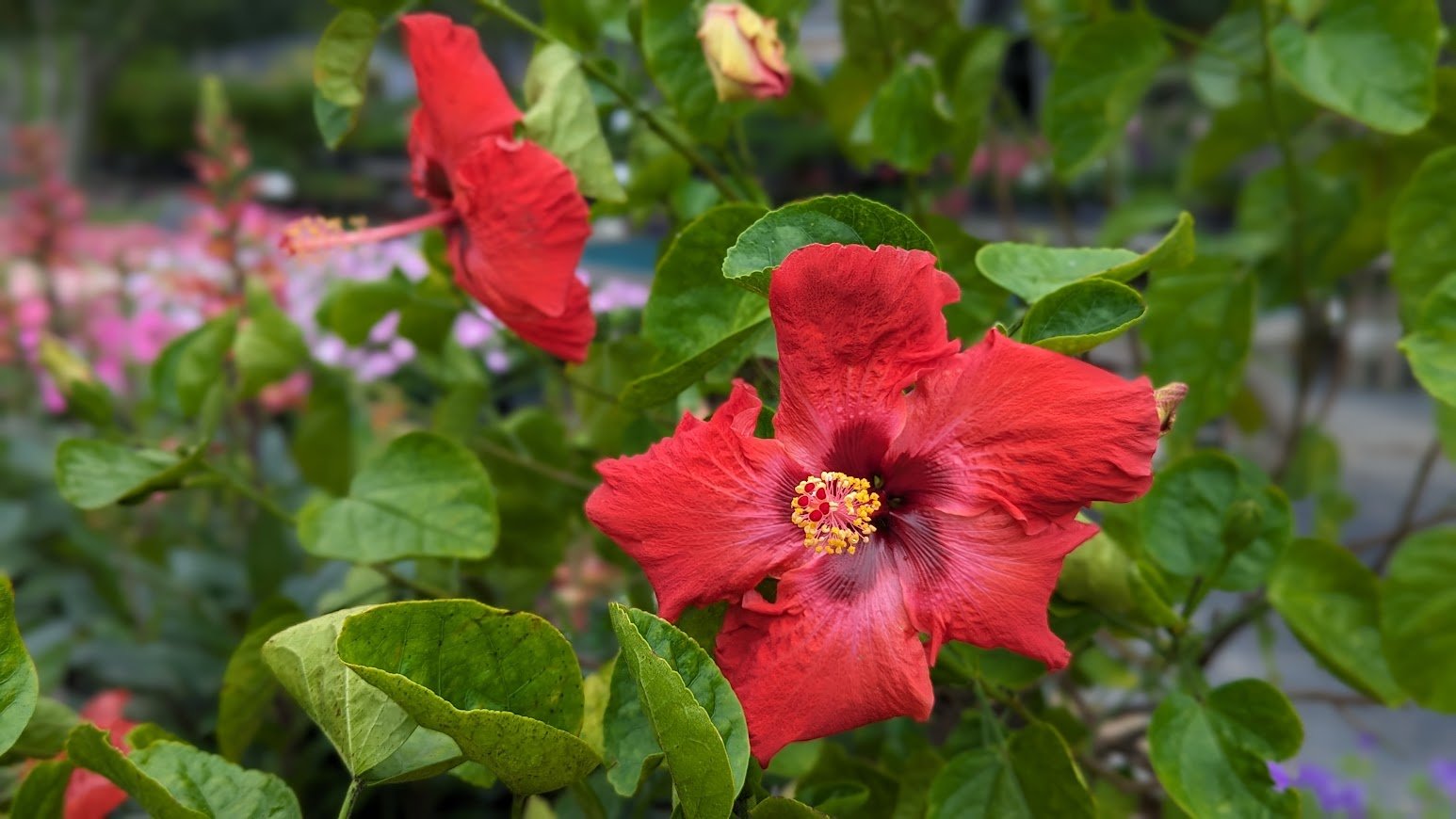
Jazzy Jewel Ruby Hibiscus (Tropical Hibiscus)
****************
Hardy Hibiscus
Hardy Hibiscus includes species native to North America, most notably Hibiscus moscheutos (commonly known as Rose Mallow or Swamp Mallow).This incredible species is actually native to Martha’s Vineyard! You can spot its beautiful wild pink flowers blooming profusely late in the season around the coastal ponds along the south shore. Unlike woody shrubs, Hardy Hibiscus are true perennials that die completely back to the ground in the winter and emerge fresh from the crown each spring. At Vineyard Gardens, we sell the species, as well as many hybrids with a wide range of flower colors (pink, purple, white, red & bi-color), large flower sizes and green to deep dark foliage.
CARE OF HARDY HIBISCUS
Plant in full sun.
They require frequent, deep watering, especially when young. Drench the plant thoroughly.
Apply a generous layer of mulch around the base to retain vital root moisture and provide extra winter insulation.
Since they freeze back completely, cut old dead stems down to the ground in late winter or early spring. They bloom on new wood (this year's growth).
To encourage a secondary flush of flowers, deadhead spent blooms before they form seed heads, or prune the plant back by one-third after a heavy flush.
Mature clumps should only be divided in the spring, never in the fall.
VARITIES AVAILABLE AT THE NURSERY:
Hybrids: Kopper King, Perfect Storm, Berry Awesome, Holy Grail, Candy Crush, Midnight Marvel, Dark Mystery, Marshmallow Moon
Luna Series: Luna Red, Luna White
Disco Bell Series: Disco Bell Pink
Hibiscus 'Berry Awesome' [Photo credit: Walter’s Garden]
Hibiscus 'Candy Crush' [Photo credit: Walter’s Garden]
Hibiscus 'Dark Mystery' [Photo credit: Walter’s Garden]
****************
Shrub Hibiscus
The most popular woody shrub is the Rose of Sharon, also known as Hibiscus Syriacus. Unlike its perennial cousins, Rose of Sharon maintains a permanent woody structure year-round, growing into a substantial ornamental shrub or small tree that can reach up to 15 feet tall. In mid to late summer, it has beautiful hibiscus like flowers, when few other flowering shrubs are peeking and is valued as an ornamental in landscapes.
CARE OF ROSE OF SHARON
Thrives in full sun. Like the hardy varieties, it is a bit late to leaf out in the spring because of its tropical roots.
It blooms on new summer growth, so prune it in early spring just as the buds start to swell. Rose of Sharon naturally grows from its tips and can become leggy or bare at the bottom if left alone. To keep it lush and full down low, prune out a few of the oldest, largest stems as close to the ground as possible to encourage fresh, leafy growth from the base.
Fertilize new plantings with a complete, slow-release fertilizer in the spring.
VARITIES AVAILABLE AT THE NURSERY:
Single Flower Varieties: Diana, Aphrodite, Fiji, Red Heart, Minerva, Blue Satin
Double Flower Varieties: Chiffon Blue, Chiffon Lavender, Chiffon Pink
Rose of Sharon
Rose of Sharon as a border
Rose of Sharon
****************
Tropical Hibiscus
Our annual selections feature Hibiscus rosa-sinensis, a stunning shrub native to Southeast Asia. While it shares a similar appearance to our hardy varieties, the Tropical Hibiscus cannot tolerate frost. This plant blooms vibrant flowers continuously from late spring until the first cold snap. They make lovely centerpieces for patio containers and garden beds. We carry these in both multi-stemmed shrub forms and as elegant, trained topiary patio trees.
CARE OF TROPICAL HIBISCUS
They prefer rich, well-draining soil packed with organic matter, maintaining a neutral to slightly acidic pH.
Give them full sun. While they will survive in partial shade, their flower production will drop significantly.
To avoid breakage of the long stems, plant hibiscus where they won’t be exposed to strong winds.
VARITIES AVAILABLE AT THE NURSERY:
Classic Favorites: The Path, Cherie, Hula Girl, Red Dragon
Jazzy Jewel® Series: Jazzy Jewel Opal, Jazzy Jewel Ruby, Jazzy Jewel Amber, Jazzy Jewel Gold

Hibiscus Tropical Jewel Ruby
Hibiscus illustration karen blackerby logan

Hibiscus Too Hot To Handle