AUGUST
GARDEN TIPS
Late summer brings a distinct shift to the garden. While some mid-season bloomers begin to fade, many late-blooming perennials and shrubs are just reaching their peak. Here’s how to keep your landscape thriving through late summer and into autumn.
*****************
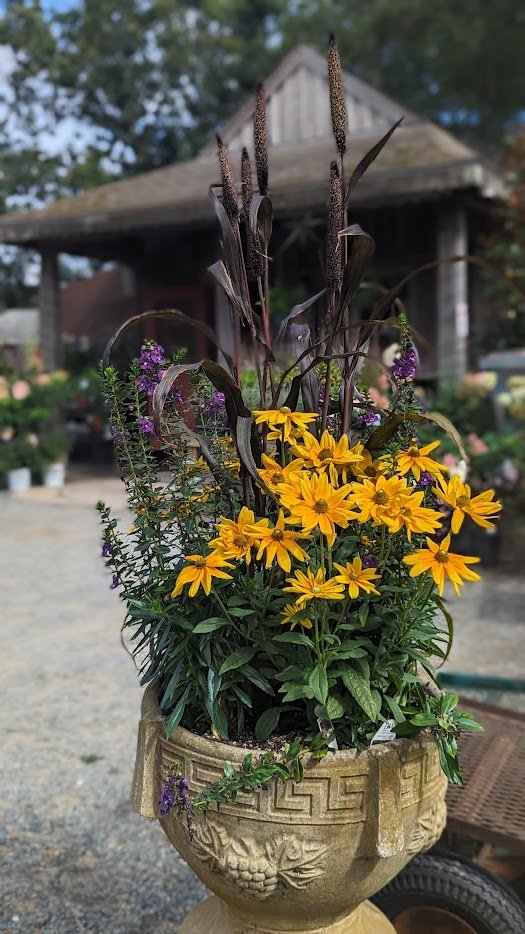
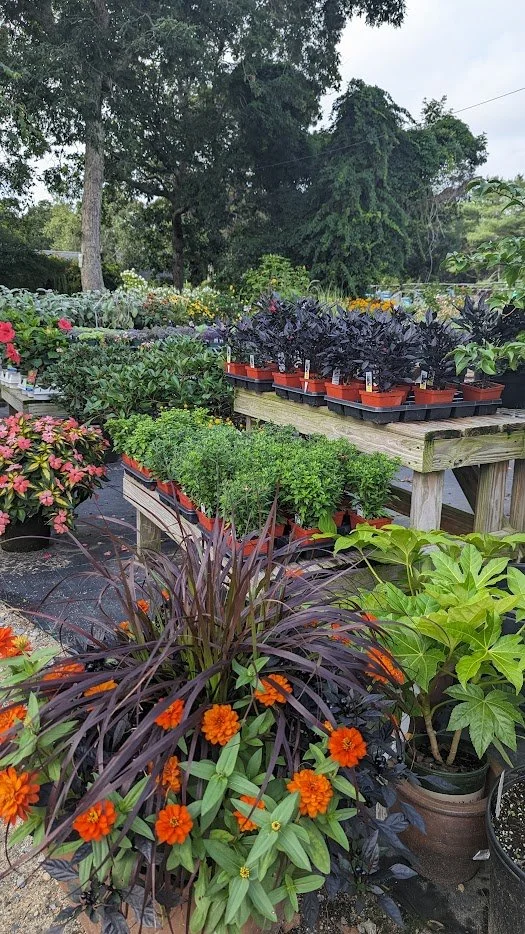
Annuals & Containers
Trim back leggy annuals and remove spent flowers to stimulate fresh growth and continuous flower buds.
Every 10-14 days dd a diluted liquid fertilizer when watering to encourage continued blooms.
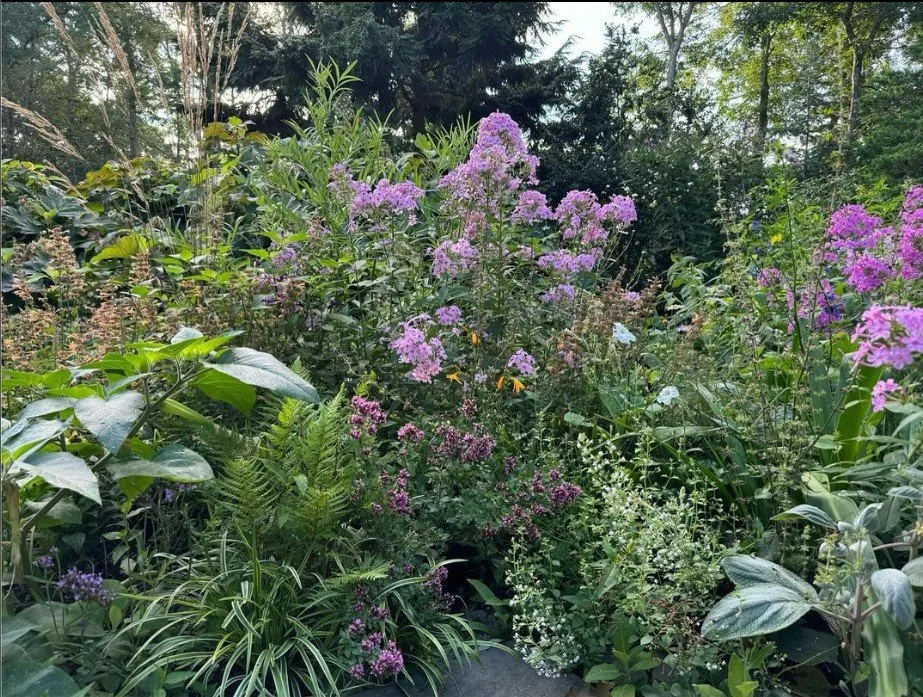
Trees, Shrubs & Perennials
Hold off on fertilizing established trees and shrubs starting in August. Late-season nitrogen pushes tender new growth that won't have time to harden off before early autumn frosts, resulting in tip dieback, damaged vascular tissue, and entry points for pathogens.
Stake tall perennials like dahlias, goldenrod, and late sunflowers that may be top-heavy or leaning after summer rainstorms.
Cut back spent perennial blooms to clean up plant silhouettes. Certain species (like salvia, catmint, and coreopsis) may reward you with a second flush of flowers before frost.
Vegetable Gardens
Pick warm-weather crops like tomatoes, peppers, cucumbers, and summer squash frequently. Consistent harvesting prevents plants from going to seed and encourages continuous yield.
Now’s the time to sow cool-season crops: lettuce, spinach, arugula, carrots, beets, beans, kale, and peas for fall harvest. Direct-seed greens like spinach, arugula, lettuce, and kale, along with root crops like beets, radishes, and carrots. Fast-maturing bush beans and snow peas can also be sown early in the month.
Weed & Pest Vigilance
Summer heat speeds up seed production for opportunistic weeds like crabgrass and wild blackberry. Pull them before they drop seed into the soil for next spring.
Leave late-blooming native perennials (such as coneflowers, asters, joe-pye weed, and goldenrod) intact as vital nectar sources for bees, butterflies, and migrating monarchs.