The Foundation of the Garden:
Understanding Your Soil pH and Nutrients
As any seasoned gardener will tell you, the secret to a vibrant landscape isn't just what you plant, it’s the soil you plant it in. Understanding the "chemistry" of your backyard can save you time and money, and most importantly, protect our delicate Island environment.
The pH Scale: Acid vs. Alkaline
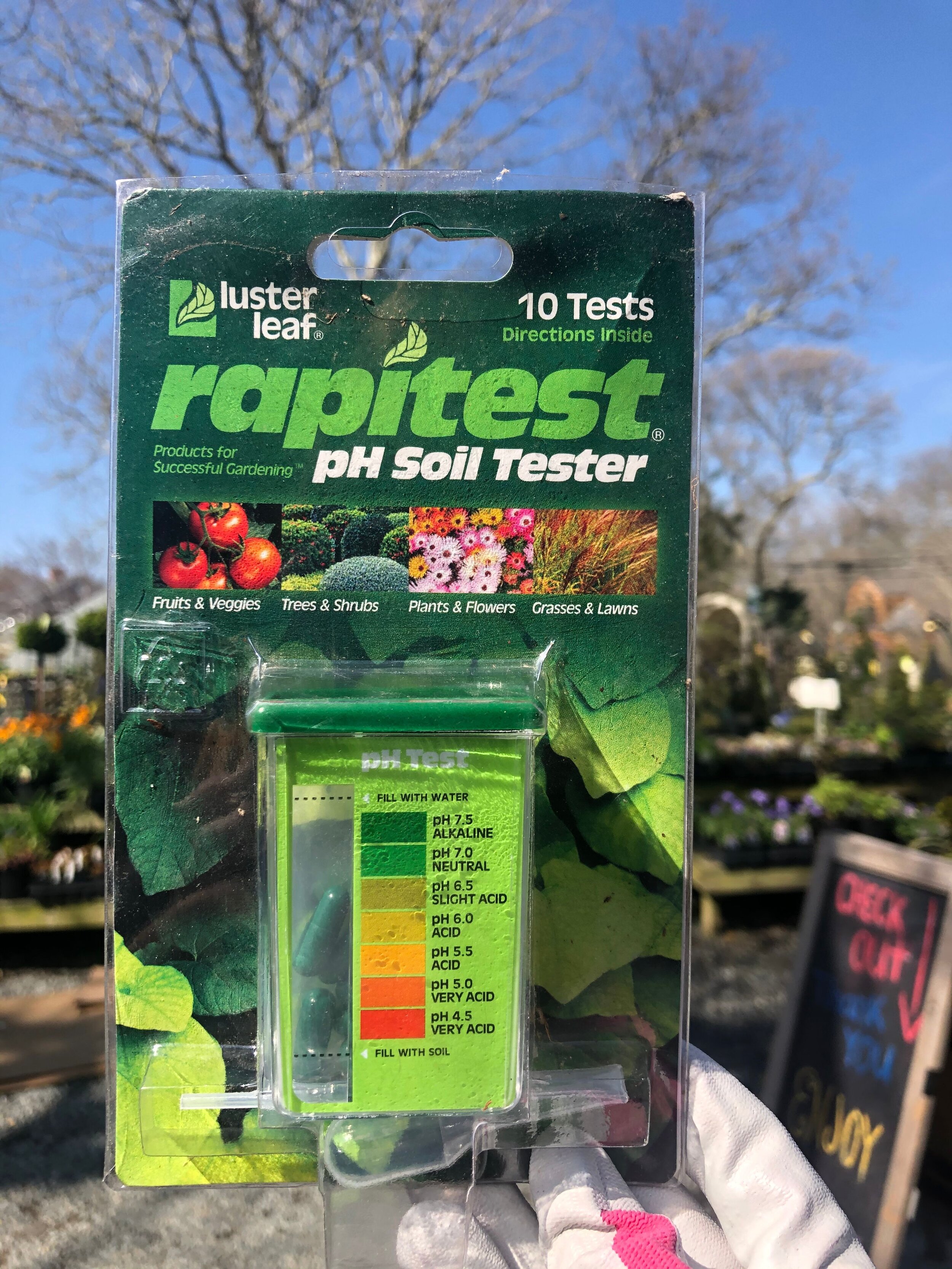
A soil pH test measures how acidic or alkaline your soil is on a scale of 0 to 14.
Acidic: Numbers below 7.0
Alkaline (Basic): Numbers above 7.0
Neutral: Exactly 7.0
When soil is near neutral, most nutrients are easily accessible to plants. However, if your pH is too high or too low, certain nutrients become "locked" and unavailable to the plant, even if they are present in the soil.
The "Blue" Hydrangea Secret
On Martha’s Vineyard, our soils tend to be naturally acidic. This is great news for blueberries, evergreens, and potatoes, and it’s the secret ingredient for our iconic Blue Mophead Hydrangeas (Nikko Blue and Endless Summer). Low pH allows aluminum in the soil to be more readily absorbed turns hydrangea flowers blue. A higher pH will shift those flowers toward pink, while a neutral soil produces a color somewhere in between.
For Bluer Blooms: Add sulfur or aluminum sulfate (ideally mixed into the soil at planting).
For Pinker Blooms: Add garden lime to raise the pH.


Vegetables and Lawns
Most vegetables prefer neutral soil. Potatoes are the exception; they thrive in acidic soil and are actually more prone to disease at a higher pH. We recommend keeping a dedicated "acidic" area for your potato patch where you skip the lime. For lawns, a neutral pH is ideal for healthy turf, so a light yearly application of lime is generally recommended here on the Island.
photo credit: keith kurman
Testing, Not Guessing
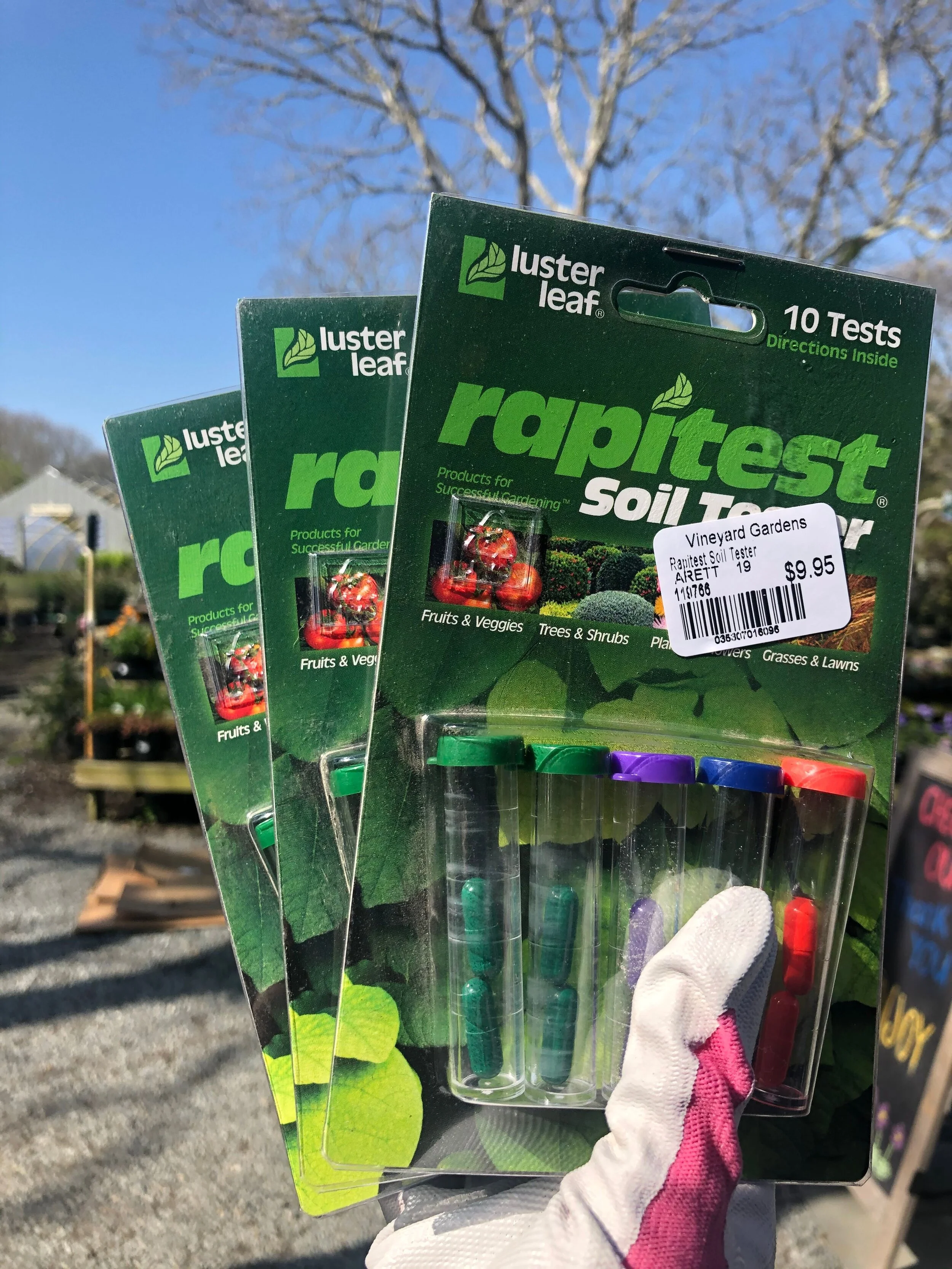
Before you start adding amendments, we highly recommend a professional soil test. You can send samples to the University of Massachusetts, and the results will tell you exactly what your soil contains and what it needs. This precision prevents over-fertilizing, which saves you money and keeps excess nutrients out of our groundwater.
Decoding the Numbers: N-P-K
Every bag of fertilizer has three numbers (e.g., 5-10-5) representing the percentage of Nitrogen (N), Phosphorus (P), and Potassium (K).
Nitrogen (N): Essential for green growth and overall plant health. It is used quickly by plants and can leach out with rain, so it is the element most often added.
Phosphorus (P) & Potassium (K): These are more stable in the soil and typically only need to be replenished every two or three years.

05-10-05

Vegetable Fertilizer 3-4-4 (Nitrogen, Phosphorous, Potassium)

Step 1: Lawn Fertilizer 20-0-3 (Nitrogen, Phosphorous, Potassium).

Step 2: Lawn Fertilizer 21-0-3 (Nitrogen, Phosphorous, Potassium).
Protecting Our Ponds
At Vineyard Gardens, we sell several lawn fertilizers with a "0" middle number (no phosphorus). Excess phosphorus can run off into our local ponds, encouraging algae blooms that harm our water quality.
We also advocate for organic fertilizers, which are slow-release and add beneficial organic matter back into the soil.
What to Use Now
For Lawns: Nitrogen is what creates that deep green, healthy look. A high-nitrogen fertilizer like Jonathan Green Green-Up (20-0-3) is excellent for established turf.
For Vegetables: Use a lower first number, like Espoma Organic Garden-tone (3-4-4). Too much nitrogen in the veggie garden will give you beautiful leaves but very little fruit (tomatoes and squash)!