• Home
  • ABOUT
    • FALL CHECKLIST
    • PROJECTS
    • Landscape Teams
    • LANDSCAPE DESIGN
    • LANDSCAPE CONSTRUCTION
    • LANDSCAPE MAINTENANCE
    • Nursery
    • SALES & DISCOUNTS
    • BULK MATERIAL
    • PLANT PROFILES
  • FIELD NOTES
  • EVENTS
  • TESTIMONIALS
  • Careers
  • Contact
Menu

Vineyard Gardens

484 State Road
West Tisbury, MA, 02575
508.693.8512
Landscaping & Garden Center

Your Custom Text Here

Vineyard Gardens

  • Home
  • ABOUT
  • LANDSCAPING
    • FALL CHECKLIST
    • PROJECTS
    • Landscape Teams
    • LANDSCAPE DESIGN
    • LANDSCAPE CONSTRUCTION
    • LANDSCAPE MAINTENANCE
  • NURSERY
    • Nursery
    • SALES & DISCOUNTS
    • BULK MATERIAL
    • PLANT PROFILES
  • FIELD NOTES
  • EVENTS
  • TESTIMONIALS
  • Careers
  • Contact

COOL WEATHER VEGGIES

March 24, 2026 Karen Logan

Lettuce, herbs and lavender illustration by karen blackerby logan

COOL WEATHER

VEGGIES & GREENS

Grow Your Own Greens!

Fresh, homegrown greens bring vibrant flavor and nutrition to your table. Cool weather veggies like lettuce, spinach, arugula, kale, endive and broccoli thrive in early spring, making them perfect for an early start to your garden. Onions thrive in northern climates, and timing is key for a flavorful harvest. Whether you’re growing bunching onions, leeks, or classic yellow and red varieties, planting them early gives them a strong start before summer’s heat. These cool-season crops develop robust roots when started early, ensuring a crisp, homegrown bounty for your kitchen. Don’t wait, get these cool weather veggies and greens in the ground and watch them flourish!

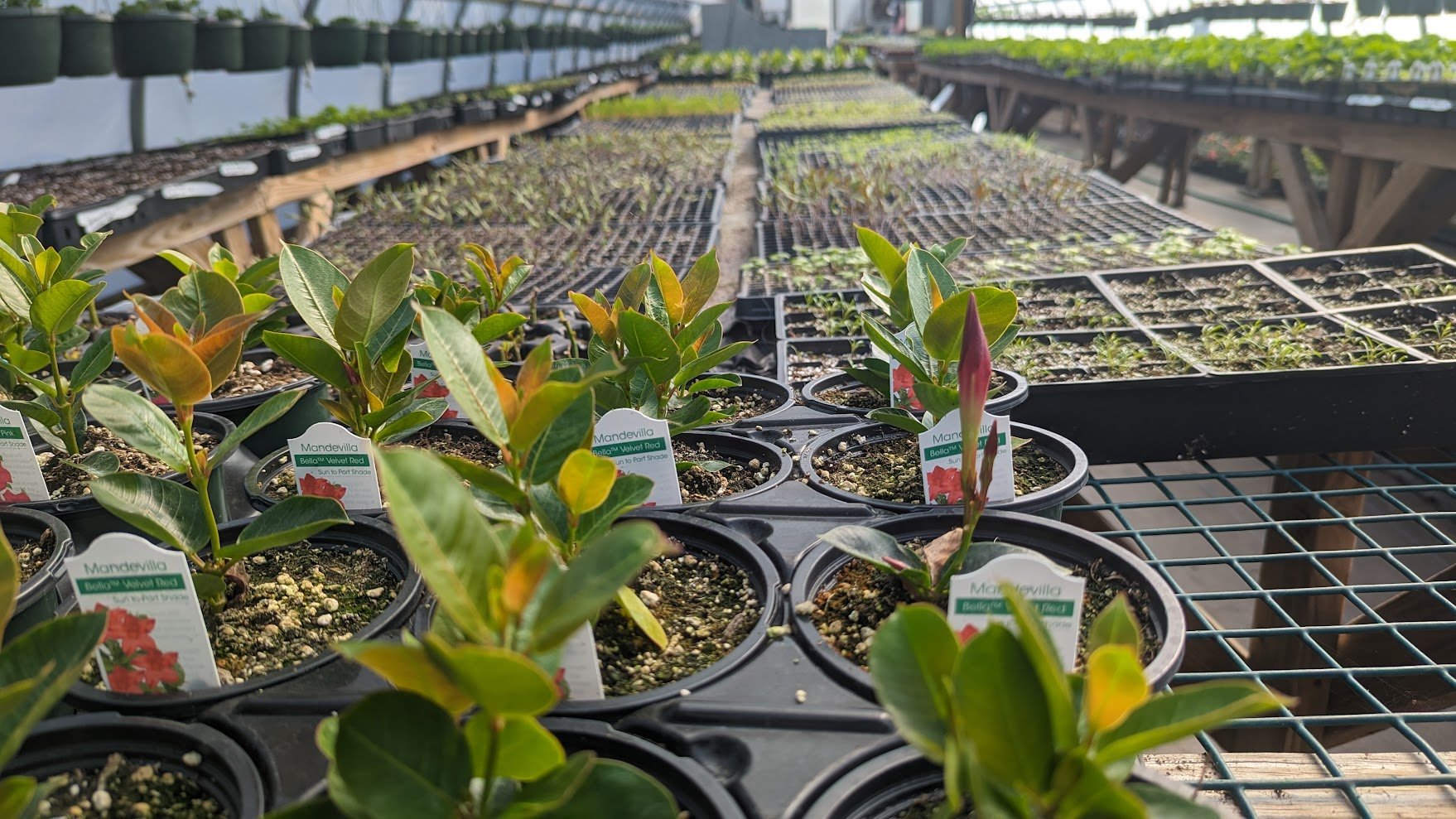
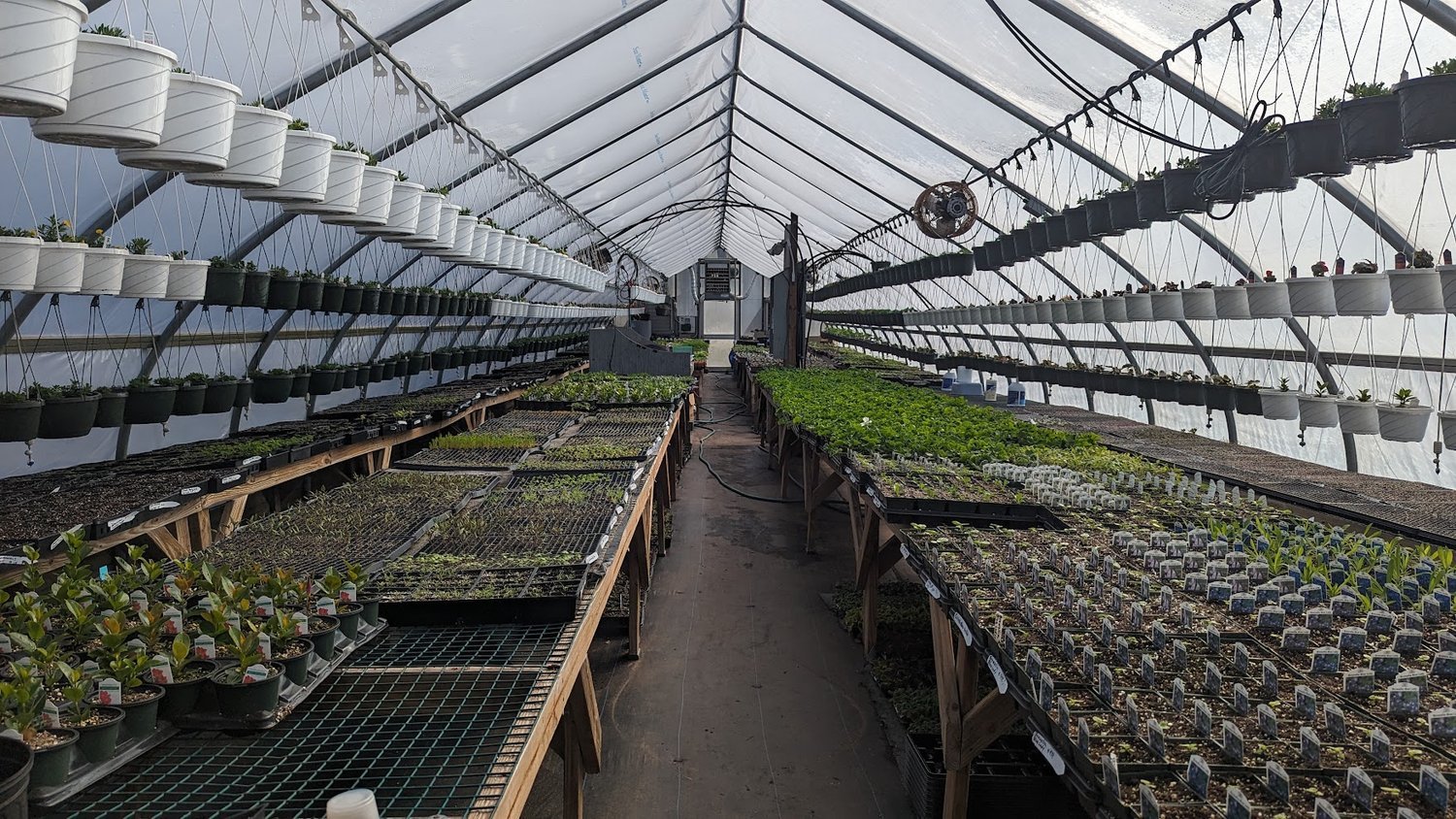
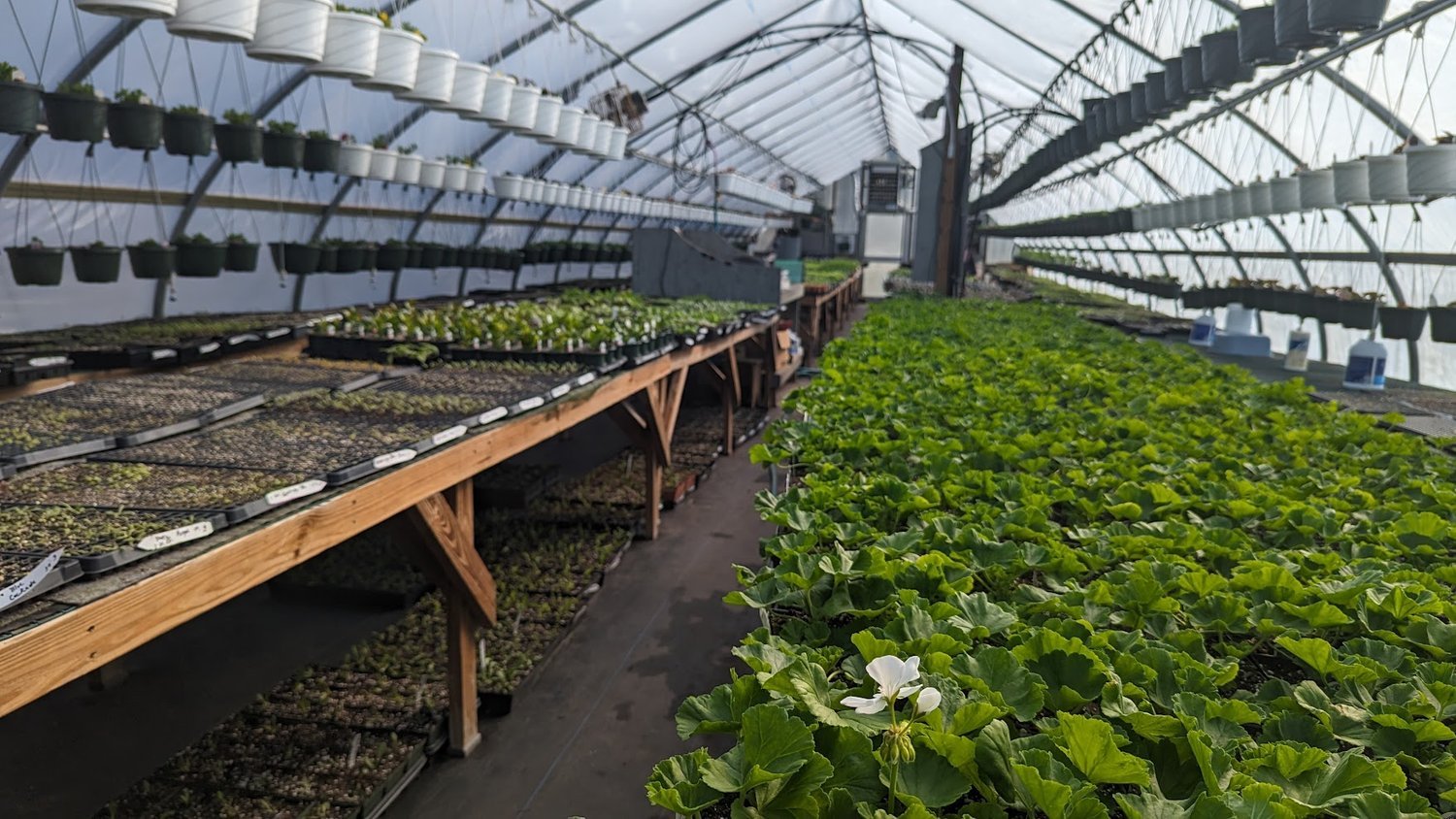
Cool weather greens growing in our greenhouse

First plant a round of our early seeded six packs of greens, then direct sow a second batch in mid April for a continuous harvest!.

  • Start Indoors First: Other herbs and cool-weather vegetables benefit from an early start indoors before transplanting as seedlings.

  • Direct Seed in Mid-April: Lettuces and cilantro can be sown directly into the garden once the soil is workable.

We’ve Got You Covered!

🌿 We grow a wonderful selection of greens and cool-weather veggies from seed, available in convenient plant packs.
🌿 Looking to start from scratch? We also offer a diverse variety of high-quality seeds from Fedco and Botanical Interest to get your garden growing!

Leafy greens like cooler temperatures to produce quick, tender leaves for your salads and cooking. The earlier you get them in the ground the better!

St. Patrick's Day is traditionally when you plant your peas out in the garden. If you missed it we've got you covered. Peas like to do most of their growth in cool temperatures.

We always start a bountiful selection of leafy salad greens.

“It's nearly springtime when a person’s thoughts should hopefully turn to ....... vegetables! That's right it's time to start our vegetable gardens. Even though our frost free date is technically May 1st, this is a great time of year to start our cool loving vegetables. There are many vegetables that can handle the light frosts we get this time of year. If a colder night were to be predicted, in the high 20s, you can cover your freshly planted vegetables with Reemay, plastic or an old sheet to protect them from the frost. At this point, most greens can be planted and some, like spinach, do much better in cooler weather than in the summer. Broccoli, cauliflower and cabbage are known as cole crops, which sounds like cold crops, all do very well planted at this time a year too. While kids don't always like the spicy taste of radishes, they are a great vegetable for them to plant as they come up in a matter of days and are ready to pick in a few short weeks. “ - Chuck Wiley, founder of Vineyard Gardens Landscaping

The Spring Vegetable Garden

Lettuces

Mixed Mesclun Greens

Red Leaf Lettuce

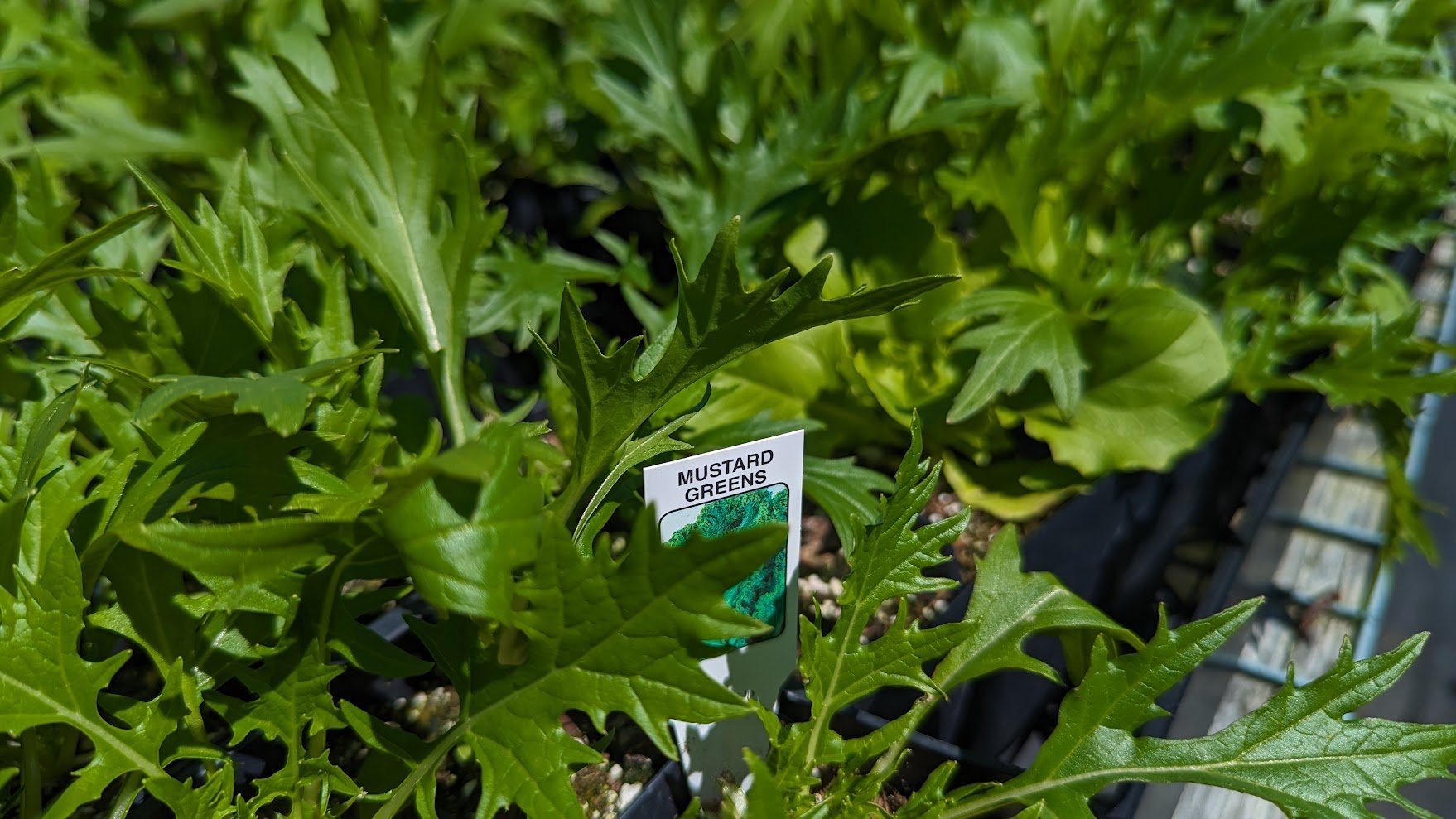
Mustard Greens

Cool Weather Veggies to Plant

These hardy crops thrive in spring’s crisp temperatures:

  • Leafy Greens: Many types of lettuce including Spinach, Endive, Swiss Chard, Mustards and Collards

  • Peas: Don’t forget to plant your peas. Soak before seeding, it speeds up germination. They imbibe and more easily split the seed coat so the radicle can anchor itself down to become the root system. The two cotyledons then emerge, sometimes the seed coat stays attached to one of the cotyledons. It’s so beautiful watching the birth of a plant. We have hundreds of plants being born every day at Vineyard Gardens.

  • Brassicas: We will have a variety of broccolis in packs, such as Calabrese, Romanesco, Waltham, Cauliflower Snowball, Cabbage & Kale

*****************

Herbs

NOW IS THE TIME TO PLANT SOME HERBS! COME CHECK OUT OUR HERB HOUSE & HERB GARDEN!

ANNUAL HERBS: Cilantro, Parsley, Dill, Chervil, Lemon Grass, Lemon Verbena and Rosemary
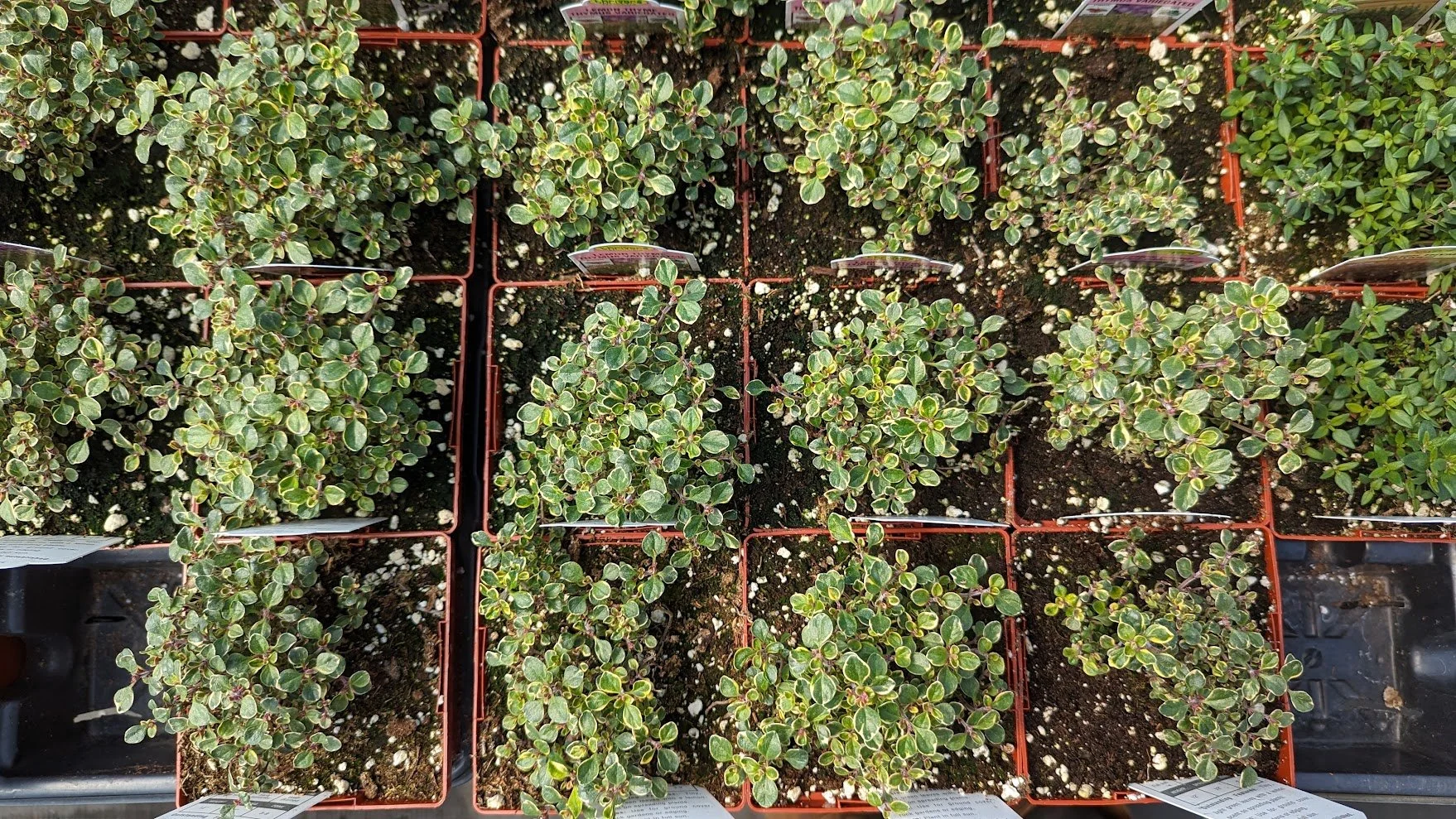
PERENNIAL HERBS: Thyme. Sage, Mint, Tarragon, Savory and Lemon Balm
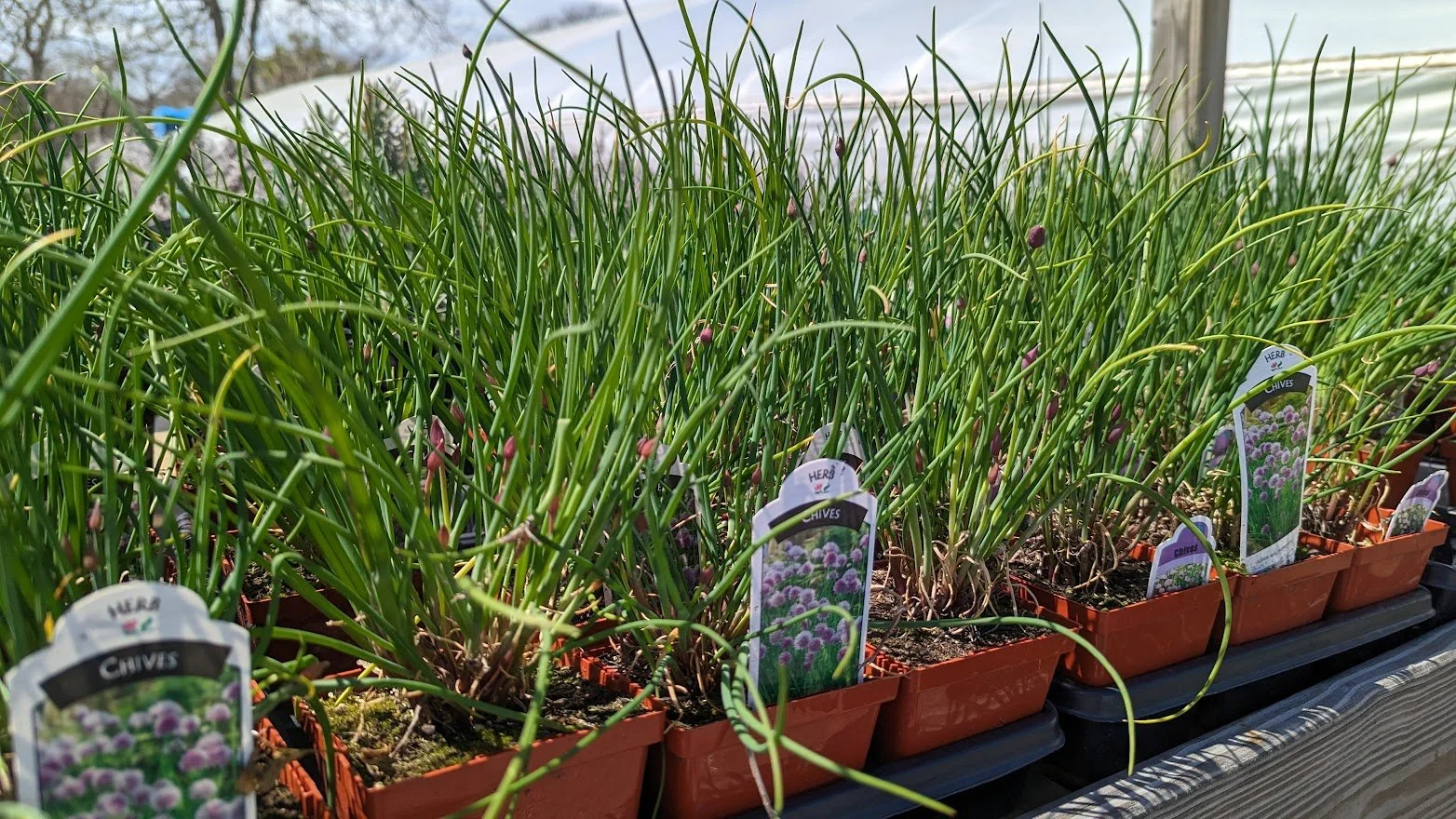
Eat Local Grow It in Your Own Backyard!

There’s nothing fresher than harvesting your own greens straight from the garden. Start early, plant with care, and enjoy delicious, homegrown goodness all season long!

SPRING CHECKLIST
MARCH GARDEN TIPS
In MARCH, VEGETABLE GARDENS, FIELD NOTES Tags cool weather vegetables, lettuces, mustard greens, cool weather veggies, leafy greens, onions, seeds
Comment

HARDY ANNUALS

March 17, 2026 Karen Logan

Hardy Annuals: Ladybird Poppies, Cornflower, Larkspur [illustration by karen blackerby logan]

*********************

HARDY ANNUALS

The Magic of Succession Gardening

Ever notice a lull in your garden between spring’s bloom and summer’s peak? That’s where hardy annuals shine, seamlessly filling the gaps and keeping the garden alive with color and movement. This technique, known as succession gardening, ensures a continuous display while supporting pollinators.

In December, we seeded a vibrant mix of cornflowers, poppies, Queen Anne’s lace, larkspur, and sweet peas, all carefully timed to establish strong root systems before winter. With early planting (as soon as March or April), these hardy annuals burst into bloom just when the garden needs them most, creating a dynamic, ever-changing landscape. Hardy annuals bloom early and will flower through June and some into July. In addition to blooming in June, these annuals knit together a beautiful planting scheme with the evolving summer perennials.

Learn more about Andrew Wiley's poetic gardening style

Vineyard Gardens Display bed in June filled with hardy annuals and biennials

******************************

Why Hardy Annuals?

  • Extended bloom time: Last year, poppies planted on March 15 bloomed through July 4!

  • Strong root systems: Early winter seeding promotes healthier, more resilient plants.

  • Pollinator-friendly: A rich nectar source when other flowers are scarce.

  • Seamless integration: They blend naturally into garden beds as perennials take over.

******************************

Best Uses for

Hardy Annuals


🌿 GARDEN BEDS: Hardy Annuals fill empty spaces and create a natural flow with perennials. All the hardy annuals we carry are perfect for your formal or informal flower gardens, landscapes or cottage gardens.

🌿 MASS PLANTINGS: A striking, meadow-like effect with minimal effort.

🌿 CUT FLOWERS: Hardy Annuals are great cut flowers! Below is a selection that are beautiful in your garden and on your table.

  • Larkspur 

  • Sweet peas

  • Centaurea (Corn Flowers) 

  • Scabiosa 

  • Snap dragons (Antirrhinum)

  • Ammi majus/ Ammi majus 'Select White' 

  • Ammi visnaga 'Green Mist'

  • Agrostemma (Both Colors) 

  • Orlaya 

  • Papaver: You must cauterize them (burn the tip of the stem with a lighter) in order for the bloom to last longer after cut.

🌿 CONTAINERS: Hardy Annuals provide early-season lush foliage and color with a mix of tall and trailing varieties. All the hardy annuals we carry are beautiful in containers.

  • Tall Plants: Cornflowers (36”), Queen Anne’s Lace, Larkspur

  • Front of Border/Containers: Asperula orientalis ‘Cloud Nine’ (long-blooming)

  • Other Selections: Poppies, Bellis, Variegated Vinca

🌿 WINDOW BOXES: Shorter hardy annuals are great for lining the front edge of a window boxes.

  • Asperula: Bloom mid April through the end of June 

  • Papaver : Bloom May through second week of July

With a little planning, hardy annuals transform a garden’s “quiet moments” into a season of abundance.

Want to dig deeper? Explore a couple of our favorite varieties below and tips for planting success!

******************************

Available Now!

List of flowering annuals that we have grown from seed that are available now!

  • Lobularia benthamii

  • Malcolmia maritima

  • Malcolmia maritima ‘Choice Mix’

  • Mathiola bicornis

  • Nigella ‘African Bride’

  • Nigella ‘Delft Blue’

  • Nigella ‘Miss Jekyll Indigo’

  • Nigella ‘Miss Jekyll Light Blue’

  • Papaver ‘Amazing Grey’

  • Papaver ‘Angel’s Choir’

  • Papaver ‘Drama Queen’

  • Papaver ‘Hungarian Blue’

  • Papaver ‘Ladybird’

  • Papaver ‘Monet’

  • Papaver rhoeas

  • Papaver ‘Sissinghurst White’

  • Papaver ‘White Cloud’

  • Salvia coccinea

  • Salvia sclarea ‘Blue Monday’

  • Salvia viridis ‘Rose’

  • Scabiosa ‘Blue Cocade’

  • Scabiosa ‘Fata Morgana’ 

  • Agrostemma 'Ocean Pearl'

  • Ammobium grandiflorum

  • Ammi majus

  • Ammi visnaga 'Green Mist'

  • Antirrhinum ‘Black Prince’

  • Antirrhinum ‘F1 Lavender’

  • Antirrhinum ‘Potomac Cherry Rose’

  • Antirrhinum ‘Potomac Orange’

  • Antirrhinum ‘Potomac White’

  • Bellis perennis

  • Calendula ‘Neon’

  • Calendula ‘Pacific Beauty Apricot’

  • Centaurea cyanus 'Blue Boy'

  • Centaurea ‘Pinkie’

  • Dahlia coccinea

  • Daucus carota

  • Eschscholzia ‘Purple Gleam’

  • Eschscholzia ‘White Linen’

  • Foeniculum vulgare

  • Gypsophila ‘Covent Garden’

  • Larkspur 'Light Blue'

  • Linaria ‘Northern Lights’

Antirrhinum (Snapdragons) are part of the Potomac series and Centaurea cyanus (Bachelor Buttons or Cornflowers), are both excellent cut flowers.

Sweet Peas
Hardy Annual Cut Flowers
Snapdragons

******************************

VINEYARD GARDENS

DISPLAY BED

In June our display bed is in it’s full glory filled with hardy annuals and biennials. A tapestry of texture and color.

Poppy Ladybird.jpeg
IMG_1544.jpg
IMG_1549.jpg
IMG_1554.jpg
IMG_1559.jpg
IMG_1566.jpg
IMG_1573.jpg
IMG_2266[1].jpg
IMG_2396[1].jpg
IMG_2398[1].jpg
IMG_2467[1].jpg
IMG_2579[1].jpg
March Gardening Tips
Spring Checklist
In SPRING PLANTS, MARCH, ANNUALS, FIELD NOTES Tags hardy annuals, succession gardening, ladybird poppies, cornflower, sweetpeas
Comment

SUCCESSION GARDENING

March 15, 2026 Karen Logan

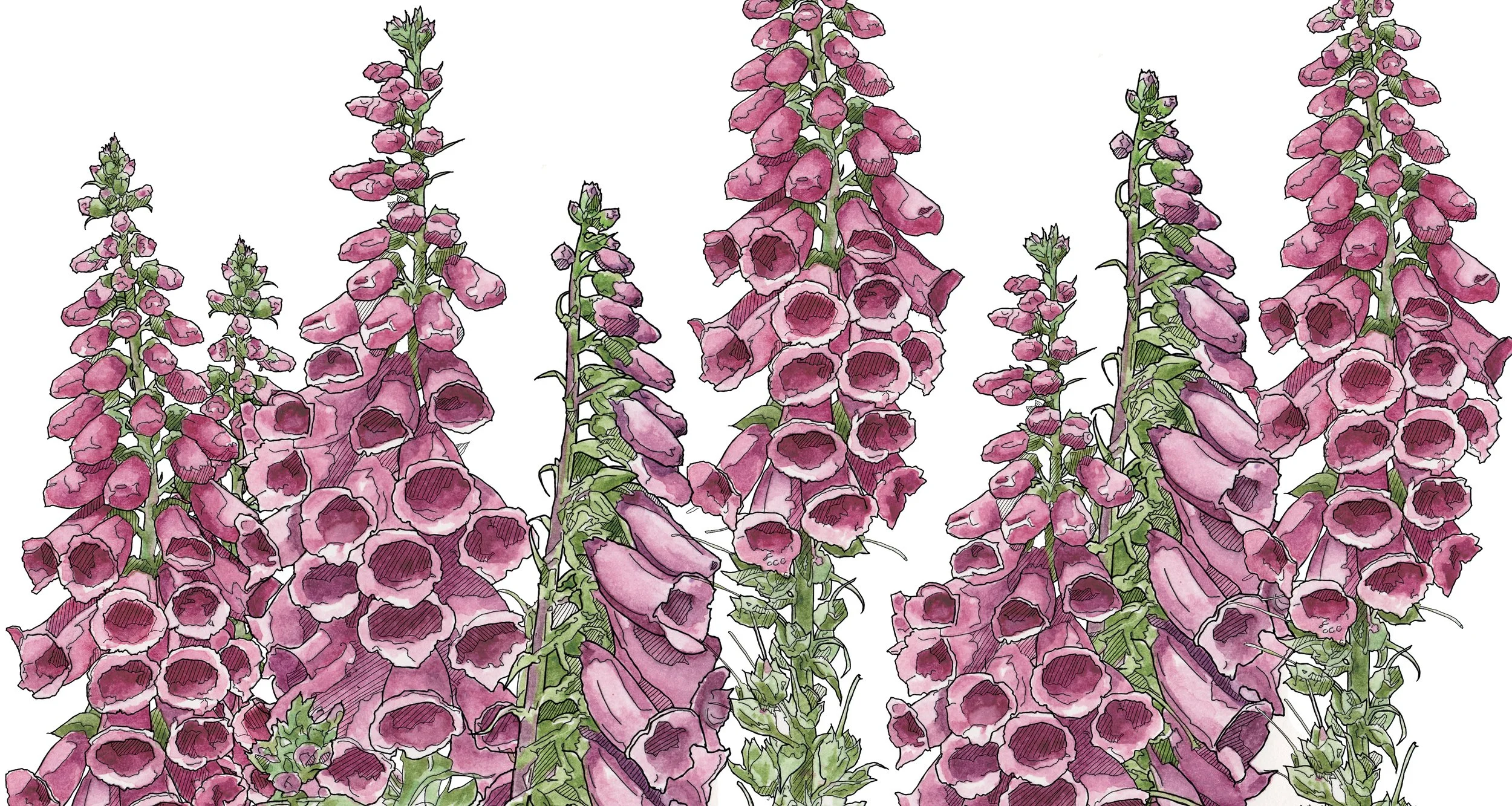
Digitalis purpurea illustration by karen blackerby logan

SUCCESSION

GARDENING

*********************

There is a time in early summer when groups of perennials are either ending their season or just starting their growth spurts. During this ‘in-between’ period in June, the addition of hardy annuals effectively bridges the blooming gap filling in the empty space of spent perennials. This strategic planting is known as succession gardening, a layered gardening style that has continuous blooms throughout the season. Succession gardening breathes more color, cut flowers, birds and bees into the garden.

Vineyard Gardens Nursery

We seeded an assortment of hardy annuals last fall, such as Cornflowers (Centaurea cyanus), Ladybird poppies (Papaver commutatum), Rose of Heaven (Silene ‘Blue Angel’), Larkspurs, Feverfew, Queen Anne’s Lace (Ammi Majus), Snapdragons (Antirrhinum) and some biennials like Lychnis coronaria, Digitalis purpurea (hybrids) and Verbascums that bloom early and will flower through June and some into July. In addition to blooming in June, these annuals knit together a beautiful planting scheme with the evolving summer perennials.

Hardy annuals can be used both in formal gardens and natural settings.

Digitalis purpurea

Feverfew

Verbascum thapsis

**************

SUCCESSION GARDENING TIPS

The flowers of hardy annuals can occupy negative space in June and then the foliage of neighboring perennials fill that space in July.

  • Hardy annuals are best planted early, typically around mid march, depending on the weather. Planted early they will give you the maximum desired effect.

  • Vineyard Gardens has a great selection of our fall sown hardy annuals that are available now and ready to plant.

  • These plants can be directly sown in the spring but will not give you the size, vigor or highly anticipated jaw dropping display due to the warmer temperatures as spring progresses.

Alternatively, hardy annuals can be removed in July and replaced with tender annuals.

Tender annuals include Cosmos, Dahlias, Tagetes, Browalia, Ageratum, Coleus, Impatiens or Cleome. 

Cornflowers (Centaurea cyanus)

Verbascum thapsis

Digitalis purpurea ‘Apricot’

SUCCESSION PLANTING - GREAT DIXTER
MARCH GARDEN TIPS
In GARDEN TIPS, MARCH, ANNUALS, FIELD NOTES Tags hardy annuals, succession gardening, Digitalis purpurea
Comment

VINEYARD GARDEN'S SEED PROJECT

March 9, 2026 Karen Logan

VINEYARD GARDENS

SEED PROJECT

Believe it or not, spring is just around the corner! At our in-house growing facility, seedlings are beginning to emerge, and a new season is taking shape. The anticipation is palpable as we prepare for another year of vibrant growth.

A Botanical Haven on Martha’s Vineyard

Vineyard Gardens Nursery, located in West Tisbury, is a five-acre botanical paradise featuring ten thriving greenhouses. Established over 30 years ago with just a single greenhouse, it has grown into an island staple, a flourishing nursery and landscaping hub.

Rooted in deep horticultural expertise, Chris and Chuck Wiley, along with their two sons Alan and Andrew, have nurtured what began as a modest landscaping company into a full-scale plant production center. Their passion for growing healthy, hardy plants has driven them to cultivate many plants from seed, ensuring the highest quality for their customers.

From Seed to Sprout: The Magic Behind the Scenes

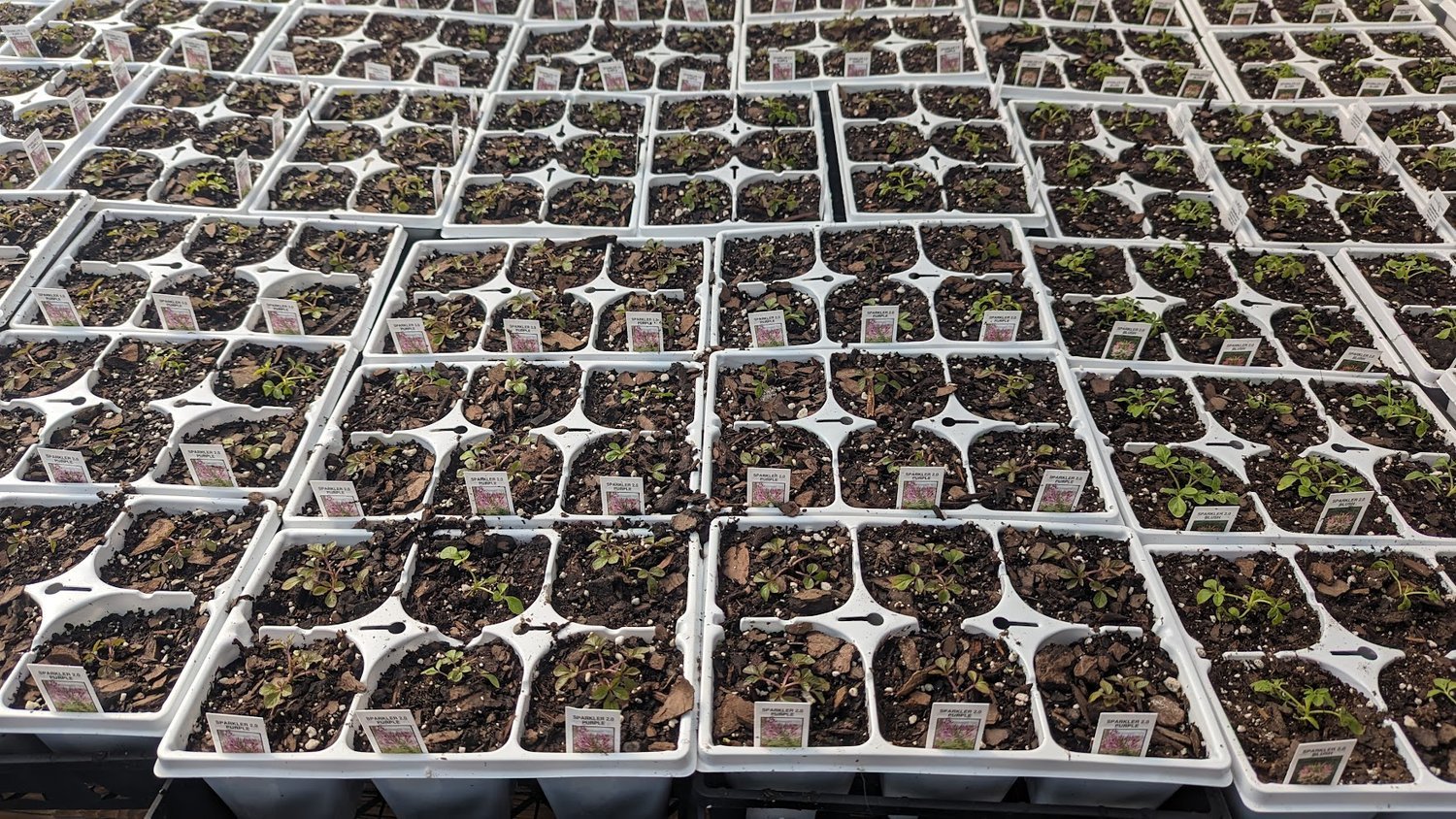
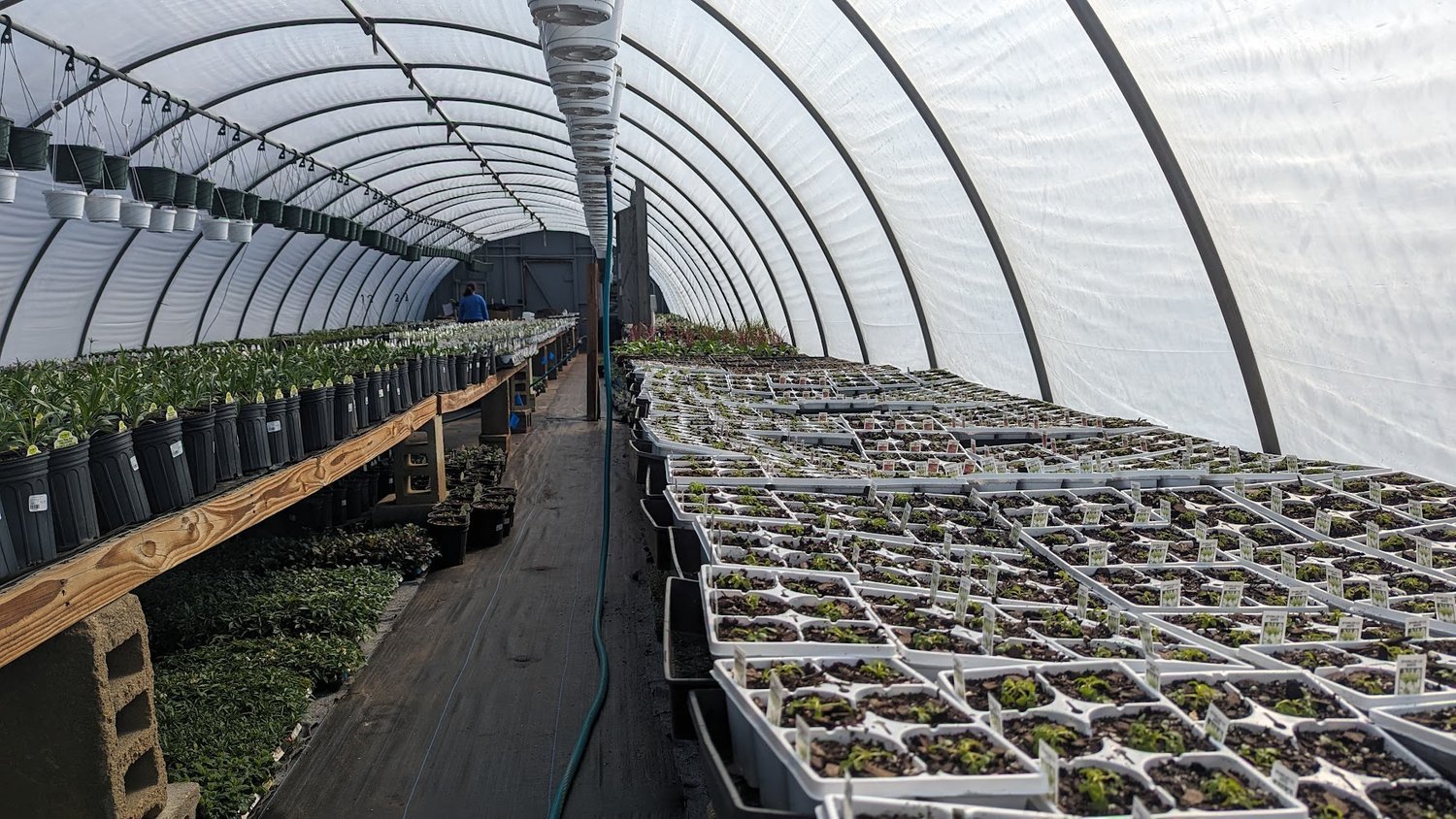
To support this in-house production, the Wileys developed VG2, a dedicated five-acre growing site. Equipped with both indoor and outdoor growing spaces, it features four expansive 100-foot greenhouses. One of these is specially designed for seed germination, where temperature, humidity, and automated mist-watering systems create the perfect environment for new life to take root. This is where the majority of our vegetables, herbs, annuals, and perennials begin their journey.

“The range of plants we germinate at VG2 is extensive,” Chris explains. “We start a few hundred varieties, mostly annuals, but we always seed a dozen or more perennials, trees, and shrubs as well. The biggest challenge is timing, having crops ready at the right moment and in the right quantities. Sometimes we overproduce, but more often, we sell out quickly!” Thanks to this dedicated production site, Vineyard Gardens Nursery remains stocked with beautiful, healthy plants all season long.

PXL_20240416_131709350.jpg
PXL_20240416_131816851.jpg
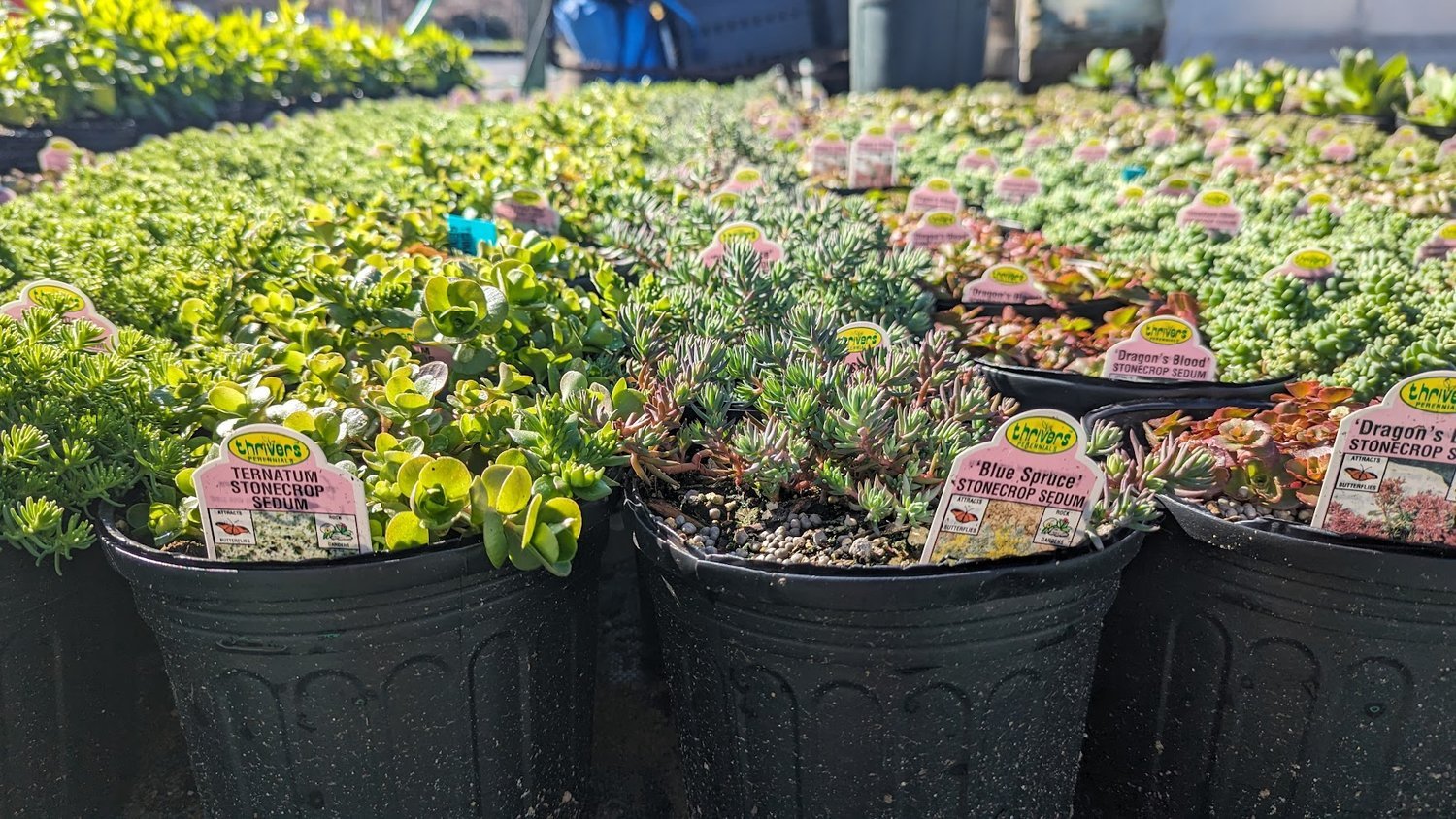
stonecrop.jpg
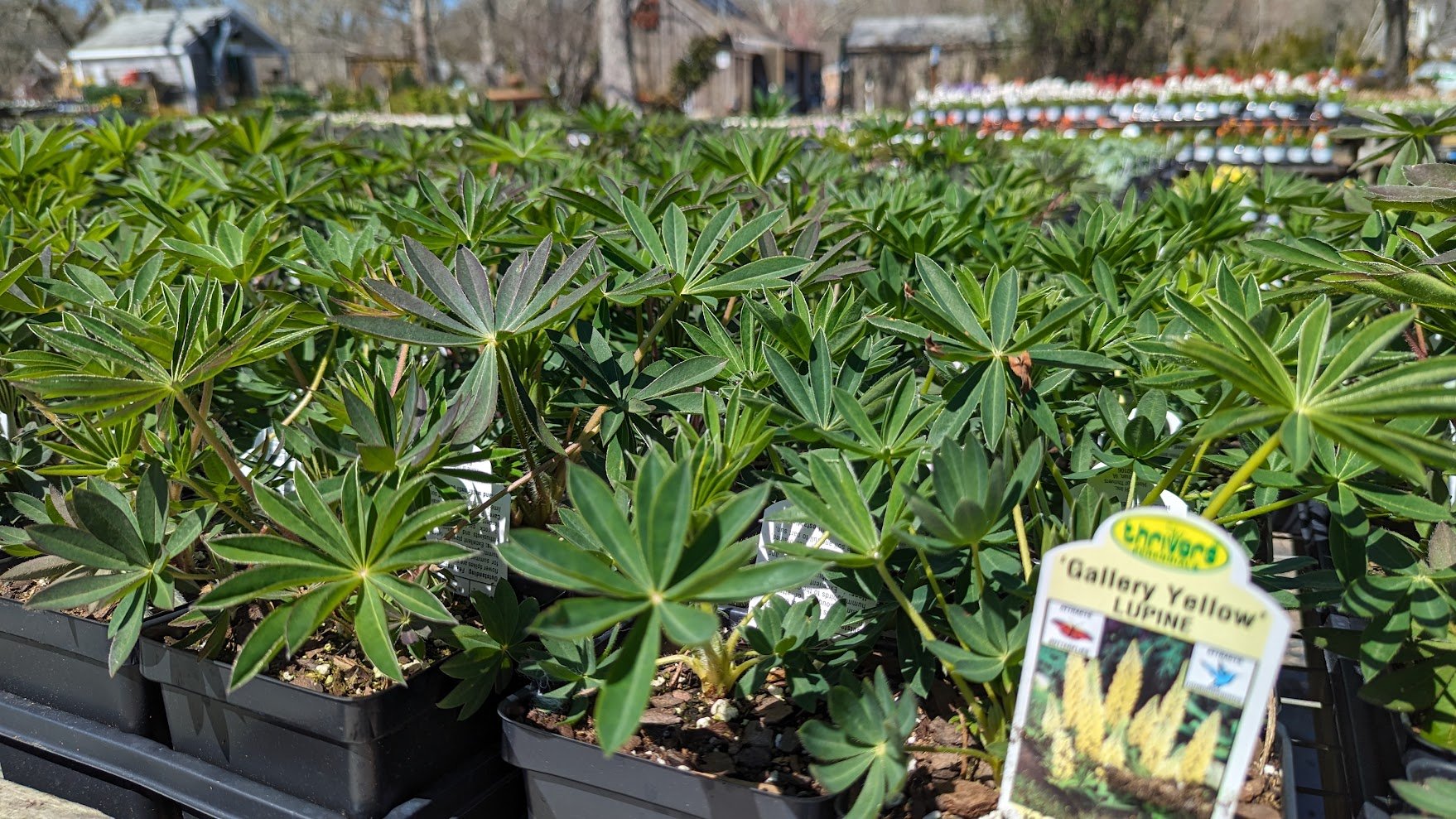
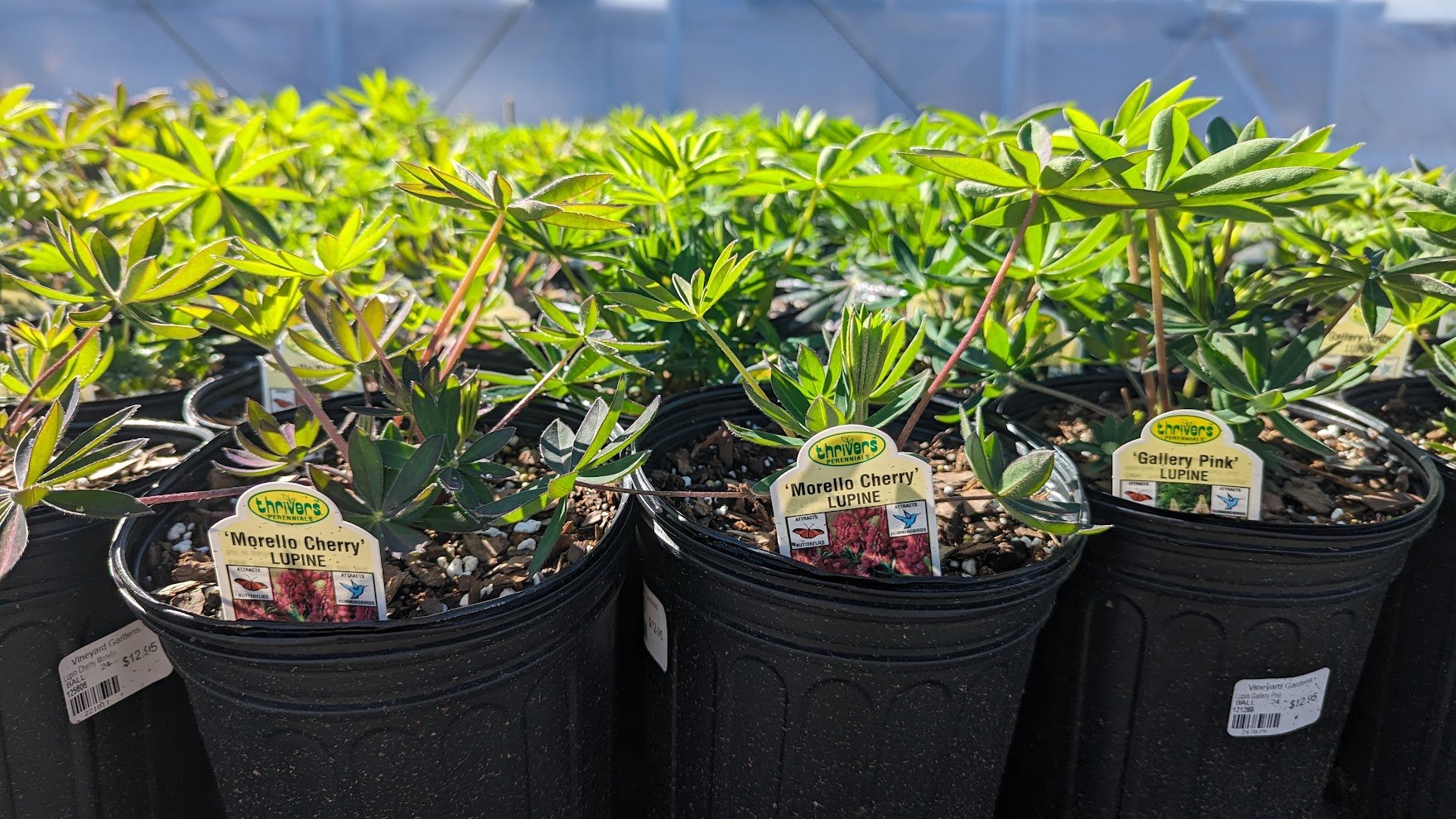
lupine.jpg
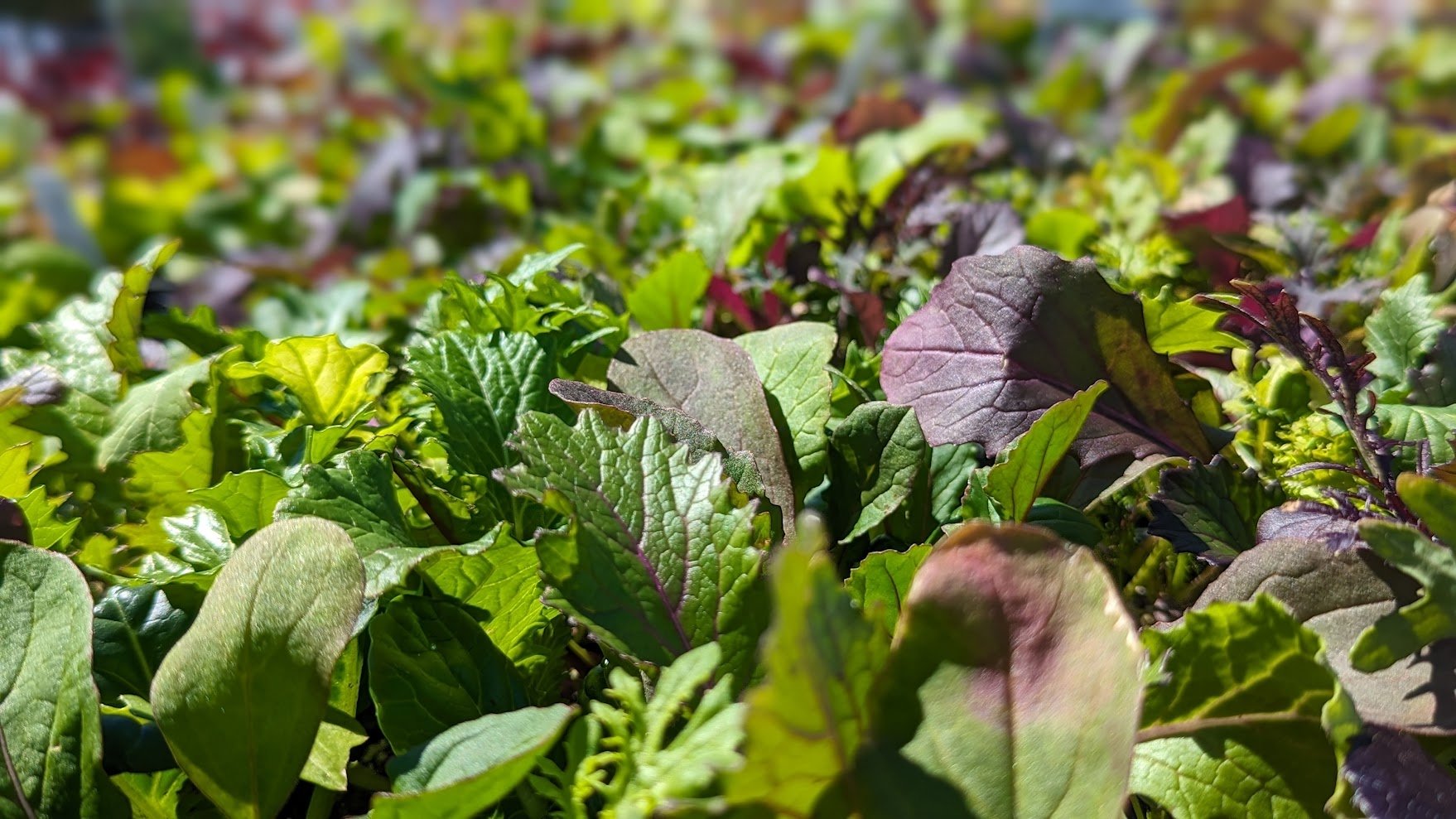
mixed greens.jpg
PXL_20240416_131850910.jpg
PXL_20240416_132308278.jpg
PXL_20240416_155408951.jpg
PXL_20240416_155420545.jpg
PXL_20240416_131850910.jpg
PXL_20240416_132208441.jpg
PXL_20240416_132233584.jpg
sedumsa1.jpg
VG+grown+sparkler+purple.jpg
vineyard+gardens+grown+seedlings1.jpg
PXL_20240416_131709350.jpg PXL_20240416_131816851.jpg stonecrop.jpg lupine.jpg mixed greens.jpg PXL_20240416_131850910.jpg PXL_20240416_132308278.jpg PXL_20240416_155408951.jpg PXL_20240416_155420545.jpg PXL_20240416_131850910.jpg PXL_20240416_132208441.jpg PXL_20240416_132233584.jpg sedumsa1.jpg VG+grown+sparkler+purple.jpg vineyard+gardens+grown+seedlings1.jpg

A Passion for Growing, A Love for Edibles

Chris speaks about plant production with the enthusiasm of a proud parent. She can effortlessly discuss the diverse array of plants she cultivates in English, Latin, and Spanish, her excitement making you want to dig in and start growing yourself.

“But our proudest moment is in spring,” she beams, “when we see our amazing display of vegetable packs, seeded and grown right here. This year we have moved to deeper packs for our greens because we know it’s all about an extensive root system determining the vitality of what we get above ground. More and more customers are embracing edible gardening, and we love being part of that journey. We grow a wide variety of greens, including Asian greens like Chinese cabbage, bok choy, and tatsoi. We even seed a Brazilian vegetable called Jilót and sell over 500 of them! We also grow Couve or Brazilian Collards and this year we are growing four different Brazilian peppers including, Buiquino and  Bishops Cap which did great last year.” She adds with a smile, “Right now, our cool-weather crops are thriving in the greenhouses.”

Ready to Grow? We’re Here to Help!

With decades of expertise and an ever-growing ambition to cultivate, Vineyard Gardens is ready to support you in your gardening journey. Whether you're looking for seasonal flowers, robust vegetables, or specialty greens, our team is here to help you plant, nurture, and grow with confidence.

Spring is coming, let’s get growing!

In MARCH, VINEYARD GARDENS PROJECTS, FIELD NOTES Tags Vineyard Gardens production facility, spring gardens, seedlings, greenhouses

MARCH GARDENING TIPS

March 5, 2026 Karen Logan

Lilac illustration by karen blackerby logan

MARCH

GARDEN TIPS

Vineyard Gardens Landscaping is available to help with your gardening needs!

***************************************

PRUNE

  • Its a good idea to sterilize the pruning shears with a 10% bleach solution to avoid passing diseases from cut to cut

  • Good time to prune fruit trees, raspberries and grape

  • Grapes should be pruned now before the weather warms up as they will “bleed sap” if done during warmer weather

  • Fruit trees should be pruned now to maintain healthy branch structure and to reduce the total number of fruits per branch. If a branch has too many fruits they will tend to be small and often fall off. If allowed to reach maturity the branch could break from too much weight.

  • It’s easier to see the branch structure before the plant leafs out. Remove damaged or crossing branches, and especially for fruit trees waterspouts which are small branches growing straight up through the tree.

  • Prune any trees damaged by winter storms

  • Prune PG Hydrangeas but NOT macrophyllas

  • Prune Crape myrtles and any late season blooming plants, like hypericum, caryopteris

Winter or early spring is the best time to prune most deciduous trees and shrubs. Removing dead wood and reducing their size. A couple of exceptions being lilacs and Hydrangea macrophyllas.

Hydrangea arborescens ‘Annabelle’ needs to be cut back before they start to awaken in Spring, now is a good time to do it if you haven’t already.

SPRAY

  • One spray to prevent Peach leaf Curl (Sulfur or Copper based fungicides). Peaches should be sprayed with a lime sulfur solution which is organic and highly efficient at stopping peach leaf curl, a very common disease that weakens the tree.

DESIGN

  • Plan and design your plantings and garden beds

TOP DRESS

Add a 1-2 inch layer of compost, rich in organic matter, over the top of your garden beds. Plants will come up right through it. The organic matter in compost is already broken down. The nutrients will slowly leach down with the spring rains and be available to be up taken by roots when plants are ready to grow. Do not use mulch as a top dressing as the larger bark chunks rob the soil of nitrogen in the breakdown process. If you are going to mulch on top of the top dressing of organic matter, spread some fertilizer under the mulch to supply nutrients for decomposition. For new beds or vegetable gardens waiting to be planted you can add more than 1-2 inches of organic matter on top, or the organic matter can be rototilled in, mixing it a few inches into the soil.

  • Top dressing bulb areas and lightly fertilize bulb areas before they come up any further

  • Top dress your veggie garden

  • Its still a bit early to fertilize as the plants aren't actively taking up nutrients and with a lot of rain the fertilizer could leach or run off instead of being used by the plants.

SEEDLINGS

  • Start cool weather seedlings indoors to be planted out by the end of March or beginning of April.

  • Later in the month start your warm weather seedlings indoors. These will get planted out in May.

  • There is still time to order flower and vegetable seeds.

  • Do not work wet soil in vegetable gardens as that leads to compaction, the last thing you want to happen to your soil.

Vineyard Garden Greens

Giant Red Mustard

PERENNIAL PLANT OF THE YEAR
SPRING CHECKLIST
In GARDEN TIPS, MARCH, FIELD NOTES Tags spring pruning, spring top dressing bulb areas, march garden tips
Comment

WINTER PROJECTS

February 25, 2026 Karen Logan

As we prepare for spring, pouring over seed catalogs and drooling over our friends’ Instagram posts from Colombia to the Mekong Delta, it is a good time to get outside and accomplish some garden tasks that will be put aside once the bulbs begin to break ground. If the prospect of tree climbing and brush hauling is deterring you, remember that Vineyard Gardens’ landscape crew is working year round and available to help. Below are a few of the garden tasks that you could be chipping away at during these mild February days.

*************

PRUNING GRAPE VINES AND FRUIT TREES

Grapes may look a mess this time of year and it may be tempting to simply cut them back, but the process of pruning them is best demonstrated. Like riding a bike, once you’ve done it a few times it gets easier.

Fruit trees are a bit trickier due to variety, special growth patterns and fruiting strategies but the basic rule of thumb is to open up the inside allowing for good air circulation and access to sunlight. Remove dead or diseased wood and a few of the older branches and crosses. Remove about 1/3rd of the older wood but preserve a balanced structure.

Once the pruning is complete and the weather has warmed up, spray with Dormant, aka Horticultural Oil. This is a non-toxic spray that coats the stems and bark with a mild pesticide that helps control most types of pests that can plague fruit trees and plants in the Rose family.

pruning grapes

watch & learn

pruning grapes

illustrated guide

pruning fruit trees in winter

watch & learn

*************

SHAPING AND REMOVING DEAD WOOD FROM CONIFERS AND EVERGREENS

Evergreens often outgrow their allotted space. They tend to keep their foliage on the sunny side of the plant, leaving the back sparse and leggy. They also tend to hold onto old wood that can harbor mold, mildew and fungus. Thinning out the old dense branching and accumulation of discarded foliage can lighten up the overall structure and make for a healthier plant. Some evergreens have a hard time producing new growth on old, hardened off wood. Hollies and Boxwood are a couple that appreciate being cut back hard,  called “hat-racking”.  

Holly

pruning hollies

watch & learn

A "hat-racked" Holly from this year. Stay tuned to see how it looks throughout the growing season.

*************

CUTTING BACK ORNAMENTAL GRASSES

A perfect late-winter project! Ornamental grasses hold up well through most of the winter, providing volume, screening and an attractive feature in the winter landscape.  Make sure to cut them back in early Spring or you’ll end up cutting off  new growth. The grasses do not need to be flush cut, they can be cut at angles or domes, the object is to clear away old canes before  new growth begins to emerge.  A hedge trimmer or hand pruners can be used.

Karl Foerster Grass

*************

HEADING BACK LATE SUMMER FLOWERING SHRUBS

Martha's Vineyard homeowners tend to favor late summer flowering shrubs such as Pee Gee Hydrangeas, Bluebeard Caryopteris, St. John’s Wort, Butterfly Bush and Rose of Sharon. These shrubs  perform best with a hard cut back before new growth begins to emerge. Be careful not to cut back your common blue type of Hydrangea, Hydrangea macrophylla, because these hold their flowering buds at the tips of last years’ growth. Wait to prune lilacs until after they have flowered.

Winter is the best time to prune most deciduous trees and shrubs. Removing dead wood and reducing their size. A couple of exceptions being lilacs and Hydrangea macroph

These tip buds hold this season's flowers. Be careful not to trim them off

These tip buds hold this season's flowers. Be careful not to trim them off

Hydrangea bud

Hydrangea bud

Last year's cuts on a Pee Gee Hydrangea. This year leave a couple of buds beyond for a big, full flowering.

Last year's cuts on a Pee Gee Hydrangea. This year leave a couple of buds beyond for a big, full flowering.

A fall cleanup cut. Notice last year's cuts on these Annabelle Hydrangeas. The Annabelle's are very forgiving, but if you leave this much stem length on them they'll tend to flop more.

A fall cleanup cut. Notice last year's cuts on these Annabelle Hydrangeas. The Annabelle's are very forgiving, but if you leave this much stem length on them they'll tend to flop more.

*************

ROSES

This can be the time to cut out dead, broken and/or diseased wood from roses as well.

Most roses will benefit from a hard structural pruning at this time. Be sure to keep your pruners clean and sharp. Carry with you alcohol wipes to clean the blades when moving from one plant to the next. This will help prevent spreading virus and fungal spores. Always keep the area under roses clean from debris and refresh top-dressing every year. This is where pests can deposit eggs and where fungus spores collect. These steps may not eliminate black spot, Japanese beetles or aphids but it will make it easier to keep them under control. Later you can spray with Horticultural oil, as with your fruit trees.

*************

REPAIRING SETTLED STONEWORK

Now would be a good time to reset cobble edging and patio pavers that have settled and become uneven.

  1. You can get a couple buckets of sand from Keane’s or Goodale’s

  2. Pull up a section of pavers

  3. Spread out the sand. A trick when doing this is to spread the sand under the edges of the stone leaving it lower or a little hollow in the center to prevent rocking.

  4. Reset the stones. The stones can be left slightly higher than grade to allow for settling.

While doing this, observe where you have standing water and erosion problems. These can be corrected by digging a shallow trench towards lower grade and back-filling with pea stone. Plan ahead and fill some pockets at the joints with a sand/compost mix to allow for planting “Stepables” like Thyme or Blue Star Creeper Isotoma fluviatillis when they come available later in the Spring.

*************

CLEANING AND SHARPENING YOUR TOOLS

Be prepared! If you don’t have the equipment to sharpen your pruners, loppers, hedge shears and pruning saw’s you can collect them together and drop them off at the Vineyard Gardens office across from Keane’s to have them sharpened for a modest fee. You should also clean and sharpen your spades and shovels, it will make your garden tasks so much easier and safer. Its good practice to keep a 5gal. bucket with sand mixed with old, used motor oil in it around to clean your tools after using them.  This is also a good time to oil the wood stocks of any tools with wooden handles, it will give it a chance to soak in and renew the grain making them stronger and last longer.

Winter is a great time to clean and sharpen tools.

*************

CLEARING OUT GUTTERS AND LEAVES COLLECTED AROUND THE FOUNDATION OF THE HOUSE

With all the spring rains you’ll want to be sure that the gutters are running clear, even if you cleared them out after the fall leaf drop. It is best practice to check again.  It also gives you a chance to make sure there was no damage during the winter from the weight of ice and snow.

It's generally good to keep debris from accumulating around the foundation of the house as well. This is where rodents and general pests will tend to nest, protected against a nice warm foundation.

During mid-Winter mild spells we are encouraged to get out and accomplish some neglected garden chores.

............................................................................................................................
If all this seems daunting, do what you can and  Vineyard Gardens can take care of the rest. Please call the Vineyard Gardens Landscaping office at (508) 693.8512   

Time waits for no one and spring is just around the corner. The Nursery will open mid March, giving you a few weeks to prepare.

In GARDEN TIPS, FIELD NOTES

SOLAR POWERING VINEYARD GARDENS PRODUCTION FACILITY

March 23, 2018 Karen Logan

Vineyard Gardens production facility in West Tisbury is in the final stages of installing a parking canopy complete with solar arrays.  As an avid environmentalist the goal to source alternative energy for Vineyard Gardens has been a long held objective for co-owner Chuck Wiley. Now that the technology has become more readily available and the concern for climate change has heightened, Chuck knew it was time to make this happen.

Chuck built Vineyard Gardens from a summer seasonal landscape business service back in the 80’s to one of the largest and most respected Landscape/Garden Centers on Island. He was an early adopter of recycling, composting and natural gardening methods. To achieve his objective of an alternative energy source Chuck teamed up with John Guadagno and Rob Meyers at South Mountain Co. The folks at South Mountain have been involved in environmental design and development here on the Island for decades. Chuck  felt they were the best choice to head this project because of their reputation as well as a desire to stick with a local company, who would be readily available if something should arise. He explains, “As far as the environmental impact, the only arbiter was the town and South Mountain knew what to do, what to say and what to ask for." This project had a lot of people working on it, South Mountain, Brissette Electric, Keene Bros. and various other subs.

This newly installed 25 feet high, 40 feet wide, 75 feet long parking canopy is constructed of steel I-beams with deep concrete footings held together with giant bolts. The roof is 3,000 square feet with six parking spaces below. Chuck explains, “The size and location was dictated by how much sun exposure we are able to get and that covers nearly 100% of my usage. It was a no-brainer. I actually didn't lose any space. I didn’t really lose any planting area under it and the cars used to overheat sitting out there, so it really serves our needs.”

The panels will collect energy from the sun every day and will transmit it to transformers that will produce enough power to offset the usage of Vineyard Gardens two commercial growing facilities. Chuck states, “It will generate a conservative estimate of 52 kilowatts of power a year. And between the nursery (VG 1) and the production site (VG 2)  we use about 55kw so it should cover nearly 100% of our usage” He discusses how they use a lot more energy in the summer than in the winter. The large consumption of energy in the summer comes from the cooling fans in the greenhouses and the water pumps. Furthermore, “During the winter months when we are not consuming that energy the power goes into a meter so we’re feeding energy back into the grid, a net usage of zero. If things are going great, there could be excess generated.”

The cost of the project is $272,000 dollars. Chuck explained, “I applied for a $20 thousand dollar Rural Energy for America Program Grant from the USDA. I spent an incredible amount of time trying to get it.” Holding up a file folder more than an inch thick of paperwork he states “This is my USDA file. They accepted my application but they haven’t given me any money yet. They wanted everything. I had to show that it wasn’t on an anthropological site, didn’t have an Indian Burial Ground. I had to show them all my math and that there were no better, cost effective alternatives. They wanted an environmental review and so on.” He explains how he did not realize what an undertaking it would be to apply for this yet he says, “I could have done this project without all this paperwork, but the reason this project makes sense is that there are government incentives. If I were to have to pay for this without the incentives the payback period would be much longer and would not make as much sense.” He goes on to say that he was able to get a loan from Cape Cod 5 who has done previous loans for solar arrays and that in ten years, in theory, this project should pay for itself.

Overall Chuck says, “This is a good thing for me because it’s paying for itself but just the thought of doing anything that will cut down on our coal, oil or gas usage is huge to me. This has been a very important part of my life.”  As far as maintenance goes, “It's near zero. There are some electrical components that may have to be replaced after twenty plus years, but for the most part its supposedly maintenance free. I’d love to see millions of these across the world. As long as they could pay for themselves, I don’t know why you wouldn’t do it And if we create enough of them maybe we won’t need those  other forms of energy.” Ultimately he is extremely happy with his decision and recommends it 100%!

In FIELD NOTES Tags solar power, solar power parking canopy, vineyard gardens
← Newer Posts

484 State Rd. West Tisbury, MA 02575

Mon - Fri : 8am - 4:30pm

Sat : 8am-4:00pm

Closed Sundays

(508) 693.8512