• Home
  • ABOUT
    • PROJECTS
    • SPRING CHECKLIST 2026
    • Landscape Teams
    • LANDSCAPE DESIGN
    • LANDSCAPE CONSTRUCTION
    • LANDSCAPE MAINTENANCE
    • Nursery
    • BULK MATERIAL
    • PLANT PROFILES
  • Application
  • EVENTS
  • FIELD NOTES
  • TESTIMONIALS
  • Contact
Menu

Vineyard Gardens

484 State Road
West Tisbury, MA, 02575
508.693.8512
Landscaping & Garden Center

Your Custom Text Here

Vineyard Gardens

  • Home
  • ABOUT
  • LANDSCAPING
    • PROJECTS
    • SPRING CHECKLIST 2026
    • Landscape Teams
    • LANDSCAPE DESIGN
    • LANDSCAPE CONSTRUCTION
    • LANDSCAPE MAINTENANCE
  • NURSERY
    • Nursery
    • BULK MATERIAL
    • PLANT PROFILES
  • Application
  • EVENTS
  • FIELD NOTES
  • TESTIMONIALS
  • Contact

ANNUALS

June 8, 2026 Karen Logan

HOW

ANNUALS COLONIZE

THE GARDEN

THE MAGIC OF RESEEDING

Annuals are celebrated for providing brilliant, non-stop color all summer long. Unlike perennials, annuals complete their entire life cycle in a single season; germinating, blooming, producing seed, and then dying as winter approaches.

But their story doesn't end there, before they go, they drop their seeds to the earth. Hidden in the soil through the winter, these seeds burst to life the following spring as a brand-new generation. Often the seedlings are identical or very similar to the mother but these seedlings aren't always carbon copies of the mother plant. Much like human brothers and sisters, they share a family resemblance but can often surprise you with unique variations.

When a plant successfully naturalizes and drops seed in the same area year after year, it is called colonizing. This process creates effortless, natural-looking drifts in the landscape. If you want to welcome this self-sustaining magic into your yard, here are some fantastic annuals (and biennials!) that love to colonize:

  • Poppies

  • Bachelor’s Buttons

  • Cleome (Spider Flower)

  • Larkspur

  • Browallia americana (Jamaica Forget-Me-Not)

  • Nigella (Love-in-a-Mist)

  • Foxgloves (A classic biennial that colonizes)

Because they put all their energy into a single season, annuals usually boast a much longer blooming window than perennials, with many flowering non-stop from June until frost. By planting colonizing varieties, you get the best of both worlds: unbeatable summer-long color, and a beautiful return performance next spring!

Calendula Bon Bon mix / A dwarf Calendula blooms all summer in full sun or part shade. Calendula flowers are edible. Other edible flowers to use as garnishes include Bachelor Buttons, Borage Borago officinalis, Nasturtiums and Violas.

Calibracoa Sweet Peach. Annual blooms all summer.

Calendulas(Taller). Taller calendulas make good cut flowers. Edible.

****************

Tips for

Reseeding Success

If you want to encourage your annuals and biennials to naturalize and carpet your garden beds next spring, a few simple adjustments to your maintenance routine will maximize your success:

  • Time Your Deadheading: Cutting back faded flowers keeps the plant blooming vigorously all summer. However, if you want the plant to drop seed for next year, you must stop deadheading later in the season. The flower heads need time to dry, mature, and develop viable seeds on the stem.

  • Go Easy on the Mulch: Avoid burying the area around the mother plant under a heavy layer of mulch. Many annual seeds are tiny and require direct contact with the soil and ambient sunlight to trigger spring germination.

  • Rethink Your Fall Cleanup: If you are trying to establish a colony of self-seeding plants, in the fall mulch that specific area very lightly, or skip it altogether, so you don't accidentally smother the fallen seeds.

Morning Glory

Cleomes

Zinnias. One of the best cut flowers

****************

TRY THESE!

We have many favorites! The tried and true ones are still around.

There are new introductions of cultivars within each of these.

Geraniums / Impatiens / Cosmos / Cleome / Portulacas / Salvias / Marigolds / Alyssum / Ageratums / Nasturtiums / Nicotianas / Dahlias / Asters / Zinnias / Morning Glories / Amaranthus / Gomphrenas / Pentas / Lisianthus / Scabiosa / Snapdragons / Dusty Miller / Callas / Caladiums / Coleus / Agapanthus / Tropical Hibiscus / Fuchsia

****************

LONG BLOOMING PROVEN WINNER ANNUALS

Argyranthemums / Osteospermums / Lobularias / Calibrachoas / Euphorbia Diamond Frost / Petunias / Torenias / Diascias / Phlox / Verbenas

****************

LESSER KNOWN ANNUALS THAT ARE STRONG GARDEN PERFORMERS

Browallia americana / Orlaya grandiflora / Ammi majus / Erigeron karvinskianus / Nigella / Ceratotheca triloba / Rhemania angulata / Emilia coccinea / Tithonia / Sanvitalia / Dahlberg Daisies / Daturas Ricinus / Clary Sage (Blue Monday and Pink Sundae) / Tibouchina urvilleana

****************

RECOMMENDED DEER RESISTANT ANNUALS

Lantanas / Salvias / Daturas / Ricinus

****************

TRY ADDING ANNUAL VINES TO CONTAINERS & HANGING BASKETS

Mina lobata / Thunbergias / Cobaea scandens (Cup and Saucer Vine) / Mandevilla
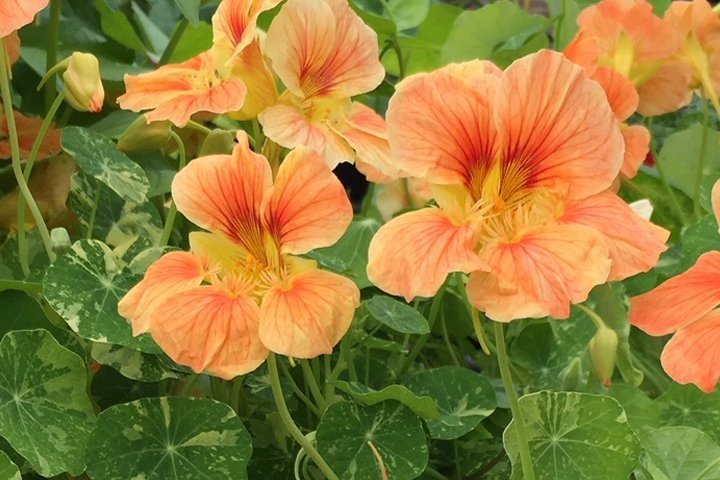
Nasturtiums
Nasturtiums
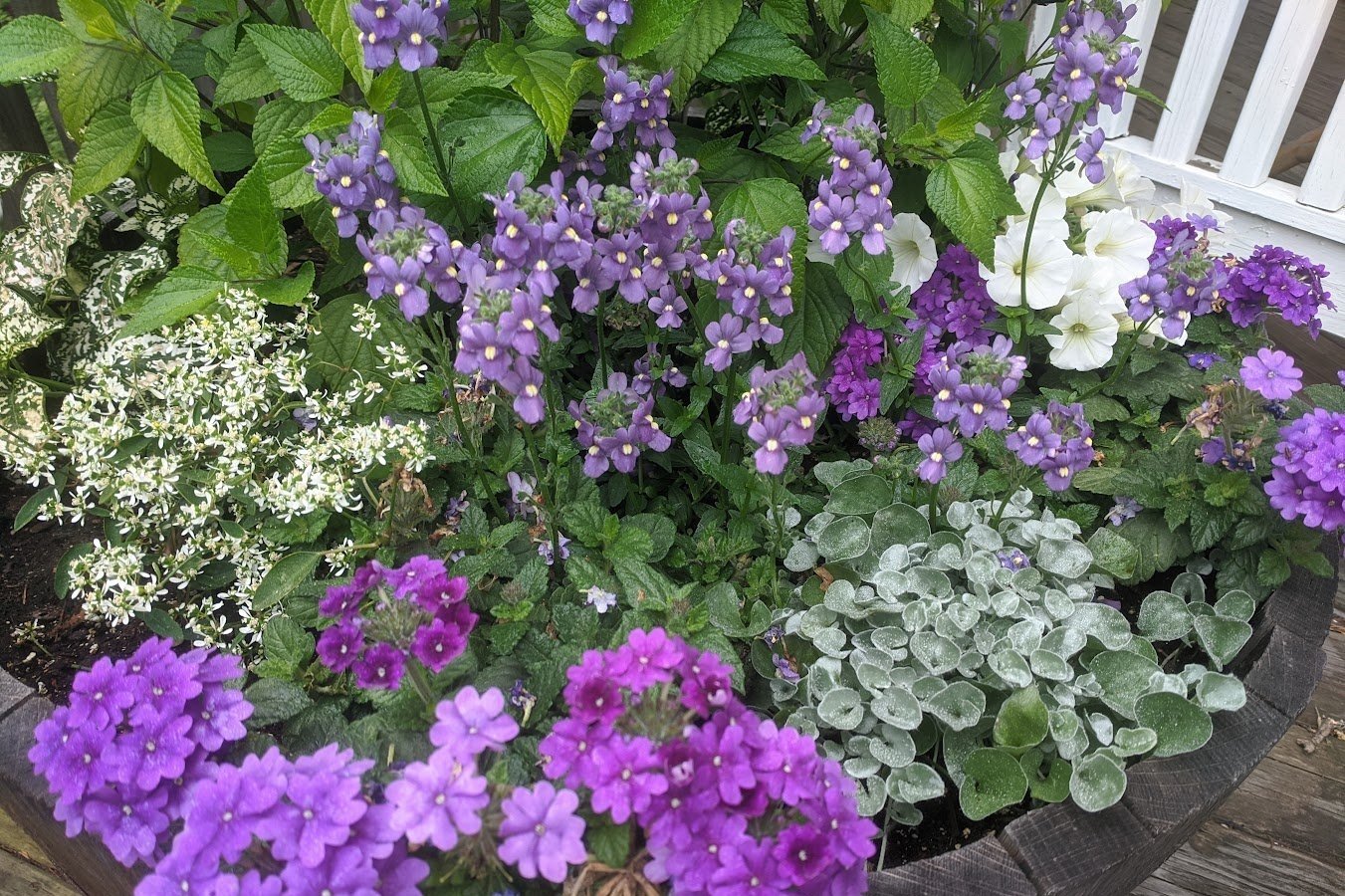
Salvia Amistad / Salvia Hummingbird / Verbena Vanessa Purple / Nemesia Bluebird / Petunia Vista White / Hippo White Polka Dot / Dichondra / Euphorbia Frost
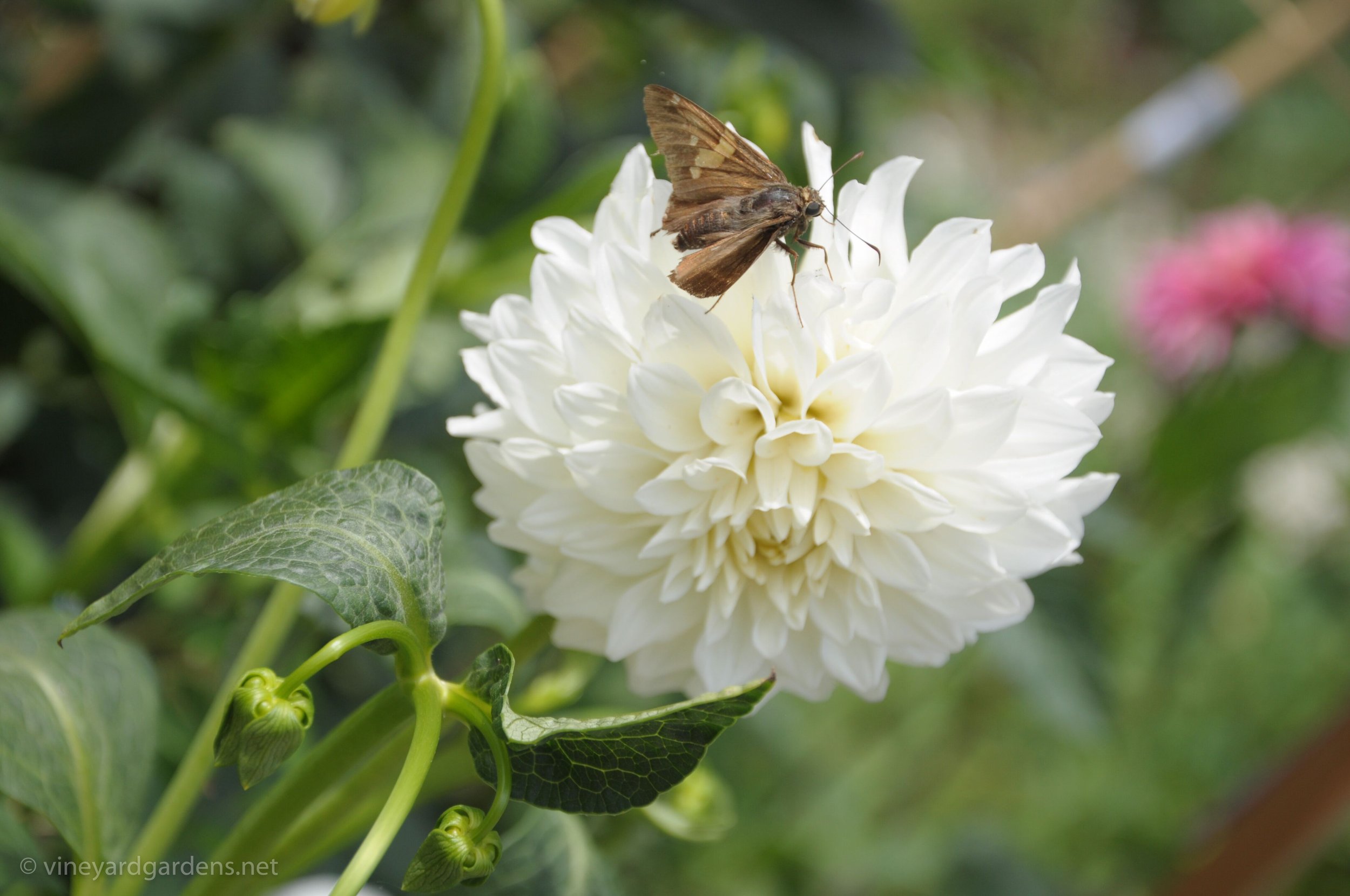
Dahlia
Dahlia
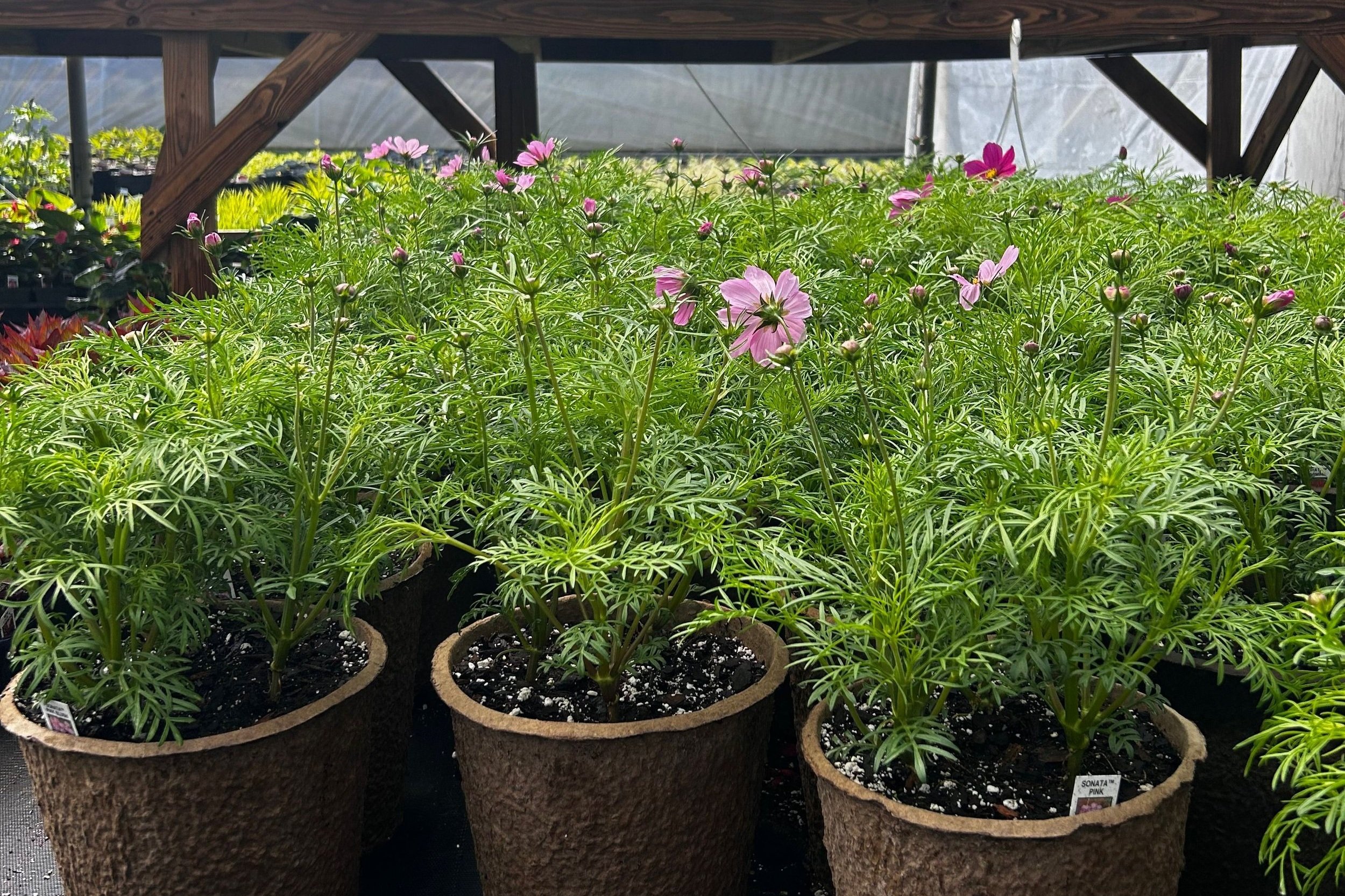
Cosmos Sonata Pink
Cosmos Sonata Pink
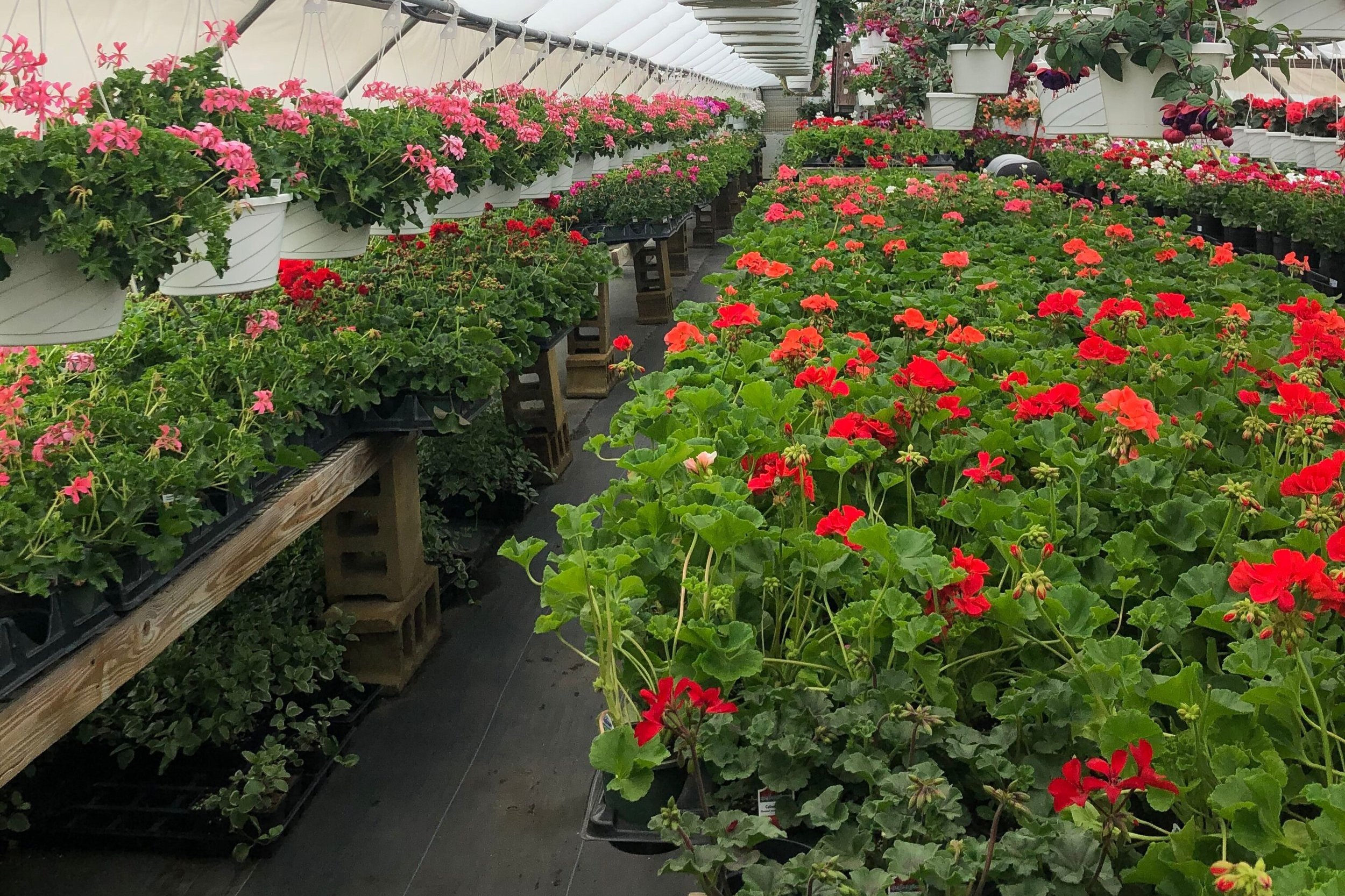
Geraniums
Geraniums
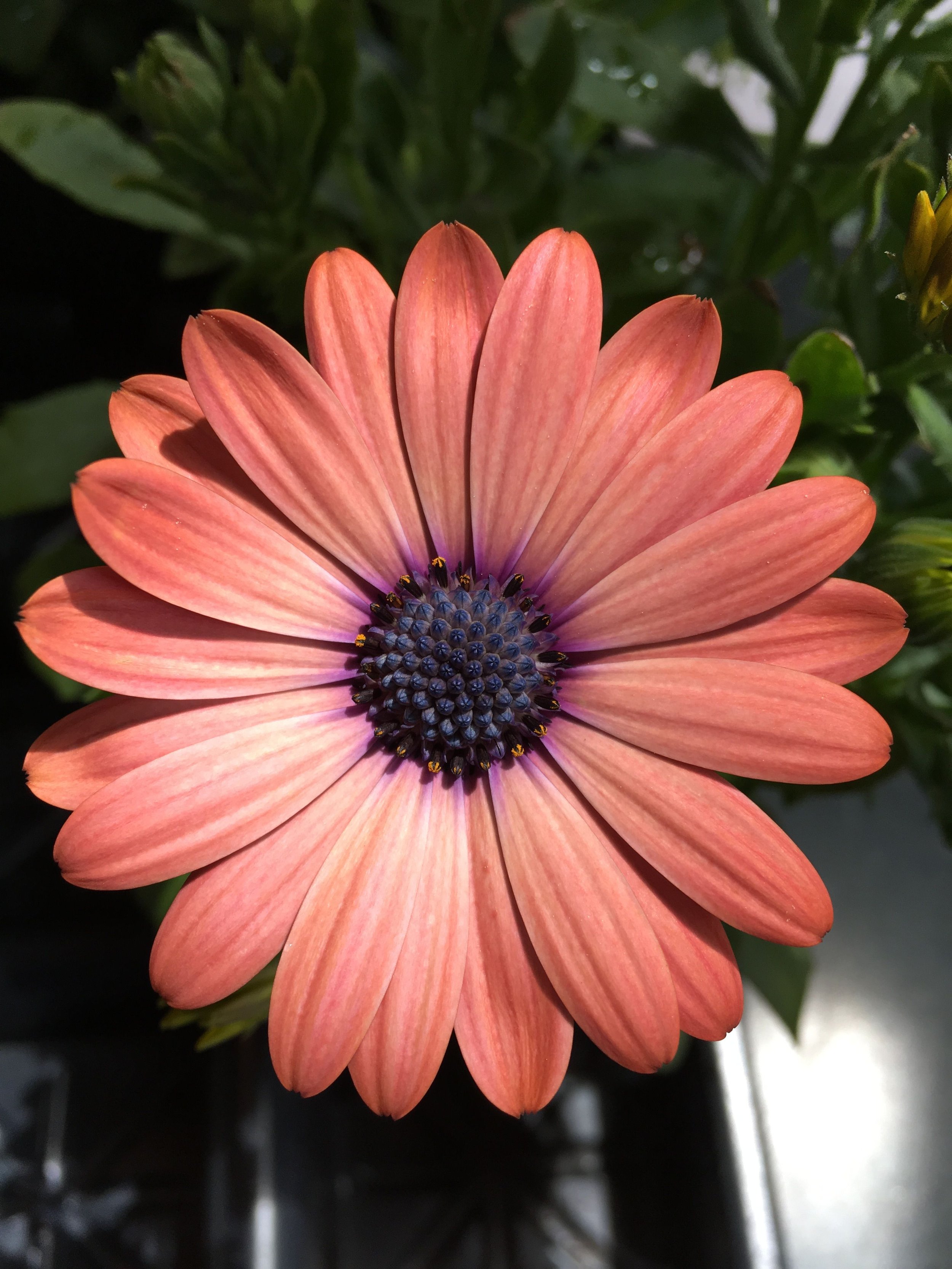
Osteospermum Serenity Bronze
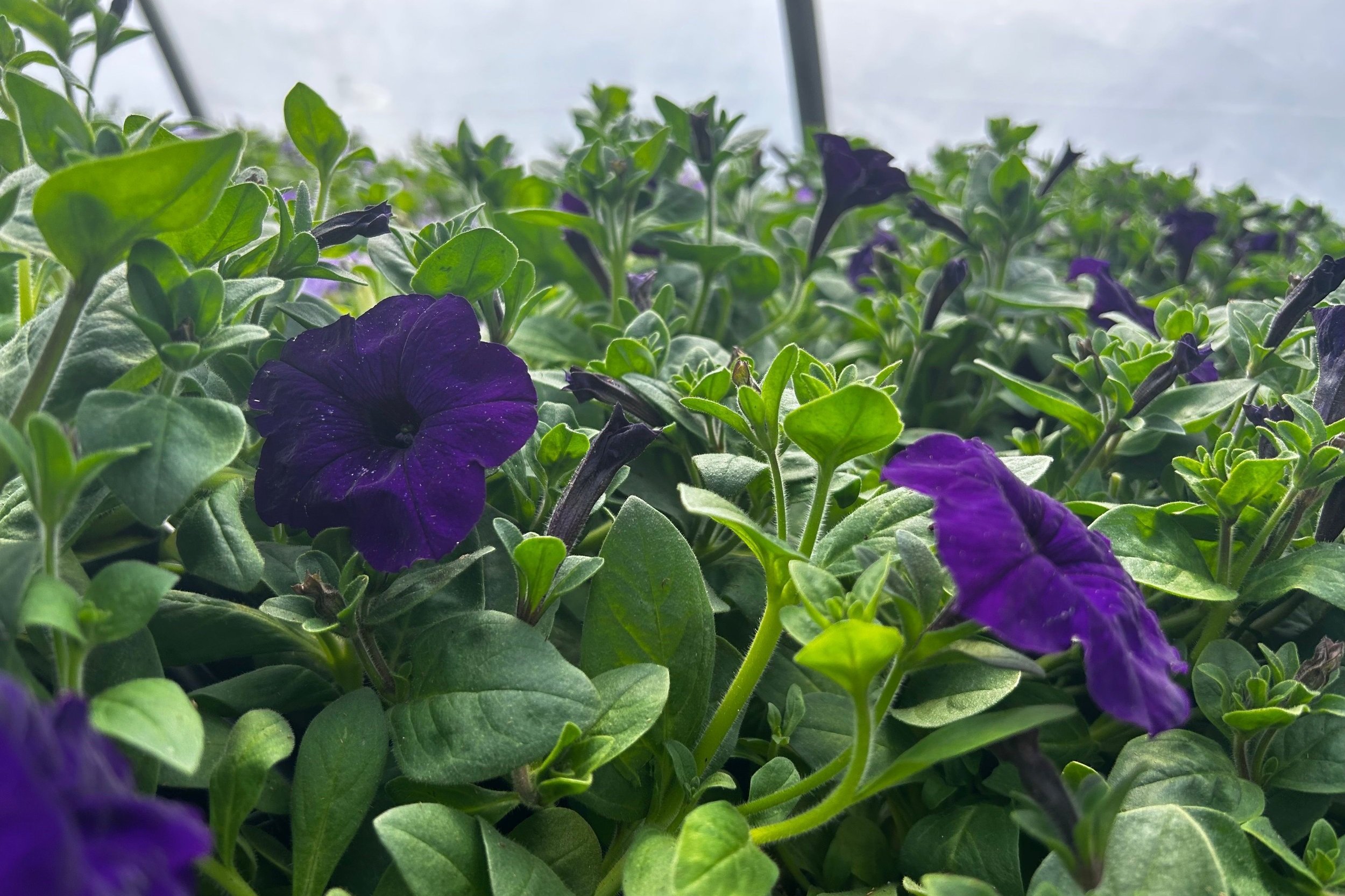
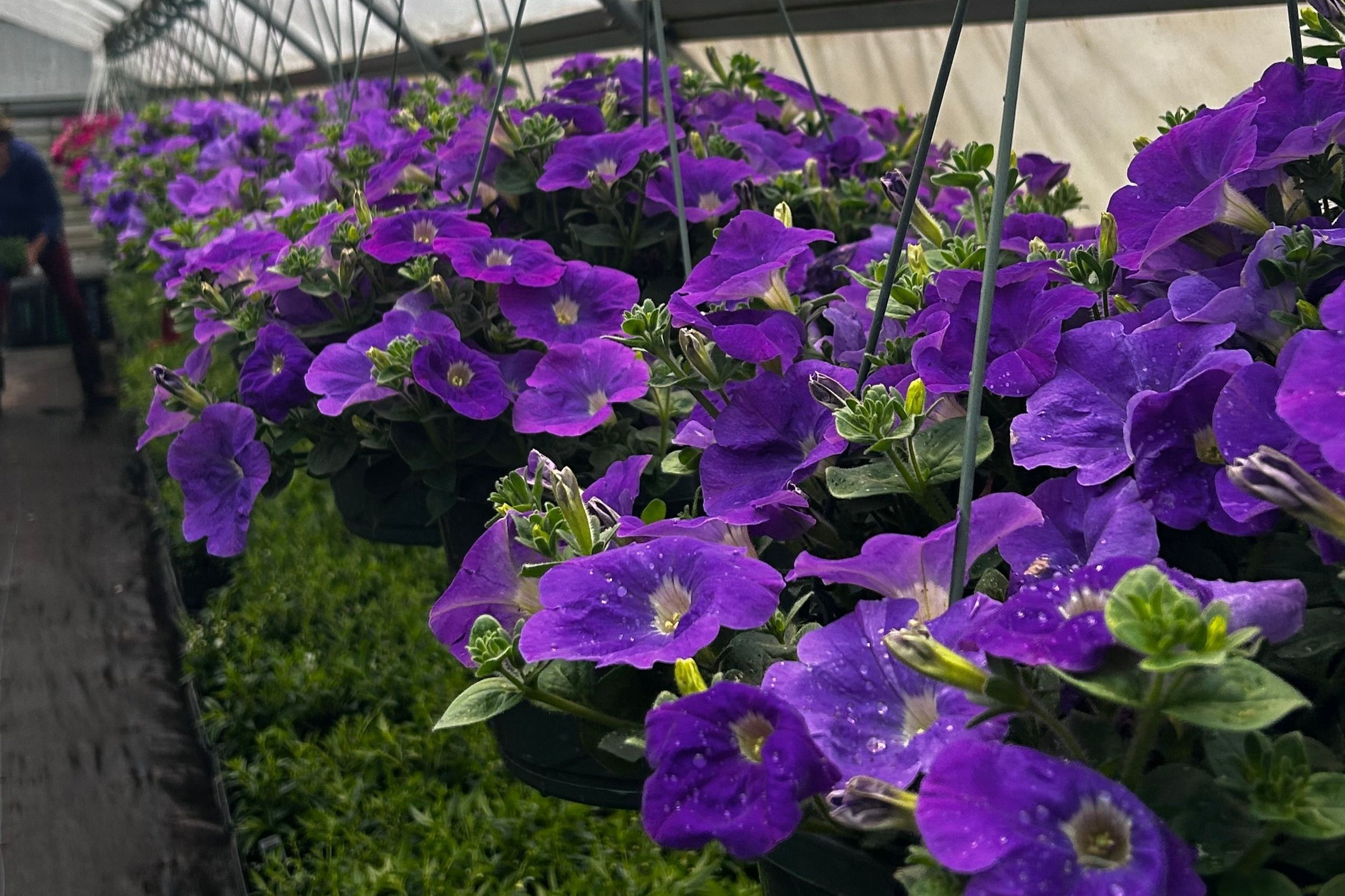
Petunia Easy Wave Blue
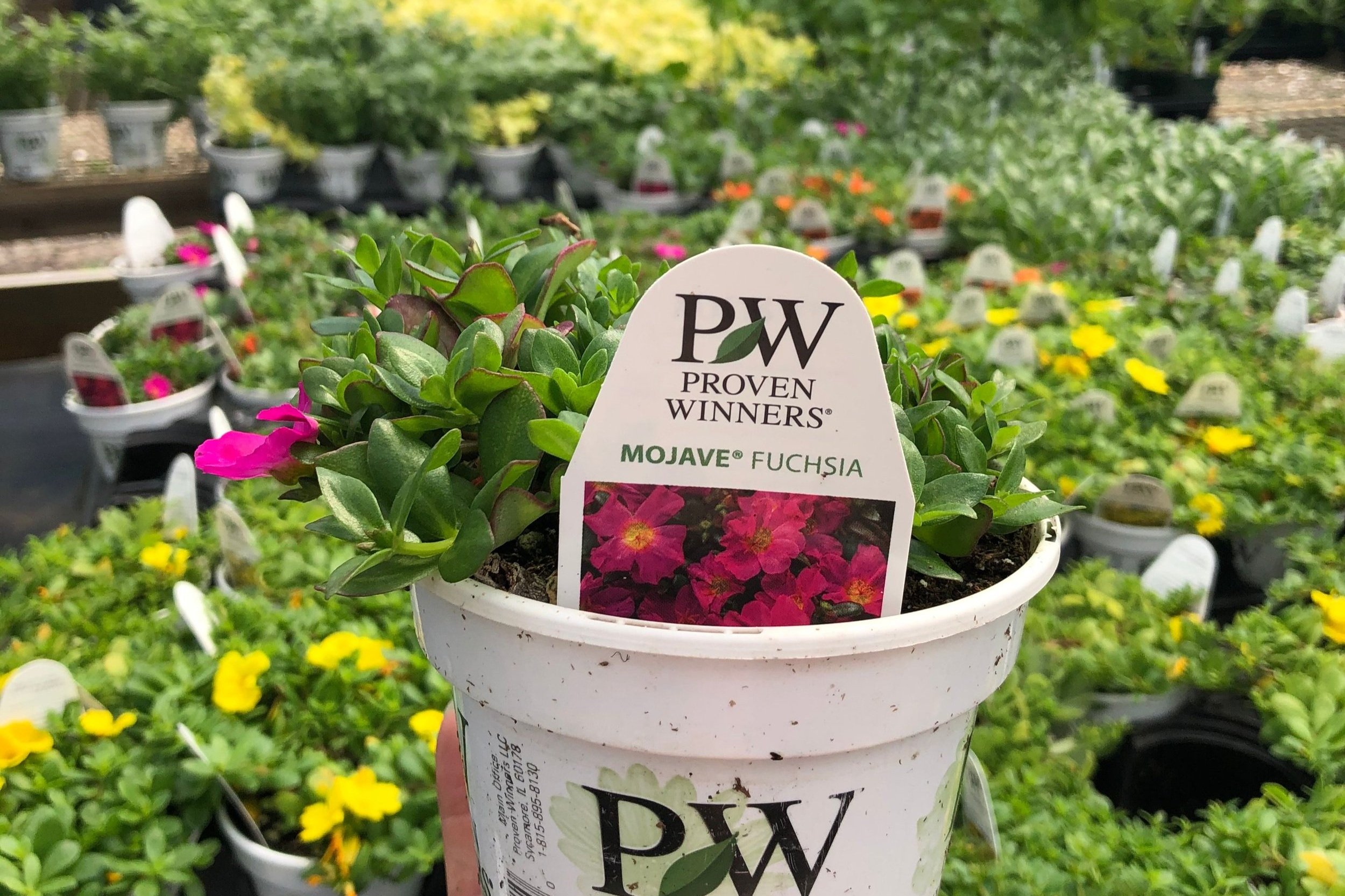
Portulaca Fuschia
Portulaca Fuschia
Portulaca Fuchsia
Portulaca Fuchsia
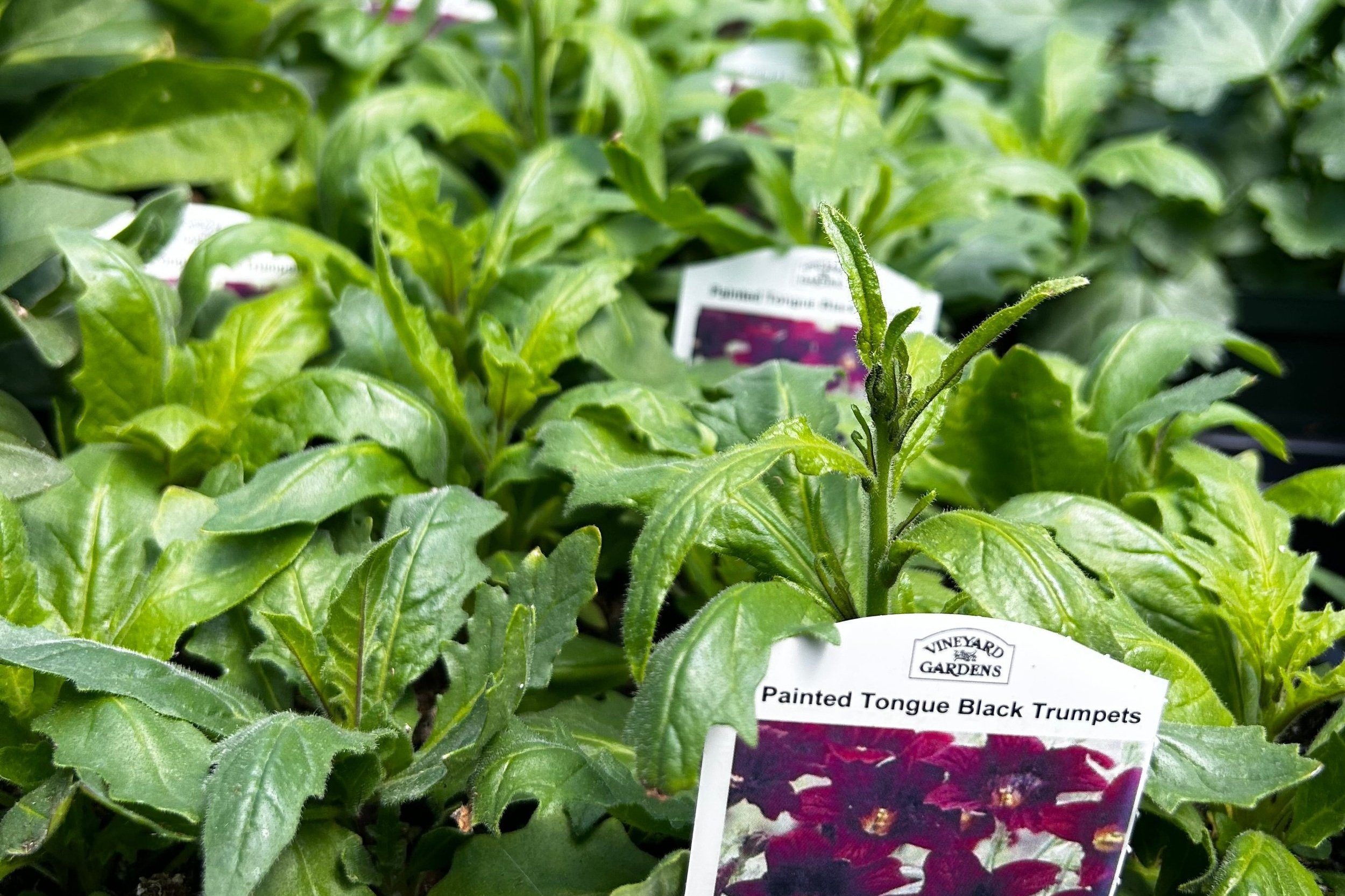
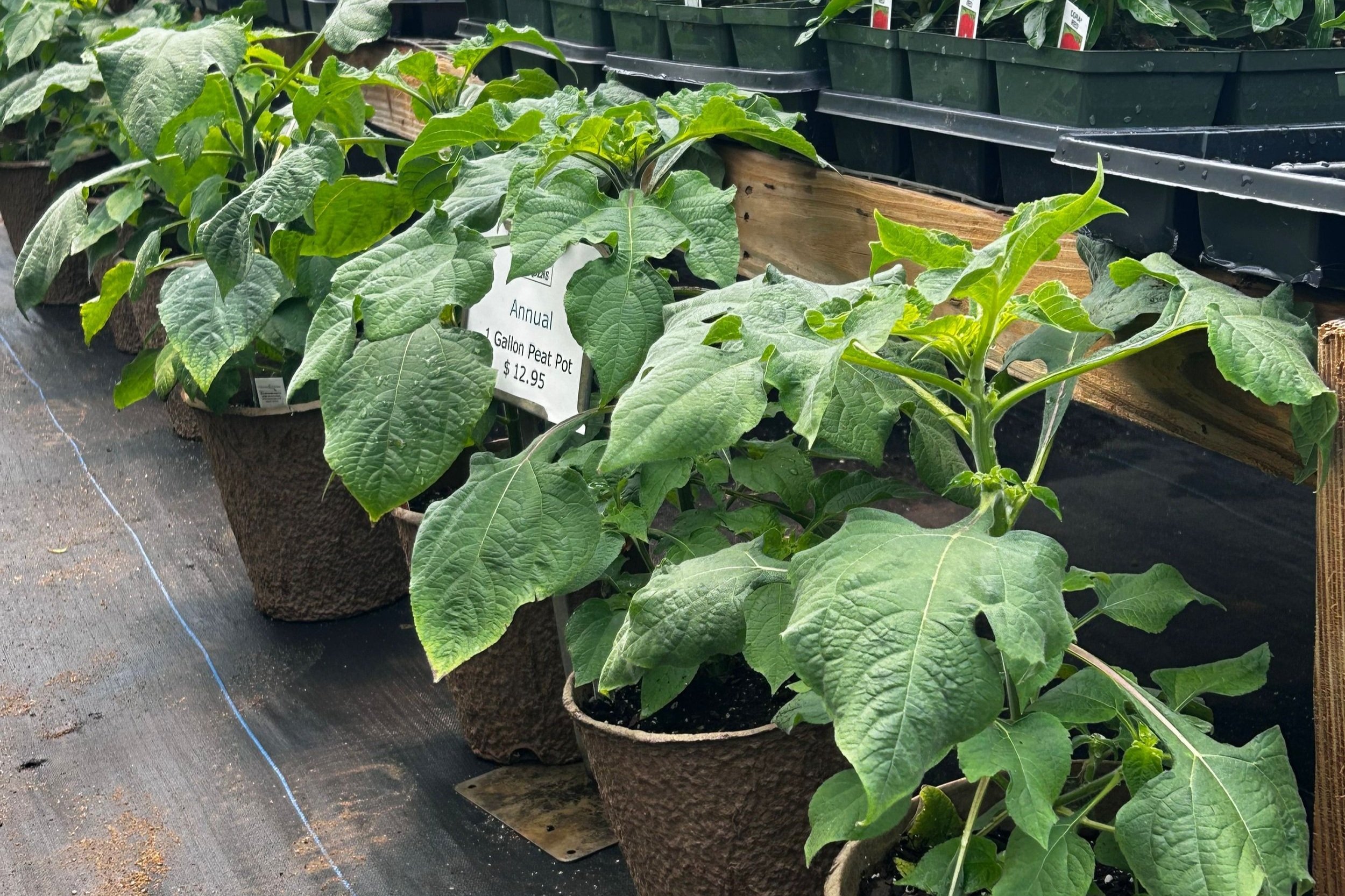
Salpiglossis
Salpiglossis
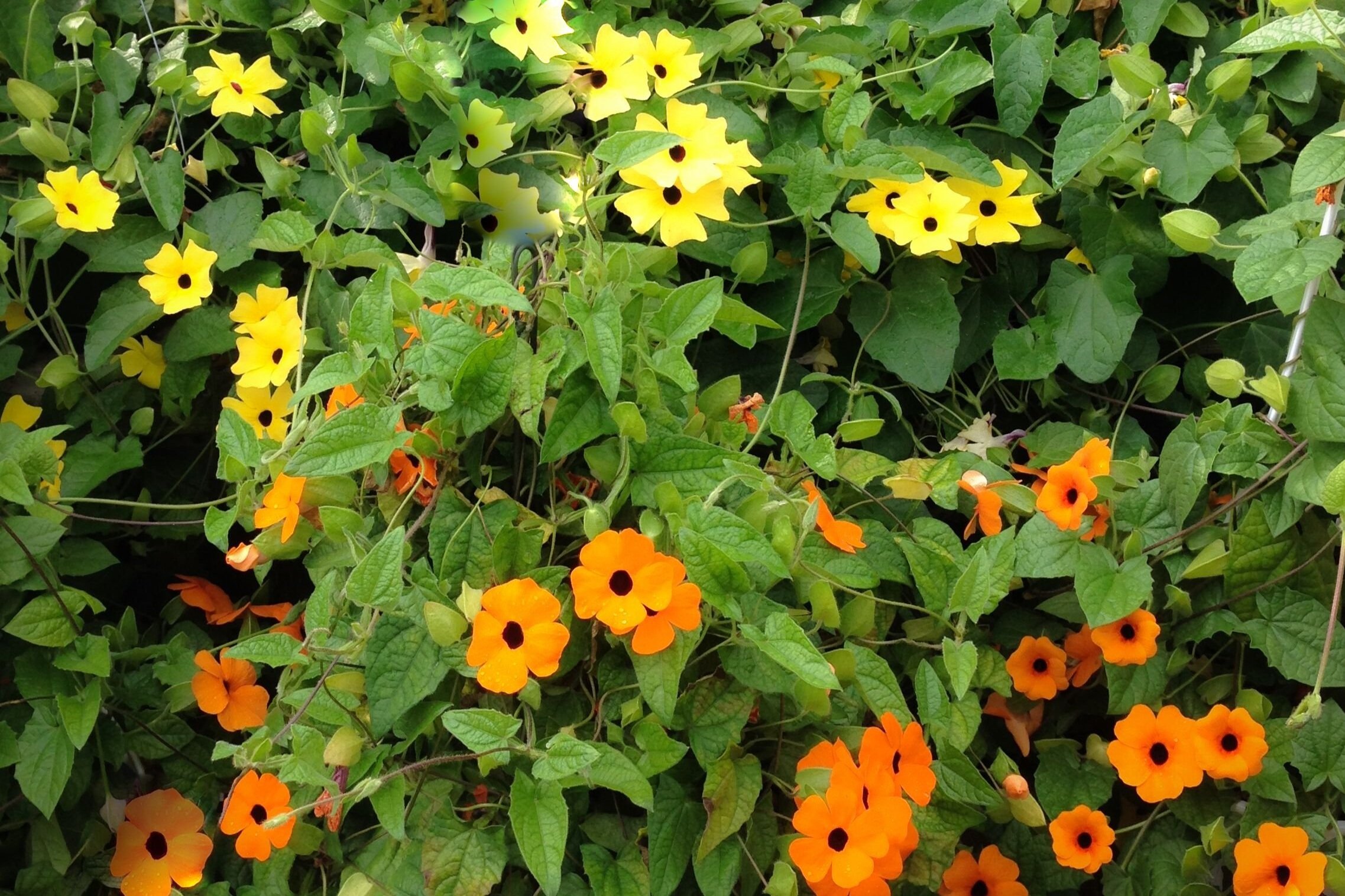
Thunbergias
Thunbergias
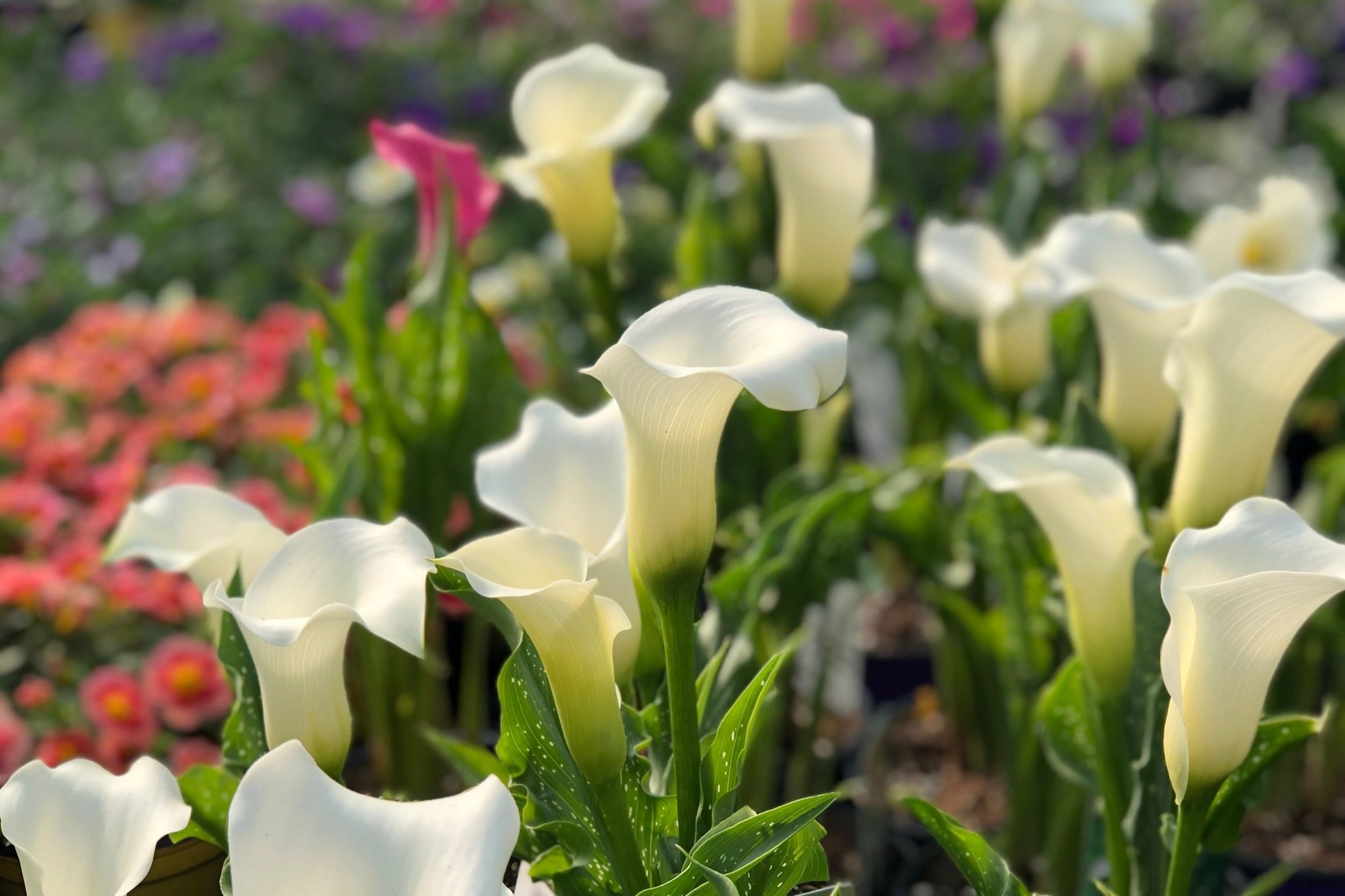
Calla Lily_Zantedeschia Snow Storm
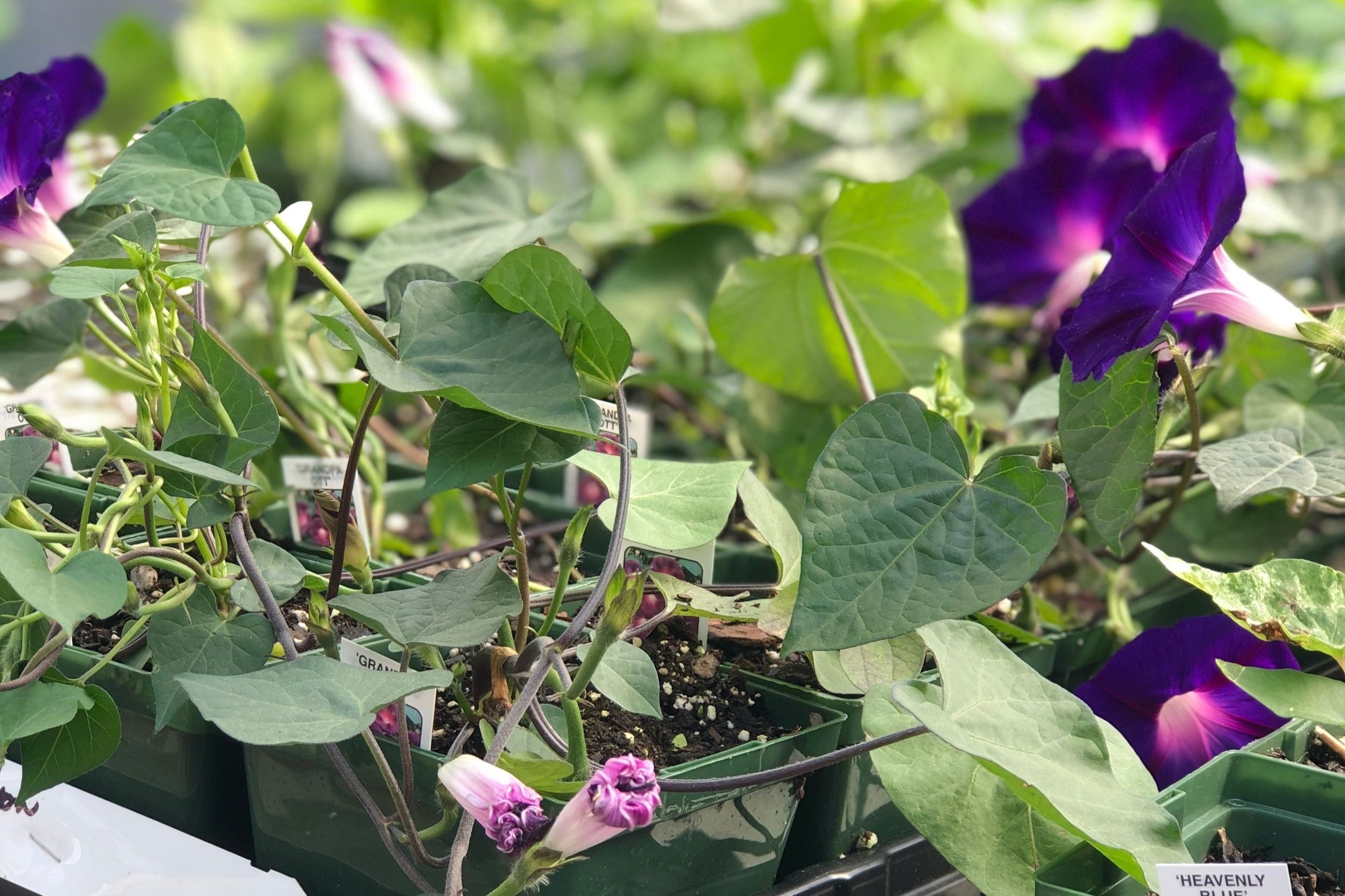
Ipomoea Heavenly Blue
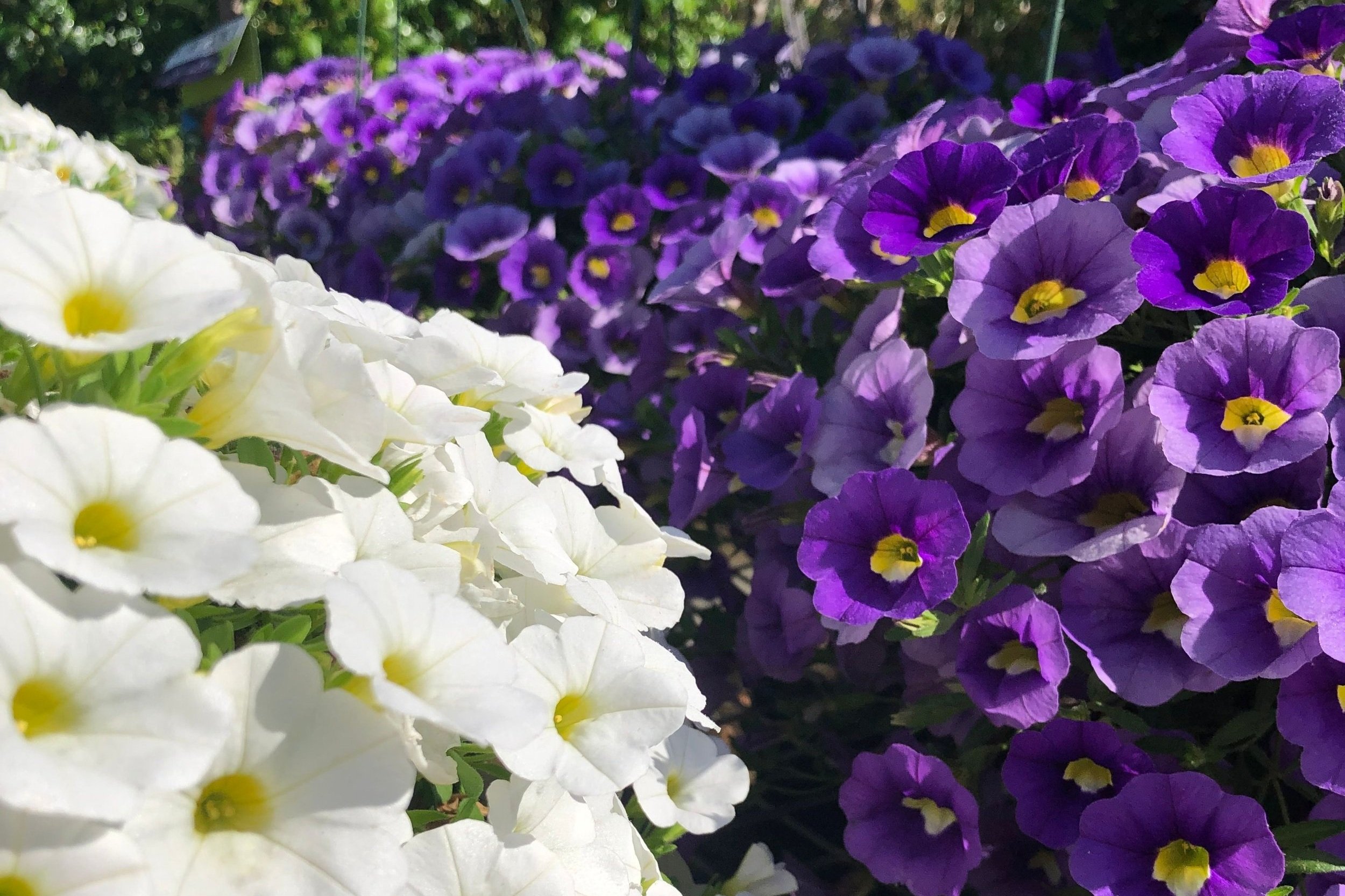
Calibrachoa_Million Bells
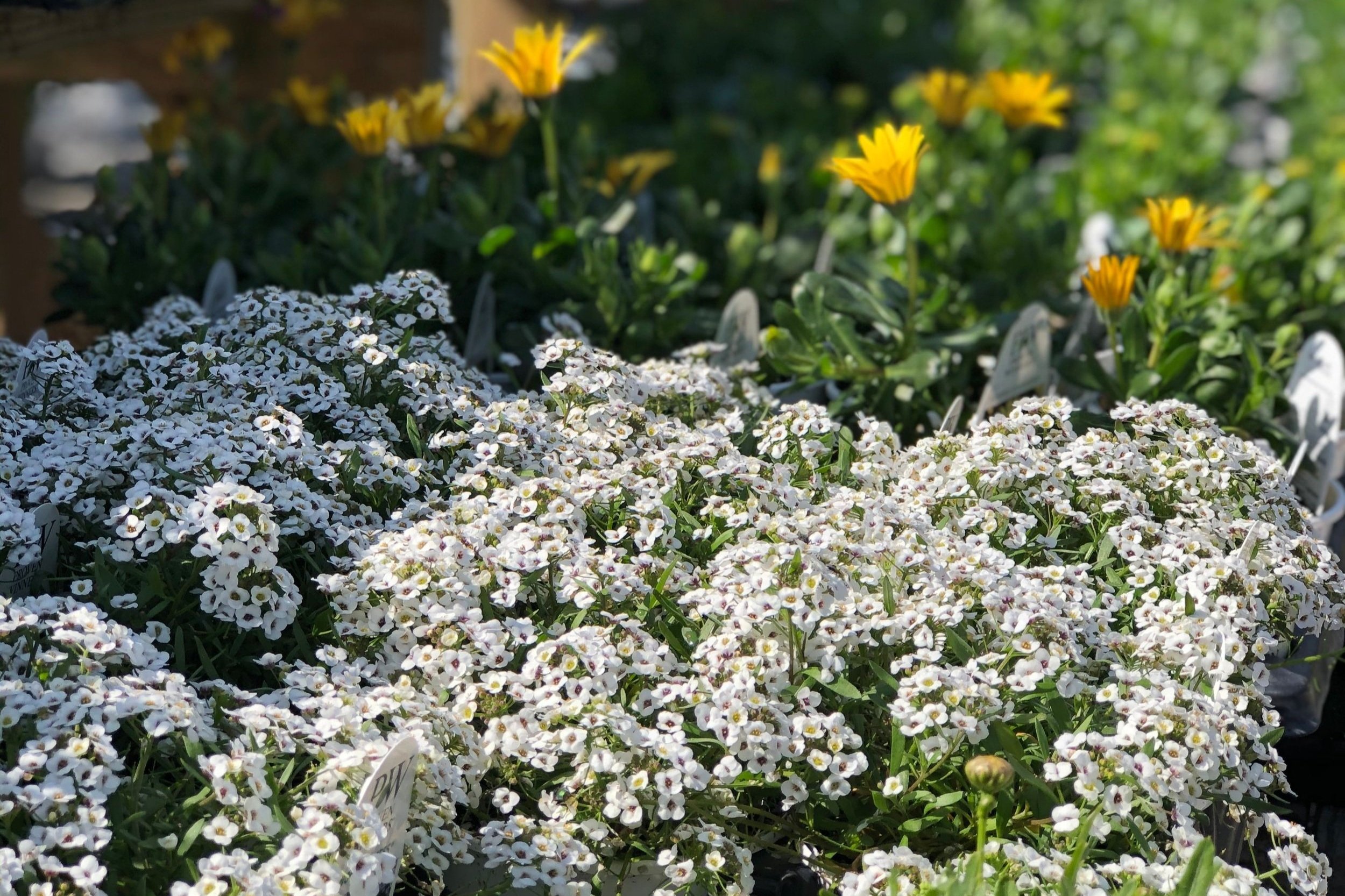
Sweet Alyssum
Sweet Alyssum
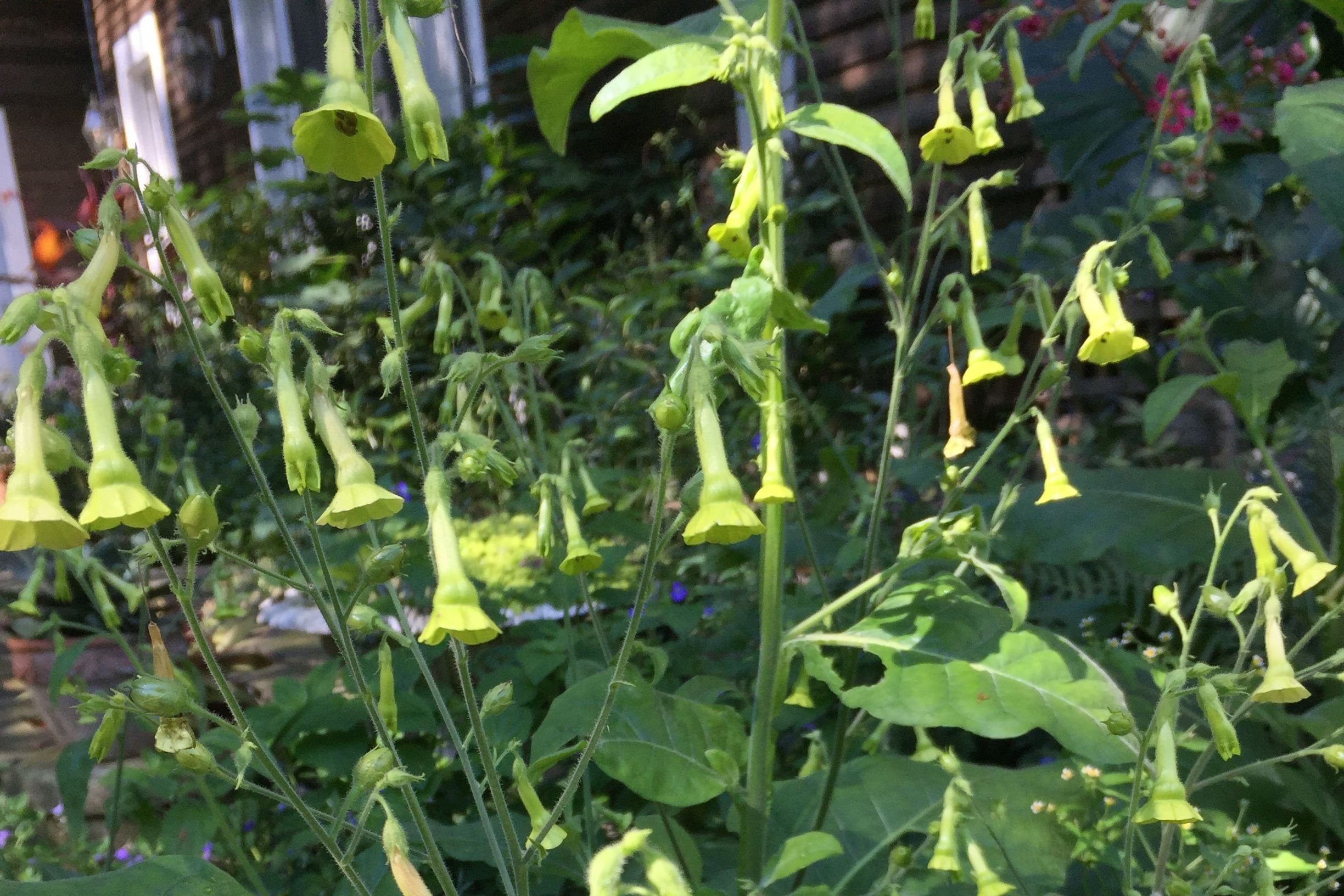
Nicotiana langsdorfii
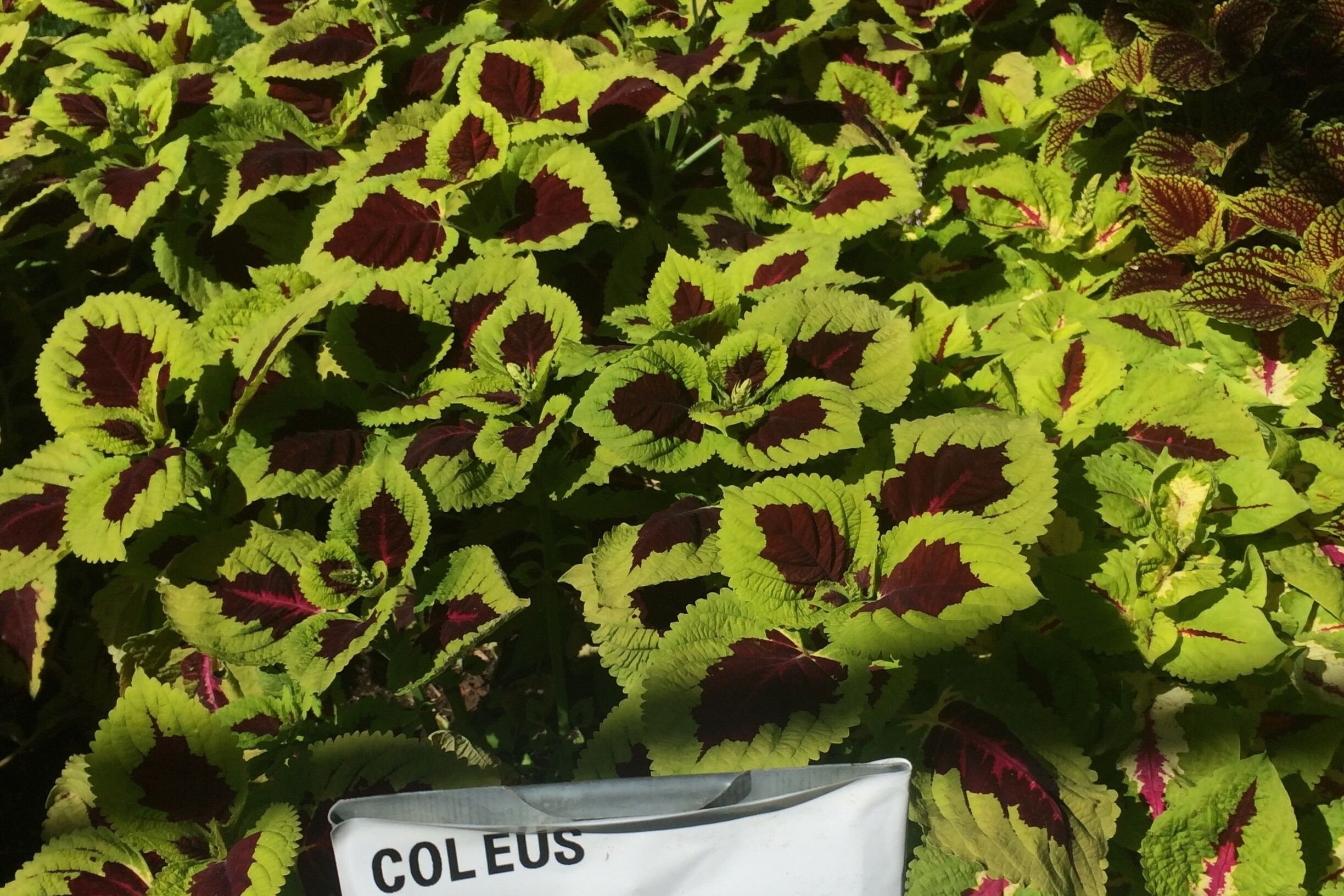
Coleus
Coleus
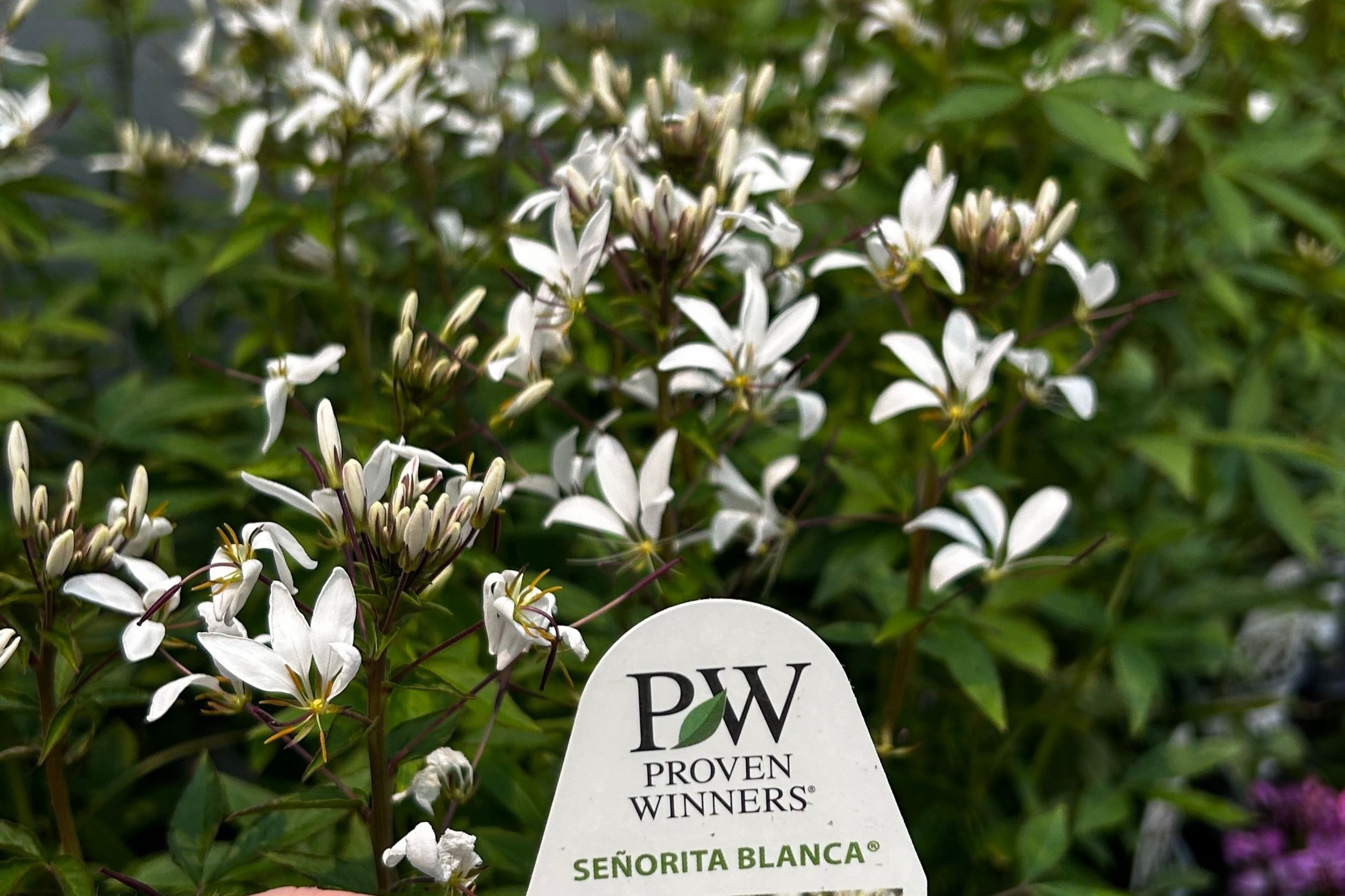
Cleome Senorita Blanca
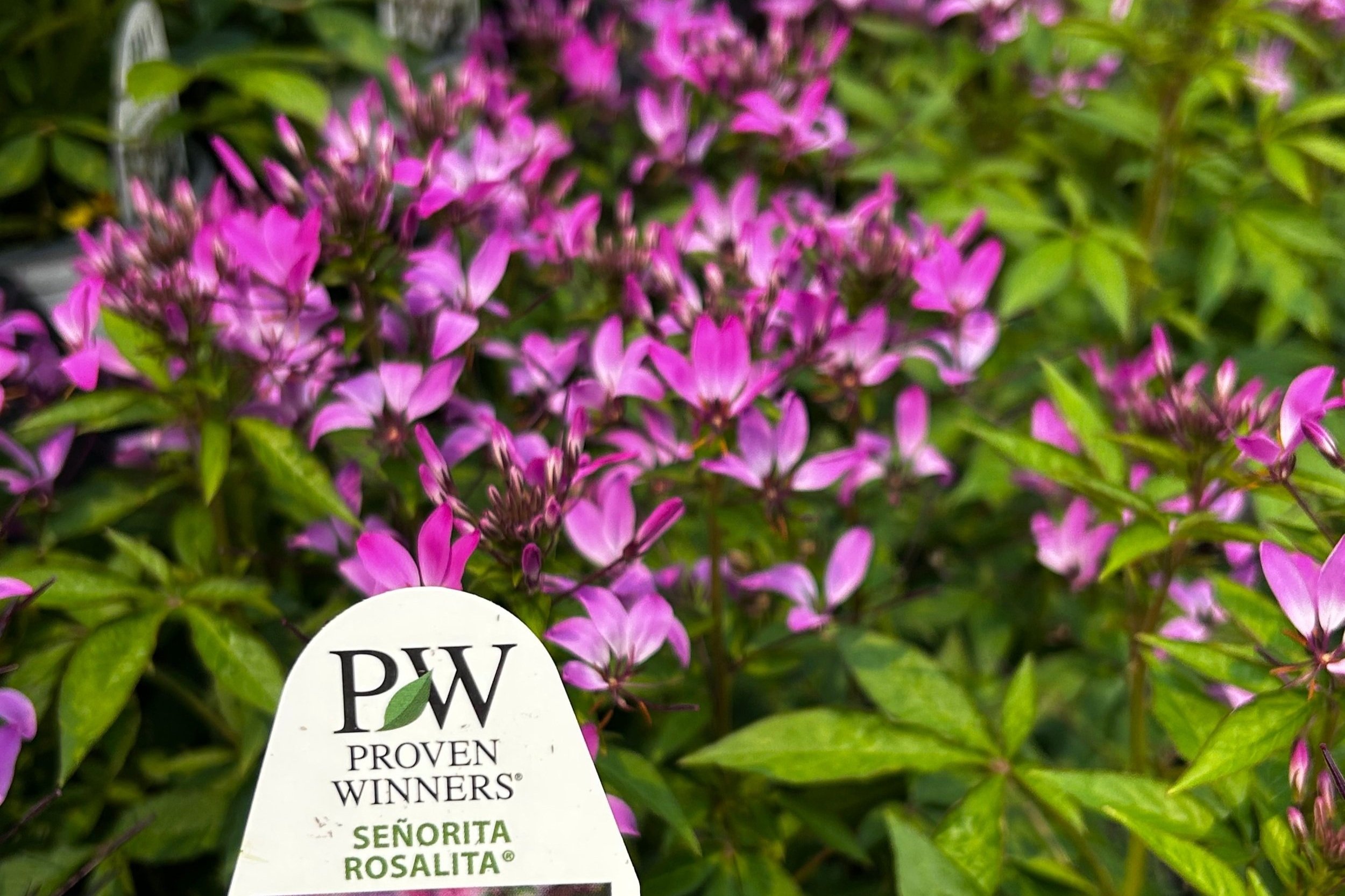
Cleome Senorita Rosalita
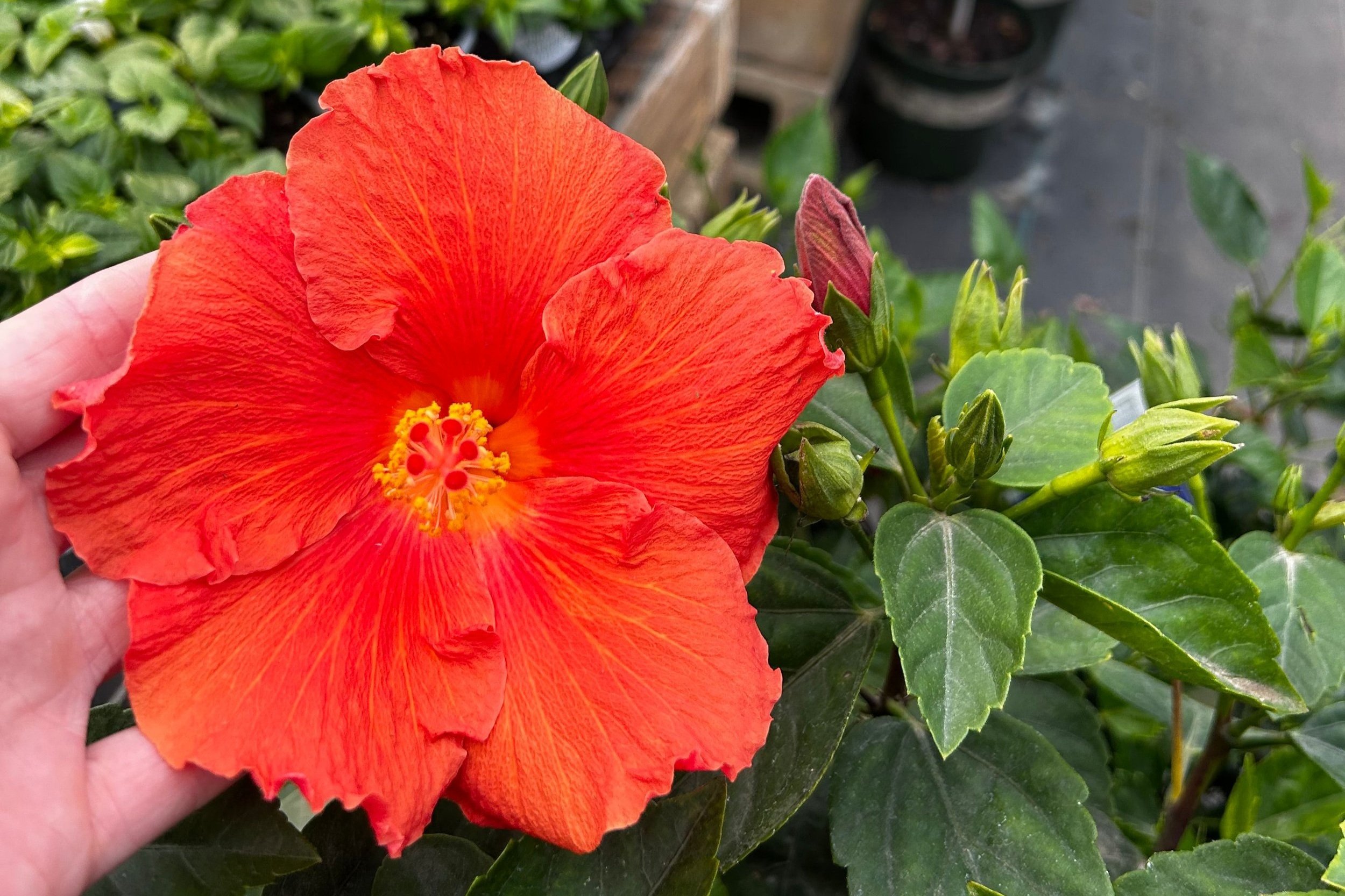
Hibiscus Tropical Jewel Amber
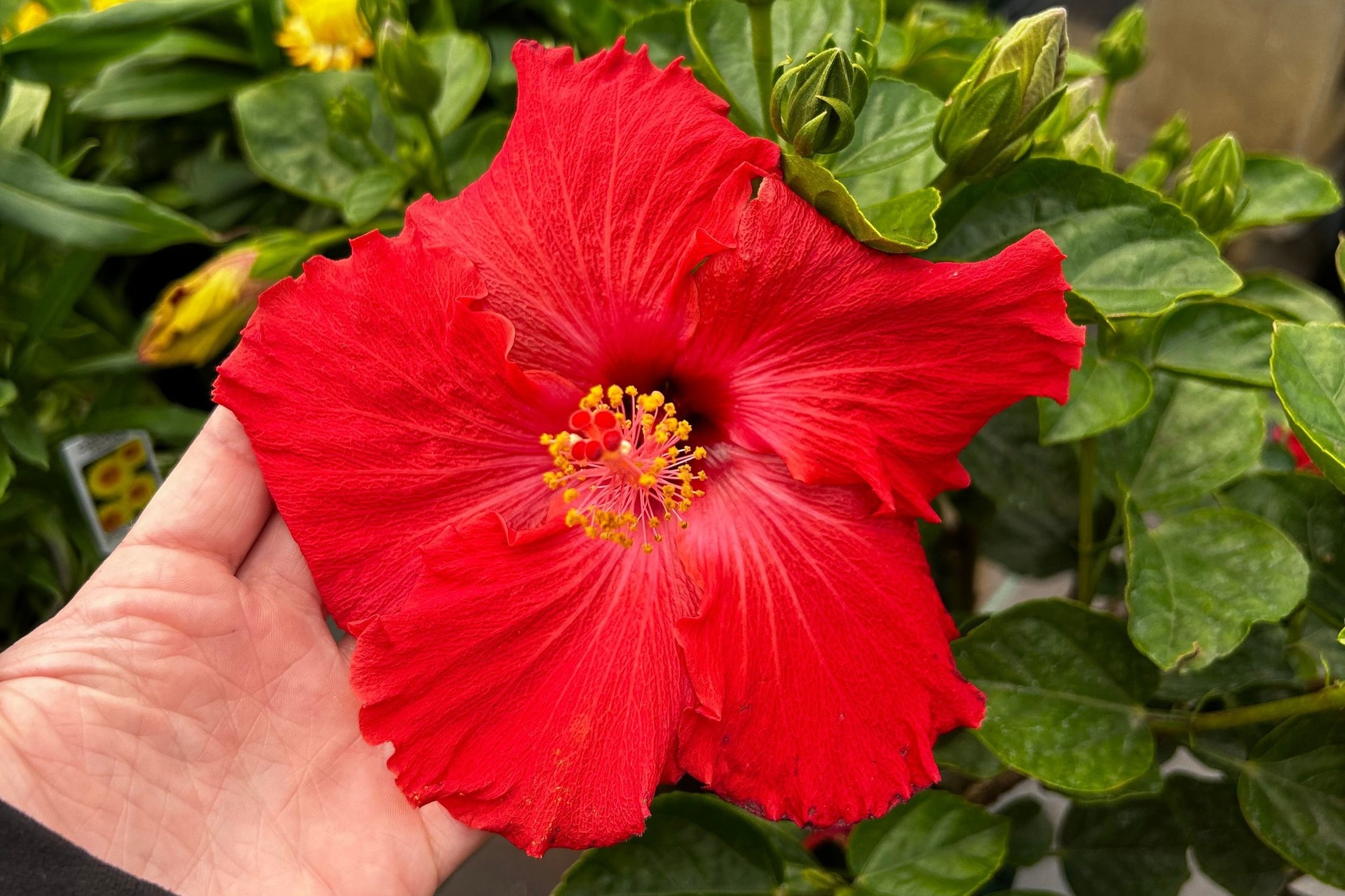
Hibiscus Tropical Jewel Ruby
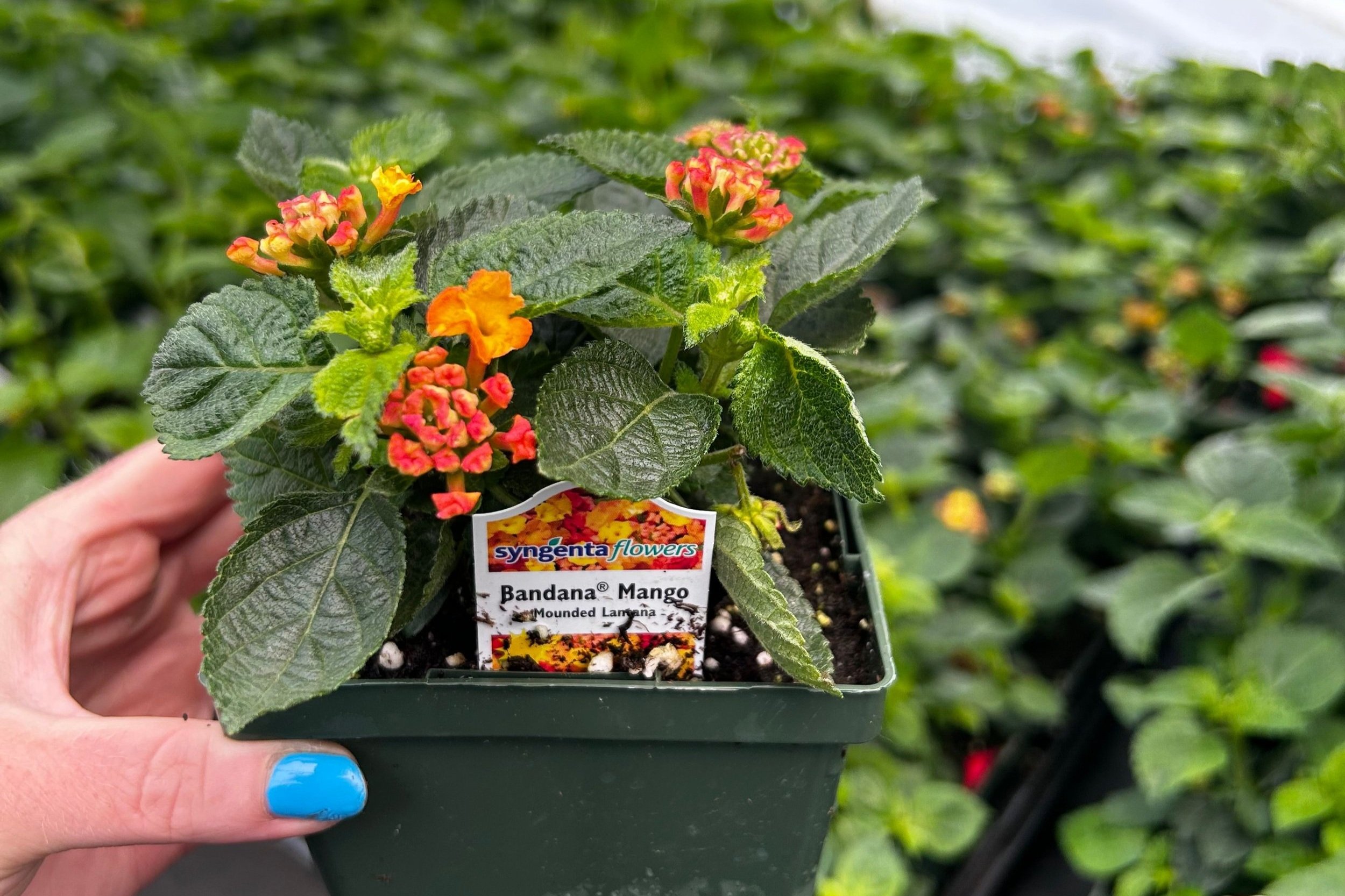
Lanatana Bandana Mango
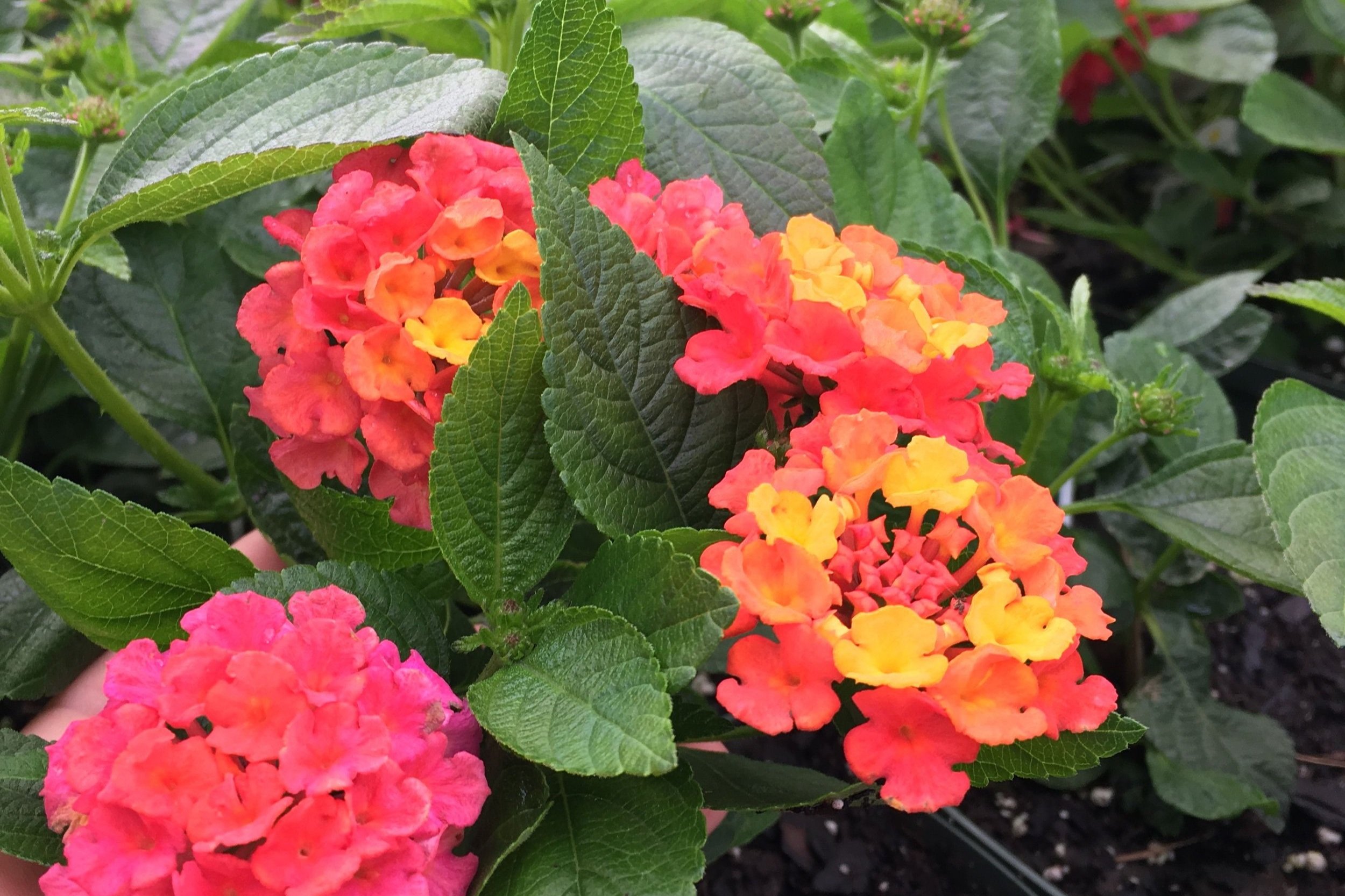
Lantana Sunrise Rose
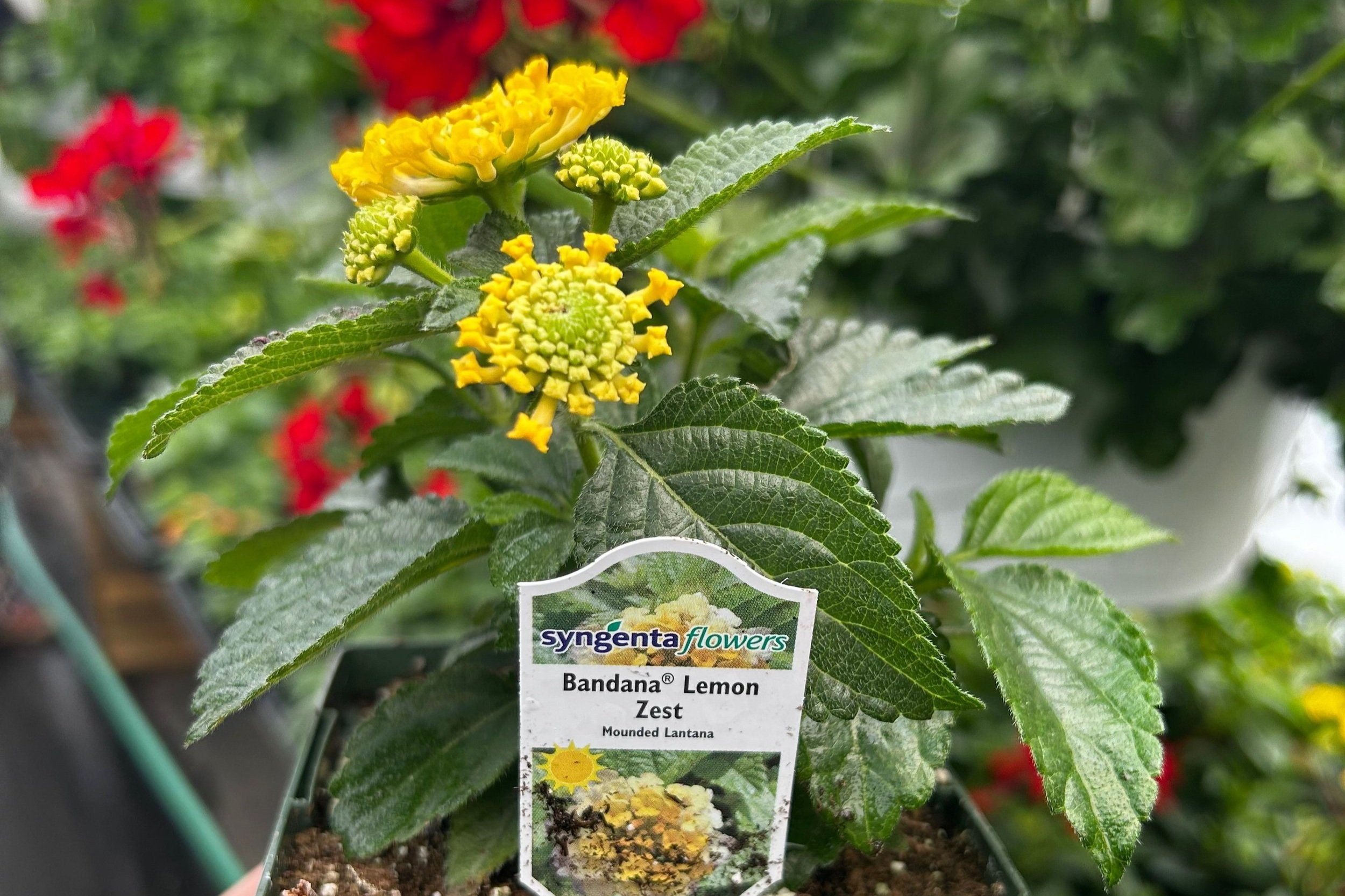
Lantana Bandana Lemon Zest
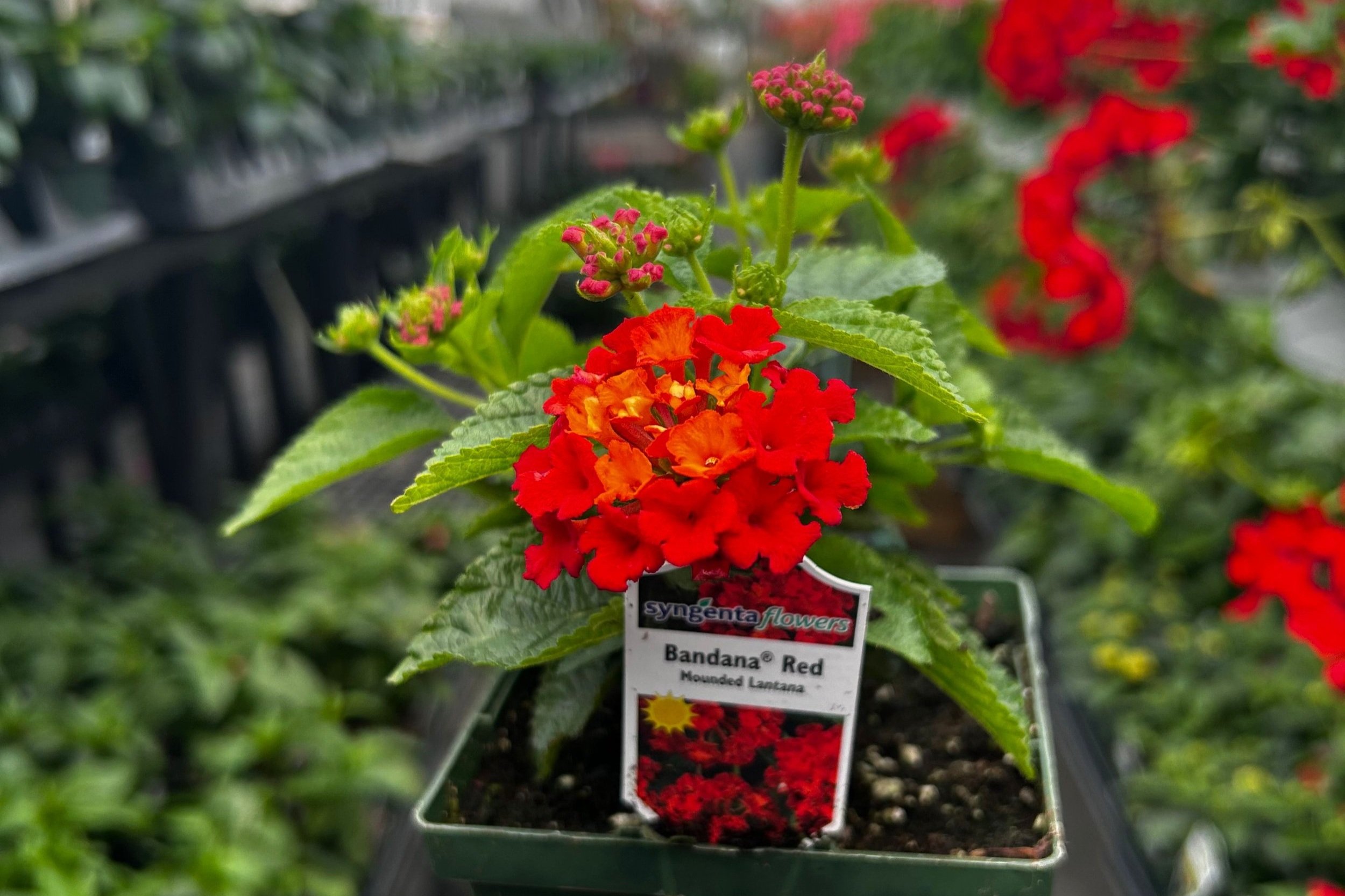
Lantana Bandera Red
Lantana Bandera Red
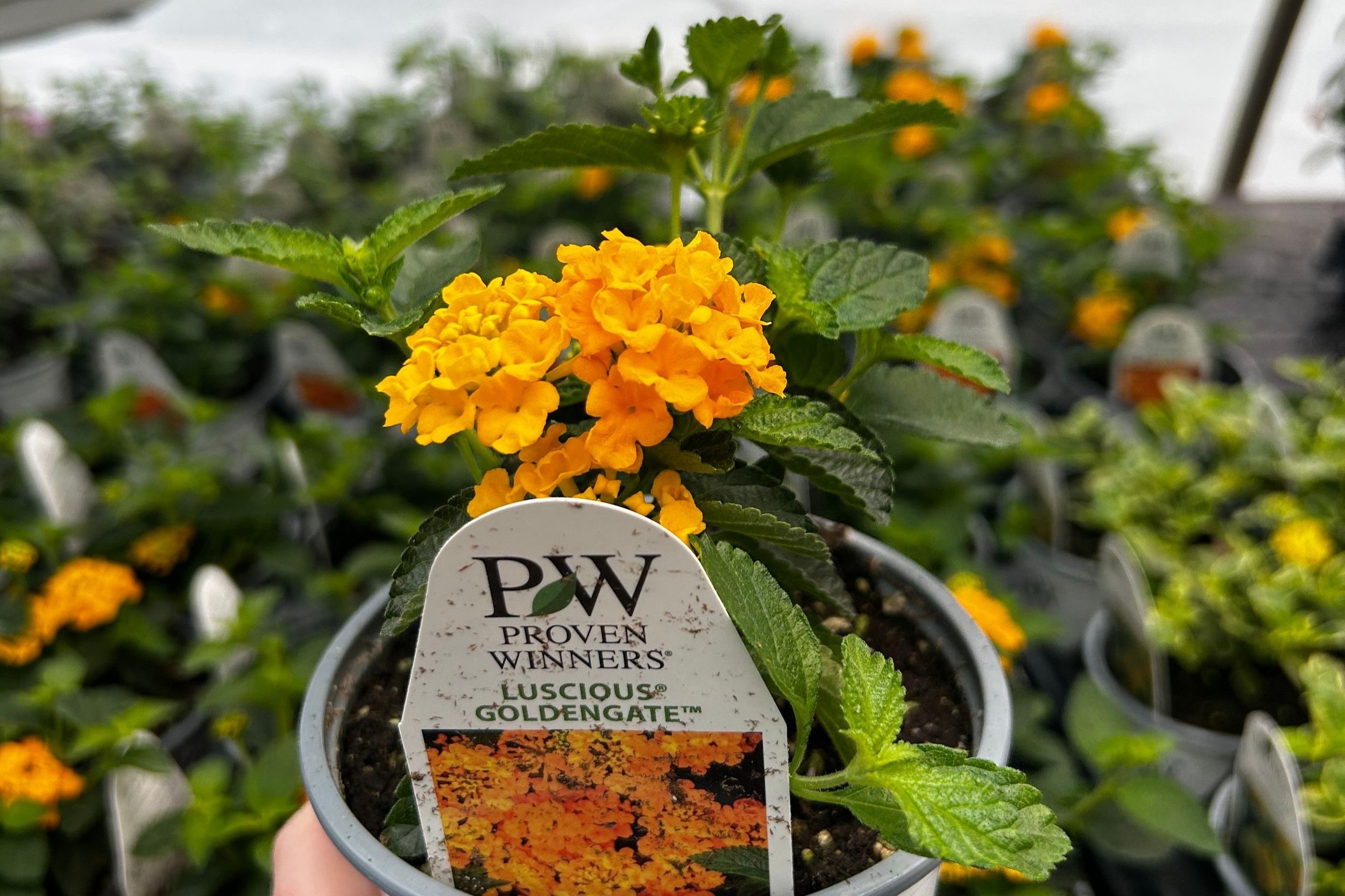
Lantana Lucsious Golden Gate
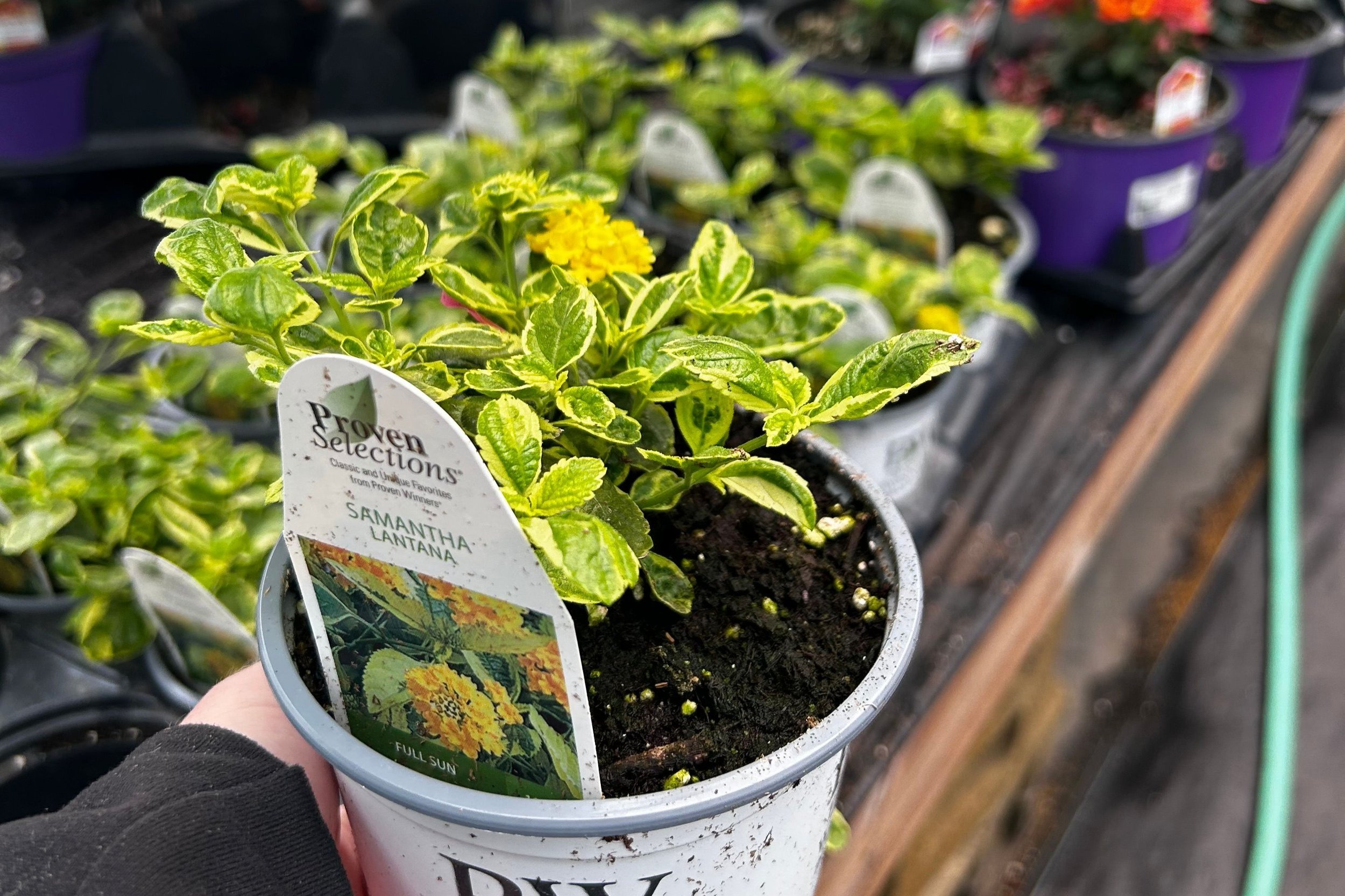
Lantana Samantha
Lantana Samantha
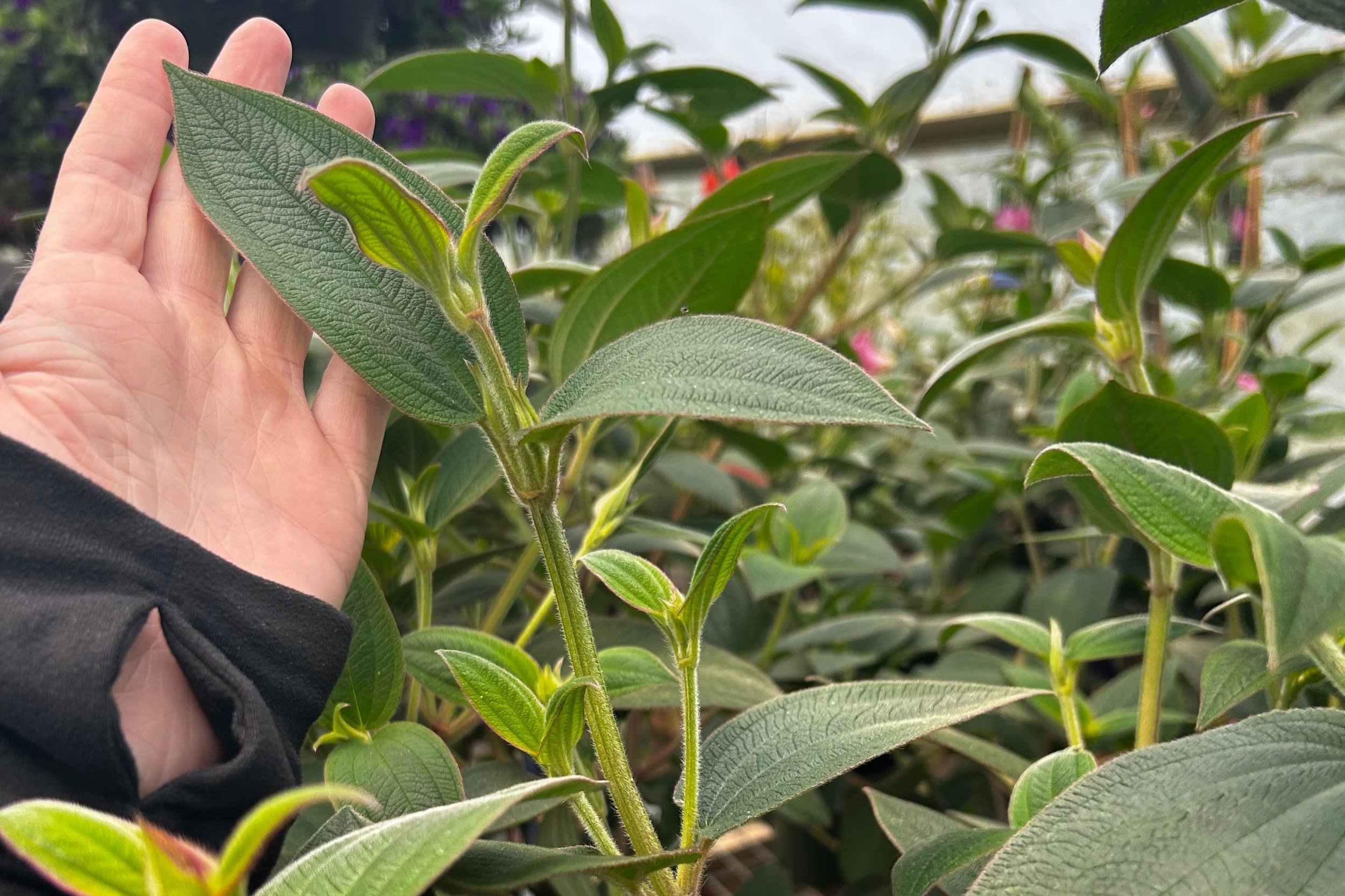
Tibouchina urvilleana
Tithonia
Tithonia
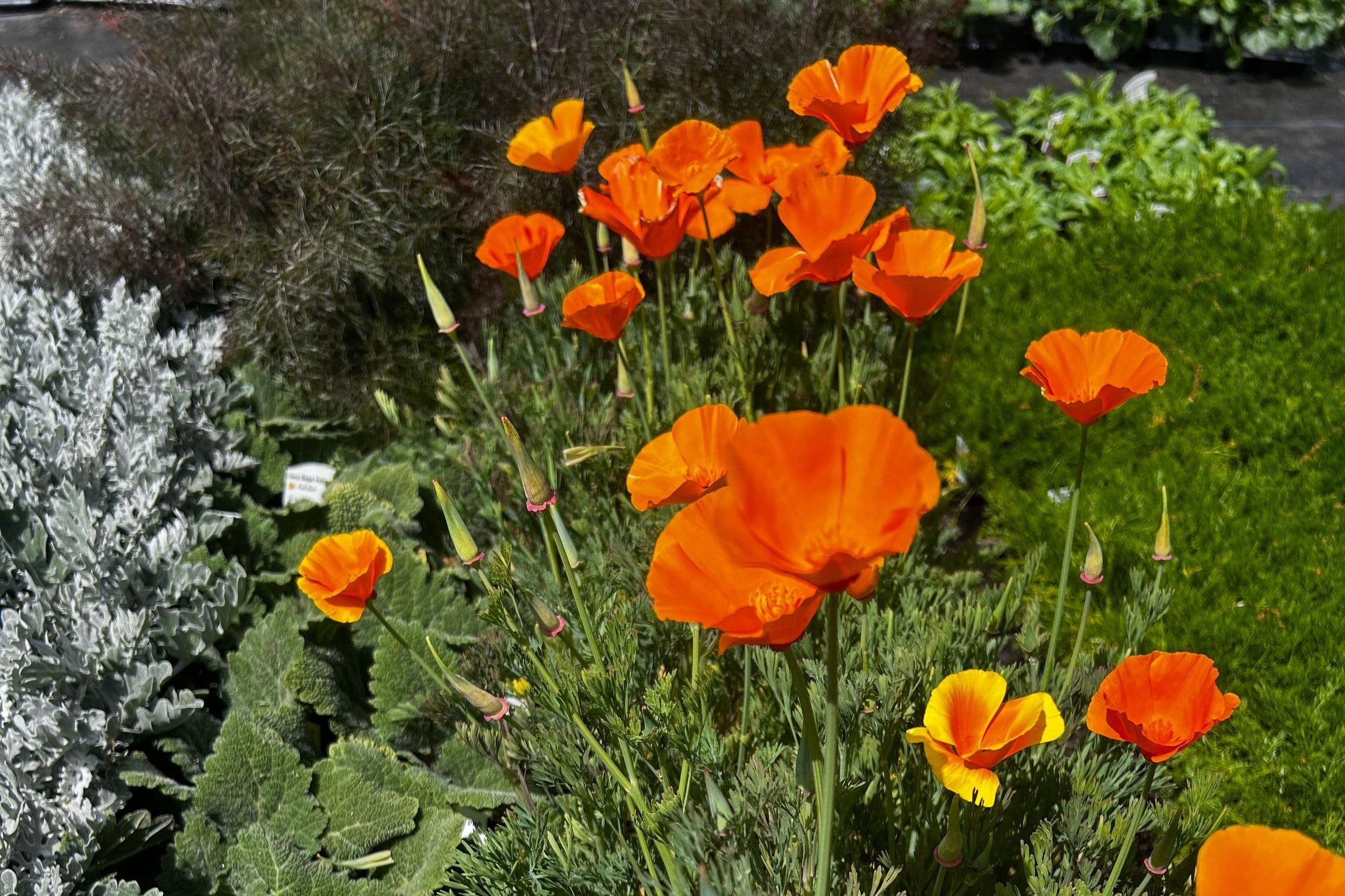
Eschscholtzia Californica Orange Poppy
Nasturtiums Salvia Amistad / Salvia Hummingbird / Verbena Vanessa Purple / Nemesia Bluebird / Petunia Vista White / Hippo White Polka Dot / Dichondra / Euphorbia Frost Dahlia Cosmos Sonata Pink Geraniums Osteospermum Serenity Bronze Petunia Easy Wave Blue Portulaca Fuschia Portulaca Fuchsia Salpiglossis Thunbergias Calla Lily_Zantedeschia Snow Storm Ipomoea Heavenly Blue Calibrachoa_Million Bells Sweet Alyssum Nicotiana langsdorfii Coleus Cleome Senorita Blanca Cleome Senorita Rosalita Hibiscus Tropical Jewel Amber Hibiscus Tropical Jewel Ruby Lanatana Bandana Mango Lantana Sunrise Rose Lantana Bandana Lemon Zest Lantana Bandera Red Lantana Lucsious Golden Gate Lantana Samantha Tibouchina urvilleana Tithonia Eschscholtzia Californica Orange Poppy

****************

Integrating Annuals into Your Garden Design

Annuals are the secret weapon for creating a dynamic, cohesive landscape. Whether you are tucking them into perennial borders, designing container displays, or hanging lush baskets, they offer an unbeatable, season-long consistency of color that anchors your overall garden design.

When you allow annuals to reseed naturally, they act as a beautiful visual thread that ties the entire garden together. Because they sprout in a delightful, random fashion, weaving seamlessly between and within your established perennials—they create an effortless, cottage-style aesthetic with no apparent pattern.

Unlike perennials, which shouldn't be overcrowded if they are to thrive, annuals are excellent for filling the gaps between your permanent plantings. The golden rule? Learn to identify the young seedlings as they emerge in early spring so you don’t accidentally pull them out thinking they are weeds!

We Grow an Assortment of Annuals!

______________

* Fillers in perennial

beds.

* Use in hanging baskets

* Use in container

plantings

* Many annuals make

great cut flowers.

*************

Hanging Baskets

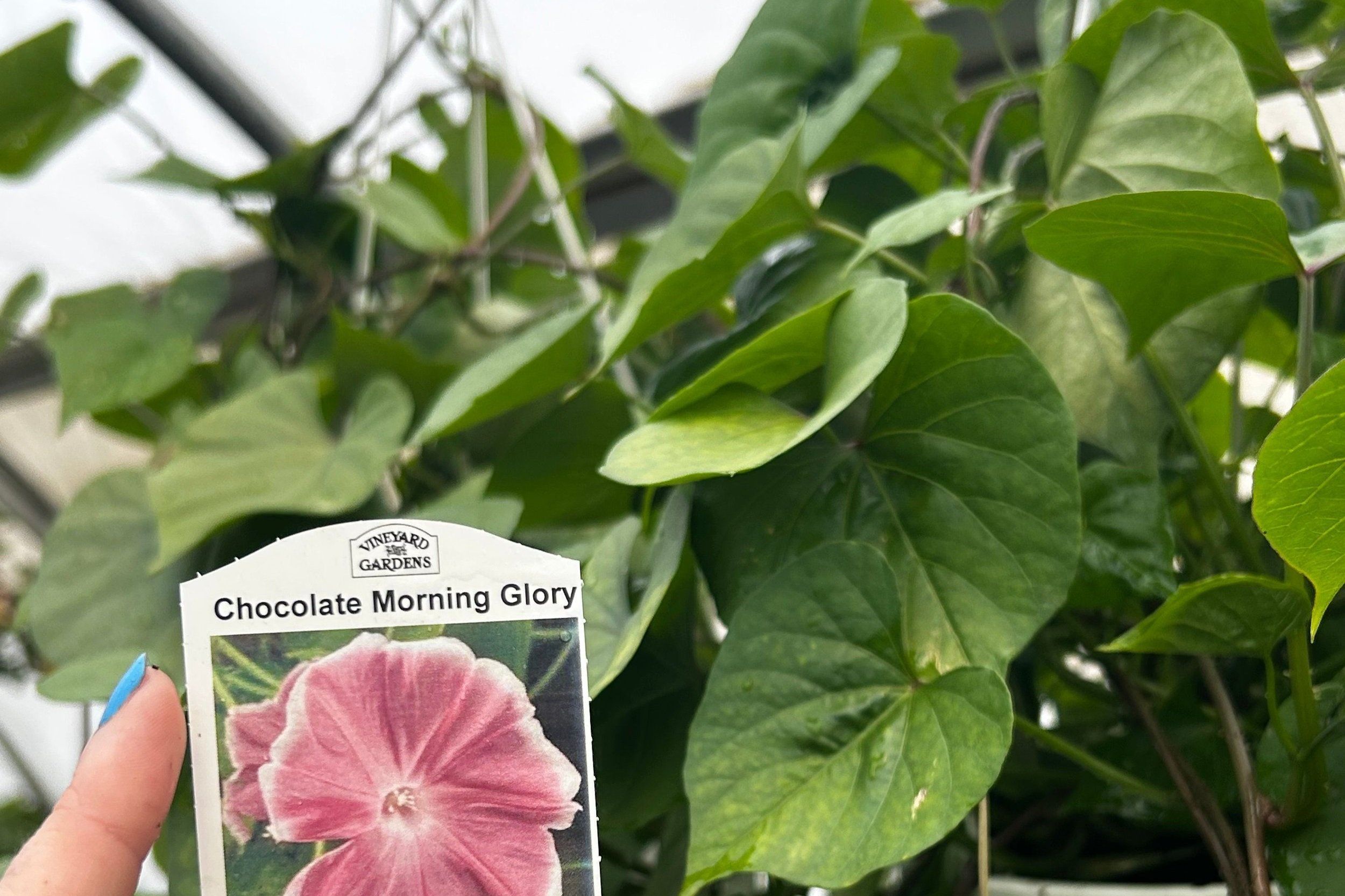
MORNING GLORIES

Heavenly Blue

Chocolate 

*****

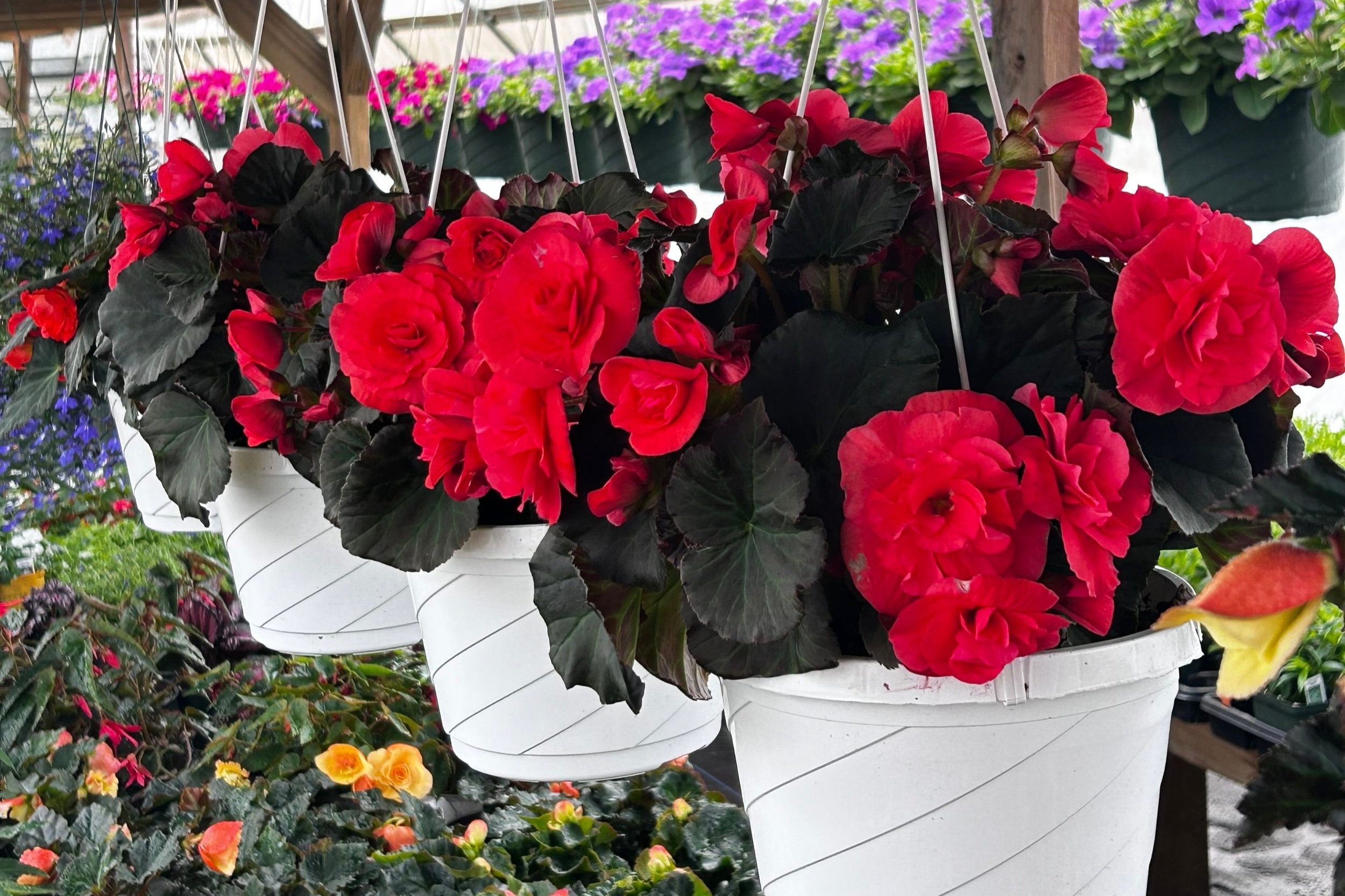
BEGONIAS

Solenia Dark Pink

Bossa Nova Orange

Encanto Pink

Miss Miami

*****

PETUNIAS

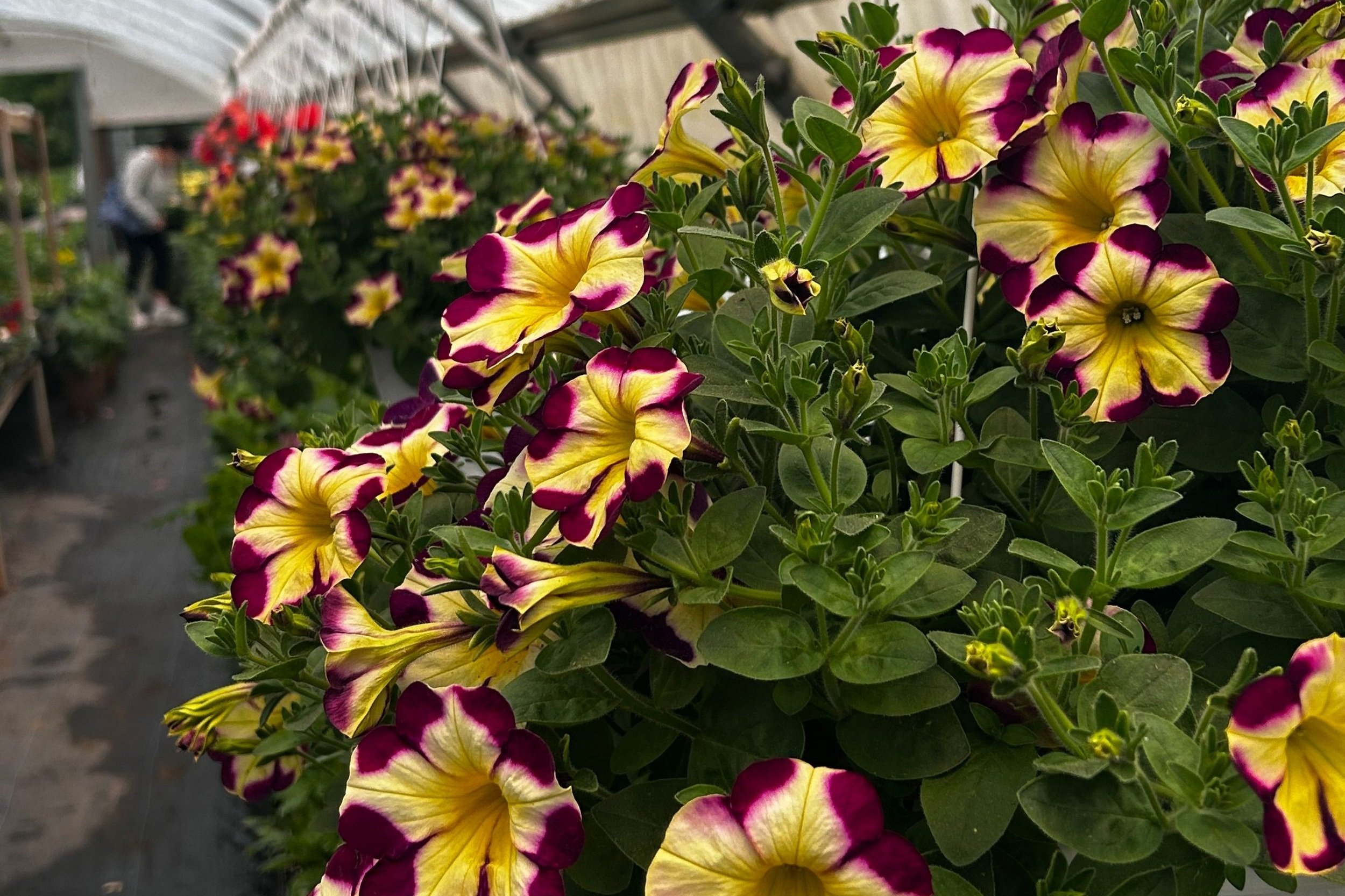
Headliner Banana Cherry

Headliner Raspberry Swirl

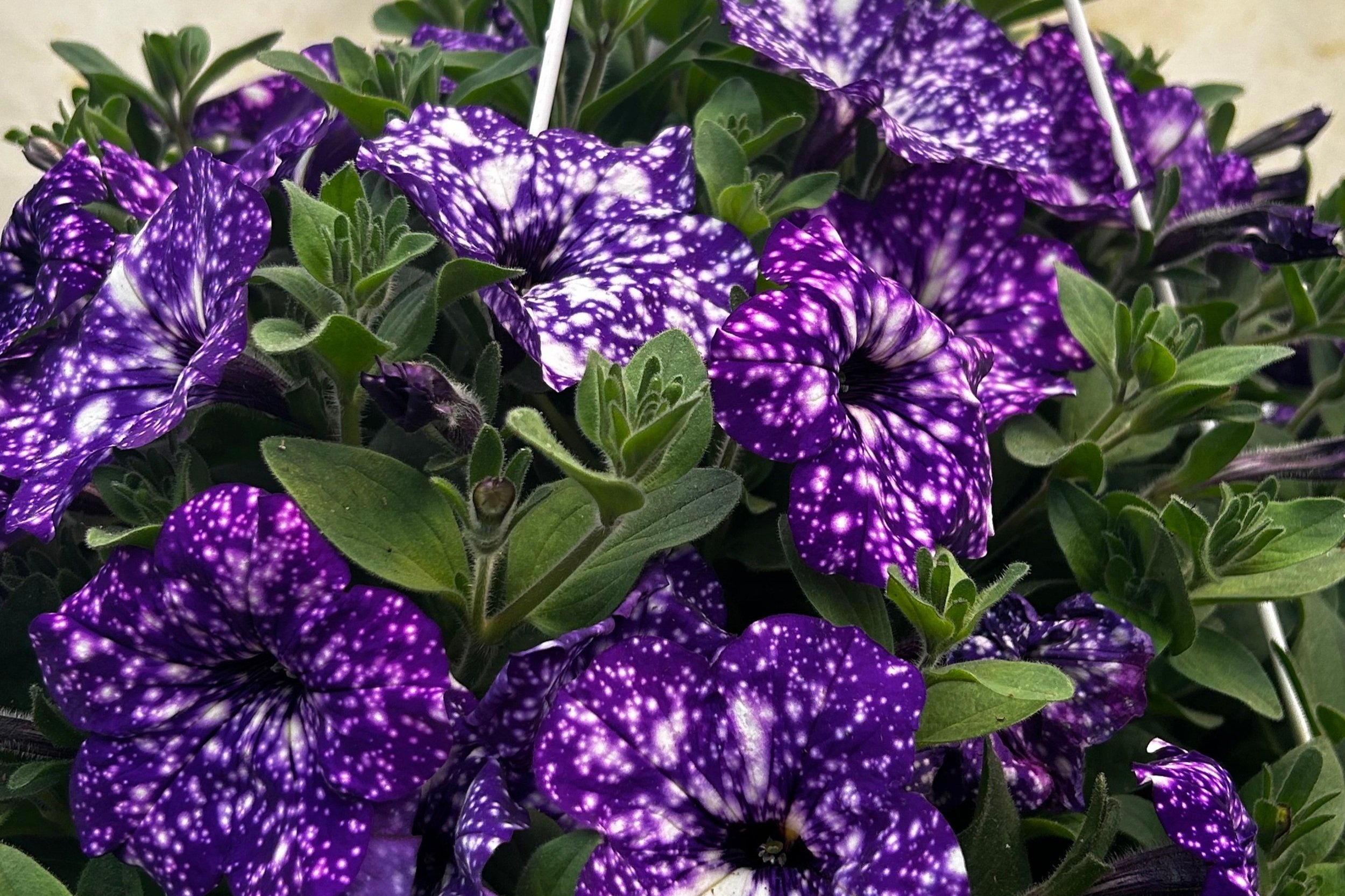
Headliner Night Sky

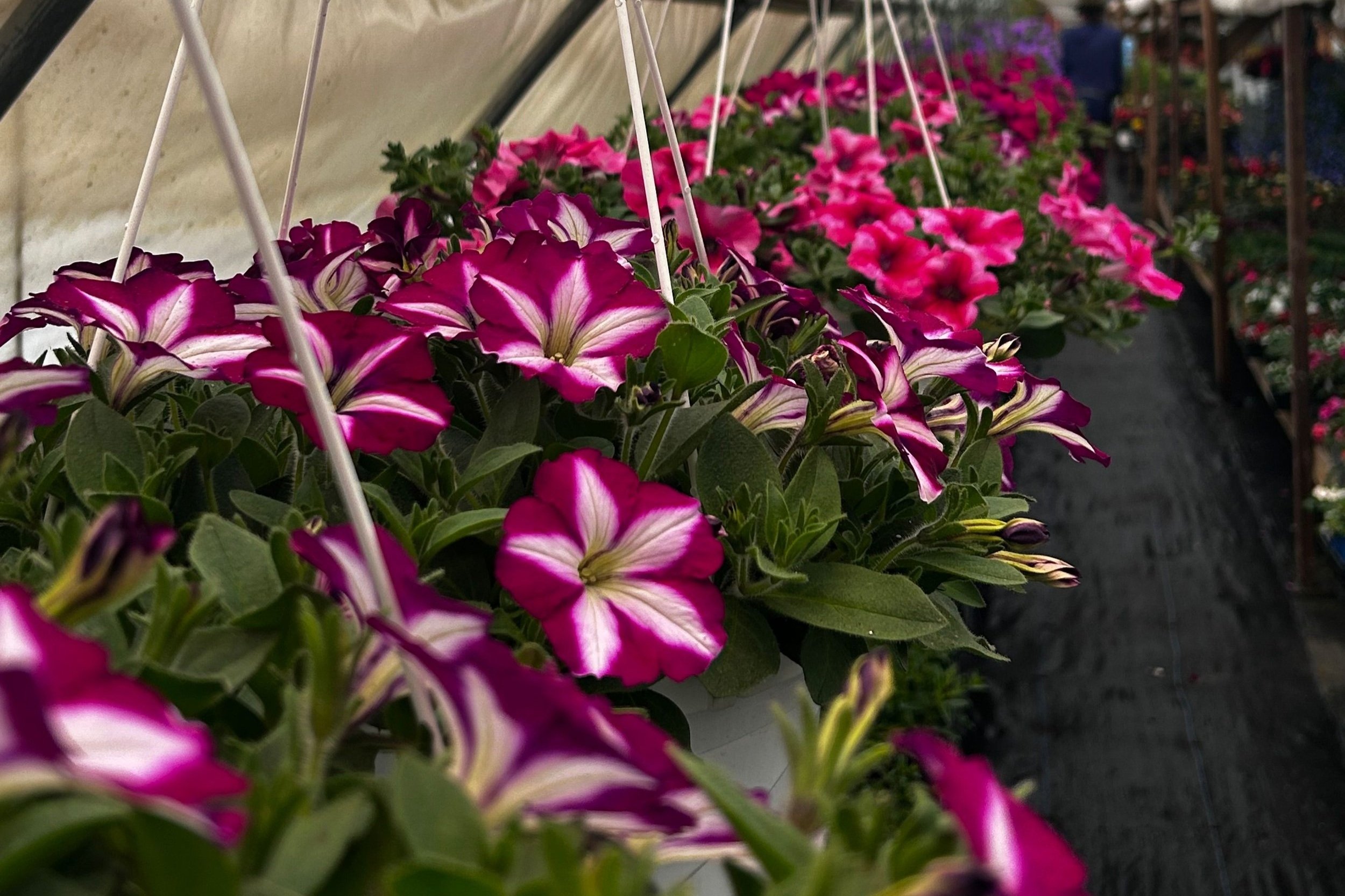
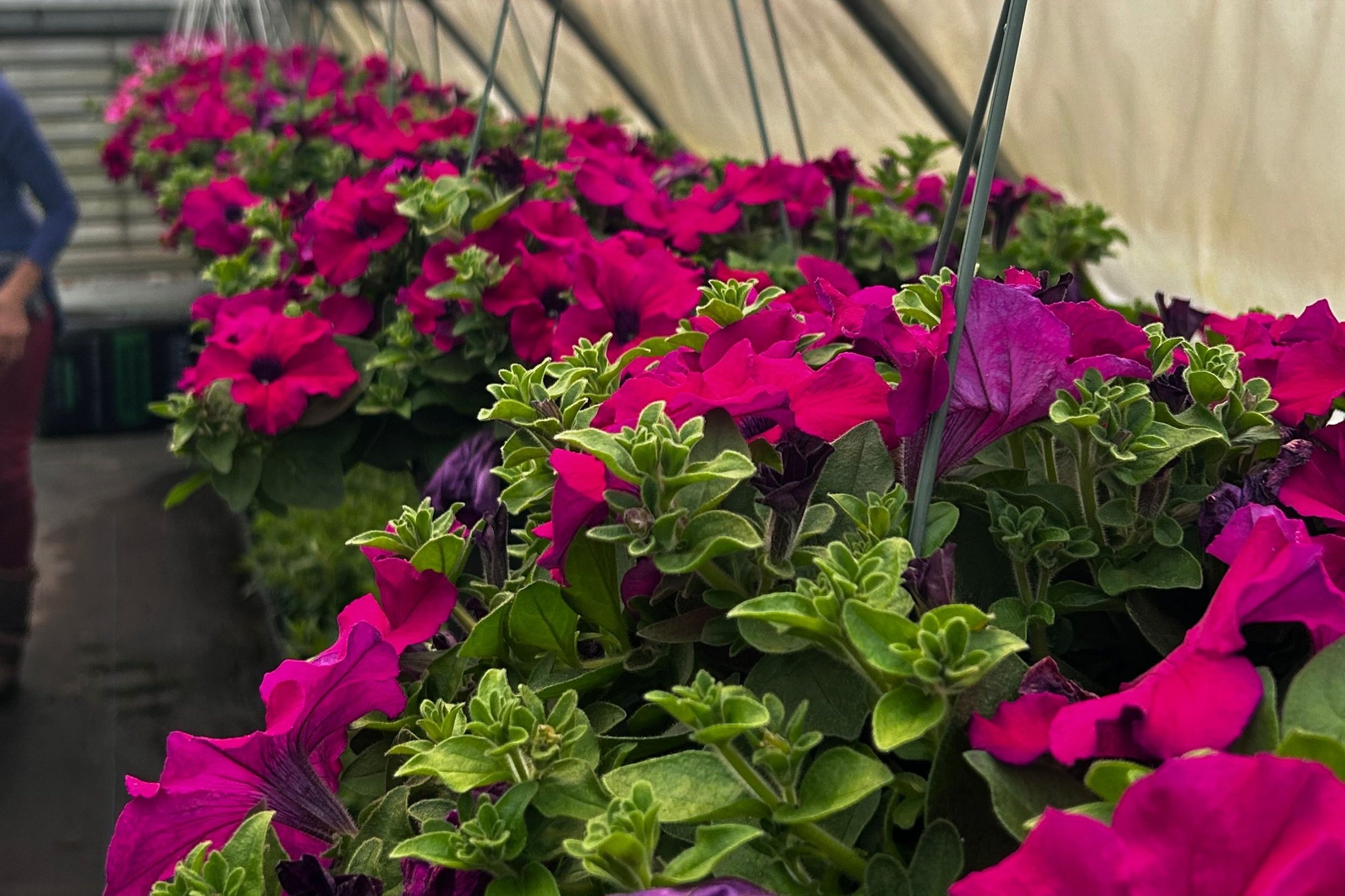
Surfinia Magenta 

Surfinia Heavenly Blue

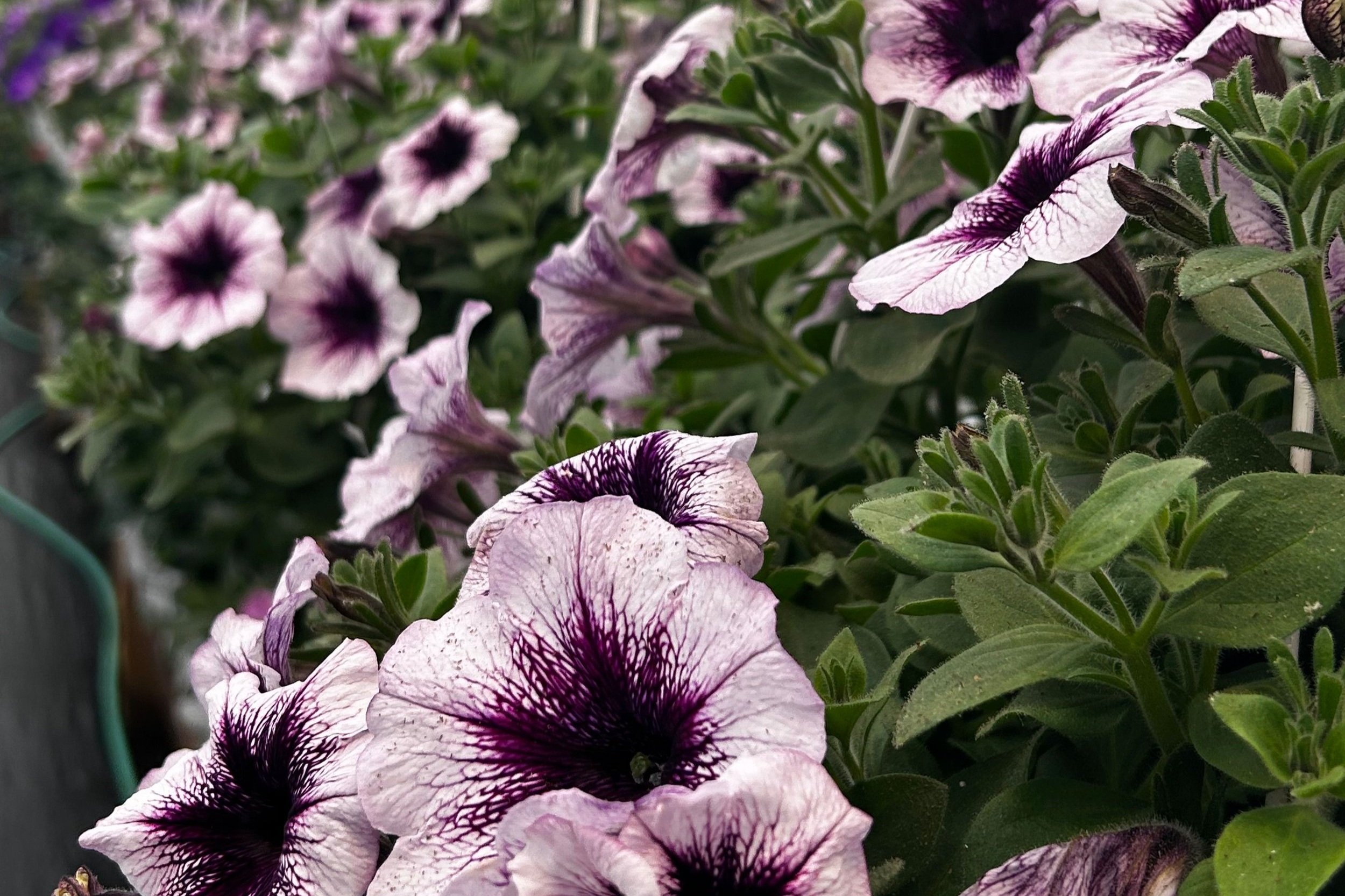
Heavenly Amethyst Burst

Patio Radiant Dark Blue

*****

LOBELIA

THUNBERGIA

Orange Wonder

*****

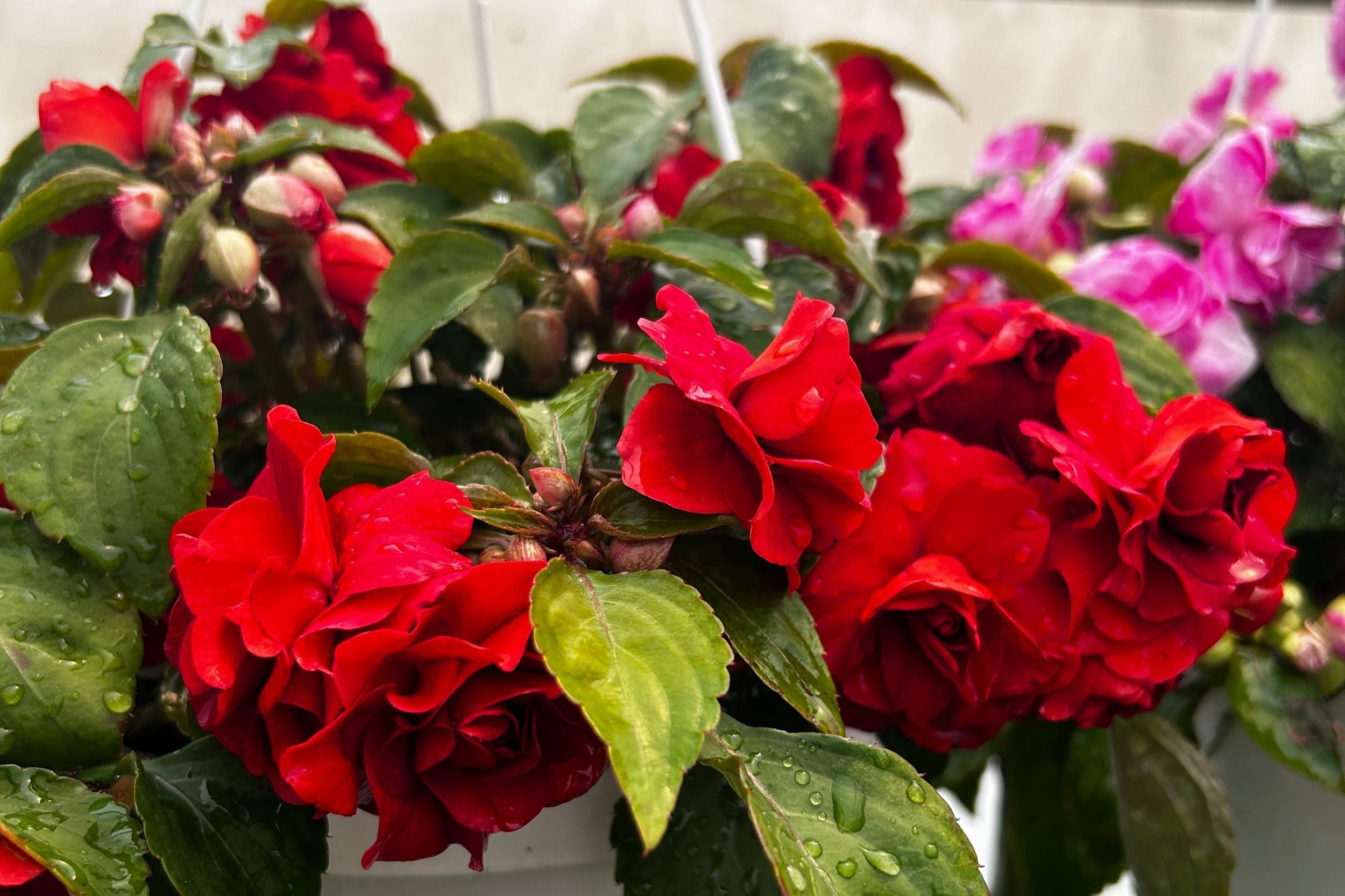
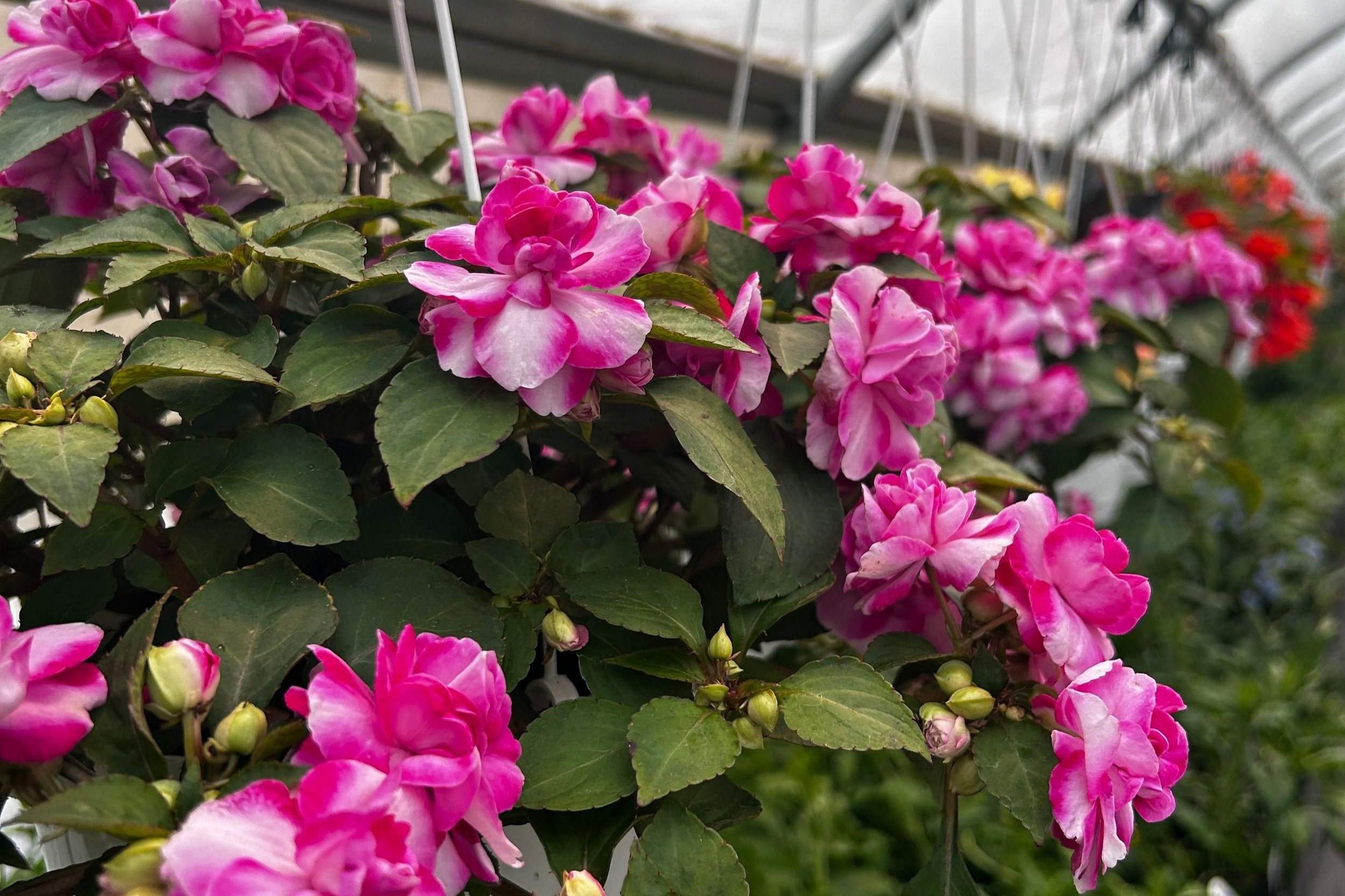
IMPATIENS

Double Sparkler Hot Pink

Dark Red

New Guinea Impatiens 

*****

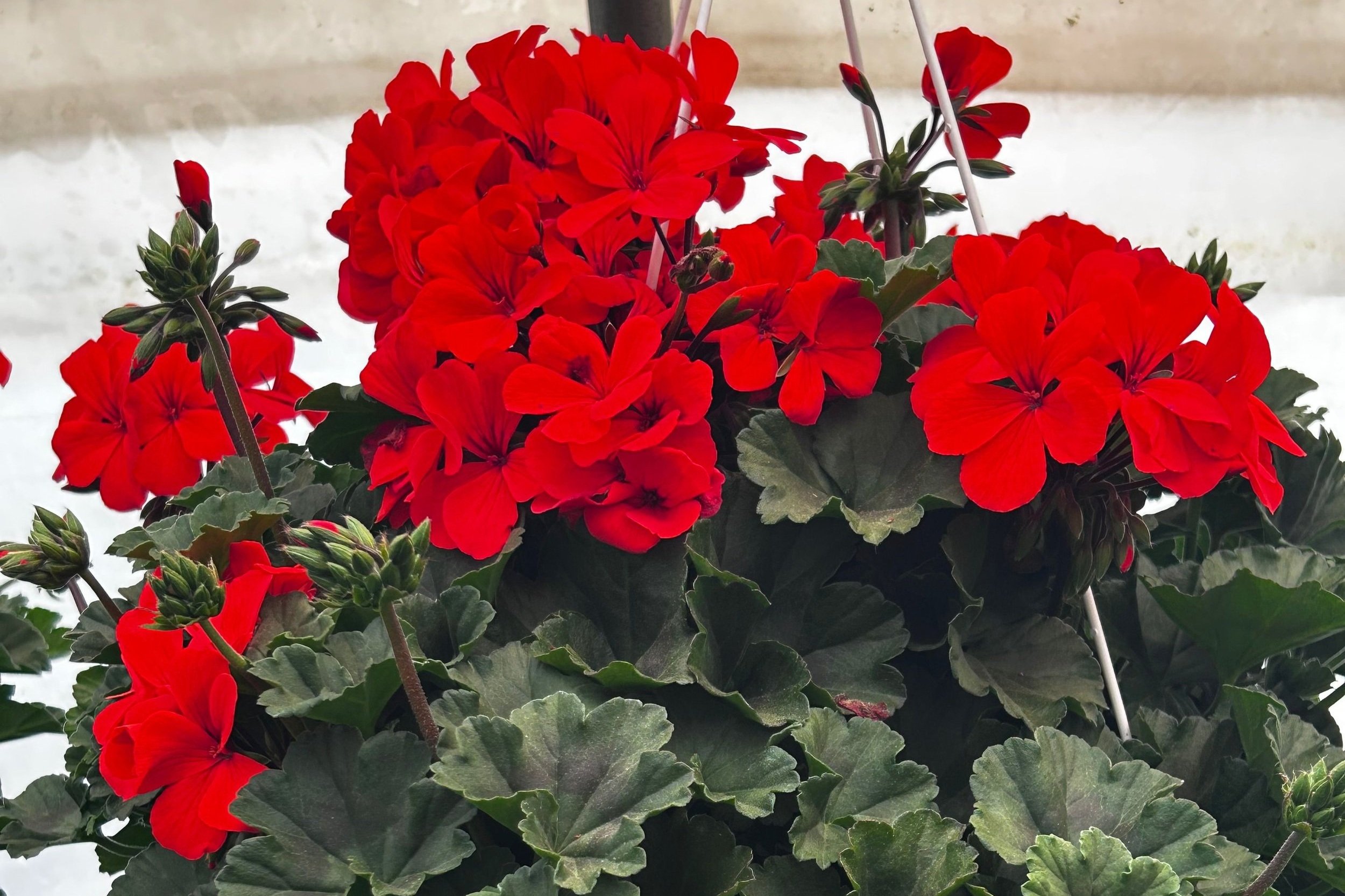
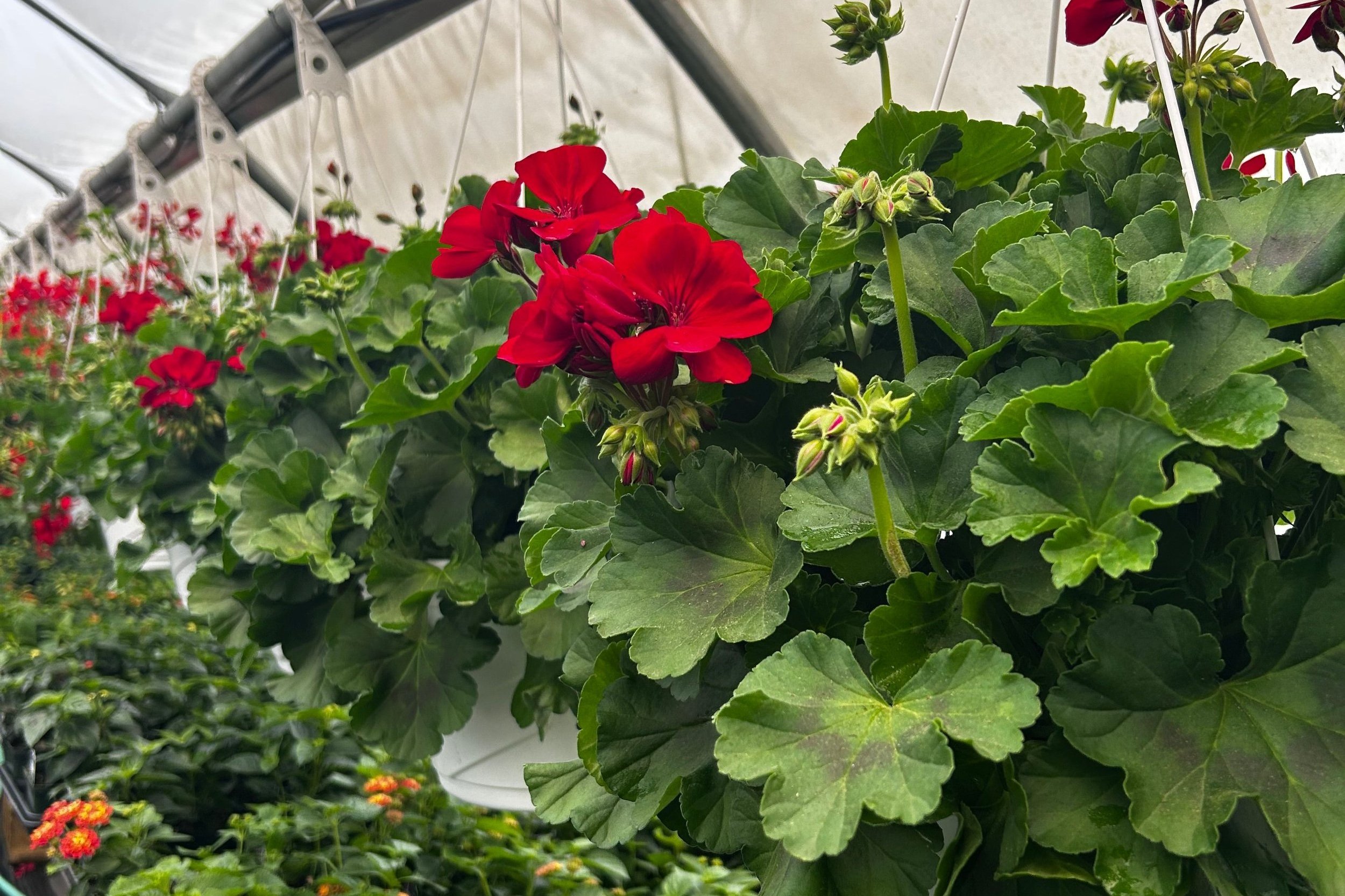
GERANIUMS

Great Balls of Fire Light

Caliente Orange 

*****

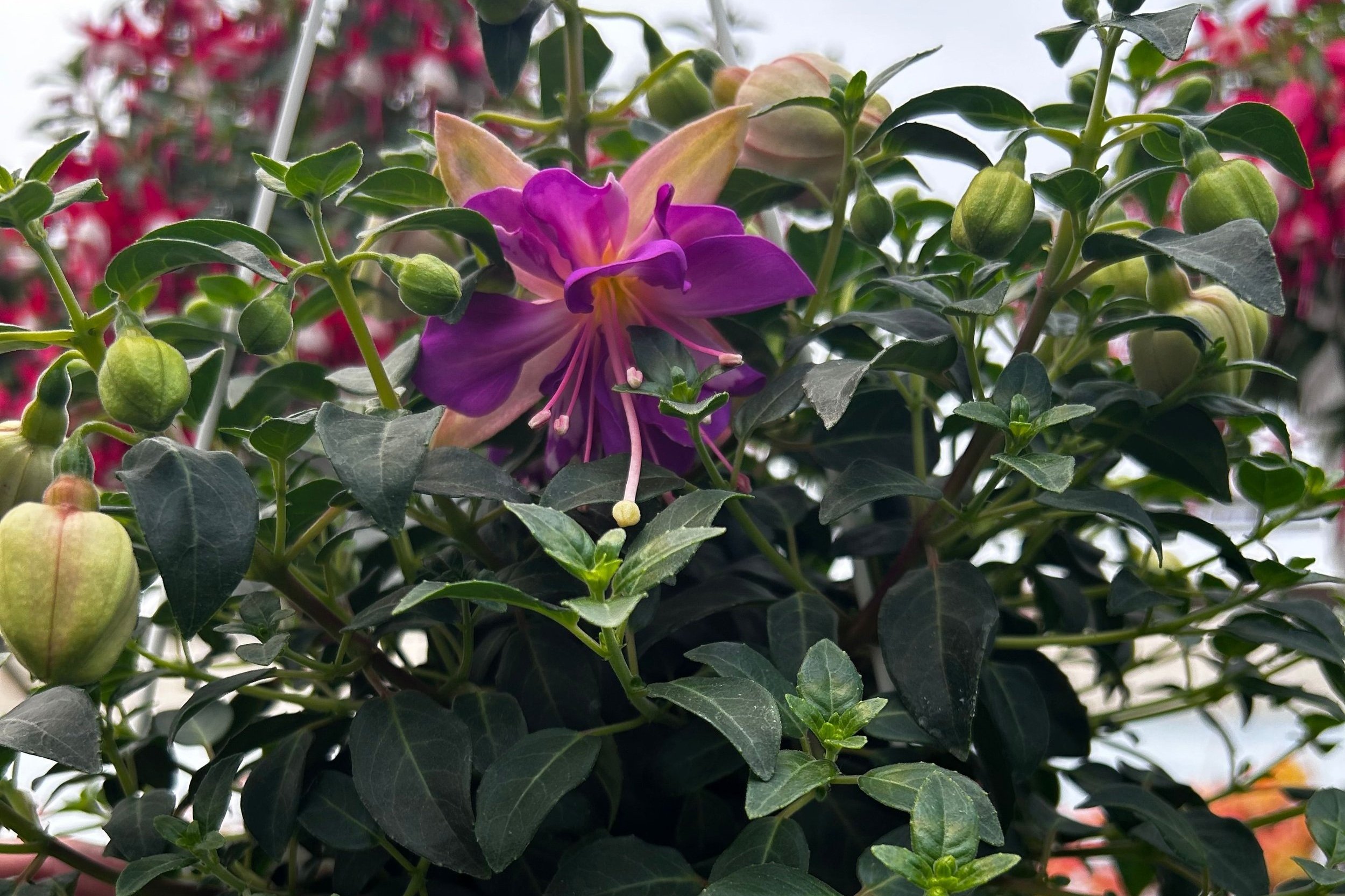
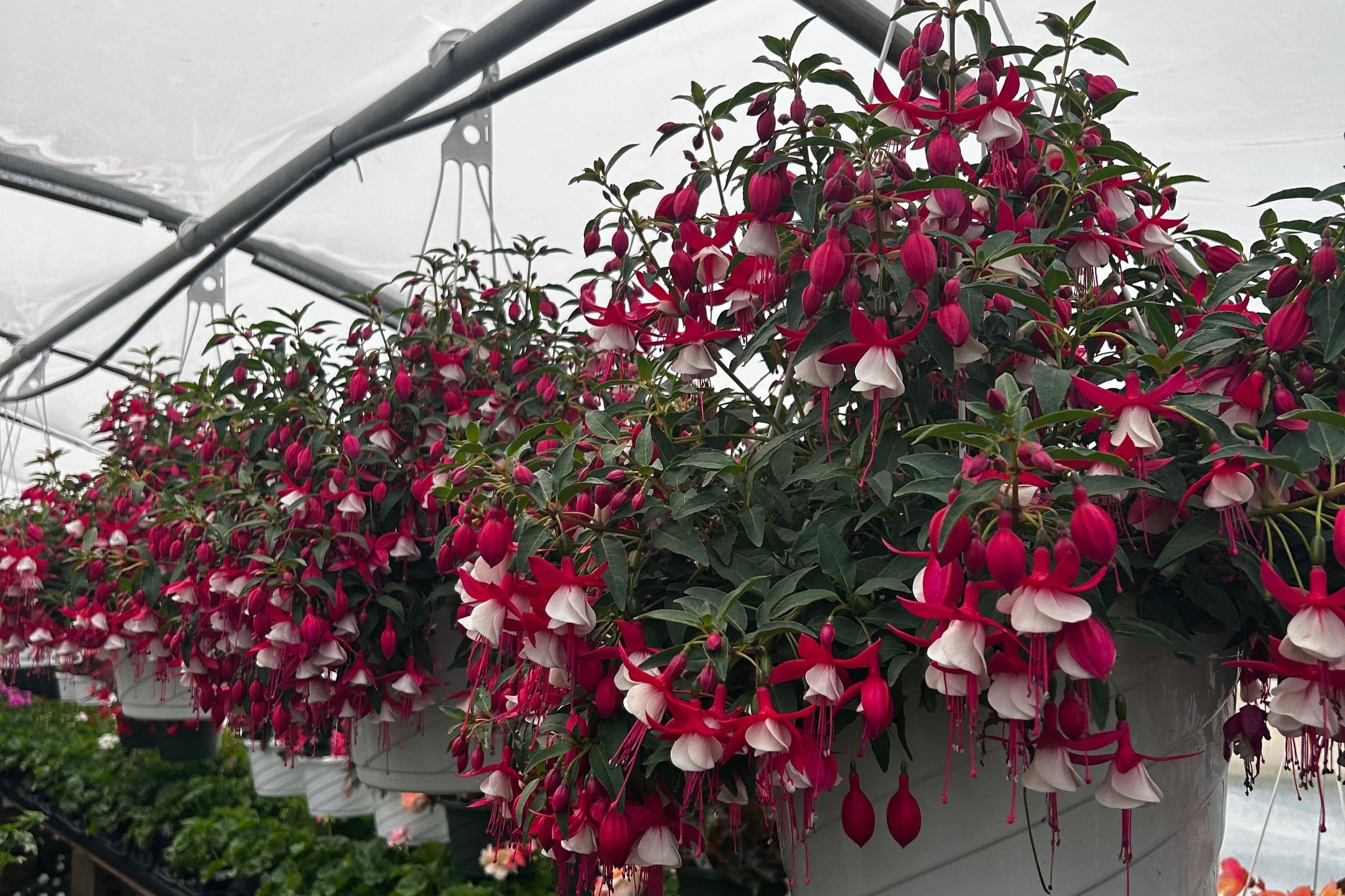
FUCHSIA

Wind Chimes Basket

Red/White

*****

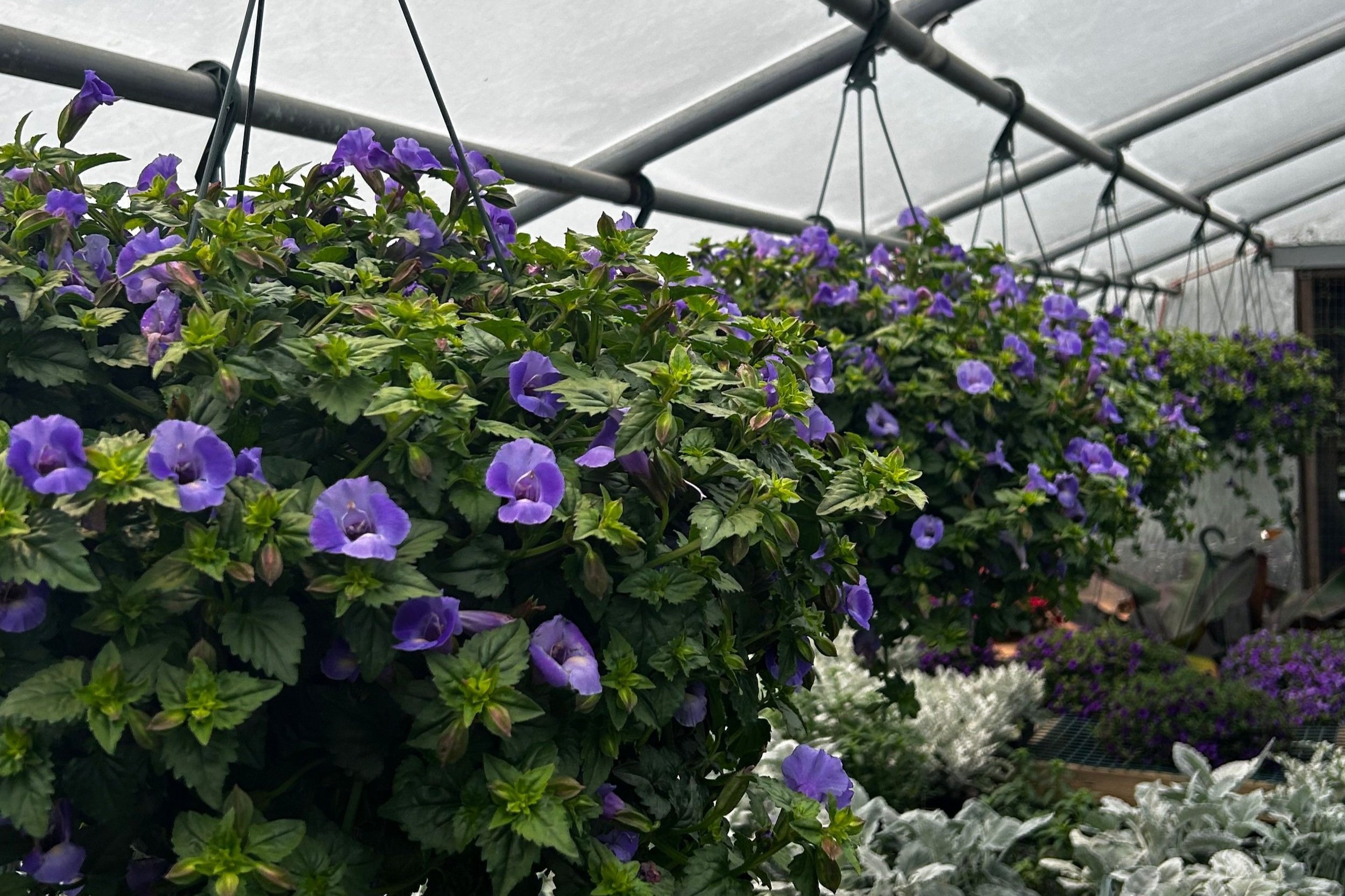
TORENIA

Summer Wave

*****

SCAEVOLA

Whirlwind Blue
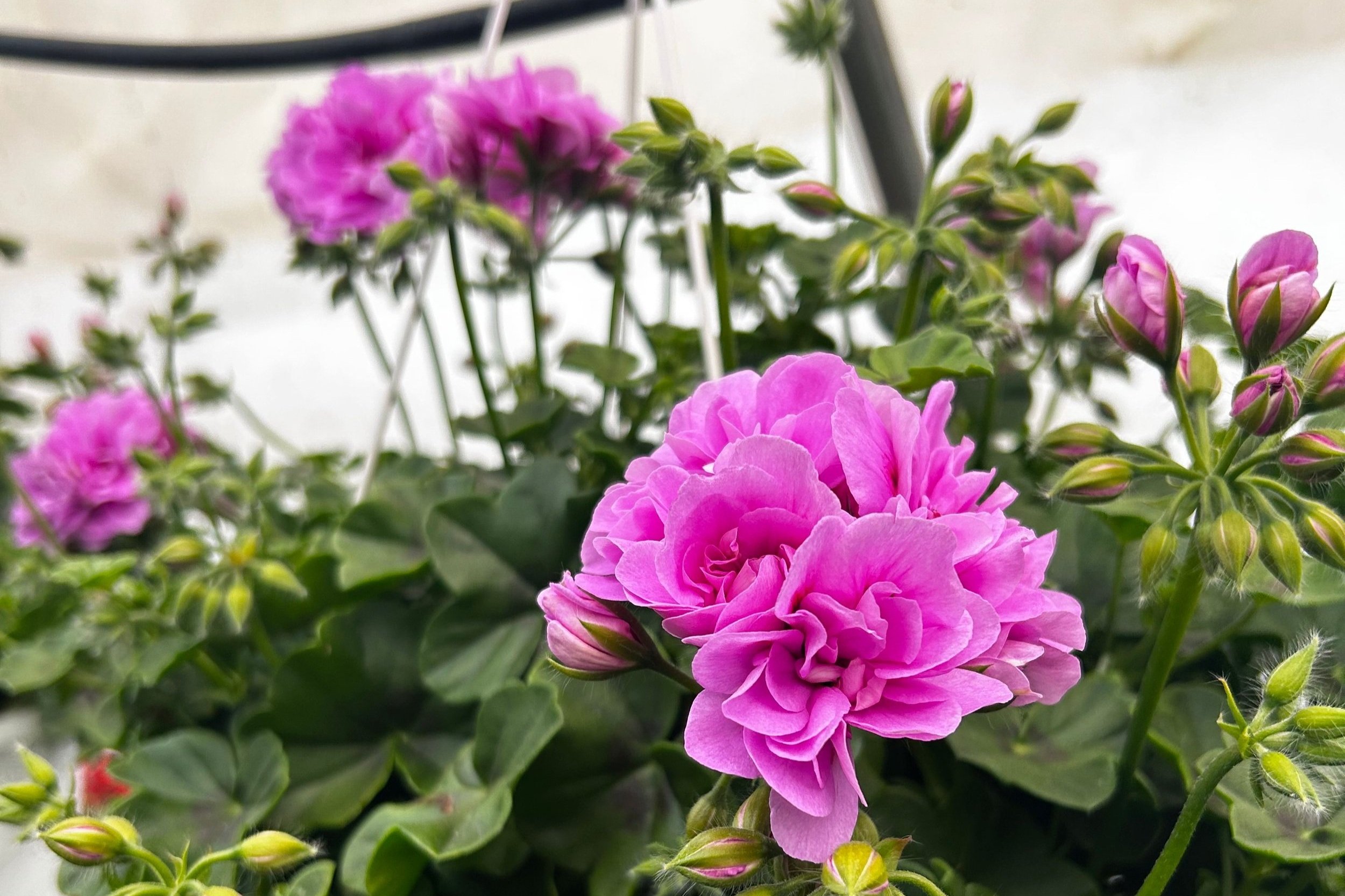
Geranium Great Balls of Fire Light Lavender
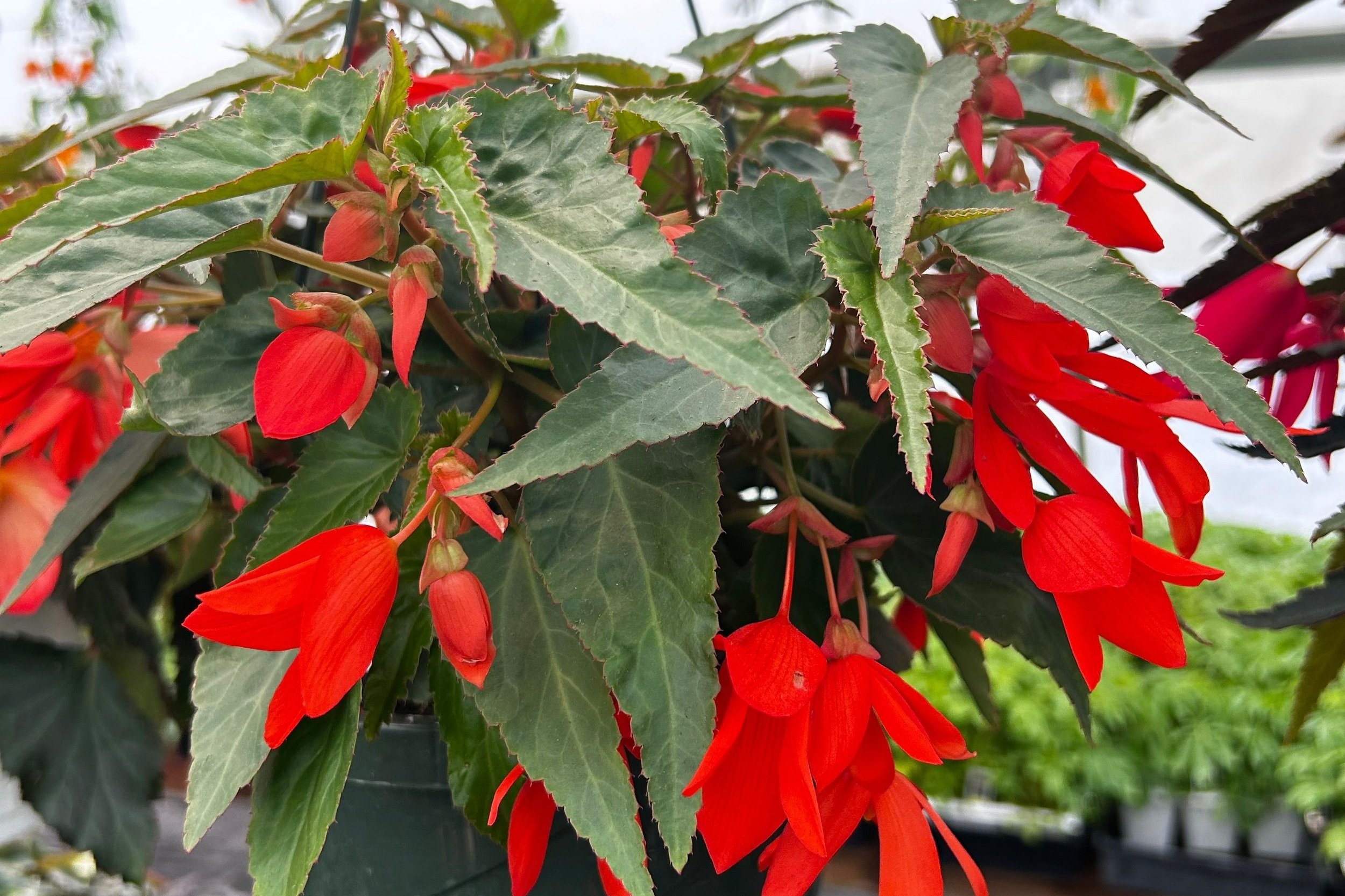
Begonia Bossa Nova Orange
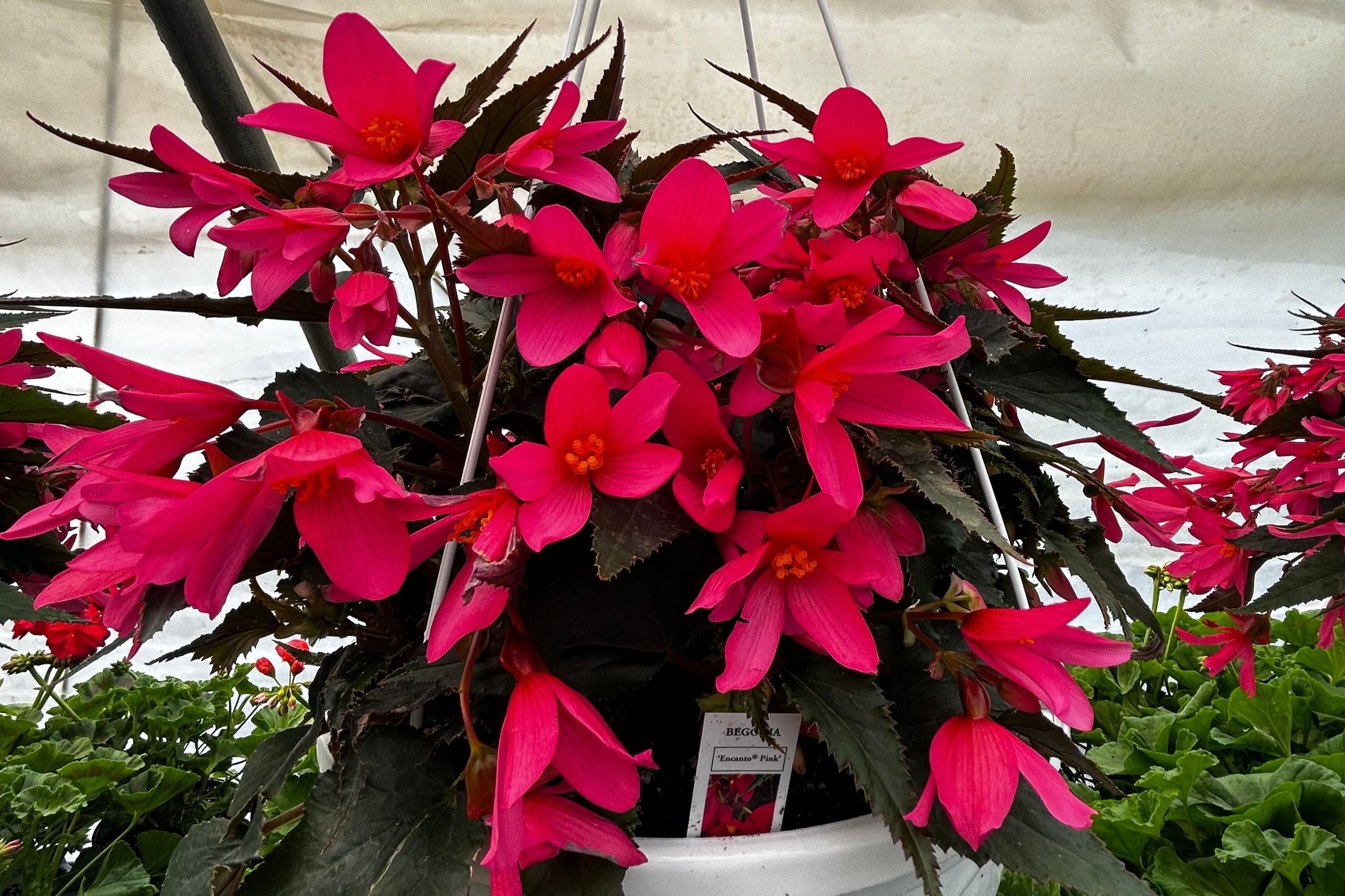
Begonia Encanto Pink
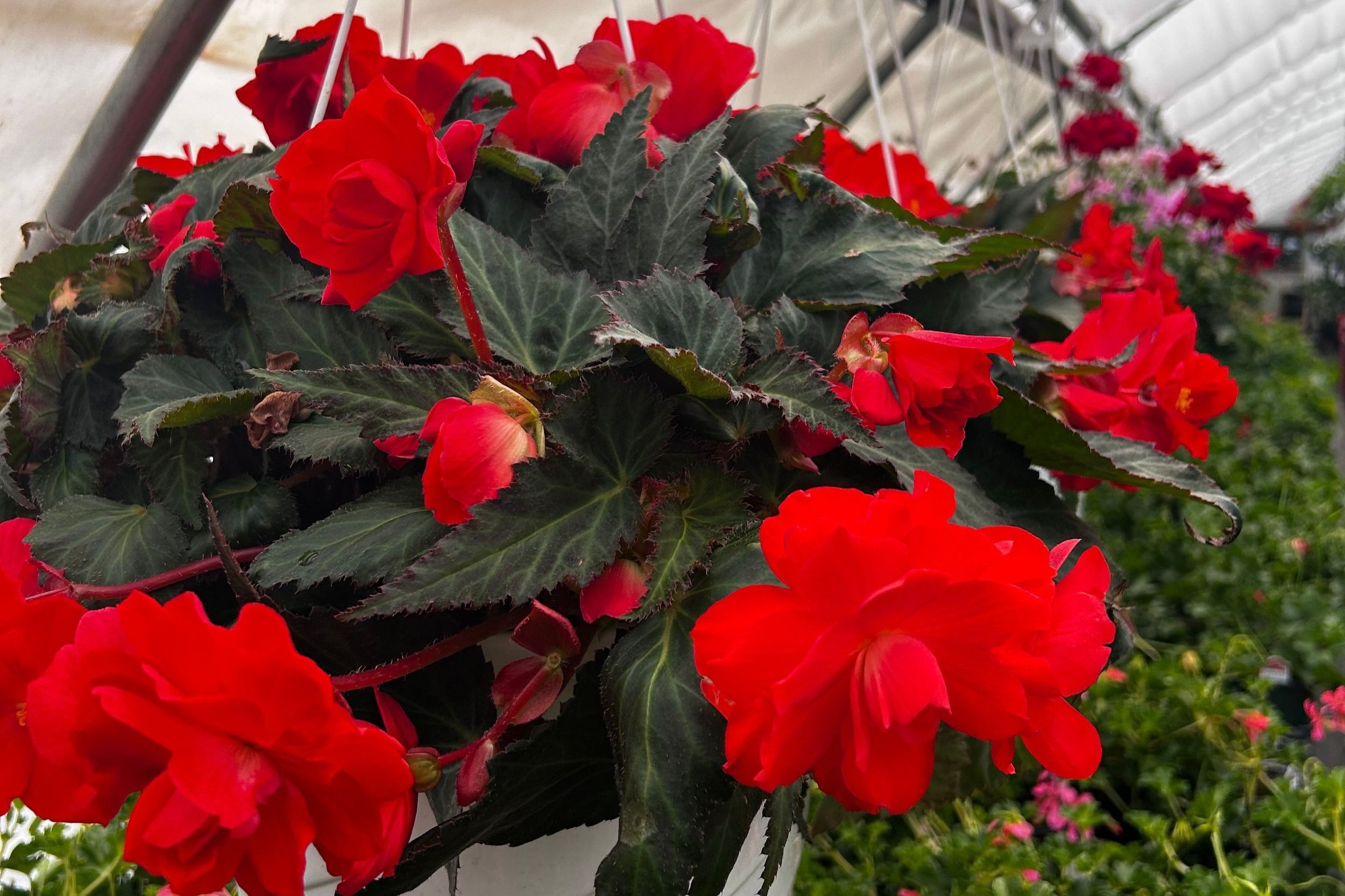
Begonia Miss Miami
Begonia Miss Miami
Begonia Solenia Dark Pink
Fuchsia Aretes Upright Rio Grande
Fuchsia
Fuchsia
Geranium Caliente Orange
Geranium
Geranium
Impatiens Double Sparkler Dark Red
Impatiens Double Sparkler Hot Pink
Ipomoea Chocolate (Morning Glory Chocolate)
Petunia Headliner Banana Cherry
Petunia Headliner Night Sky
Petunia Headliner Raspberry Swirl
Petunia Heavenly Amethyst Burst
Petunia Surfinia Heavnely Blue
Petunia Surfinia Magenta
Torenia Summer Wave Large Blue
Geranium Great Balls of Fire Light Lavender Begonia Bossa Nova Orange Begonia Encanto Pink Begonia Miss Miami Begonia Solenia Dark Pink Fuchsia Aretes Upright Rio Grande Fuchsia Geranium Caliente Orange Geranium Impatiens Double Sparkler Dark Red Impatiens Double Sparkler Hot Pink Ipomoea Chocolate (Morning Glory Chocolate) Petunia Headliner Banana Cherry Petunia Headliner Night Sky Petunia Headliner Raspberry Swirl Petunia Heavenly Amethyst Burst Petunia Surfinia Heavnely Blue Petunia Surfinia Magenta Torenia Summer Wave Large Blue
CONTAINER PLANTING
JUNE GARDENING TIPS
In GARDEN TIPS, JUNE, ANNUALS, FIELD NOTES Tags june garden tips, annuals, container gardening, hanging baskets, summer blooms
Comment

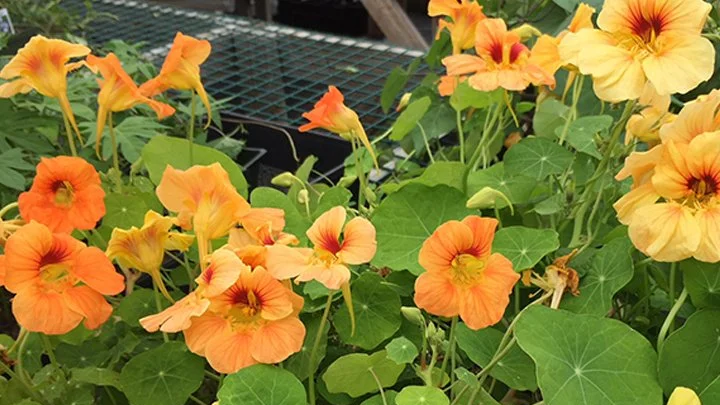
NASTURTIUM

June 8, 2026 Karen Logan

Nasturtiums

The Ultimate Easy-to-Grow Annual

Nasturtiums are vibrant, fast-growing annuals that are perfect for beginners and a joyful project to grow with children. Not only do they reward you with an abundance of beautiful blooms, but the entire plant is edible, both the leaves and flowers add a delicious, peppery kick to summer salads! Their sweet fragrance also makes them a lovely, unexpected choice for small cut-flower arrangements.

Nasturtiums as a filler annual

**********

Choosing the Right Variety for Your Space

  • For Containers & Baskets: Choose compact, dwarf varieties that won't take over your patio. Excellent choices include 'Alaska Variegated', 'Empress of India', 'Cherry Rose Jewel', or the 'Fiesta Blend'.

  • For Vertical Gardens & Living Mulch: If you want a trailing ground cover, a natural weed barrier, or a climbing vine, look for trailing varieties with long runners like 'White Moonlight', 'Red Canary Creeper', 'Yellow Canarybird', or a robust Trailing Mix.

**********

PLANTING & PLACEMENT

  • Sowing Seeds: You can start seeds indoors 4 to 6 weeks before the last frost, or sow them directly into the garden in early spring. Plant seeds 1/2” deep and space them 10 to 12 inches apart. You will see sprouts emerge in just 7 to 10 days!

  • Sunlight: Select a spot in full sun. They can tolerate partial shade, but they won't bloom nearly as vibrantly.

  • Soil Secret: Nasturtiums actually prefer poor, lean soil and do not need fertilizer. Rich, fertile soil will trigger a massive flush of green leaves but very few flowers. Plant them in those tricky garden spots where other annuals struggle!

**********

SUMMER CARE

  • Water regularly throughout the season, but let the soil dry out slightly between waterings to avoid over-saturating them.

  • Deadhead faded flowers consistently to prolong the blooming season into autumn.

  • If you’re growing nasturtiums in containers, they may need to be trimmed back occasionally over the growing season to encourage fresh, bushy growth.

JUNE GARDEN TIPS
CONTAINER GARDENING
LEARN MORE ABOUT ANNUALS
In GARDEN TIPS, JUNE, PLANT PROFILES, VINES, ANNUALS Tags nasturtiums, annuals

SALVIAS

June 1, 2026 Karen Logan

SALVIAS

Members of the mint family, Salvias are famous for their incredible diversity, boasting over 900 species worldwide. While about 50 of these are native to North America. However, for those of us gardening in Massachusetts, the Lyre-leaf Sage (Salvia lyrata) is our region's only true native sage. No matter the variety, Salvias are renowned as absolute pollinator magnets, featuring nectar-rich blooms that act as an irresistible beacon for hummingbirds, butterflies, and a wide variety of local pollinators.

Salvia Leucantha

Salvia Blue Monday

Salvia nemorosa (perennial)

***********

GROWING SALVIA

How to Plant & Grow Salvia for Success

Salvias are sun-loving, low-maintenance perennials that reward you with vibrant blooms and incredible pollinator activity all season long. Whether you are looking for classic blues and purples or want to branch out into vibrant pinks, fuchsias, whites, or reds, there is a variety for every palette. These tough, deer-resistant plants are exceptionally easy to care for. Here is how to give your new Salvias the absolute best start in your landscape:

  • Choose the Right Spot: Select a location that receives full sun (at least 6 hours of direct sunlight daily) and has excellent drainage. Salvias absolutely do not like soggy roots.

  • Prepare the Soil: Dig a hole twice the width of the plant’s container to give the roots plenty of room to expand. Mix a 3-inch layer of high-quality compost into the existing soil to enrich and improve drainage.

  • Plant with Care: Gently remove the Salvia from its nursery pot. Place it in the hole so the top of the root ball sits perfectly level with the surrounding soil line.

  • Space for Growth: Space your plants 1 to 3 feet apart, depending on the specific variety. Proper spacing ensures excellent airflow and gives the plant room to reach its mature size.

  • Backfill and Firm: Fill in the hole around the plant with your soil mix, pressing down gently with your hands to eliminate air pockets and stabilize the root ball.

  • Water Deeply: Give your newly planted Salvias a thorough, deep soaking to settle the soil and reduce transplant shock.

  • Mulch: Apply a thin layer of mulch around the base of the plant to retain moisture, suppress weeds, and regulate soil temperature.

  • Encourage More Blooms: Deadheading spent flowers encourages repeat blooming. Follow the flower stem down to the base and cut just above the foliage for a clean finish and more blossoms.

  • Spring Cleanup: Wait until early spring, when you see signs of new growth, to cut back old stems. This helps protect the plant during winter and gives you a clearer view of what's emerging.

  • Divide Every 3 Years: To keep your Salvias vigorous, divide clumps every 3 years. The best time to divide is in early spring, before new growth fully emerges.

While Salvias are remarkably drought-tolerant once established, consistent watering during their first few weeks in the ground is key to healthy, deep root development. With just a bit of maintenance, Salvias reward you with long-lasting color and a steady stream of pollinators.

Salvia nemorosa

Salvia Purple Rain

***********

PERENNIAL SALVIAS

While most perennial salvias bloom in early summer, you can easily extend their performance by deadheading the faded flower spikes. They will reward you with a fantastic second flush of blooms later in the same season!

Salvia Wind Walker Red

————————

A perennial species of

Salvia that is 4’ tall.

Graceful arching stems

with brilliant red flowers

bloom from late June

through fall. Cut this

Salvia back to 6” in

early summer to keep

stems shorter and

stronger. Hummingbirds

love it!

Perennial Salvia Varieties

Salvia nemorosa Species (Meadow Sage)

These are the classic garden staples known for their upright flower spikes and compact, mounded foliage.

  • 'Salvatore Blue': Features aromatic, royal purple-blue spikes that add wonderful vertical interest and deep color to garden beds and planters.

  • 'Caradonna': Features striking, dark purple stems that contrast beautifully with its violet-blue flowers.

  • 'Dark Matter': Deeply saturated, near-black buds that open into intense violet-blue spikes.

  • 'Blue Marvel' & 'Rose Marvel': Some of the largest flower spikes in the genus, providing an extra-bold splash of blue or rose-pink.

  • 'White Profusion': A high-performance variety completely covered in crisp, clean white flowers that rebloom beautifully.

  • 'Snow Hill': A dependable, classic white selection that forms a tidy, cool mound in the border.

  • 'Blue by You': An early bloomer featuring rich blue-purple spikes and excellent heat tolerance.

  • 'Violet Riot': Forms a dense, uniform mound packed with vivid violet-blue flowers.

  • 'East Friesland': A compact old favorite featuring rich violet-purple spikes.

  • 'Feathers Peacock': Feathery foliage and soft lavender-blue flowers.

The 'Lyrical' Series

Known for their robust growth, strong branching, and high flower count per stem.

  • 'Lyrical Blue': Deep indigo-blue petals contrasted beautifully by rich burgundy accents.

  • 'Lyrical Rose': Bright rose-pink flower spikes that bring a soft warmth to the garden.

Other Salvias

  • 'Midnight Model': Produces striking, intense violet-blue flowers on a round, dense, perfectly neat clump.

  • 'Evening Attire': Features huge, vivid violet-blue flowers packed tightly into a highly refined, upright habit.

  • 'Moulin Rouge': Makes a dramatic statement with oversized, rich rosy-pink flower spikes.

  • 'Rhythm and Blues': Striking tricolor blue-purple blooms.

  • Salvia greggii (Mirage™ Series): Woody, drought-tolerant mounds with aromatic foliage.

  • Salvia verticillata 'Purple Rain': An "oldie but goodie" featuring arching stems with smoky purple whorls of flowers that look incredibly soft and romantic.

Biennial Sages

Biennials spend their first year growing lush foliage and explode into dramatic, oversized blooms in their second year.

  • Salvia argentea (Silver Sage): A striking, clump-forming biennial grown as much for its texture as its flowers. It features massive, fuzzy, woolly silver leaves that look like velvet, topped with elegant white flowers.

  • Salvia sclarea (Clary Sage): A biennial species native to the Mediterranean basin that we proudly grow from seed right here! This is a massive, very showy architectural plant that features huge spikes bearing large, colorful bracts that last all summer.

    • The Straight Species: Features pink blooms with darker pink edges.

    • Salvia sclarea var. turkestanica: A beautiful variety featuring striking white flecks and pink bracts.

Salvia nemorosa

Salvia madrensis

Salvia greggii Mirage Salmon

***********

ANNUALS: SEASON EXTENDERS

Plant them now and they will be gorgeous in the fall!

Annual Salvias are absolute powerhouses in the garden, providing non-stop color from early summer straight into late fall. From unique varieties we start right here from seed to high-performance selections grown from premium plugs, these plants are the ultimate season extenders. In fact, hardy varieties like Pineapple Sage will often stay in full bloom well into November! To get the absolute most out of them, we recommend planting them early in the season so they have plenty of time to reach their magnificent mature size. While they do beautifully in both patio containers and garden beds, keep in mind that they put all their energy into a single season and will not come back next year.

Planning Ahead

It's the perfect time to think about late summer and autumn interest, when designing your garden beds now. Our late-blooming 'season-extender' Salvias are the perfect tool to keep your landscape vibrant and colorful long after other perennials have faded.

Salvia guaranitica Black and Blue

Salvia Wendy’s Wish

Salvia Summer Jewel Pink

***********

Vineyard Gardens Seed-Grown Favorites

There is a special charm to plants grown from seed right here at the nursery. These selections are famous for their exotic, oversized bracts and incredibly long-lasting color.

  • Clary Sage (Salvia sclarea): Produces massive, architectural flower spikes with prominent, colorful bracts that look delightfully exotic and last all summer.

  • Salvia horminium Blue Monday: A true Vineyard Gardens favorite featuring striking, intense blue-violet top leaves (bracts) that retain their deep color for months.

  • Salvia horminium Rose Sundae: A gorgeous sister variety to 'Blue Monday,' boasting soft, vivid rose-pink bracts that add a beautiful warmth to cottage gardens and bouquets.

  • Salvia patens Patio Sky Blue (Gentian Sage): Breathtaking sky-blue flowers, set on a compact habit perfect for pots.

'Plug-Grown' Annuals

Grown from specialized starter plugs, these high-performance cultivars grow rapidly into robust, heavy-blooming plants for your large containers and garden beds.

  • Salvia guaranitica 'Black and Blue' (Anise-Scented Sage): Featuring deep cobalt-blue tubular flowers emerging from dramatic, near-black calyxes.

  • 'Amistad' (Andrew’s Recommendation): A top pick by Andrew! This spectacular hybrid boasts massive, continuous spikes of royal purple flowers sitting on sharp black stems. It is an absolute magnet for hummingbirds.

  • 'Indigo Spires': A deep, rich blue showstopper with extra-long flower spikes. This tough variety keeps going and going. It will still be blooming beautifully alongside your fall asters and mums!

  • 'Skyscraper Orange': Brings unique, warm sunset-orange tones to the annual border on sturdy, upright stems.

  • 'Skyscraper Pink': Features densely packed, bright pink trumpets that stand up beautifully to summer heat.

  • 'Unplugged Pink': A compact, tidy selection covered in soft pink spikes, perfect for mid-sized patio containers.

  • 'Rockin’ Deep Purple': A tough, modern hybrid loaded with rich, royal purple blooms that require no deadheading to keep flowering.

  • 'Rockin’ Blue Suede Shoes': Features soft, light blue petals contrasted against crisp, deep black calyxes.

  • 'Rockin’ Fuchsia': Vibrant, neon-fuchsia blossoms that scream for attention from across the yard.

  • 'Wendy’s Wish': A massive customer favorite featuring brilliant, hot-magenta pink flowers with colorful fluted calyxes.

  • 'Love and Wishes': Another popular favorite, displaying a sophisticated, deep antique shade of reddish-pink and dark maroon stems.

  • Salvia leucantha ('Mexican Bush Sage'): The ultimate late-season extender. This magnificent, velvety-textured plant saves its main explosion of soft purple and white spikes for autumn, blooming beautifully deep into October.

Salvia Blue Monday

Salvia Amistad

Salvia Wendy’s Wish

***********

Salvias in the Herb House

Explore our fantastic selection of aromatic, edible sages!

  • Salvia elegans ‘Pineapple Sage’ (annual): A spectacular annual herb and a magnificent season extender. The species name elegans reflects its tender nature, meaning it will not overwinter in our climate. However, it grows at an astonishing rate if you get it in the ground early! When planted in spring or early summer, a simple 4-inch nursery pot of Pineapple Sage will easily reach 4 to 5 feet tall and wide in a single season. In late summer and throughout autumn, it bears brilliant, tubular red flower spikes. As a delightful bonus, its lush green foliage releases a sweet pineapple aroma when brushed.

  • Salvia officinalis ‘Culinary Sages’ (Perennial)

    These hardy perennial sages are wonderful in the kitchen and bring beautiful, year-round texture to the herb garden. While the straight species and 'Berggarten' remain the two absolute classics for culinary use, we also carry these gorgeous, highly ornamental varieties:

    • Purple Leaf Sage: Features rich, smoky-purple foliage that adds dark, dramatic depth to herb planters.

    • Golden Sage: Boasts bright green leaves beautifully variegated with wide, chartreuse-gold margins.

    • Tricolor Sage: A stunning, highly ornamental selection with striking variegated foliage splashed in shades of purple, pink, and creamy white.

Tricolor variegated Sage

LEARN MORE: PERENNIAL HERBS
CONTAINER PLANTING
In PERENNIALS, ANNUALS, JUNE, PLANT PROFILES Tags salvia, vineyard garden salvia sale, growing salvia, care for salvia, black and blue salvia, blue salvia, clary sage

CORNFLOWER

April 23, 2026 Karen Logan

Cornflower & Poppies [illustration by karen blackerby logan]

CORNFLOWER

Centaurea cyanus (Bachelor Buttons)

******************************

Late Spring Blues

There’s something magical about walking through the garden in late spring and catching flashes of brilliant cobalt blue dancing in the breeze. That’s the unmistakable charm of Cornflower, also known as Bachelor Buttons, a beloved classic that never goes out of style. Here at Vineyard Gardens, we celebrate this beauty in all its hues: the traditional electric blue, soft pinks and deep purples. As part of Andrew Wiley’s Hardy Annual Project, Cornflower was sown in December to encourage strong root development, and are now ready to be transplanted into your garden.

Cornflower (Centaurea cyanus) is a true multitasker. It’s stunning in the garden, a joy in a vase, and secretly useful in more ways than one: from herbal tea to bath salts to bouquets.

******************************

Why You'll Love

Growing Cornflower

They thrive in full sun and well-drained soil and bloom abundantly in late spring and early summer.

  • Easy to grow: Even beginning gardeners will find these flowers rewarding.

  • Pollinator-friendly: Bees and butterflies love them.

  • Versatile beauty: Ideal for wildflower meadows, cottage gardens, borders, and containers.

  • Reseed readily: A delightful thing about cornflowers is they reseed themselves in your garden year after year. Plants that reseed are a gardener’s dream, they pop up at just the right time, fill in bare spots, and help tie the garden together beautifully. Cornflowers, along with larkspur and foxgloves, are excellent re-seeders that bring a touch of spontaneity and charm to any garden space.

The blooms grow thigh-high on slender stems and create a whimsical, meadow-like effect when planted in mass.

**************

Varieties Available

at Vineyard Gardens

We carry a colorful selection of Centaurea cyanus to brighten up your garden beds and bouquets:

  • Blue Boy: The classic brilliant blue that never disappoints

  • Select Ultraviolet: A moody, rich purple variety

  • Lady Mauve: Soft and romantic in pink tones

**************

Harvesting for

Cut Flowers


Cornflowers make wonderful cut flowers, especially for rustic, natural-style arrangements.

  • Cut early in the morning, just as the flower is starting to open.

  • Strip the lower leaves before placing in water.

  • Change the water every other day to extend vase life.

Cornflowers last around 5–7 days in a vase and pair beautifully with other cottage garden favorites like yarrow, snapdragons, and larkspur.

Centaurea cyanus Boy Blue

**************

Ready to

Grow Your Own?

Whether you're filling a wildflower border or planting for pollinators, cornflowers are the perfect addition to your late spring palette.

Don’t forget to tag us in your cornflower creations. We’d love to see your gardens, bouquets, and dried flower projects!

**************

Learn About : LARKSPUR
Learn About : SPRING BLOOMS & POLLINATORS
In ANNUALS, PLANT PROFILES, APRIL Tags Cut Flowers, hardy annuals, hardy annuals vineyard gardens, marthas vineyard hardy annuals, vineyard gardens cornflower, bachelor button, centaurea cyanus marthas vineyard
Comment

AMMI

April 20, 2026 Karen Logan

Ammi and Cosmos ‘Double Click Cranberries”

A Touch of Whimsy

If you've ever wanted your garden to feel like illustrations from a romantic storybook, Ammi is your flower.

Ammi brings a soft, graceful texture to garden beds and bouquets with its lacy, delicate blooms and feathery foliage. It’s like nature’s lace, light, elegant, and full of charm.

At Vineyard Gardens, we’re proud to be part of Andrew Wiley’s Hardy Annual Project, and that means we’ve got strong, healthy Ammi plants just waiting to bring their magic to your garden. These were sown in December, a technique that allows their roots to develop deeply and ensures robust, resilient plants that bloom beautifully in the months ahead

******************************

Ammi Varieties

at Vineyard Gardens

✧ Ammi majus ‘Select White’: Pure white, delicate blooms that resemble Queen Anne’s Lace. They bring a lightness and airiness to garden beds and are breathtaking in wedding bouquets or wildflower-style arrangements.

✧ Ammi visnaga ‘Green Mist’: Soft green-tinted white blooms with a fuller, denser flower head. The perfect filler flower, Green Mist adds a gentle, misty quality to both borders and floral work. Known for its vigorous growth, it can spread easily in the right conditions. It’s great for some gardens, but it might be a bit too assertive in more managed spaces.

******************************

Why Grow Ammi?

  • Ethereal beauty: Soft, lace-like blooms

  • Cut Flowers: A must-have for garden-style floral arrangements

  • Pollinator-friendly: Bees and butterflies adore them

  • Cold-hardy annuals: Early sowing leads to early blooming!

Ammi bridges the gap between structure and softness, perfect for cottage gardens, naturalistic plantings, and cutting gardens.

Larkspur QIS Dark Blue with Ammi Majus

******************************

How to Grow

Ammi in Your Garden

Now is the perfect time to plant our winter-sown Ammi. Strong root system thanks to winter sowing.

  • Location: Full sun to part shade

  • Soil: Well-drained, average garden soil

  • Spacing: 9–12 inches apart to allow for their airy shape

  • Watering: Keep moist during establishment, then water during dry spells

Once established these low maintenance beauties will reward you with tall, graceful stems topped with dreamy blooms from late spring into summer.

******************************

Cut Flower Magic

Ammi’s doily lace form adds movement and softness to any bouquet.

  • Harvest when about 80% of the tiny flowers in the head have opened.

  • Cut early in the morning for longest vase life.

  • Strip lower leaves before placing in water.

  • Pair with peonies, snapdragons, cosmos, or roses for a garden-gathered look.

Digitalis purpurea, Antirrhinum Potomac Dark Pink with Ammi majus and Ammi visnaga ‘Green Mist’

******************************

What You

Can Do Now


  • Stop by our nursery to pick up Vineyard Gardens winter sown Ammi

  • Prep your garden beds for easy transplanting

  • Tag us in your bouquet and garden photos. We love seeing your Ammi in action!

Fill your garden with the soft lace of Ammi. You'll be amazed how much beauty can come from something so delicate.

**********************

Learn About : SNAPDRAGONS
APRIL GARDENING TIPS
In ANNUALS, PLANT PROFILES, APRIL Tags Cut Flowers, hardy annuals, hardy annuals vineyard gardens, marthas vineyard hardy annuals, vineyard gardens ammi, ammi majus, ammi visnaga
Comment

LARKSPUR

April 7, 2026 Karen Logan

Larkspur [illustration by karen blackerby logan]

LARKSPUR

Delphinium consolida

******************************

A Late Spring Spark

Why Hardy Annual Larkspur Deserves a Spot in Your Garden

There’s a certain kind of magic in plants that rely on the cold to gift us beauty just as the world is warming again. Hardy annual larkspur (Delphinium consolida) is one of those graceful gifts. With its feathery foliage, towering spires, and an almost ethereal range of blues, pinks, purples, and whites, larkspur is a must-have for anyone who loves cut flowers or wants to bring a touch of cottage garden charm to their late spring landscape.

Larkspur QIS Dark Blue with Ammi Majus

******************************

An Annual That

Can Handle A Chill

Unlike many annuals that must wait until after the last frost, larkspur thrives in the early season. It actually needs a cold period to break seed dormancy. As part of Andrew Wiley’s Hardy Annual Project, larkspur was sown in December to encourage strong root development, and those plants are now ready to be transplanted into your garden.

Once established, larkspur sends up strong, straight stems topped with layered blooms that almost look too delicate to be real. But don’t be fooled, these plants are workhorses. Hardy to around 20°, they’ll shrug off chilly spring nights while other flowers are still in their seed trays.

Larkspur QIS Dark Blue with Papaver ‘Amazing Grey’

******************************

Elegance

in the Garden


Hardy annual larkspur is one of those old-soul flowers that rewards a little planning with a lot of beauty. They’re a graceful, low-fuss way to add vertical interest and early color. It thrives in garden beds, wildflower meadows and acts as a natural pollinator magnet. In a world that sometimes feels rushed, there’s something satisfying about planting a flower that asks you to think ahead and to trust the process.

And did we mention color? While larkspur’s deep indigo blues are the most iconic, they also come in pastels.

Antirrhinum Potomac Deep Orange and Larkspur QIS Dark Blue

******************************

A Cut Flower Favorite

For cut flower lovers, larkspur is ideal. The blooms are long-lasting in the vase, and the more you cut, the more the plant gives. Harvest when just a few blossoms at the base of the stem have opened and the rest are still in bud, this way, you get the full bloom show indoors. Some growers swear by a quick dip in boiling water to extend vase life even further.

If you’re dreaming of armfuls of early summer blooms, larkspur might just be your next garden obsession.

They pair beautifully with peonies, sweet peas, bachelor’s buttons, and early roses.

Larkspur

******************************

Growing Tips


Cool-Season Lovers: Larkspur thrives in cool weather. Plant in early spring best results.

Support Matters: Provide stakes or netting to keep tall stems upright, especially in breezy spots.

Harvest at the Right Time: For the longest vase life, cut stems when only the lower third of the blooms have opened. They’ll continue to open from bottom to top.

Winter-Sown for Summer Beauty: At Vineyard Gardens, our December-sown larkspur are ready to plant now. Early winter sowing helps develop strong roots, setting the stage for full, vibrant summer blooms

******************************

Larkspur

Varieties Available

A member of the Delphinium family, larkspur offers tall, elegant spires of blooms that not only bring drama to any bouquet but will also readily reseed in a sunny garden.

  • Deep Blue

  • Fancy Blue Purple

  • Fancy Rose Striped

  • Fancy Smokey Eyes

  • Frosted Skies

  • Misty Lavender

  • QIS 'Lilac

  • QIS 'Pure White'

  • QIS 'White'

******************************

Learn About : HARDY ANNUALS
In ANNUALS, PLANT PROFILES, APRIL Tags Cut Flowers, hardy annuals, hardy annuals vineyard gardens
Comment

SNAPDRAGONS

April 5, 2026 Karen Logan

SNAPDRAGON

Antirrhinum majus

******************************

A Hardy Annual

and an Outstanding

Cut Flower

As a kid, I loved snapdragons. My grandmother taught me how to pinch them just right so their "mouths" would open and close. It felt like a little bit of garden magic, and to this day, snapdragons hold a special place in my heart. Snapdragons (Antirrhinum majus) are classic garden favorites, loved for their tall, spiky blooms, vibrant colors and their long blooming season.

Snapdragons bring a touch of childhood magic to the garden!

Digitalis purpurea, Antirrhinum Potomac Dark Pink with Ammi majus and Ammi visnaga ‘Green Mist’ 

******************************

Hardy and Resilient


One of the standout features of Snapdragons are their ability to perform exceptionally well in different growing conditions. As a hardy annual, it can tolerate light frosts, making it a great early-season or late-season bloomer. If planted in an area with sun before the warm weather arrives, deadheaded or cut for flowers, they can bloom all summer long. Their adaptability makes them a valuable addition to any garden, where season extension is key.

A hardy annual that thrives in cool weather and extends your flower season.

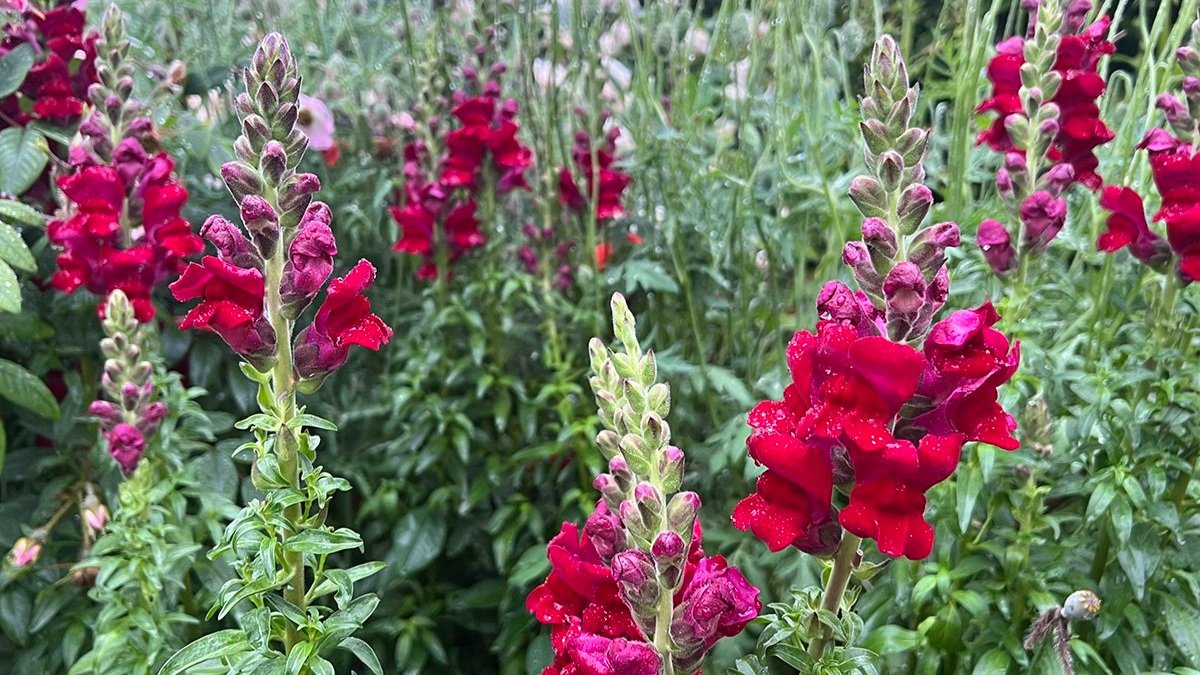
Antirrhinum Potomac Red 

******************************

Ideal for

Cut Flowers

The 'Potomac Series' takes snapdragons to a whole new level, making them an excellent choice for both long blooming gardens and cut flowers. With strong stems, a long vase life, and the ability to thrive in a variety of conditions, these hardy annuals are a must-grow for anyone who loves cut flowers. Their tall, sturdy stems make them easy to arrange in bouquets and can last 7-10 days in a vase. The Rocket series is another good variety for cuts.

Antirrhinum Potomac Deep Orange and Larkspur QIS Dark Blue

******************************

Growing Tips


  • Cool-Season Lovers: Plant out in early spring or fall. They thrive in cool weather and may struggle in extreme summer heat.

  • Support is Key: Provide staking or netting to keep stems upright, especially in windy locations.

  • Pinch for More Blooms: Pinching young plants encourages bushier growth and more flower-producing stems.

  • Harvest at the Right Stage: For the longest vase life, cut stems when only the lower third of the flowers have opened. Their blooms open sequentially from bottom to top.

    Vineyard Gardens December sown Snapdragons are ready to be planted out. By sowing them in the early winter it ensures a strong root system allowing them to bloom all summer long!

Snapdragons Potomac Series

******************************

Snapdragon

Varieties Available

This Season

  • The Potomac Series (Andrew’s Hardy Annual Project): We have a beautiful selection of Potomac Series snapdragons ready to plant now! Andrew seeded four varieties in December—‘Cherry Rose,’ ‘Dark Orange,’ ‘Potomac White,’ and ‘Royal’—which are in larger pots, with strong root systems and a long blooming season. In addition, we have early-arriving Potomac Snapdragons in 3” black pots in Royal, Pink, Orange, and Cherry Rose. These are the best cut-flower snapdragons we will have this season, and they’re hardened off outside and ready to go. 

  • The Rocket series: These are another good variety for cut flowers. Available in White.

  • Snaptini series: We are growing this dwarf series that are too short for cut flowers but extremely beautiful and very hardy. 4 packs are available in Red, White and Yellow.

  • Twinny Peach and the Candy Showers series  in Pink and White.

The ‘Potomac Series' is a rewarding flower to grow with their stunning color range, excellent vase life, and ability to withstand cool temperatures. Add these beauties to your garden, and you’ll enjoy their blooms from spring through fall!

******************************

Learn About : HARDY ANNUALS
In ANNUALS, PLANT PROFILES, APRIL Tags Snapdragons, Snapdragon Potomac Series, Cut Flowers, hardy annuals
Comment

HARDY ANNUAL CUT FLOWERS

April 3, 2026 Karen Logan

Ammi visnaga 'Green Mist' a cousin to Queens Anne Lace

******************************

HARDY ANNUAL

CUT FLOWERS

The Delight of Late Spring Bouquets

Have you ever longed for a garden that bursts into bloom early in the season, filled with flowers ready to be cut and arranged, lifting your spirits from the greys of winter? Hardy annuals might just be your new best friend. These resilient flowers thrive in cooler temperatures, one of the first to awaken your landscape as winter fades.

Learn more about Hardy Annuals & Succesion Gardening

Ammi (Ammi majus)

Larkspur QIS Dark Blue with Ammi Majus

******************************

What are

Hardy Annuals?

Hardy annuals are flowers that complete their entire lifecycle, from seed to bloom to seed again, in one growing season. But unlike tender annuals, they can tolerate (and even prefer) the cooler temperatures of early spring and fall. Vineyard Gardens sows theirs in early winter to establish strong roots, rewarding you with a head start on blooms as soon as the temperatures rises.

Larkspur QIS Dark Blue with Papaver ‘Amazing Grey’ 

Centaurea cyanus 'Blue Boy' - ready to plant!

Ladybird Poppies (Papaver commutatum)

******************************

Favorite Hardy

Annual Cut Flowers

Ready to Plant Today!

Salvia Blue Monday

Antirrhinum Potomac Red 

Want to get started? Here are some tried-and-true hardy annuals, sown in December at Vineyard Gardens, that are beautiful in your garden and on your table.

  • Agrostemma : Brings a delicate yet striking presence to garden borders and meadow plantings. Attracts pollinators. Adds ethereal quality to cut flower arrangements.

    • Ocean Pearl

    • Purple Queen

  • Ammi Majus ‘Select White’ : Delicate, lacy flowers that resemble Queen Anne’s Lace, adding a whimsical touch.

  • Ammi visnaga ‘Green Mist’ : Lacy, green-tinted white flower, that resembles Queen Anne’s lace, adding a soft, ethereal touch to garden borders and floral arrangements.

  • Antirrhinum majus (Snapdragons) Vibrant, long-lasting, and available in a variety of colors. Potomac Series is the best cut-flower snapdragons we will have this season. Hardened off outside and ready to go.

    • Cherry Rose

    • Dark Orange

    • Potomac White

    • Royal

  • Centaurea cyanus (Bachelor’s Buttons): Easy to grow. Frilled blooms atop slender, upright stems. Versatile addition to wildflower meadows, cottage gardens, and floral arrangements..

    • Blue Boy

    • Select Ultraviolet

    • Lady Mauve

  • Larkspur: In the Delphiniums family, gorgeous flowers that will reseed in your sunny garden. Tall, elegant spires that add drama to any bouquet.

    • Deep Blue

    • Fancy Blue Purple

    • Fancy Rose Striped

    • Fancy Smokey Eyes

    • Frosted Skies

    • Misty Lavender

    • QIS 'Lilac

    • QIS 'Pure White'

    • QIS 'White'

  • Lathyrus odoratus (Sweet Peas): Delicate tendrils, a sweet fragrance, and endless color options make these an old-fashioned favorite.

  • Orlaya 'White Lace' : Delicate, lacy white blooms resembling Queen Anne’s Lace. Soft airy appearance. Ready to be planted! A great cut flower.

  • Papaver commutatum (Lady Bird) : Bright red blooms with striking black spots, these poppies add a bold splash of color to bouquets. While their vase life is short, sealing the cut stem with a quick flame can help prolong their beauty.

  • Papaver:

    • Bridal Silk

    • Imperial Pink

    • Papaver rhoeas

  • Salvia horminium : Vibrant, long blooming colorful, papery bracts in shades of pink, purple, and white. Bold color and unique texture add contrast in a cut flower arrangement.

    • Pink Sunday

    • Blue Monday

  • Scabiosa : Adds a bold contrast to garden borders and cut flower arrangements while attracting bees and butterflies.

    • Black Knight

    • Fata Morgana

    • Merlot Red

    • Oxford Blue

Cutting flowers encourages more blooms, so don’t be shy about filling your vases!

Want to dig deeper? Explore a couple of our favorite varieties below and tips for planting success!

Antirrhinum majus 'Snapdragons'
Lathyrus odoratus 'Sweet Peas'

******************************

A Garden

That Gives Back

There’s something magical about stepping into the garden in late spring early summer, scissors in hand, and gathering a bouquet of homegrown blooms. Hardy annuals make this possible, bridging the gap between winter’s dormancy and the abundance of summer.

So why not carve out a little space in your garden for these cold-tolerant beauties?

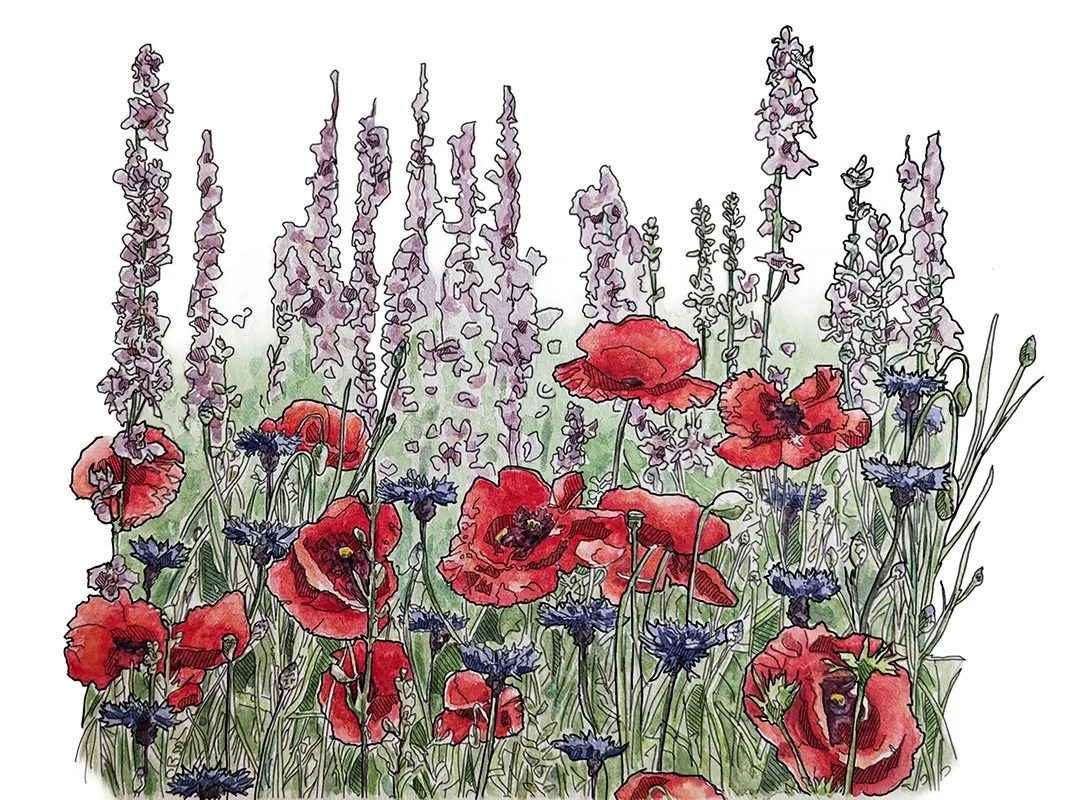
Ladybird Poppies, Cornflower, Larkspur [illustration by karen blackerby logan]

******************************

April Garden Tips
Learn more : Early Spring Color
In SPRING PLANTS, ANNUALS, APRIL, FIELD NOTES Tags hardy annuals, cornflower, snapdragons, larkspur, hardy annual cut flowers, spring bouquets, annual season extenders
Comment

HARDY ANNUALS

March 17, 2026 Karen Logan

Hardy Annuals: Ladybird Poppies, Cornflower, Larkspur [illustration by karen blackerby logan]

*********************

HARDY ANNUALS

The Magic of Succession Gardening

Ever notice a lull in your garden between spring’s bloom and summer’s peak? That’s where hardy annuals shine, seamlessly filling the gaps and keeping the garden alive with color and movement. This technique, known as succession gardening, ensures a continuous display while supporting pollinators.

In December, we seeded a vibrant mix of cornflowers, poppies, Queen Anne’s lace, larkspur, and sweet peas, all carefully timed to establish strong root systems before winter. With early planting (as soon as March or April), these hardy annuals burst into bloom just when the garden needs them most, creating a dynamic, ever-changing landscape. Hardy annuals bloom early and will flower through June and some into July. In addition to blooming in June, these annuals knit together a beautiful planting scheme with the evolving summer perennials.

Learn more about Andrew Wiley's poetic gardening style

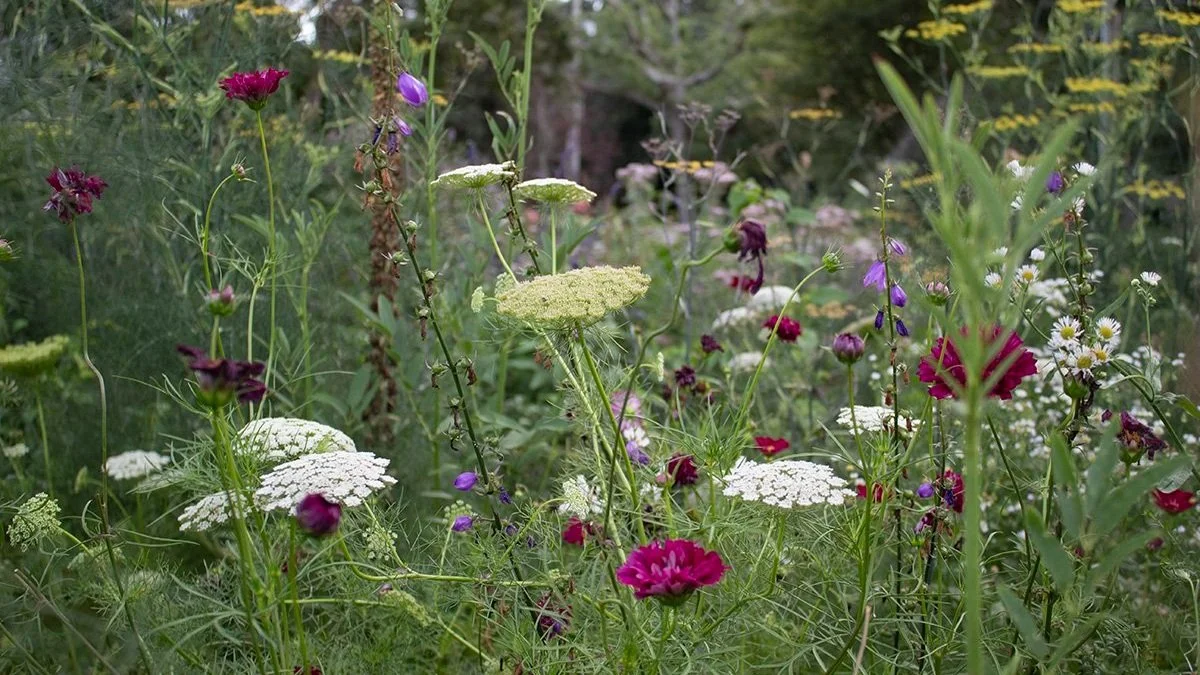
Vineyard Gardens Display bed in June filled with hardy annuals and biennials

******************************

Why Hardy Annuals?

  • Extended bloom time: Last year, poppies planted on March 15 bloomed through July 4!

  • Strong root systems: Early winter seeding promotes healthier, more resilient plants.

  • Pollinator-friendly: A rich nectar source when other flowers are scarce.

  • Seamless integration: They blend naturally into garden beds as perennials take over.

******************************

Best Uses for

Hardy Annuals


🌿 GARDEN BEDS: Hardy Annuals fill empty spaces and create a natural flow with perennials. All the hardy annuals we carry are perfect for your formal or informal flower gardens, landscapes or cottage gardens.

🌿 MASS PLANTINGS: A striking, meadow-like effect with minimal effort.

🌿 CUT FLOWERS: Hardy Annuals are great cut flowers! Below is a selection that are beautiful in your garden and on your table.

  • Larkspur 

  • Sweet peas

  • Centaurea (Corn Flowers) 

  • Scabiosa 

  • Snap dragons (Antirrhinum)

  • Ammi majus/ Ammi majus 'Select White' 

  • Ammi visnaga 'Green Mist'

  • Agrostemma (Both Colors) 

  • Orlaya 

  • Papaver: You must cauterize them (burn the tip of the stem with a lighter) in order for the bloom to last longer after cut.

🌿 CONTAINERS: Hardy Annuals provide early-season lush foliage and color with a mix of tall and trailing varieties. All the hardy annuals we carry are beautiful in containers.

  • Tall Plants: Cornflowers (36”), Queen Anne’s Lace, Larkspur

  • Front of Border/Containers: Asperula orientalis ‘Cloud Nine’ (long-blooming)

  • Other Selections: Poppies, Bellis, Variegated Vinca

🌿 WINDOW BOXES: Shorter hardy annuals are great for lining the front edge of a window boxes.

  • Asperula: Bloom mid April through the end of June 

  • Papaver : Bloom May through second week of July

With a little planning, hardy annuals transform a garden’s “quiet moments” into a season of abundance.

Want to dig deeper? Explore a couple of our favorite varieties below and tips for planting success!

******************************

Available Now!

List of flowering annuals that we have grown from seed that are available now!

  • Lobularia benthamii

  • Malcolmia maritima

  • Malcolmia maritima ‘Choice Mix’

  • Mathiola bicornis

  • Nigella ‘African Bride’

  • Nigella ‘Delft Blue’

  • Nigella ‘Miss Jekyll Indigo’

  • Nigella ‘Miss Jekyll Light Blue’

  • Papaver ‘Amazing Grey’

  • Papaver ‘Angel’s Choir’

  • Papaver ‘Drama Queen’

  • Papaver ‘Hungarian Blue’

  • Papaver ‘Ladybird’

  • Papaver ‘Monet’

  • Papaver rhoeas

  • Papaver ‘Sissinghurst White’

  • Papaver ‘White Cloud’

  • Salvia coccinea

  • Salvia sclarea ‘Blue Monday’
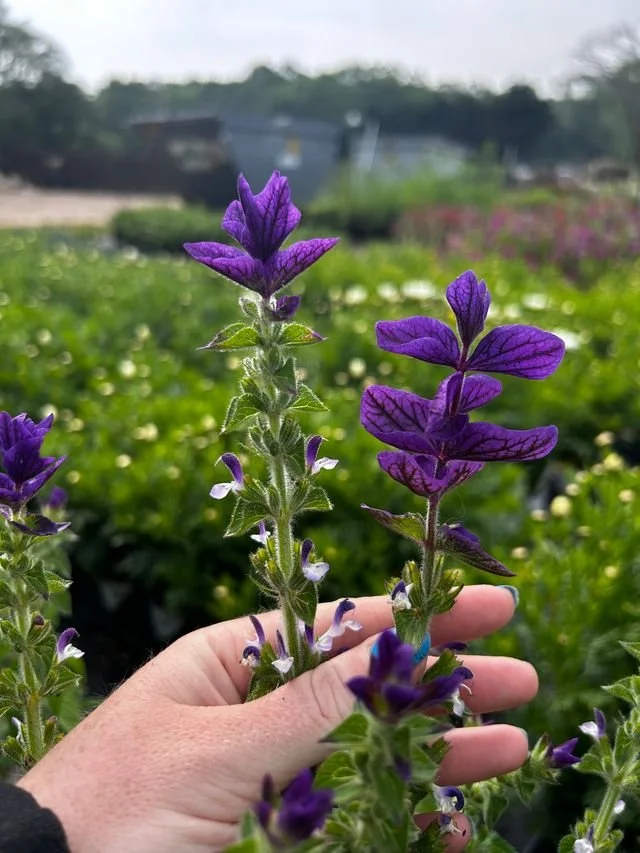
  • Salvia viridis ‘Rose’

  • Scabiosa ‘Blue Cocade’

  • Scabiosa ‘Fata Morgana’ 

  • Agrostemma 'Ocean Pearl'

  • Ammobium grandiflorum

  • Ammi majus

  • Ammi visnaga 'Green Mist'

  • Antirrhinum ‘Black Prince’

  • Antirrhinum ‘F1 Lavender’

  • Antirrhinum ‘Potomac Cherry Rose’

  • Antirrhinum ‘Potomac Orange’

  • Antirrhinum ‘Potomac White’

  • Bellis perennis

  • Calendula ‘Neon’

  • Calendula ‘Pacific Beauty Apricot’

  • Centaurea cyanus 'Blue Boy'

  • Centaurea ‘Pinkie’

  • Dahlia coccinea

  • Daucus carota

  • Eschscholzia ‘Purple Gleam’

  • Eschscholzia ‘White Linen’

  • Foeniculum vulgare

  • Gypsophila ‘Covent Garden’

  • Larkspur 'Light Blue'

  • Linaria ‘Northern Lights’

Antirrhinum (Snapdragons) are part of the Potomac series and Centaurea cyanus (Bachelor Buttons or Cornflowers), are both excellent cut flowers.

Sweet Peas
Hardy Annual Cut Flowers
Snapdragons

******************************

VINEYARD GARDENS

DISPLAY BED

In June our display bed is in it’s full glory filled with hardy annuals and biennials. A tapestry of texture and color.

Poppy Ladybird.jpeg
IMG_1544.jpg
IMG_1549.jpg
IMG_1554.jpg
IMG_1559.jpg
IMG_1566.jpg
IMG_1573.jpg
IMG_2266[1].jpg
IMG_2396[1].jpg
IMG_2398[1].jpg
IMG_2467[1].jpg
IMG_2579[1].jpg
March Gardening Tips
Spring Checklist
In SPRING PLANTS, MARCH, ANNUALS, FIELD NOTES Tags hardy annuals, succession gardening, ladybird poppies, cornflower, sweetpeas
Comment

SUCCESSION GARDENING

March 15, 2026 Karen Logan

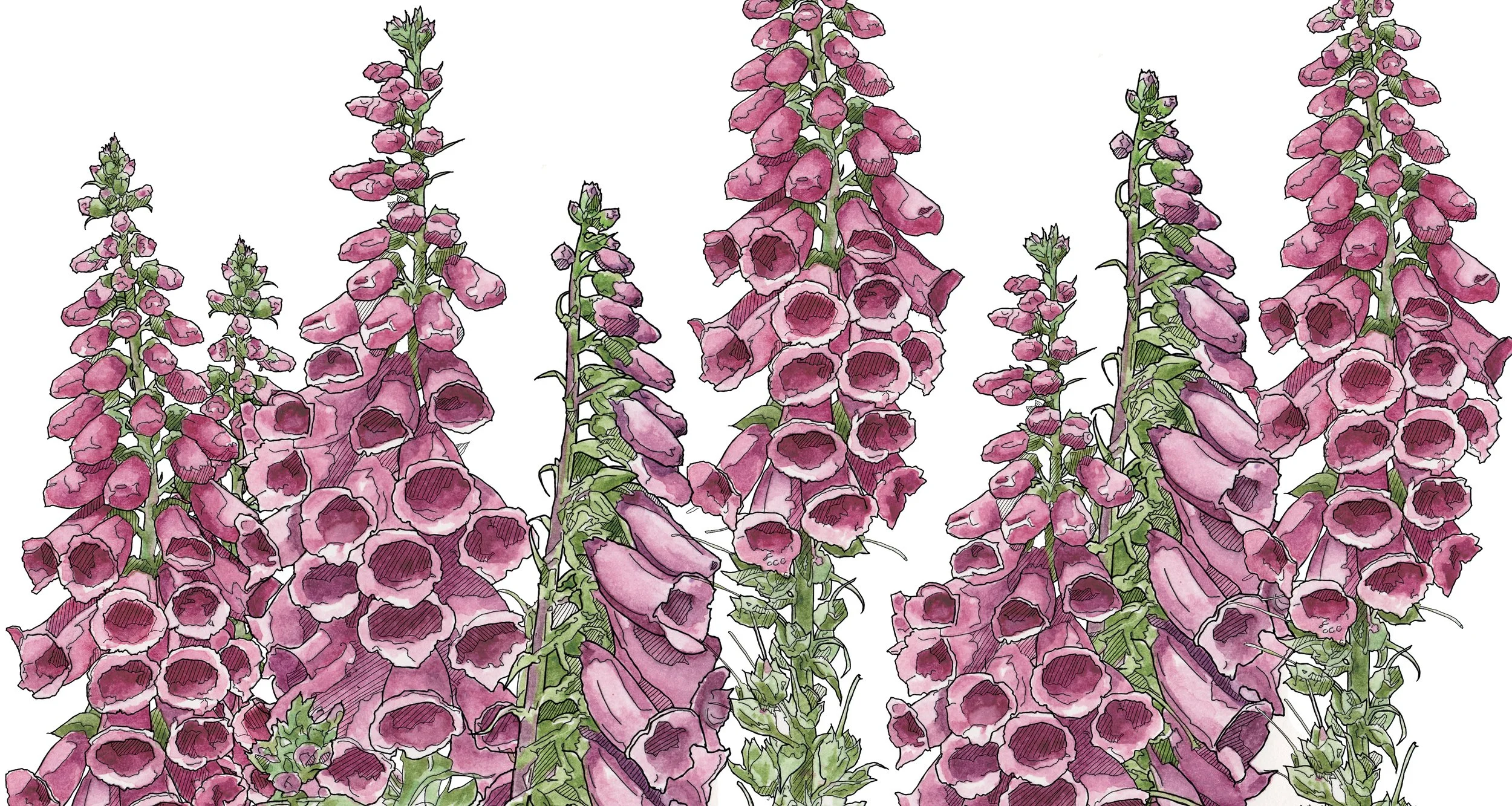
Digitalis purpurea illustration by karen blackerby logan

SUCCESSION

GARDENING

*********************

There is a time in early summer when groups of perennials are either ending their season or just starting their growth spurts. During this ‘in-between’ period in June, the addition of hardy annuals effectively bridges the blooming gap filling in the empty space of spent perennials. This strategic planting is known as succession gardening, a layered gardening style that has continuous blooms throughout the season. Succession gardening breathes more color, cut flowers, birds and bees into the garden.

Vineyard Gardens Nursery

We seeded an assortment of hardy annuals last fall, such as Cornflowers (Centaurea cyanus), Ladybird poppies (Papaver commutatum), Rose of Heaven (Silene ‘Blue Angel’), Larkspurs, Feverfew, Queen Anne’s Lace (Ammi Majus), Snapdragons (Antirrhinum) and some biennials like Lychnis coronaria, Digitalis purpurea (hybrids) and Verbascums that bloom early and will flower through June and some into July. In addition to blooming in June, these annuals knit together a beautiful planting scheme with the evolving summer perennials.

Hardy annuals can be used both in formal gardens and natural settings.

Digitalis purpurea

Feverfew

Verbascum thapsis

SUCCESSION GARDENING TIPS

*********************

The flowers of hardy annuals can occupy negative space in June and then the foliage of neighboring perennials fill that space in July.

  • Hardy annuals are best planted early, typically around mid march, depending on the weather. Planted early they will give you the maximum desired effect.

  • Vineyard Gardens has a great selection of our fall sown hardy annuals that are available now and ready to plant.

  • These plants can be directly sown in the spring but will not give you the size, vigor or highly anticipated jaw dropping display due to the warmer temperatures as spring progresses.

Alternatively, hardy annuals can be removed in July and replaced with tender annuals.

Tender annuals include Cosmos, Dahlias, Tagetes, Browalia, Ageratum, Coleus, Impatiens or Cleome. 

*********************

Cornflowers (Centaurea cyanus)

Verbascum thapsis

Digitalis purpurea ‘Apricot’

SUCCESSION PLANTING - GREAT DIXTER
MARCH GARDEN TIPS

Digitalis purpurea 'Cream'

In GARDEN TIPS, MARCH, ANNUALS, FIELD NOTES Tags hardy annuals, succession gardening, Digitalis purpurea
Comment

SWEET PEAS

March 14, 2026 Karen Logan

Sweet Peas [illustration by karen blackerby logan}

SWEET PEAS

Lathyrus odoratus 

A Fragrant Climbing Favorite

Sweet peas are a hardy annual that thrive in cool weather and full sun, producing an abundance of blooms from late spring through fall. Their delicate tendrils eagerly climb trellises, fences, or arbors, bringing vibrant color and a light, sweet fragrance to the garden. Reminiscent of classic cottage gardens, their scent and charm make them a favorite among gardeners and flower lovers alike.

Part of Andrew Wiley’s Hardy Annual Seed Project, these sweet peas were sown in the fall to develop stronger roots, resulting in longer-lasting flowers and a more robust growing season. Regular watering, deadheading, and support for climbing will keep them flourishing. When plants reach about 8 inches tall, pinching the central stem encourages more branching and fuller growth.

A top choice for cut flowers, sweet peas look stunning in bouquets and bloom more when harvested regularly. Whether left to climb in the garden or brought indoors, they bring beauty and fragrance wherever they grow.

SWEET PEAS A GREAT CHOICE FOR CUT FLOWERS!

Sweet Pea Zinfandel

Sweet Pea High Scent

Sweeet Pea April in Paris

*****************************

SOWING

SWEET PEAS

Follow these simple steps to set your plants up for success.

1. Prepare the Soil

  • Dig a large hole and mix in plenty of compost. Sweet peas thrive in rich, well-draining soil.

  • Choose a sunny spot for the best growth and yield.

2. Planting & Supporting

  • For best results, plant sweet pea seedlings before they become root-bound to avoid root disturbance.

  • Provide a support structure like bamboo canes or trellises to help vines climb.

3. Water & Feed

  • Keep soil consistently moist, but not waterlogged, especially as plants begin to grow and flower.

  • Apply a balanced fertilizer regularly. Peas are heavy feeders and need extra nutrients to thrive.

4. Maintenance for Continuous Growth

  • Deadhead (remove spent blooms) from sweet peas to encourage flowering into late summer or even fall.

  • Cut Sweet Peas frequently to keep plants producing.

WITH PROPER CARE, YOUR SWEET PEAS WILL REWARD YOU WITH LUSH BLOOMS ALL SEASON LONG!

*****************************

NOW AVAILABLE!

A variety of hardy annual Sweet Pea seedlings Andrew sowed in the fall are now ready to be planted out!

High Scent

Cupanis Original

Elegance Lavender

April in Paris

Raspberry Twirl

Queen of Hearts

Mermaids Dream

Enchante

Zinfandel

Royal Wedding

Watermelon

Strawberry Fields

*****************************

MARCH GARDEN TIPS
SPRING CHECKLIST
In ANNUALS, MARCH, PLANT PROFILES Tags spring blooms, hardy annuals, sweet peas
Comment

[PLANT PROFILE] GERBER DAISIES

June 12, 2023 Karen Logan

Gerber Daisies

GERBER DAISIES

Vividly colored Gerber Daisies are best planted in spring after all chances of frost have passed. In our zone, they are considered annuals. They bloom beautifully throughout the summer and die off in winter.

Varieties

_______

* Patio Series:

Tall larger flower

Available in two colors.

* Jaguar Series:

Short & ornamental

GROWING TIPS

____________

* Bred for the outdoors

* Flourish all summer

* Best grown in 7” pots or

larger

* Large bloom size 4”-5”

* Height 15-18” with

flowers

Gerber Daisy, Jaguar Series

Gerber Daisy, Jaguar Series

Gerber Daisy, Jaguar Series

unleash the wild on your yard

doug tallamy

Perennials

summer blooming perennials

In JUNE, ANNUALS, PLANT PROFILES Tags summer blooms, annuals, gerber daisies
Comment

484 State Rd. West Tisbury, MA 02575

Mon - Sat : 8am - 5pm / Sun : 9am-3pm

(508) 693.8512