• Home
  • ABOUT
    • FALL CHECKLIST
    • PROJECTS
    • Landscape Teams
    • LANDSCAPE DESIGN
    • LANDSCAPE CONSTRUCTION
    • LANDSCAPE MAINTENANCE
    • Nursery
    • SALES & DISCOUNTS
    • BULK MATERIAL
    • PLANT PROFILES
  • FIELD NOTES
  • EVENTS
  • TESTIMONIALS
  • Careers
  • Contact
Menu

Vineyard Gardens

484 State Road
West Tisbury, MA, 02575
508.693.8512
Landscaping & Garden Center

Your Custom Text Here

Vineyard Gardens

  • Home
  • ABOUT
  • LANDSCAPING
    • FALL CHECKLIST
    • PROJECTS
    • Landscape Teams
    • LANDSCAPE DESIGN
    • LANDSCAPE CONSTRUCTION
    • LANDSCAPE MAINTENANCE
  • NURSERY
    • Nursery
    • SALES & DISCOUNTS
    • BULK MATERIAL
    • PLANT PROFILES
  • FIELD NOTES
  • EVENTS
  • TESTIMONIALS
  • Careers
  • Contact

SWAMP ROSE

November 9, 2026 Karen Logan

Swamp Rose [illustration by karen blackerby logan]

SWAMP ROSE

Rosa palustris

The Swamp Rose and Wetland Resilience

by karen blackerby logan

Swamp Rose (Rosa palustris) is a native shrub that brings delicate fragrance, stunning autumn color, and amazing ecological benefits to the wetter edges of your landscape. Right at home on Martha’s Vineyard and across New England, this tough native rose proves that a plant can be both stunningly beautiful and wonderfully useful in the garden. Whether you are designing a rain garden, managing a damp boundary, or simply looking to invite more life onto your property, swamp rose is a perfect solution.

Swamp Rose [image credit: karen blackerby logan]

How to Identify Swamp Rose

How to tell\ Swamp Rose apart from traditional garden roses and the invasive multi-flora rose:

  • Stems & Thorns: It features maroonish-red stems armed with paired, downward-curving thorns situated at each node.

  • Foliage: Pinnately compound dark green leaves, transitioning into a brilliant, fiery mix of yellows, oranges, and reds in autumn.

  • Canopy Growth: In natural settings, swamp roses tend to take on a more leggy, open habit, holding their leaves and flowers primarily at the top to capture maximum sunlight. If you prefer a fuller, more bushy look in a home garden setting, pruning in late winter shapes its form.
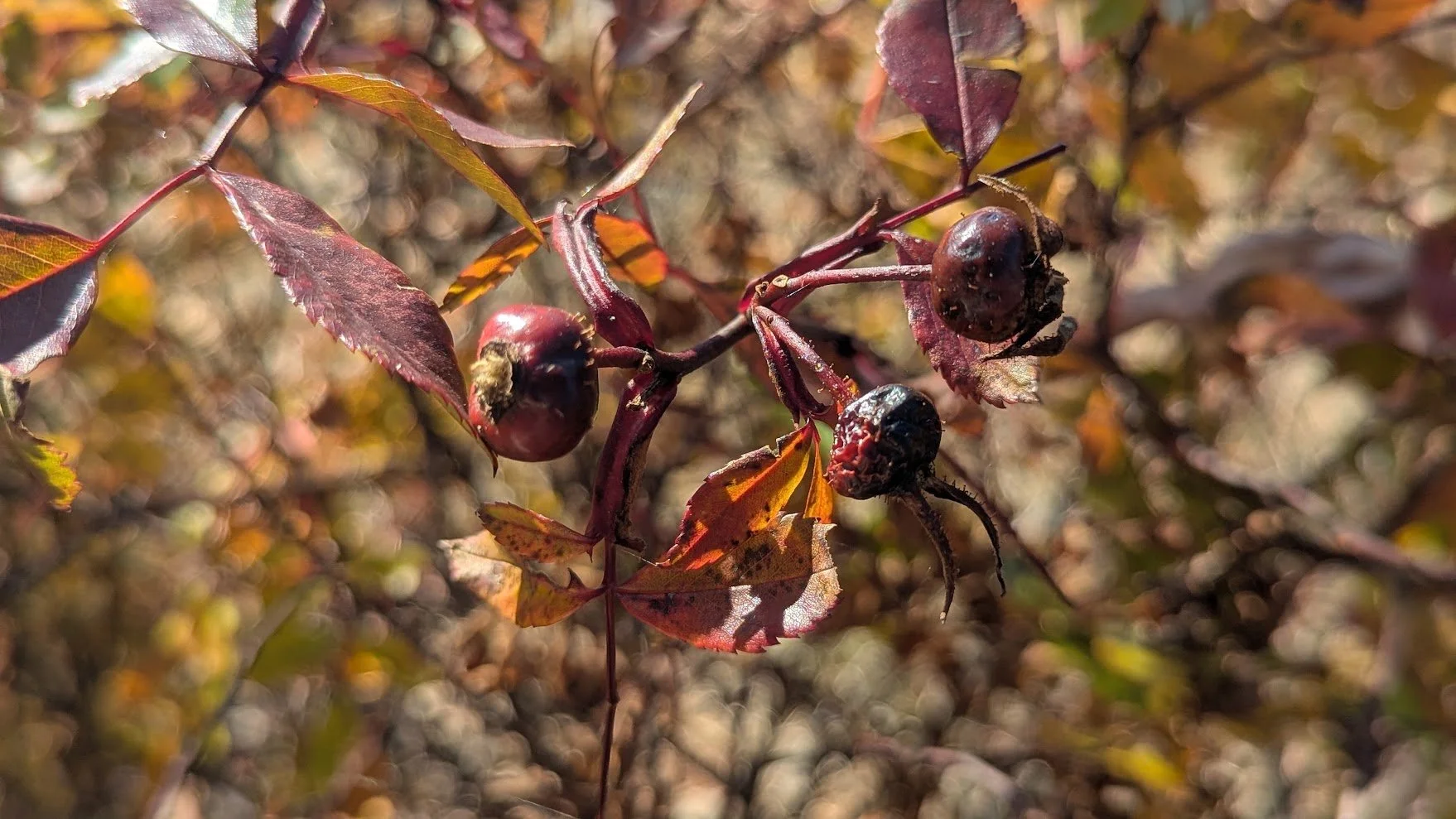
Swamp Rose Rose Hips in November [image credit: karen blackerby logan]
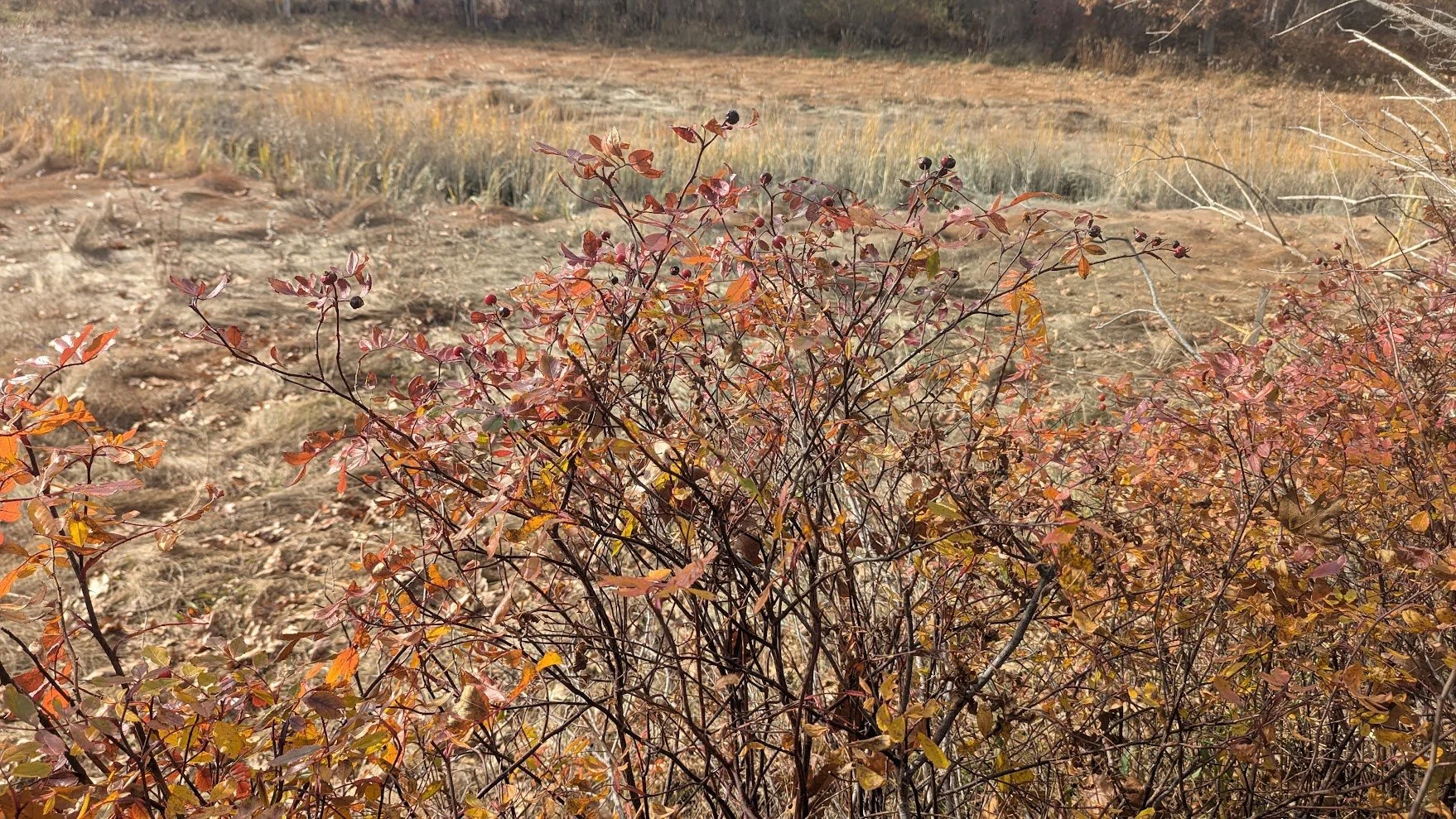
Swamp Rose lining Fore River Estuary in Portland Maine [image credit: karen blackerby logan]

Ecological Benefits

Pollination

From June through August, Swamp Roses are in full bloom with their fragrant pink flowers centered around prominent yellow stamens. Because Swamp Rose flowers do not produce nectar, they offer abundant, high-protein, high-energy pollen. Their open-anther pollen is easily accessible to a wide variety of generalists, including native bees, bumblebees, flies, and beetles.

Caterpillars & Birds

Swamp Rose is a keystone plant that supports over 100 species of native caterpillars. These caterpillars are an essential protein source for nesting songbirds who rely on them to feed their young in spring. While parents forage, those same dense thickets and angled thorns offer safe, secure shelter from predators. In the fall, the flowers give way to bright red, fleshy rose hips. Rose hips are an important winter food source for wildlife like cedar waxwings, wild turkeys, and small mammals. This sets up a brilliant mutualism: the rose hips feed the animals through the winter, while the animals' digestive tracts help break down the hard seed coats, aiding in seed germination and dispersal.

Wetland Resilience & Erosion Control

Swamp rose thrives in rich, moist, acidic soils. While it dislikes permanent standing water, it has evolved to handle seasonal flooding and muddy, low-oxygen wetland soils, an environment that would cause root rot in standard garden roses. Beneath the surface, its root system spreads via underground suckers and rhizomes, forming dense, multi-stemmed thickets. This root network plays a critical role in soil stabilization and erosion control along ponds, streams, and wet depressions, while the dense thickets above ground provide safe nesting cover for birds.

Karen’s sketchbook entry

************

Landscape Design

Layering the Landscape

Swamp roses naturally hold their canopy high to maximize sun exposure, which can leave the lower portion of the shrub a bit bare. In a home landscape, you can create a layered design by planting moisture-loving perennials underneath to hide the lower stems and extend the seasonal interest:

  • Marsh Marigold (Caltha palustris): Offers vibrant yellow spring blooms.

  • Blue Flag Iris (Iris versicolor): Taller purple spring blooms.

  • Canada Anemone (Anemone canadensis): Delicate, bright white spring flowers.

Embrace the wild beauty of New England’s wetlands by incorporating the swamp rose into your garden design!

************
NOVEMBER GARDEN TIPS
[PLANT PROFILE] WINTERBERRY
In FALL PLANTS, PLANT PROFILES, NATIVE PLANTS, WINTER PLANTS, SHRUBS, NOVEMBER Tags native shrub, winter interest shrub, deciduous shrubs, Swamp Rose, Rosa palustris, ecological planting, wetlands shrub
Comment

WINTERBERRY

October 27, 2026 Karen Logan

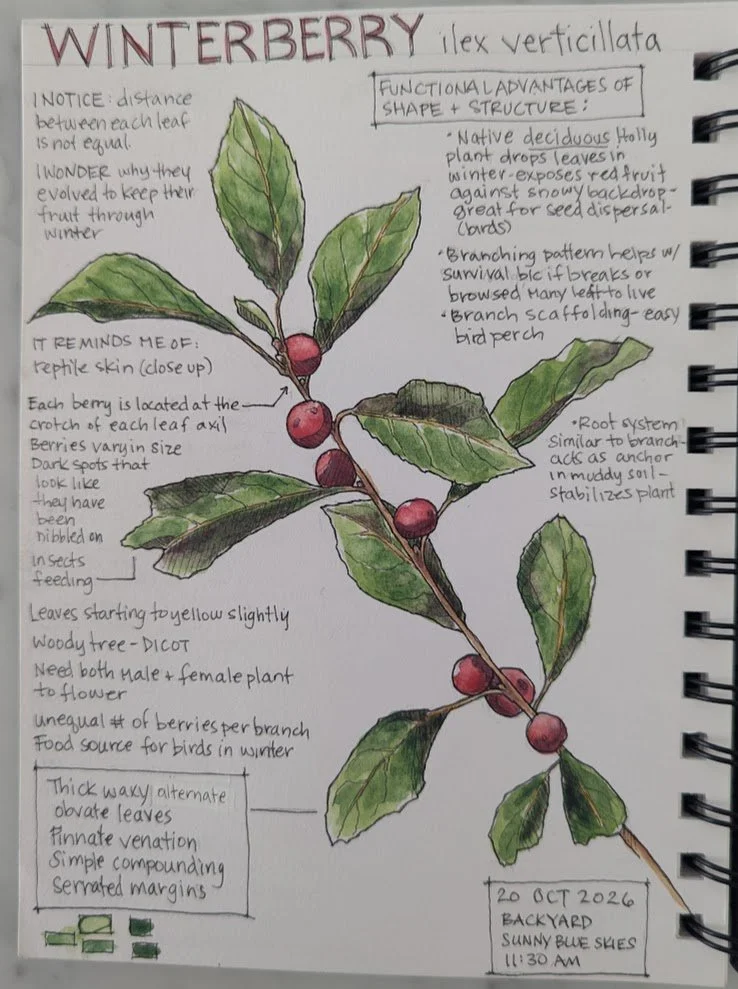
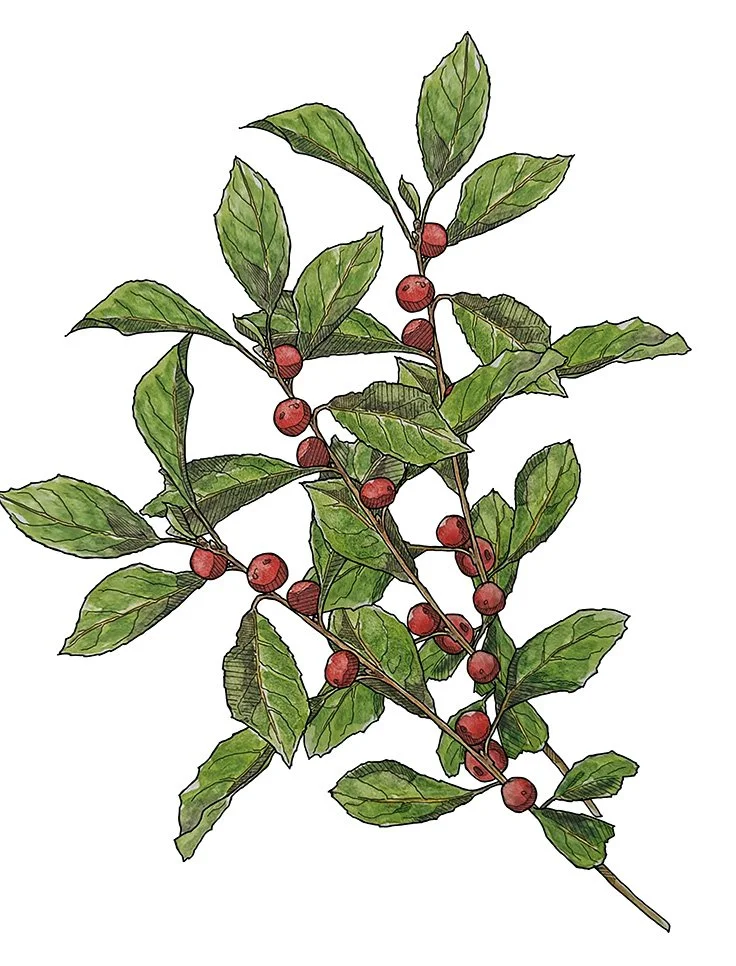
Winterberry [illustration karen blackerby logan]

WINTERBERRY

Ilex verticillata

The Iconic New England Winter Shrub

by karen blackerby logan

When I picture a New England landscape in winter, one native shrub steps forward to light up the woods and wetlands: Winterberry (Ilex verticillata). Unlike its glossy, evergreen cousins in the holly family, common winterberry is deciduous. Its purplish-green foliage turns dark and drops with the frost, leaving behind clusters of bright red berries clinging to the bare, gray branches. These red berries have become synonymous with winter and the holiday season.

Hardier than evergreen hollies and can be grown as far north as Vermont and even southeast Canada.

A Botanical Portrait

Winterberry is native to wetlands and damp thickets across the eastern United States. It is an upright, medium-sized shrub typically reaching 4 to 10 feet tall, with interesting evolutionary adaptations tailored for its native habitat:

  • Deciduous Shrub: By dropping its leaves in winter, the brilliant red berries stand out against snow or gray winter skies, helping foraging birds.

  • Root System: Below ground, winterberry features a robust root system whose branching patterns mirror its above-ground structure, acting as a natural anchor in muddy, saturated soils and stabilizing stream banks and wetland edges.

  • Foliage & Fruit: The leaves are thick, waxy, and feature fine serrations along the margins. If you look closely at where the leaf meets the stem (the leaf axil), you'll find the origin point of its signature berries.

Four-Season Ecological Interest

Winterberry isn't just a winter showstopper; it supports a vibrant local web of life all year round:

  • Spring: Inconspicuous, honey-scented blooms emerge, drawing in native spring pollinators.

  • Summer: Provides a lush, dense green backdrop of foliage that works wonderfully in rain gardens, waterfront plantings, or naturalized screening hedges. (It thrives in acidic, moist soils, is salt-tolerant, though it prefers not to dry out completely).

  • Fall & Winter: The foliage darkens, drops, and leaves behind the fruit display that acts as an essential emergency food source for native overwintering birds, who in turn help disperse seeds across the landscape.

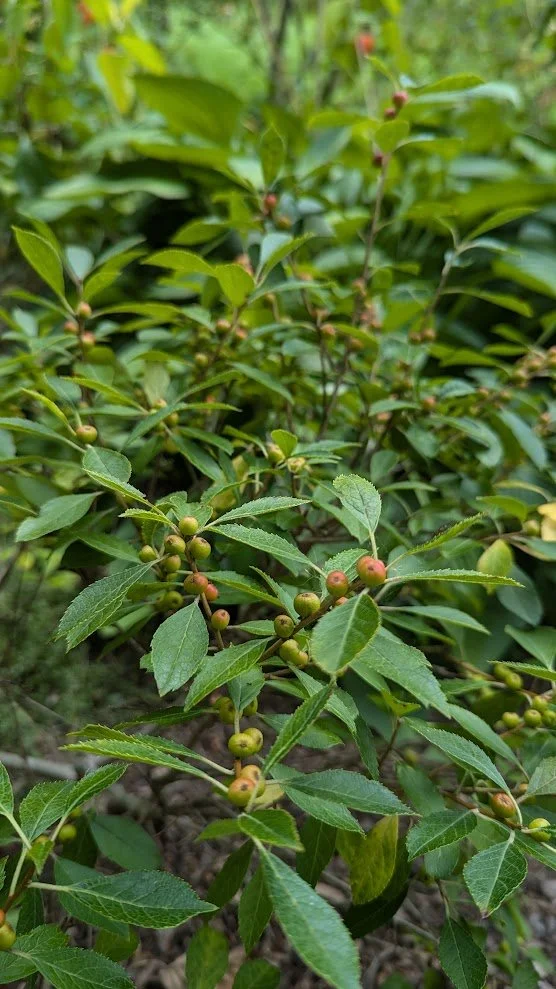
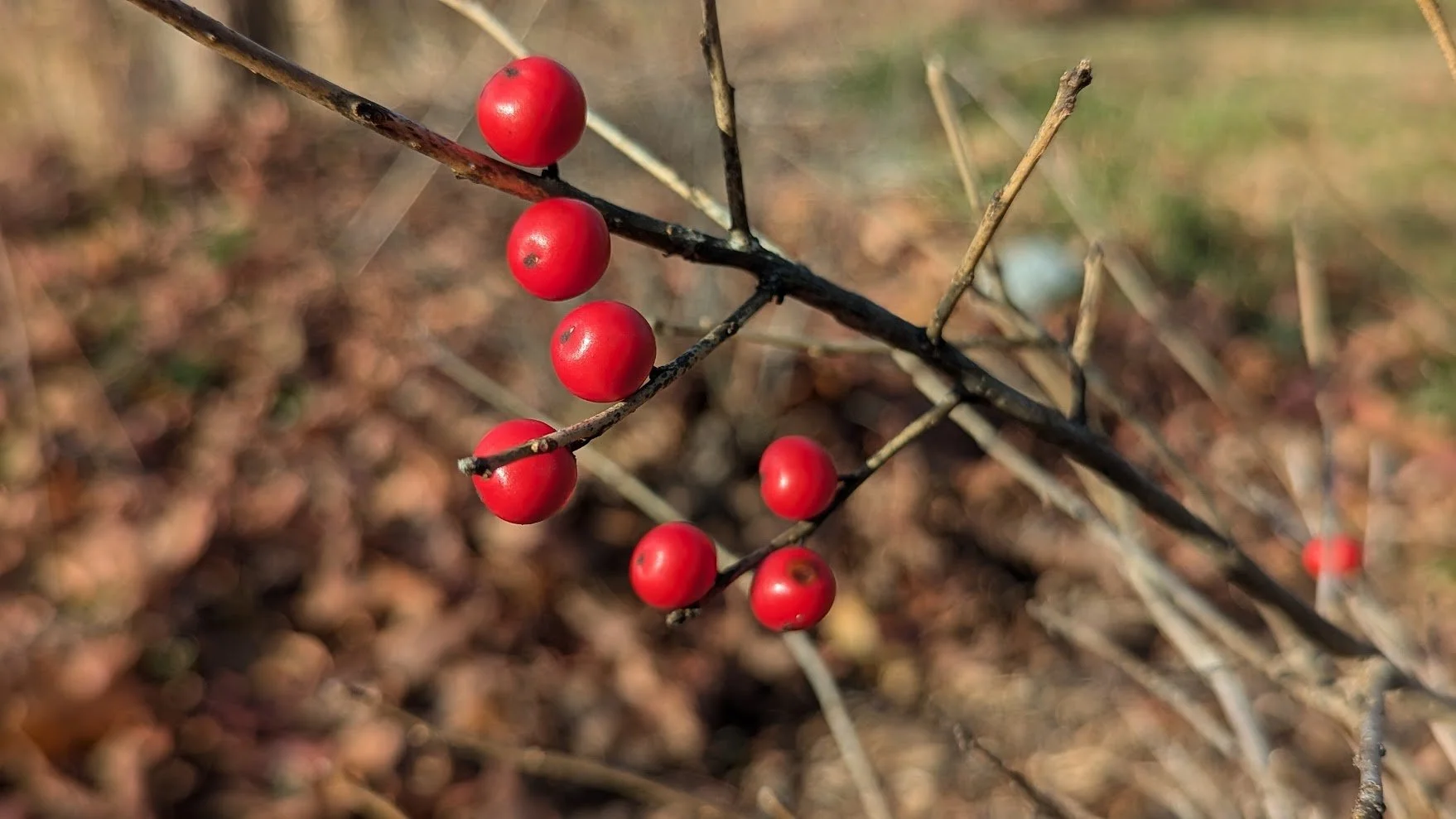
Berries starting to ripen [image credit: karen blackerby logan]

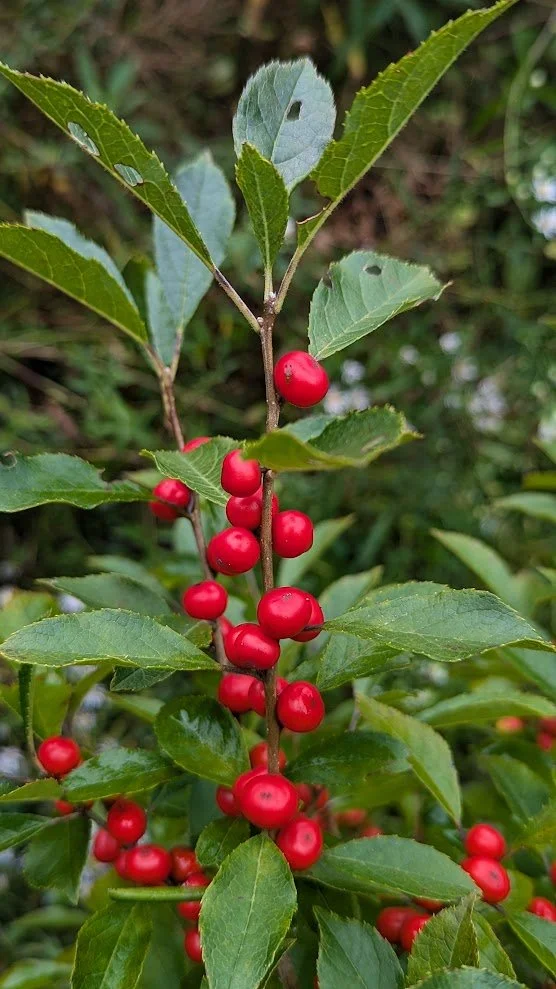
Ripened berries [image credit: karen blackerby logan]

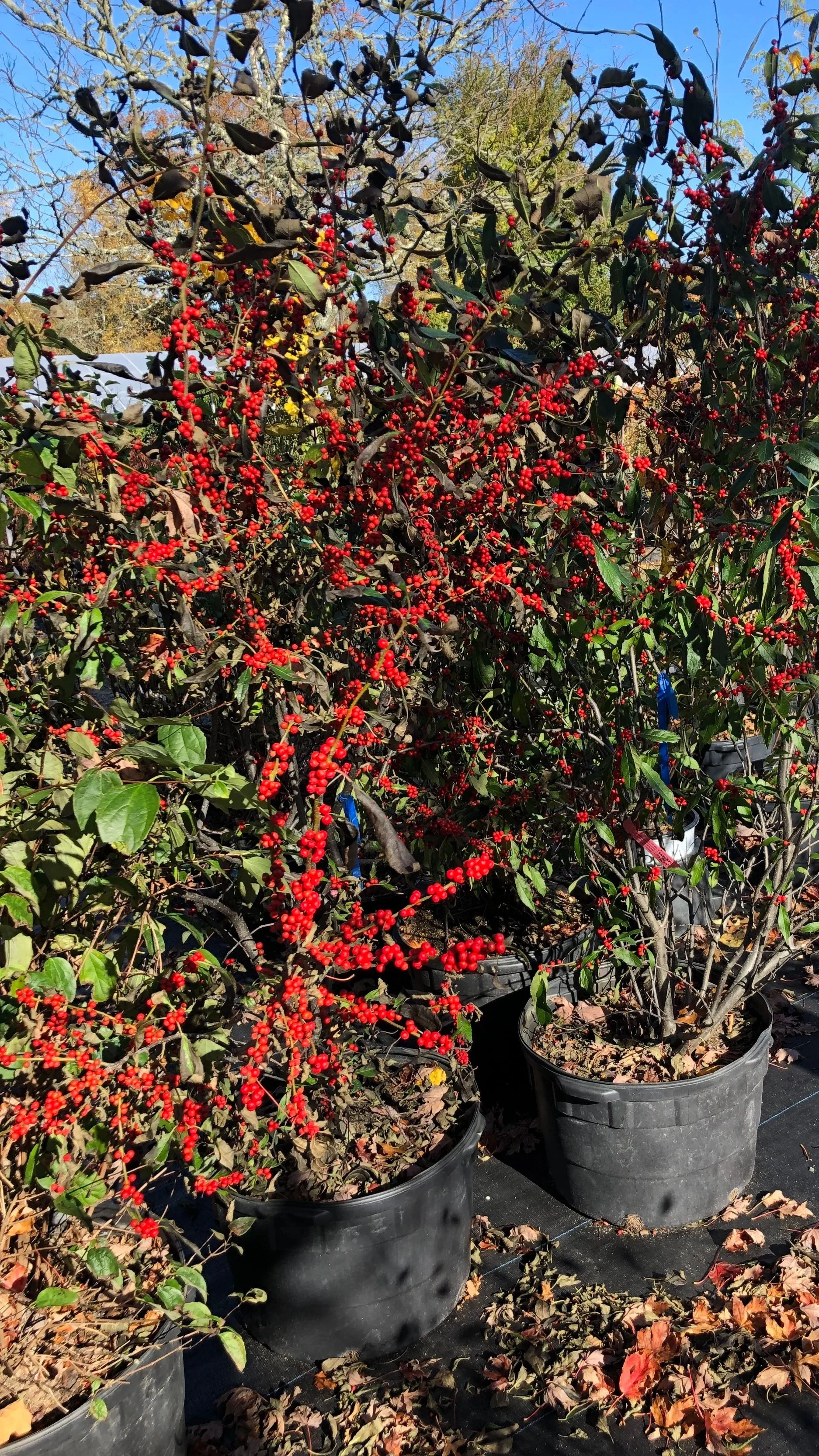
Leaves falling off and berries remain

******************

Cultivars for Every Landscape

Because winterberry is dioecious, meaning individual plants are strictly male or female, you must plant in multiples (at least one male pollinator for every group of female fruit-bearing shrubs) to get that iconic berry display. There are many red berried cultivars and some yellow and orange berried cultivars. Many get very large. 6-8 ft tall by 10 ft wide but there are some smaller cultivars. Popular cultivars include:

  • Red cultivars: Winter Red (classic, heavy-fruiting), Maryland Beauty, Berry Heavy and Little Goblin Red (a compact, 3-4 ft option perfect smaller spaces).

  • Dwarf red berried cultivars: Sprite and Berry Poppins

  • Other varieties: Winter Gold (striking amber-orange berries) and Berry Heavy Gold (Proven Winner variety with large yellow fruit)

  • Male Cultivars: Jim Dandy, Southern Gentleman (pairs with Winter Red or Winter Gold), Mr. Poppins, Apollo and Little Goblin Guy (designed specifically to pollinate the Little Goblin series).  

These Hollies prefer a moist soil and are native to eastern North America. A sunny location will produce more berries.

******************

Deepening

Connection:

Winterberry Through a Nature Journaling Lens

When we encounter a plant like winterberry in the colder months, it offers a wonderful invitation to slow down. This is where I find nature journaling to become such a powerful practice.

Nature journaling isn’t about creating a botanical masterpiece or worrying about whether you can draw; it’s a tool for shifting from passive viewing to active sensory engagement. When you stand before a winterberry shrub this fall and winter:

  1. Take a few slow breaths in the crisp air. Notice the crunch of frozen ground beneath your feet and the stark, geometry of the bare branches.

  2. Instead of just noting "it has red berries," use your journal to ask functional questions: Why are the berries clustered so tightly at the leaf nodes? How does dropping its leaves help the plant conserve energy and signal to birds?

  3. Try sketching just a single twig. Notice how the alternate leaves left tiny scars on the bark, or how the bark's texture differs from other shrubs around it.

By moving past simple observation into active, curious inquiry, we don't just learn about the plant, we tune our own nervous systems to the rhythms of the natural world, stepping gently into the role of environmental stewards.

Stop by Vineyard Gardens to bring this wonderful native plant home and watch the garden magic unfold!

AUTUMN GARDEN
[PLANT PROFILE] ASTERS

Winterberries in November

In FALL PLANTS, PLANT PROFILES, NATIVE PLANTS, OCTOBER, WINTER PLANTS, SHRUBS Tags native shrub, winterberry Ilex verticillata, winter interest shrub, deciduous shrubs
Comment

484 State Rd. West Tisbury, MA 02575

Mon - Fri : 8am - 4:30pm

Sat : 8am-4:00pm

Closed Sundays

(508) 693.8512