• Home
  • ABOUT
    • FALL CHECKLIST
    • PROJECTS
    • Landscape Teams
    • LANDSCAPE DESIGN
    • LANDSCAPE CONSTRUCTION
    • LANDSCAPE MAINTENANCE
    • Nursery
    • SALES & DISCOUNTS
    • BULK MATERIAL
    • PLANT PROFILES
  • FIELD NOTES
  • EVENTS
  • TESTIMONIALS
  • Careers
  • Contact
Menu

Vineyard Gardens

484 State Road
West Tisbury, MA, 02575
508.693.8512
Landscaping & Garden Center

Your Custom Text Here

Vineyard Gardens

  • Home
  • ABOUT
  • LANDSCAPING
    • FALL CHECKLIST
    • PROJECTS
    • Landscape Teams
    • LANDSCAPE DESIGN
    • LANDSCAPE CONSTRUCTION
    • LANDSCAPE MAINTENANCE
  • NURSERY
    • Nursery
    • SALES & DISCOUNTS
    • BULK MATERIAL
    • PLANT PROFILES
  • FIELD NOTES
  • EVENTS
  • TESTIMONIALS
  • Careers
  • Contact

SWAMP ROSE

November 9, 2026 Karen Logan

Swamp Rose [illustration by karen blackerby logan]

SWAMP ROSE

Rosa palustris

The Swamp Rose and Wetland Resilience

by karen blackerby logan

Swamp Rose (Rosa palustris) is a native shrub that brings delicate fragrance, stunning autumn color, and amazing ecological benefits to the wetter edges of your landscape. Right at home on Martha’s Vineyard and across New England, this tough native rose proves that a plant can be both stunningly beautiful and wonderfully useful in the garden. Whether you are designing a rain garden, managing a damp boundary, or simply looking to invite more life onto your property, swamp rose is a perfect solution.

Swamp Rose [image credit: karen blackerby logan]

How to Identify Swamp Rose

How to tell\ Swamp Rose apart from traditional garden roses and the invasive multi-flora rose:

  • Stems & Thorns: It features maroonish-red stems armed with paired, downward-curving thorns situated at each node.

  • Foliage: Pinnately compound dark green leaves, transitioning into a brilliant, fiery mix of yellows, oranges, and reds in autumn.

  • Canopy Growth: In natural settings, swamp roses tend to take on a more leggy, open habit, holding their leaves and flowers primarily at the top to capture maximum sunlight. If you prefer a fuller, more bushy look in a home garden setting, pruning in late winter shapes its form.
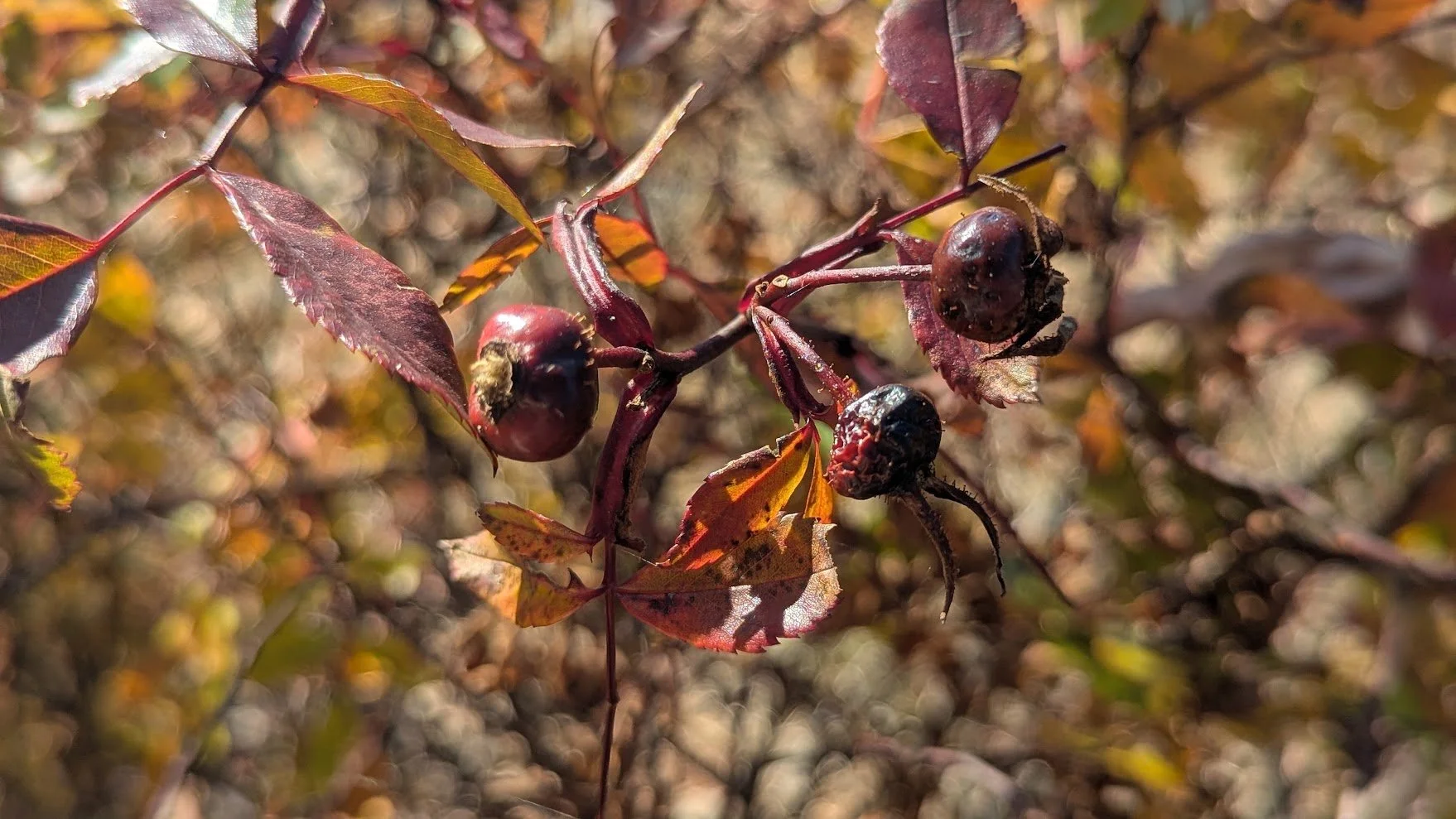
Swamp Rose Rose Hips in November [image credit: karen blackerby logan]
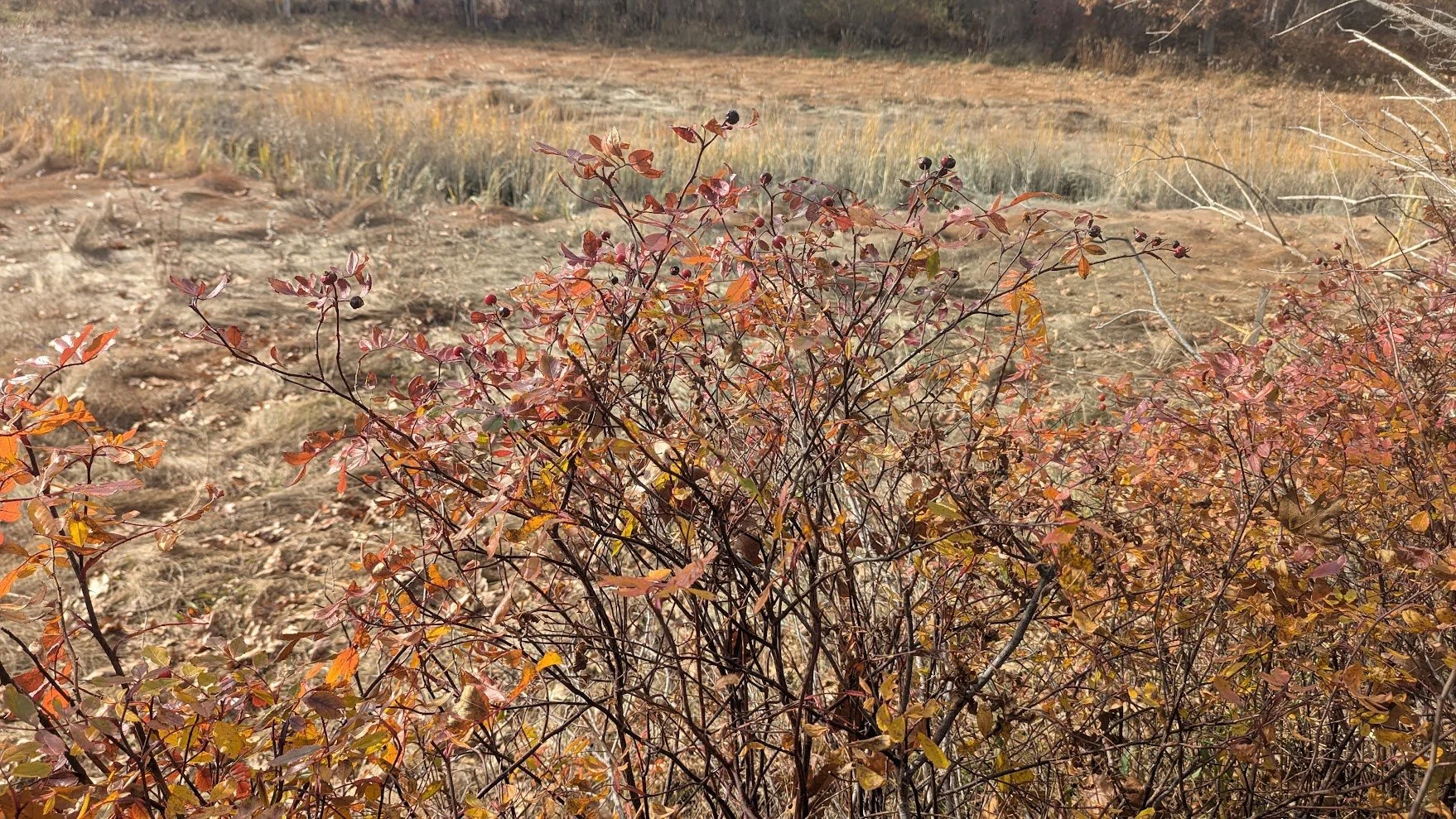
Swamp Rose lining Fore River Estuary in Portland Maine [image credit: karen blackerby logan]

Ecological Benefits

Pollination

From June through August, Swamp Roses are in full bloom with their fragrant pink flowers centered around prominent yellow stamens. Because Swamp Rose flowers do not produce nectar, they offer abundant, high-protein, high-energy pollen. Their open-anther pollen is easily accessible to a wide variety of generalists, including native bees, bumblebees, flies, and beetles.

Caterpillars & Birds

Swamp Rose is a keystone plant that supports over 100 species of native caterpillars. These caterpillars are an essential protein source for nesting songbirds who rely on them to feed their young in spring. While parents forage, those same dense thickets and angled thorns offer safe, secure shelter from predators. In the fall, the flowers give way to bright red, fleshy rose hips. Rose hips are an important winter food source for wildlife like cedar waxwings, wild turkeys, and small mammals. This sets up a brilliant mutualism: the rose hips feed the animals through the winter, while the animals' digestive tracts help break down the hard seed coats, aiding in seed germination and dispersal.

Wetland Resilience & Erosion Control

Swamp rose thrives in rich, moist, acidic soils. While it dislikes permanent standing water, it has evolved to handle seasonal flooding and muddy, low-oxygen wetland soils, an environment that would cause root rot in standard garden roses. Beneath the surface, its root system spreads via underground suckers and rhizomes, forming dense, multi-stemmed thickets. This root network plays a critical role in soil stabilization and erosion control along ponds, streams, and wet depressions, while the dense thickets above ground provide safe nesting cover for birds.

Karen’s sketchbook entry

************

Landscape Design

Layering the Landscape

Swamp roses naturally hold their canopy high to maximize sun exposure, which can leave the lower portion of the shrub a bit bare. In a home landscape, you can create a layered design by planting moisture-loving perennials underneath to hide the lower stems and extend the seasonal interest:

  • Marsh Marigold (Caltha palustris): Offers vibrant yellow spring blooms.

  • Blue Flag Iris (Iris versicolor): Taller purple spring blooms.

  • Canada Anemone (Anemone canadensis): Delicate, bright white spring flowers.

Embrace the wild beauty of New England’s wetlands by incorporating the swamp rose into your garden design!

************

NOVEMBER GARDEN TIPS
[PLANT PROFILE] WINTERBERRY
In FALL PLANTS, PLANT PROFILES, NATIVE PLANTS, WINTER PLANTS, SHRUBS, NOVEMBER Tags native shrub, winter interest shrub, deciduous shrubs, Swamp Rose, Rosa palustris, ecological planting, wetlands shrub
Comment

JOE-PYE WEED

August 11, 2026 Karen Logan

JOE-PYE WEED

Eutrochium

by karen blackerby logan

A member of the Asteraceae (Aster) family, Joe-Pye weed (Eutrochium) is a late-summer blooming native with vital ecological value. It serves as a primary late-season nectar source for pollinators, including monarchs, swallowtails, and native bees, while its seed heads provide key autumn and winter forage for songbirds. Beyond its ecological importance, Joe-Pye weed is a wonderful landscape plant, helping with erosion control, naturalizing rain gardens, woodland borders, pond shores, and native meadows.

Joe-Pye Weed [illustration by karen blackerby logan]

Botanical Illustration through a Biomimicry Lens

In nature, every form follows a functional purpose. When you observe plant architecture closely, you begin to uncover universal evolutionary strategies.

For me, creating botanical illustrations is far more than capturing a likeness: it is an exercise in field observation. While drawing in the garden, I observe which species interact with the plant, feel its textures, smell its aromas, and attempt to deduce its defense mechanisms, structural adaptations, and reproductive strategies. It becomes a fascinating game of botany detective: analyzing the details using all my senses, and then diving into reliable research to see how accurate my hypotheses are.

Here is what I observed while illustrating and sitting with Joe-Pye weed in the garden, in combination with researching the botanical science behind its design.

——————————-

Observing Nature’s Design:

The Architecture, Strategies, and Ecology of Joe-Pye Weed

karen’s sketchbook observations

Architectural Height & Stem Resilience

  • Tall Structure (4–8+ feet): Growing tall allows Joe-Pye weed to have greater access to sunlight while surrounded by lower vegetation.

  • Pithed or Hollow Stems: The thick stems provide great structural integrity, resisting wind and rain without toppling over.

  • Purple Stems: The purple stems have anthocyanin pigment that acts as a sun shield protecting the plant from solar radiation and deterring herbivorous insects.

Leaf Structure and Shape

  • Whorled Leaf Pattern: Radiating out in whorls of 3 to 6 leaves per node, this arrangement prevents upper leaves from completely shading lower foliage, maximizing sunlight capture.

  • Serrated Margins: The finely jagged leaf edges help facilitate rapid transpiration, absorbing and releasing moisture to cool the plant during hot summer days.

  • Chemical Defenses: When crushed, the leaves emit a subtle, sweet vanilla scent, which serve as an effective chemical deterrent against browsing deer and rabbits.

Inflorescence & Pollination

  • Inflorescence: Arranged in broad, dome grouping, many tiny florets form a sturdy, accessible platform. This allows butterflies and bees to feed continuously while expending minimal energy.

  • Styles: The fuzzy, thread-like bristles on the flower heads are actually extended styles coated in pollen, guaranteeing that visiting insects will help with cross-pollination.

  • Nectar: The faint vanilla aroma and the high sugar concentration in the nectar rewards migrating butterflies and native bees in late summer.

Propagation & Soil Stabilization

  • Wind-Dispersed Seeds: The seeds, attached to delicate bristles operate much like dandelion seeds, floating in the breeze to their next destination. In winter, non-dispersed seeds become vital energy sources for songbirds.

  • Rhizomes: Below ground, Joe-Pye weed spreads via short, woody rhizomes. This forms dense, stable colonies that bind the soil, making it exceptional for controlling shoreline and wetland erosion.

    ——————————-

Martha’s Vineyard Native Joe-Pye Weed Species

Four Eutrochium species native to Martha’s Vineyard and the surrounding coastal plain ecosystem. While they look similar at first glance, key botanical details set them apart:

Hollow Joe-Pye Weed (Eutrochium fistulosum)

It features hollow, smooth stems that are often purplish. It is the tallest of the Eutrochium, frequently exceeding 6.5 to 8 feet tall. Very common in damp, sunny areas, wet meadows, and roadside ditches.

Purple Joe-Pye Weed (Eutrochium purpureum)

Stems are solid and green, with distinct purple pigmentation mainly on leaf nodes. Leaves release a noticeable vanilla fragrance when crushed. Prefers slightly cooler, partially shaded spots along woodland edges and clearings.

Coastal Plain Joe-Pye Weed (Eutrochium dubium)

Shorter and more compact (typically 3–5 feet), making it well-suited for home gardens. It has fewer individual florets per flower head (5–9 florets per head, compared to 9–22 in spotted Joe-Pye weed) and thicker, darker leaves. Well adapted to the sandy, acidic soil conditions and coastal damp habitats found throughout Martha's Vineyard, including pond shores and meadows.

Spotted Joe-Pye Weed (Eutrochium maculatum)

Identified by its stems that are heavily mottled with dark purple spots (some variations can occasionally feature hollow stems). It features flat-topped flower clusters rather than domed ones and has the widest geographic range of all the Joe-Pye species. Thrives in full sun to partial shade in medium-wet to saturated soils.

Garden Companion Plantings

To create a vibrant, ecologically rich native bed, pair Joe-Pye weed with these native island companions that share similar sun and moisture requirements:

  • Blue Flag Iris (Iris versicolor)

  • New England Aster (Symphyotrichum novae-angliae)

  • Swamp Milkweed (Asclepias incarnata)

  • Flat-Topped White Aster (Doellingeria umbellata)

  • Golden Alexanders (Zizia aurea)

  • Boneset (Eupatorium perfoliatum)

By welcoming Joe-Pye weed into our gardens, we don't just add height and late-season color, we give our island's pollinators a vital lifeline when they need it most.

In AUGUST, PLANT PROFILES, NATIVE PLANTS Tags Joe-Pye Weed, Eutrochium, native perennials of martha's vineyard, ecological planting, botanical illustration
Comment

484 State Rd. West Tisbury, MA 02575

Mon - Fri : 8am - 4:30pm

Sat : 8am-4:00pm

Closed Sundays

(508) 693.8512