
SWAMP ROSE
Rosa palustris
The Swamp Rose and Wetland Resilience
by karen blackerby logan
Swamp Rose (Rosa palustris) is a native shrub that brings delicate fragrance, stunning autumn color, and amazing ecological benefits to the wetter edges of your landscape. Right at home on Martha’s Vineyard and across New England, this tough native rose proves that a plant can be both stunningly beautiful and wonderfully useful in the garden. Whether you are designing a rain garden, managing a damp boundary, or simply looking to invite more life onto your property, swamp rose is a perfect solution.
Swamp Rose [image credit: karen blackerby logan]
How to Identify Swamp Rose
How to tell\ Swamp Rose apart from traditional garden roses and the invasive multi-flora rose:
Stems & Thorns: It features maroonish-red stems armed with paired, downward-curving thorns situated at each node.
Foliage: Pinnately compound dark green leaves, transitioning into a brilliant, fiery mix of yellows, oranges, and reds in autumn.
Canopy Growth: In natural settings, swamp roses tend to take on a more leggy, open habit, holding their leaves and flowers primarily at the top to capture maximum sunlight. If you prefer a fuller, more bushy look in a home garden setting, pruning in late winter shapes its form.
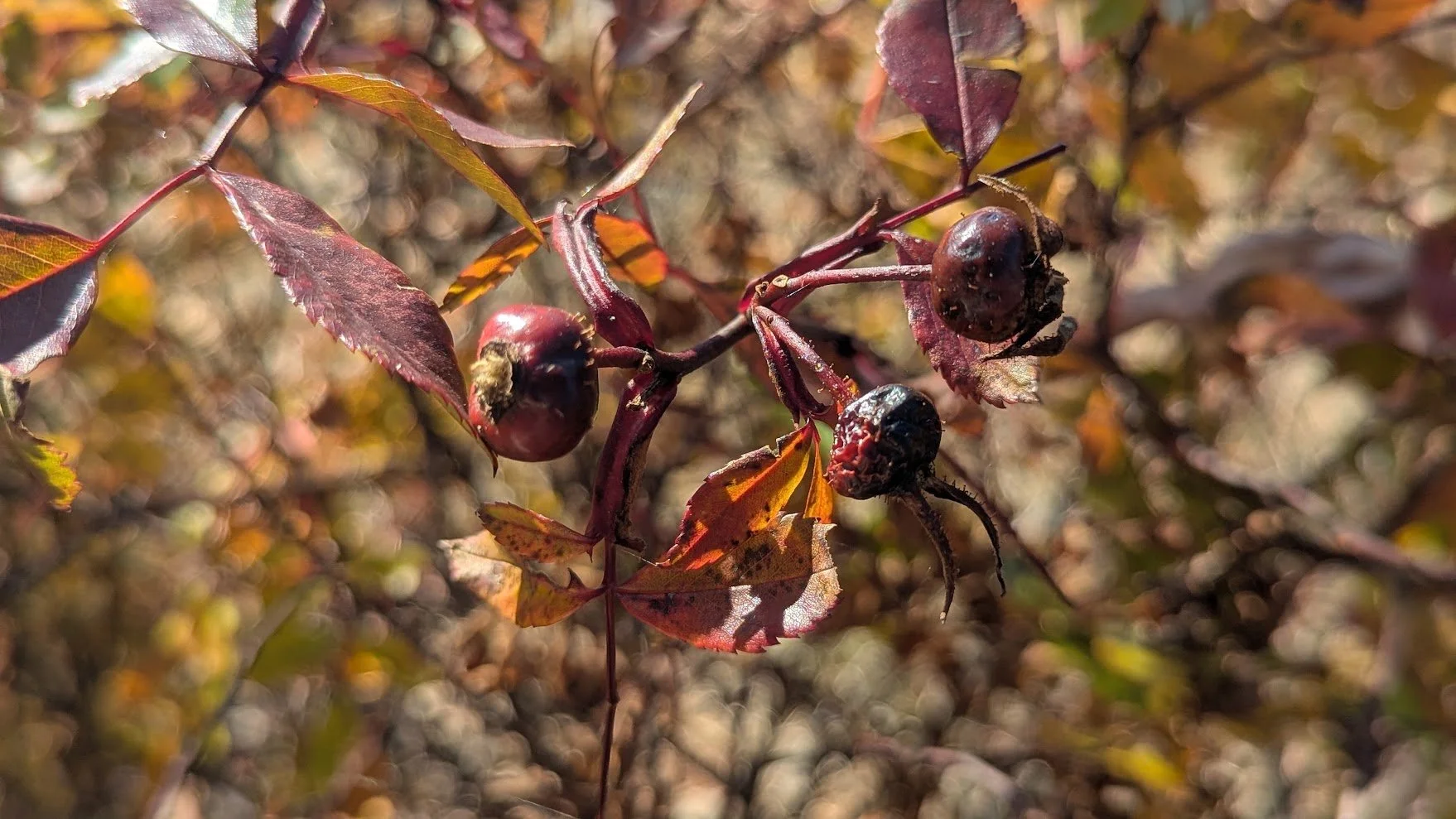
Swamp Rose Rose Hips in November [image credit: karen blackerby logan]
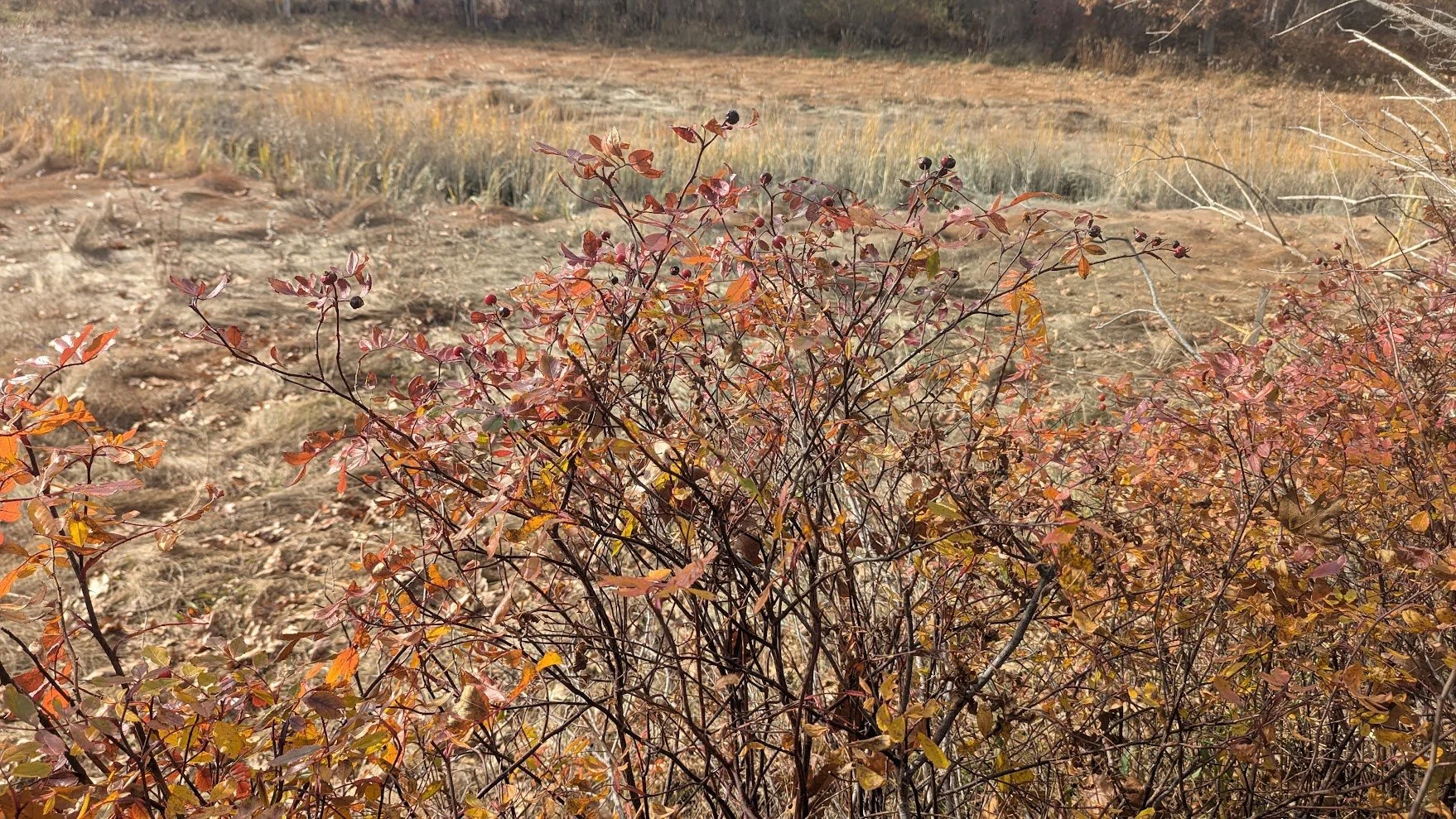
Swamp Rose lining Fore River Estuary in Portland Maine [image credit: karen blackerby logan]
Ecological Benefits
Pollination
From June through August, Swamp Roses are in full bloom with their fragrant pink flowers centered around prominent yellow stamens. Because Swamp Rose flowers do not produce nectar, they offer abundant, high-protein, high-energy pollen. Their open-anther pollen is easily accessible to a wide variety of generalists, including native bees, bumblebees, flies, and beetles.
Caterpillars & Birds
Swamp Rose is a keystone plant that supports over 100 species of native caterpillars. These caterpillars are an essential protein source for nesting songbirds who rely on them to feed their young in spring. While parents forage, those same dense thickets and angled thorns offer safe, secure shelter from predators. In the fall, the flowers give way to bright red, fleshy rose hips. Rose hips are an important winter food source for wildlife like cedar waxwings, wild turkeys, and small mammals. This sets up a brilliant mutualism: the rose hips feed the animals through the winter, while the animals' digestive tracts help break down the hard seed coats, aiding in seed germination and dispersal.
Wetland Resilience & Erosion Control
Swamp rose thrives in rich, moist, acidic soils. While it dislikes permanent standing water, it has evolved to handle seasonal flooding and muddy, low-oxygen wetland soils, an environment that would cause root rot in standard garden roses. Beneath the surface, its root system spreads via underground suckers and rhizomes, forming dense, multi-stemmed thickets. This root network plays a critical role in soil stabilization and erosion control along ponds, streams, and wet depressions, while the dense thickets above ground provide safe nesting cover for birds.
Karen’s sketchbook entry
************
Landscape Design
Layering the Landscape
Swamp roses naturally hold their canopy high to maximize sun exposure, which can leave the lower portion of the shrub a bit bare. In a home landscape, you can create a layered design by planting moisture-loving perennials underneath to hide the lower stems and extend the seasonal interest:
Marsh Marigold (Caltha palustris): Offers vibrant yellow spring blooms.
Blue Flag Iris (Iris versicolor): Taller purple spring blooms.
Canada Anemone (Anemone canadensis): Delicate, bright white spring flowers.
Embrace the wild beauty of New England’s wetlands by incorporating the swamp rose into your garden design!
************