• Home
  • ABOUT
    • FALL CHECKLIST
    • PROJECTS
    • Landscape Teams
    • LANDSCAPE DESIGN
    • LANDSCAPE CONSTRUCTION
    • LANDSCAPE MAINTENANCE
    • Nursery
    • SALES & DISCOUNTS
    • BULK MATERIAL
    • PLANT PROFILES
  • FIELD NOTES
  • EVENTS
  • TESTIMONIALS
  • Careers
  • Contact
Menu

Vineyard Gardens

484 State Road
West Tisbury, MA, 02575
508.693.8512
Landscaping & Garden Center

Your Custom Text Here

Vineyard Gardens

  • Home
  • ABOUT
  • LANDSCAPING
    • FALL CHECKLIST
    • PROJECTS
    • Landscape Teams
    • LANDSCAPE DESIGN
    • LANDSCAPE CONSTRUCTION
    • LANDSCAPE MAINTENANCE
  • NURSERY
    • Nursery
    • SALES & DISCOUNTS
    • BULK MATERIAL
    • PLANT PROFILES
  • FIELD NOTES
  • EVENTS
  • TESTIMONIALS
  • Careers
  • Contact

PANICUM (SWITCHGRASS)

September 21, 2026 Karen Logan

Panicum ‘Heavy Metal’

PANICUM

Panicum virgatum (Switchgrass) is native to Martha's Vineyard and the New England region. It is a quintessential North American warm-season grass that thrives locally in coastal plain environments, fields, and woodland edges.

Switchgrass serves many purposes in the landscape, adding height and texture, as well as giving a natural feel in ecological restoration projects. Easily grown in average to wet soils in full sun to part shade, this clump-forming grass typically stands 3 to 6 feet tall and spreads through rhizomes. Once established, it is remarkably low-maintenance, thriving in hot sun and tolerating drought without requiring rich soil.

Seasonal Interest & Wildlife Value

  • Summer & Fall: Bright green leaves line the stems throughout the growing season before turning a brilliant yellow in the fall. In mid-to-late summer, it features finely-textured, pink-tinged, panicles that mature into delicate red seed heads.

  • Winter: The seed plumes stay through winter and are a good food source for birds. The dense habit provides crucial winter cover for small mammals.

  • Ecological Role: Switchgrass acts as an important native host plant for butterflies such as the tawny edge skipper and Delaware skipper.

Popular Panicum Cultivars

  • Panicum virgatum 'Cloud Nine' (Switchgrass): One of the tallest varieties available, featuring upright bluish foliage with rose-colored seed panicles that transition to rich golden shades in autumn. It provides ideal wildlife habitat and food for songbirds.

  • Panicum virgatum 'Shenandoah' (Red Switchgrass): A stunning red switchgrass with upright foliage that becomes red-tinted during the growing season culminating in a dazzling red-leaved show in fall. It is exceptionally drought-tolerant and easy to maintain.

  • Panicum virgatum 'Heavy Metal' (Blue Switchgrass): Features a strictly upright habit with metallic-blue foliage. Airy, pink-tinted blooms appear in July, highlighting the steely blue leaves, and beautiful when planted in masses.
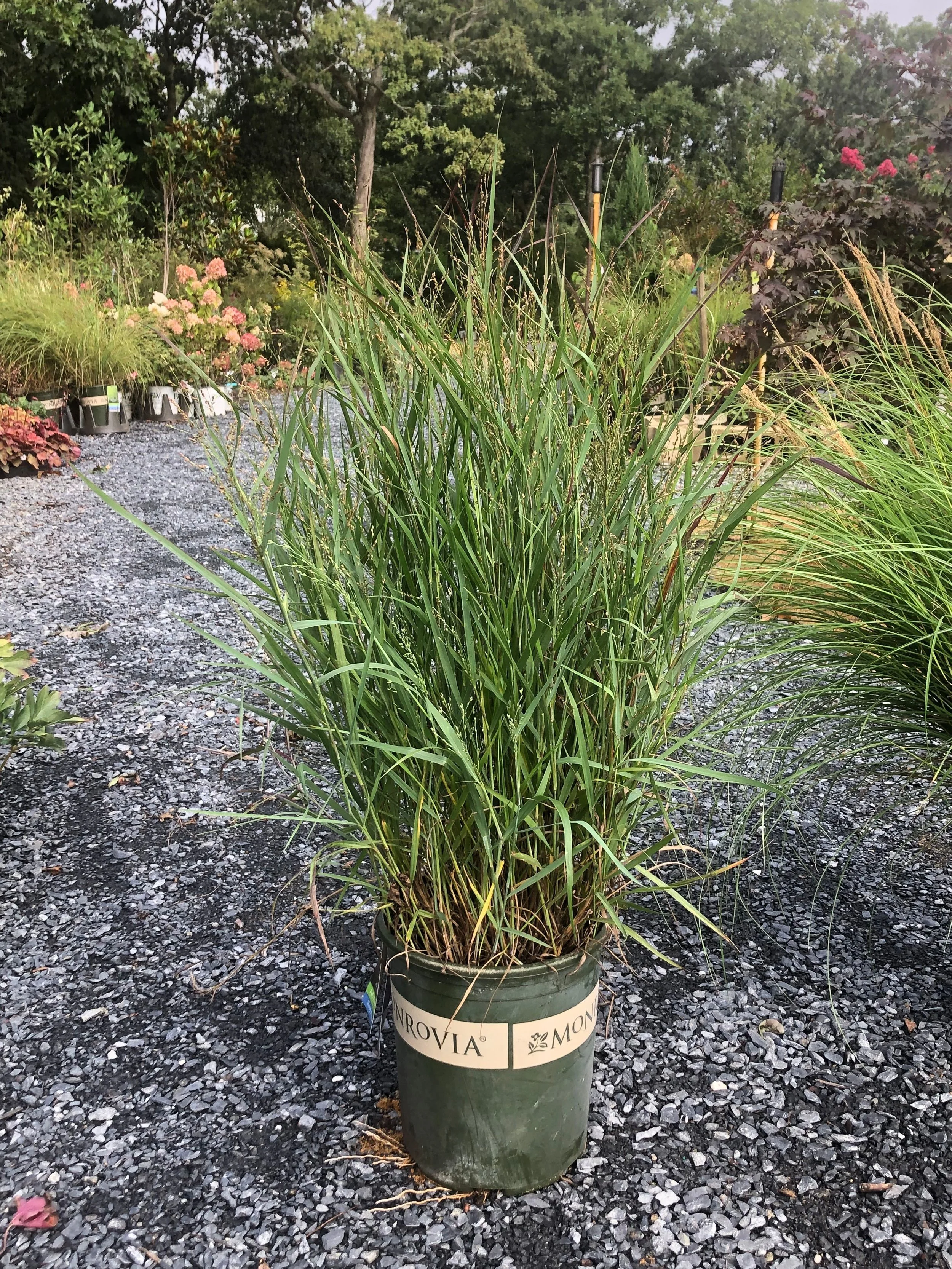
Panicum ‘Heavy Metal’

Panicum ‘Dewey Blue’

Panicum

In SEPTEMBER, FALL PLANTS, GRASSES, PLANT PROFILES, NATIVE PLANTS Tags grasses, fall color, Switch grass, Panicum virgatum, native grass
Comment

AMSONIA

May 27, 2026 Karen Logan

AMSONIA

A Native Perennial with Spring Flowers and Fall Color

Long ago, Amsonia tabernaemontana (commonly known as Bluestar) first caught my eye with its distinct mounded shape and delicate blue flowers. Later that same year, it grabbed my attention all over again when its foliage transformed into a brilliant, glowing yellow fall color. Amsonia’s rounded shape and sturdy form result from many individual stems with the exact right length to round it out. When in bloom, clusters of small, soft-blue, star-shaped flowers adorn the tip of every stem, hence its common name, Bluestar. It is no surprise that Amsonia tabernaemontana was named one of the Top 75 Garden Plants by the American Horticultural Society! With stunning spring blooms, fine texture, radiant autumn color, and excellent deer resistance, this genus offers incredible multi-season interest.

Amsonia

Amsonia tabernaemontana Bluestar

Amsonia

AMSONIA WE CARRY AT VINEYARD GARDENS

While plants are botanically classified by the similarities in their flowers, their foliage can vary wildly. This is beautifully true for the different Amsonias sitting on our nursery tables:

  • Amsonia tabernaemontana (Eastern Bluestar): This lovely native species has dense clusters of pale blue spring flowers and golden fall foliage.

  • 'Blue Ice': A compact cultivar of the native species that stays lower to the ground, with deeper dark-blue buds and a long bloom time. Perfect for smaller garden borders or containers.

  • Amsonia hubrichtii: This species offers a completely different look. It features exceptionally narrow, needle-like leaves lining the stems that create a soft, feathery texture in the wind. It turns a fiery copper-gold in October.

Why the Deer Leave It Alone: The stems and foliage of Amsonia contain a bitter, milky sap that serves as a highly effective natural defense system that deters predation by deer and rabbits.

Blue Ice Blue Star

Stiff Bluestar

Amsonia hubrichtii

Easy Care & Growing Conditions

Because these are native US prairie plants, they are incredibly tough and unfussy once established.

  • Soil: They prefer well-drained soil but aren't picky about soil fertility.

  • Sunlight: Full sun is ideal for the best form and optimal fall color. However, Amsonia tabernaemontana will tolerate partial shade (though it may bloom a bit less vigorously).

Amsonia hubrichtii in Vinieyard Gardens garden bed

Amsonia hubrichtii

Amsonia Bluestar

Since that first encounter years ago, my appreciation for this genus has only grown!

DEER RESISTENT PLANTS
In PERENNIALS, PLANT PROFILES, NATIVE PLANTS Tags Amsonia, Blue Star, Blue Ice, Amsonia hubrichtii, Amsonia tabernamontana, spring blooms, fall color
Comment

484 State Rd. West Tisbury, MA 02575

Mon - Fri : 8am - 4:30pm

Sat : 8am-4:00pm

Closed Sundays

(508) 693.8512