POLLINATION
DYNAMICS
Generalists vs Specialists
Do you want your garden to come alive this summer with bees, butterflies, birds and beneficial insects?
To create a thriving sanctuary, let’s look closely at how nature feeds itself. In the world of pollination, insects generally fall into two different categories: generalists and specialists. Understanding the difference is the secret to unlocking local biodiversity in your backyard.
While many gardeners are familiar with generalist pollinators that visit any colorful flower, regional conservation research shows that a healthy ecosystem depends on specialist relationships as well. Think of generalist pollinators, like bumblebees or standard honeybees that are perfectly happy foraging across a massive variety of different flowers.
Specialists, on the other hand, are strictly tied to specific native plant families. According to data from the Vermont Center for Ecostudies (VCE), roughly 25% of our native bee species are pollen specialists. Over thousands of years, these insects have co-evolved alongside specific native plants. They require pollen from specific native plant genera to feed their larvae. Without these specific plants, their reproductive cycle fails. If that exact native plant isn't in your neighborhood, those specialist bees simply cannot survive. A garden filled with non-native flowers might look pretty, but to a quarter of our native pollinators, it is a food desert.
Pollination is complex, co-evolved partnerships between insects and their host plants.
Great Golden Digger Wasp on Monarda punctata Spotted beebalm one of it’s favorite native nectar sources [photo by karen blackerby logan]
Mason Bee (generalist) on High Bush Blueberry [photo by karen blackerby logan]
Monarch on Swamp Milkweed [photo by karen blackerby logan]
Larval Specialists
The Wild Seed Project highlights that specialization extends far beyond bees to butterflies, beetles and moths as well. While adult butterflies are nectar generalists, their caterpillars are strictly host-plant specific, meaning they can only digest the leaves of the exact native plants they co-evolved with. Because a female butterfly will only lay her eggs on these specific hosts, losing the plants means losing the butterflies entirely. The Monarch's total reliance on milkweed is the classic example, but hundreds of our local species share these exact same strict dependencies. Many native beetles are obligate host-plant specialists relying entirely on specific plant families for their food, shelter, and reproductive lifecycle.
Monarch caterpillar on Common Milkweed [photo by karen blackerby logan]
Monarch on Common Milkweed [photo by karen blackerby logan]
Moths, Beetles & Bats: Nightime Pollinators
Did you know that moths, beetles and bats are actually powerhouse pollinators? Recent research shows they are incredibly efficient at keeping our ecosystems healthy, tracking down native plants using specialized evening scents of specific native plants. This is where the magic of a native moon garden comes in. Curated specifically to come alive at dusk, storing the sun’s energy during the day and the flowers open up in the evening. A moon garden uses white or pale flowers and silvery foliage to reflect the moonlight, and their strong, sweet fragrances act as a natural runway guide for nocturnal pollinators. By planting native favorites like Evening Primrose, Sweet Pepperbush, and Swamp Milkweed, you can create an enchanting evening landscape that feeds the moths once the sun sets.
Clethra (Sweet Pepperbush) [photo by karen blackerby logan]
***********
The Magic of Pollination
Our pollinator friends are performing one of the most magical reproductive partnerships.
Flowers offer sweet nectar and protein-rich pollen as an invitation. As an insect lands to eat, sticky pollen grains hitch a ride on its fuzzy legs and body. When it flies to the next bloom, some of that pollen rubs off onto the female part of the flower (called the stigma). From there, a tiny microscopic miracle takes place: the pollen grain grows a tiny tube that tunnels all the way down the center of the flower (style) into the ovary, fertilizing the egg inside. That fertilized egg transforms into an embryo wrapped safely inside a seed. As the seeds develop, the flower's ovary swells up to protect them and that swollen structure is the fruit!
Take a Closer Look: Next time you bite into a fresh summer strawberry, take a peek at the outside. Those tiny "seeds" on the exterior, and the microscopic hairs attached to them, are the direct remnants of the exact moment a tiny pollinator visited that flower weeks ago!
[Videos] Allium buzzing with bees. Oak Leaf Hydrangeas on the Highline in NYC.
***********
Why Native
Plants Matter
By introducing native "keystone" plants into our yards we are actively protecting these ancient, irreplaceable relationships.
This beautiful, interconnected cycle is exactly why native plants matter so much. Because some pollinators rely on very specific plants to complete their life cycles, choosing native species is the single most important thing you can do for your landscape. Native plants have co-evolved alongside local pollinators for thousands of years, making them the absolute best hosts for supporting their life cycles.
Lately, there has been an inspiring surge of understanding around the importance of caring for the native ecosystem through native plants to protect our pollinators. More and more of our customers are looking to grow pollinator-friendly gardens and actively cultivate a healthy, native landscape right in their own backyards. To meet this need, horticulturalists are continually conducting ongoing research and field trials on plants that stand out as true pollinator favorites.
At Vineyard Gardens, we’re passionate about helping you create vibrant, pollinator-friendly gardens using native and well-researched perennials. Whether you're starting entirely fresh or enhancing an existing, established landscape, your choices make a real, measurable difference for pollinator health and biodiversity.
Not sure where to begin? Check out the Cape Cod Native Plants website for a fantastic online tool to help you select the right plants for your site conditions.
St Johns Wort
Echinacea purpurea
Rudbeckia fulgida Goldsturm
***********
Pollinator
Power Plants:
Our Favorite Perennials
Here’s a list of powerhouse plants that will invite pollinators and energize your garden all season long:
Mondarda, Spotted Beebalm [photo by karen blackerby logan]
Native Pollinator Perennial :
Ageratum (Coelestinum)
Goldenrod (Solidago flexicaulis)
Joe Pye Weed (Eutrochium ‘Gateway’)
Solomon’s Seal (Polygonatum)
Blazing Star (Liatris spicata)
Mallow ‘Rose’ (Hibiscus moscheutos)
Butterfly Milkweed (Asclepias tuberosa)
Evening Primrose (Oenothera biennis)
Aromatic Aster (Symphyotrichum oblongifolius)
Woods Purple Aster (Eurybia divaricata)
Baptisia (Baptisia australis)
Beebalm (Monarda didyma)
Black-eyed Susan (Rudbeckia fulgida)
Purple Coneflower (Echinacea purpurea)
Cutleaf Coneflower (Rudbeckia laciniata)
Foamflower (Tiarella cordifolia)
Lavender
Pollinator Perennials:
Agastache (‘Kudos’ Coral, Ambrosia, Mandarin, Blue Fortune, Black Adder, Little Adder)
Bluebeard (Caryopteris)
Coneflower (Echinacea) – Sombrero Series, White Swan, Green Twister
Coreopsis – Solanna™ Bright Touch, UpTick™ Gold & Bronze
Goldenrod (Solidago)
Lavender (Lavandula)
Milkweed (Asclepias)
Phlox (Phlox paniculata)
Salvia
Perennial Sunflower (Helianthus)
Stonecrop (Sedum)
Yarrow (Achillea)
Asters
Sedum, Butterfly Milkweed, Quickfire Hydrangea
Swamp Milkweed
***********
POLLINATOR FRIENDLY SHRUBS
Clethra, Sweet Pepperbush
Native Pollinator Shrubs:
Lowbush Blueberry (Vaccinium angustifolium)
Winterberry (Ilex verticillata)
Beach Plum (Prunus maritima)
Arrowwood Viburnum (Viburnum dentatum)
Inkberry (Ilex glabra)
Sweet Pepperbush (Clethra alnifolia)
American Elderberry (Sambucus nigra ssp. canadensis)
Highbush Blueberry (Vaccinium corymbosum)
Sweet Fern (Comptonia peregrina)
Willow (Salix)
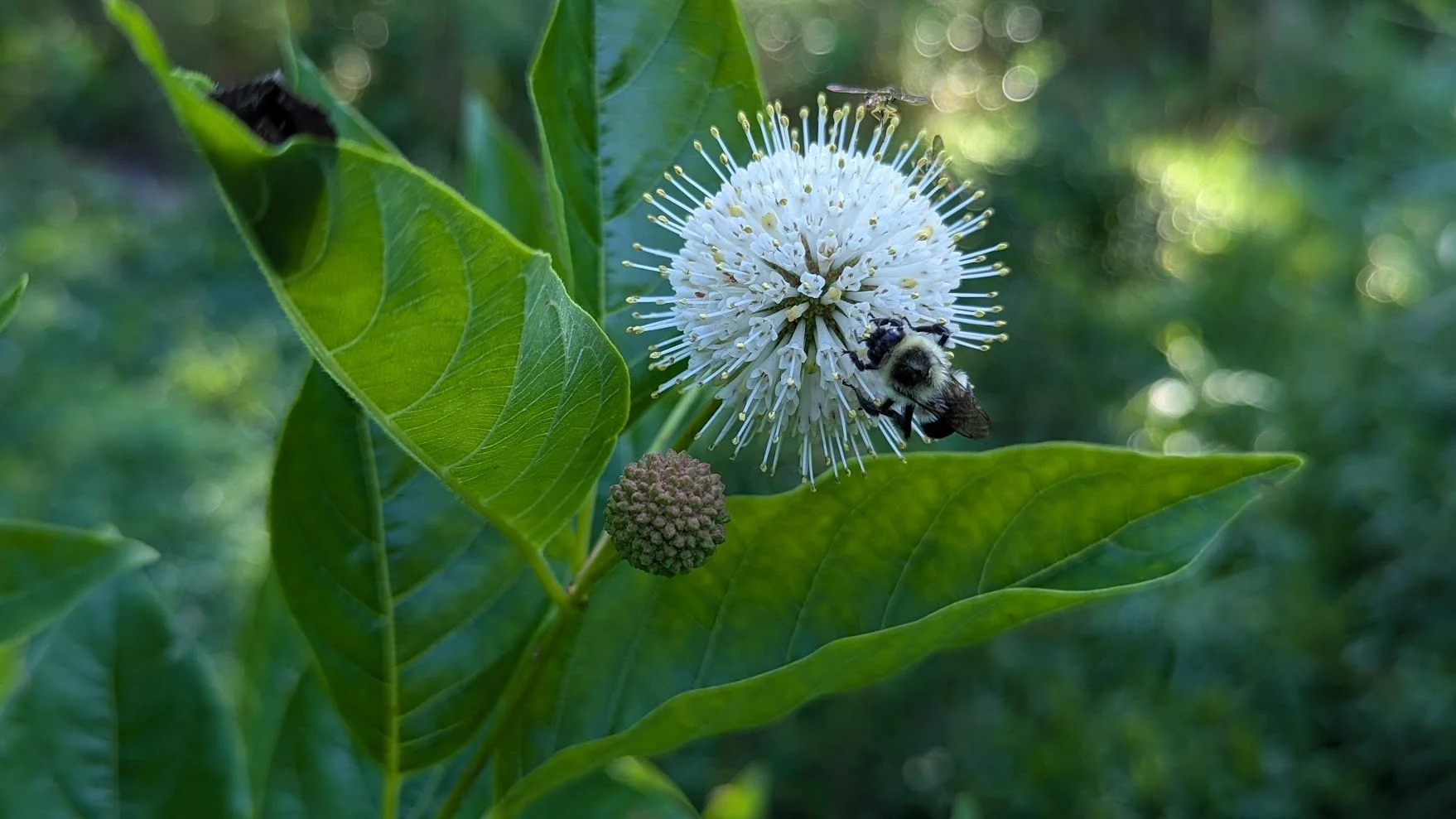
Buttonbush (Cephalanthus occidentalis)
St. John’s Wort - Hypericum
Pollinator Shrubs:
Double File Viburnum (Viburnum plicatum)
Fothergilla
Lilac (Syringa vulgaris)
Ninebark (Physocarpus)
Oakleaf Hydrangea (Hydrangea quercifolia)
St. John’s Wort (Hypericum)
Buttonbush [photo by karen blackerby logan]
Purple Leaf Sand Cherry [photo by karen blackerby logan]
Elderberry [photo by karen blackerby logan]
***********
POLLINATOR FRIENDLY TREES
Eastern Redbud (Cercis canadensis Pendula) [photo by keith kurman]
Native Pollinator Trees:
Red Maple (Acer rubrum)
Tulip Tree (Liriodendron tulipifera)
Sassafras (Sassafras albidum)
White Oak (Quercus alba)
American Holly (Ilex opaca)
Eastern Redbud (Cercis canadensis)
Magnolia virginiana
Dogwoods – Gray, Silky, Red-twig, Pagoda, Flowering
Additional Pollinator Trees:
Magnolia (Magnolia grandiflora 'Little Gem')
Stewartia
***********
READY FOR
POLLINATOR
GUESTS THIS
SUMMER?
Let your garden be a living, blooming, buzzing celebration of life.
Visit us at Vineyard Gardens to explore our selection of native and pollinator-friendly plants.
Agastache, Allium, Rudbeckia

Foam Flower, Tiarella cordifolia
Native Eastern Red Columbine (Aquilegia canadensis) [photo by karen blackerby logan]
St. John’s Wort & Cleome (pollinators and deer resistant) [photo by keith kurman]