• Home
  • ABOUT
    • PROJECTS
    • Landscape Teams
    • LANDSCAPE DESIGN
    • LANDSCAPE CONSTRUCTION
    • LANDSCAPE MAINTENANCE
    • Nursery
    • BULK MATERIAL
    • PLANT PROFILES
  • FIELD NOTES
  • TESTIMONIALS
  • Careers
  • Contact
Menu

Vineyard Gardens

484 State Road
West Tisbury, MA, 02575
508.693.8512
Landscaping & Garden Center

Your Custom Text Here

Vineyard Gardens

  • Home
  • ABOUT
  • LANDSCAPING
    • PROJECTS
    • Landscape Teams
    • LANDSCAPE DESIGN
    • LANDSCAPE CONSTRUCTION
    • LANDSCAPE MAINTENANCE
  • NURSERY
    • Nursery
    • BULK MATERIAL
    • PLANT PROFILES
  • FIELD NOTES
  • TESTIMONIALS
  • Careers
  • Contact

CREEPING PHLOX

April 24, 2026 Karen Logan

Creeping Phlox ‘Scarlet Flame’

Creeping Phlox

(Phlox subulata)

A low growing, sun-loving herbaceous perennial that has an exceptional spring bloom. It creates a magnificent carpet of color ranging from red-purple to violet-purple to pink and white in April and May. The flowers are backed by dense green foliage that stays green throughout the summer and fall. It grows 6 in. tall, forming a thick mat up to 3 ft. wide and is known for ‘creeping’.

PHLOX SPECIES

There are many phlox species

  • Phlox subulata: Creeping phlox, Phlox subulata, is only one species with many cultivars.

  • Phlox divaricata and Phlox stolonifera: These are woodland phlox that spread and can take partial shade.

  • Phlox paniculata: This is the most common phlox, the tall English phlox. It does best in full sun.

  • Phlox drummondii: This is the annual phlox. Annuals, unlike perennials, bloom all summer.

CREEPING PHLOX VARIETIES NOW AVAILABLE

We have a wonderful selection of blooming creeping phlox available at Vineyard Gardens

  • Emerald Blue

  • Candy Stripes

  • Purple Beauty

  • Red Wings

Creeping Phlox ‘Scarlet Flame’

Creeping Phlox ‘Candy Stripe’

CARE

  • Protect from Deer! They do eat Creeping Phlox.

  • It tolerates dry conditions once established

  • Good soil drainage is important

  • Cut back stems after flowering by 1/2 to maintain form and promote denser growth plus to stimulate a possible light rebloom.

WHERE TO PLANT

  • Perfect accent in a rock garden

  • Beautiful mixed with annuals.

  • Spreads easily on slopes & banks

  • Great along pathways

  • Attractive groundcover & border plant

  • Loves to cascade over walls!

    GREAT FOR BUTTERFLIES & INSECT POLLINATORS!

April Garden Tips
In SPRING PLANTS, APRIL, PLANT PROFILES Tags creeping phlox, herbaceous perennial, rock garden plant, pollinator plant
Comment

CORNFLOWER

April 23, 2026 Karen Logan

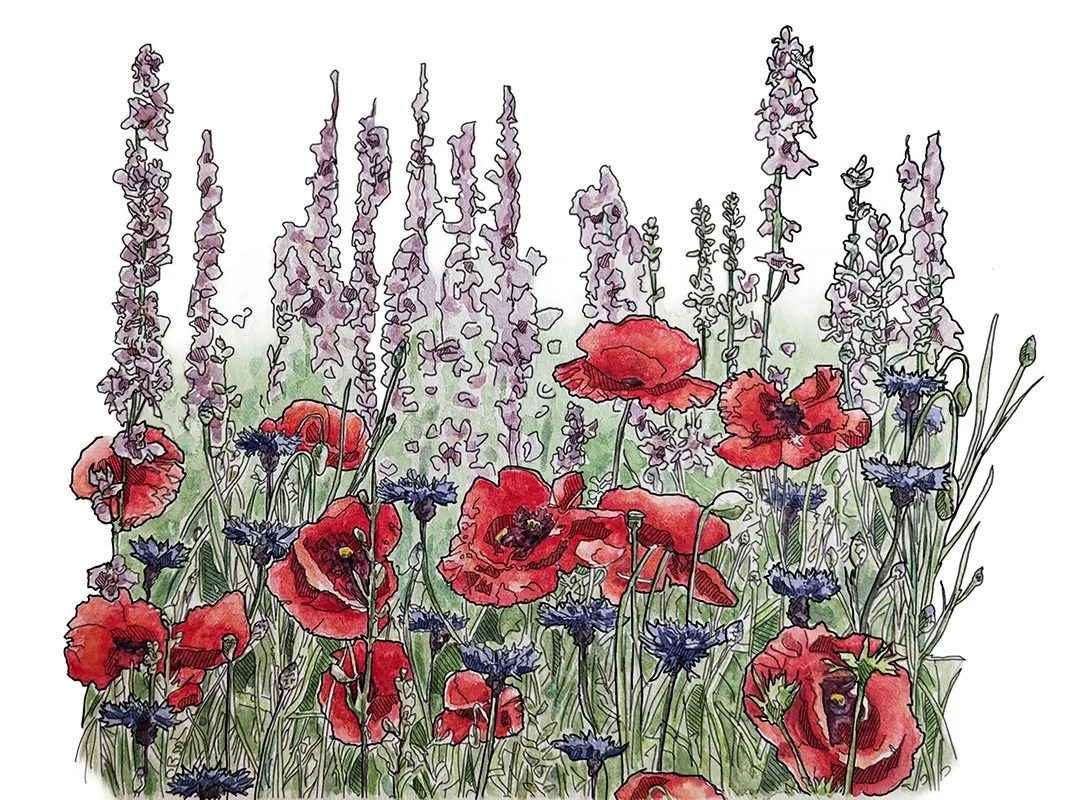
Cornflower & Poppies [illustration by karen blackerby logan]

CORNFLOWER

Centaurea cyanus (Bachelor Buttons)

******************************

Late Spring Blues

There’s something magical about walking through the garden in late spring and catching flashes of brilliant cobalt blue dancing in the breeze. That’s the unmistakable charm of Cornflower, also known as Bachelor Buttons, a beloved classic that never goes out of style. Here at Vineyard Gardens, we celebrate this beauty in all its hues: the traditional electric blue, soft pinks and deep purples. As part of Andrew Wiley’s Hardy Annual Project, Cornflower was sown in December to encourage strong root development, and are now ready to be transplanted into your garden.

Cornflower (Centaurea cyanus) is a true multitasker. It’s stunning in the garden, a joy in a vase, and secretly useful in more ways than one: from herbal tea to bath salts to bouquets.

******************************

Why You'll Love

Growing Cornflower

They thrive in full sun and well-drained soil and bloom abundantly in late spring and early summer.

  • Easy to grow: Even beginning gardeners will find these flowers rewarding.

  • Pollinator-friendly: Bees and butterflies love them.

  • Versatile beauty: Ideal for wildflower meadows, cottage gardens, borders, and containers.

  • Reseed readily: A delightful thing about cornflowers is they reseed themselves in your garden year after year. Plants that reseed are a gardener’s dream, they pop up at just the right time, fill in bare spots, and help tie the garden together beautifully. Cornflowers, along with larkspur and foxgloves, are excellent re-seeders that bring a touch of spontaneity and charm to any garden space.

The blooms grow thigh-high on slender stems and create a whimsical, meadow-like effect when planted in mass.

**************

Varieties Available

at Vineyard Gardens

We carry a colorful selection of Centaurea cyanus to brighten up your garden beds and bouquets:

  • Blue Boy: The classic brilliant blue that never disappoints

  • Select Ultraviolet: A moody, rich purple variety

  • Lady Mauve: Soft and romantic in pink tones

**************

Harvesting for

Cut Flowers


Cornflowers make wonderful cut flowers, especially for rustic, natural-style arrangements.

  • Cut early in the morning, just as the flower is starting to open.

  • Strip the lower leaves before placing in water.

  • Change the water every other day to extend vase life.

Cornflowers last around 5–7 days in a vase and pair beautifully with other cottage garden favorites like yarrow, snapdragons, and larkspur.

Centaurea cyanus Boy Blue

**************

Ready to

Grow Your Own?

Whether you're filling a wildflower border or planting for pollinators, cornflowers are the perfect addition to your late spring palette.

Don’t forget to tag us in your cornflower creations. We’d love to see your gardens, bouquets, and dried flower projects!

**************

Learn About : LARKSPUR
Learn About : SPRING BLOOMS & POLLINATORS
In ANNUALS, PLANT PROFILES, APRIL Tags Cut Flowers, hardy annuals, hardy annuals vineyard gardens, marthas vineyard hardy annuals, vineyard gardens cornflower, bachelor button, centaurea cyanus marthas vineyard
Comment

AMMI

April 20, 2026 Karen Logan

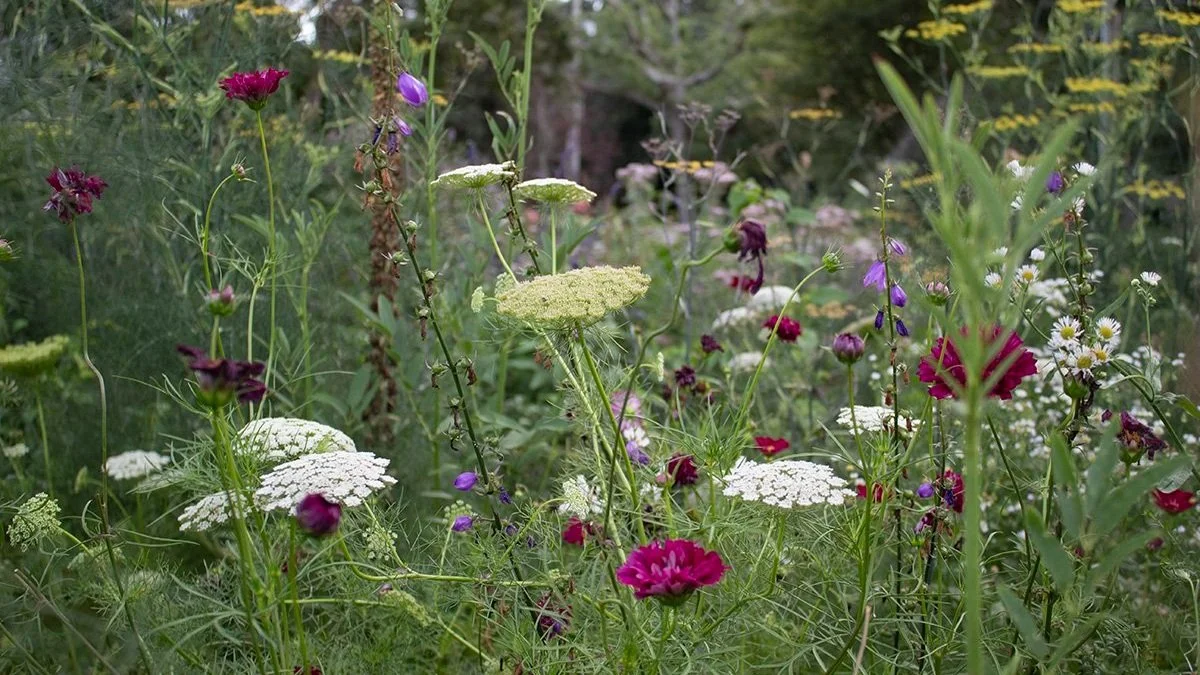
Ammi and Cosmos ‘Double Click Cranberries”

A Touch of Whimsy

If you've ever wanted your garden to feel like illustrations from a romantic storybook, Ammi is your flower.

Ammi brings a soft, graceful texture to garden beds and bouquets with its lacy, delicate blooms and feathery foliage. It’s like nature’s lace, light, elegant, and full of charm.

At Vineyard Gardens, we’re proud to be part of Andrew Wiley’s Hardy Annual Project, and that means we’ve got strong, healthy Ammi plants just waiting to bring their magic to your garden. These were sown in December, a technique that allows their roots to develop deeply and ensures robust, resilient plants that bloom beautifully in the months ahead

******************************

Ammi Varieties

at Vineyard Gardens

✧ Ammi majus ‘Select White’: Pure white, delicate blooms that resemble Queen Anne’s Lace. They bring a lightness and airiness to garden beds and are breathtaking in wedding bouquets or wildflower-style arrangements.

✧ Ammi visnaga ‘Green Mist’: Soft green-tinted white blooms with a fuller, denser flower head. The perfect filler flower, Green Mist adds a gentle, misty quality to both borders and floral work. Known for its vigorous growth, it can spread easily in the right conditions. It’s great for some gardens, but it might be a bit too assertive in more managed spaces.

******************************

Why Grow Ammi?

  • Ethereal beauty: Soft, lace-like blooms

  • Cut Flowers: A must-have for garden-style floral arrangements

  • Pollinator-friendly: Bees and butterflies adore them

  • Cold-hardy annuals: Early sowing leads to early blooming!

Ammi bridges the gap between structure and softness, perfect for cottage gardens, naturalistic plantings, and cutting gardens.

Larkspur QIS Dark Blue with Ammi Majus

******************************

How to Grow

Ammi in Your Garden

Now is the perfect time to plant our winter-sown Ammi. Strong root system thanks to winter sowing.

  • Location: Full sun to part shade

  • Soil: Well-drained, average garden soil

  • Spacing: 9–12 inches apart to allow for their airy shape

  • Watering: Keep moist during establishment, then water during dry spells

Once established these low maintenance beauties will reward you with tall, graceful stems topped with dreamy blooms from late spring into summer.

******************************

Cut Flower Magic

Ammi’s doily lace form adds movement and softness to any bouquet.

  • Harvest when about 80% of the tiny flowers in the head have opened.

  • Cut early in the morning for longest vase life.

  • Strip lower leaves before placing in water.

  • Pair with peonies, snapdragons, cosmos, or roses for a garden-gathered look.

Digitalis purpurea, Antirrhinum Potomac Dark Pink with Ammi majus and Ammi visnaga ‘Green Mist’

******************************

What You

Can Do Now


  • Stop by our nursery to pick up Vineyard Gardens winter sown Ammi

  • Prep your garden beds for easy transplanting

  • Tag us in your bouquet and garden photos. We love seeing your Ammi in action!

Fill your garden with the soft lace of Ammi. You'll be amazed how much beauty can come from something so delicate.

**********************

Learn About : SNAPDRAGONS
APRIL GARDENING TIPS
In ANNUALS, PLANT PROFILES, APRIL Tags Cut Flowers, hardy annuals, hardy annuals vineyard gardens, marthas vineyard hardy annuals, vineyard gardens ammi, ammi majus, ammi visnaga
Comment

FORGET ME NOTS

April 13, 2026 Karen Logan

Forget Me Nots illustration by karen blackerby logan

FORGET ME NOTS

(MYOSOTIS)

Myosotis is a Greek word meaning mouse’s ear which it’s foliage is thought to resemble. It is native to Europe and is in the family Boraginacea.

AN EARLY SEASON PLANT

We sell them early in the season in 5” black perennial pots.

  • Forget Me Nots readily reseed themselves and will make their home throughout your garden. This is a good thing but it can also be a problem that is easily solved with a little weeding. Pull them out where you do not want them. Yet with their pretty blue flowers in early summer you may have trouble pulling them out! Another way to control their spread is to deadhead them right after flowering before they have time to set seed and spread.

  • They are beautiful flowers to have in a woodland border.

Forget Me Nots are only available in Spring!

April Gardening Tips
In SPRING PLANTS, APRIL, PLANT PROFILES Tags Forget Me Nots, Myosotis, Spring perennials, woodland border perennial
Comment

POPPIES

April 10, 2026 Karen Logan

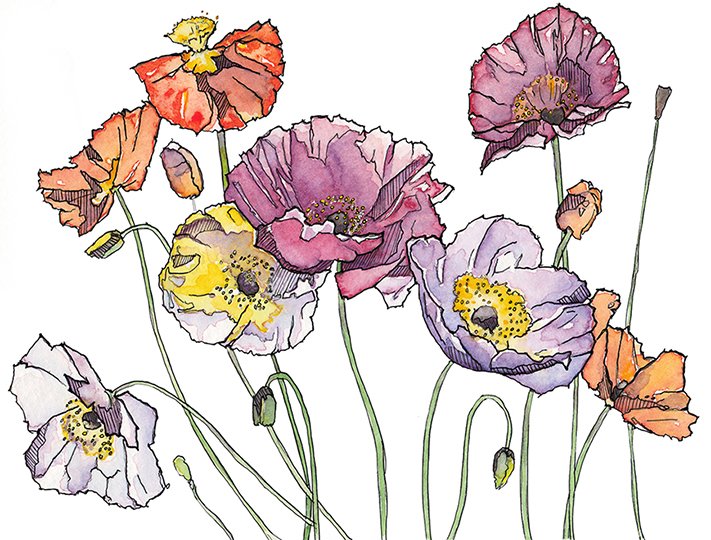
Iceland Poppies illustration by karen blackerby logan

POPPIES:

SPRING FAVORITE!

We love our poppies at Vineyard Gardens and grow a wide range of varieties for every garden. From true perennials to short-lived perennials and classic annuals, each has its own charm. Our annual poppies readily reseed, often returning year after year to create natural, evolving drifts of color.

We start our annual poppies from seed and offer a beautiful, carefully grown selection. Also grown from seed is a perennial variety that is among our favorite : the Spanish poppy, Papaver rupifragum ‘Double Tangerine Gem.’ This late-blooming beauty produces soft apricot flowers in late summer. Native to the mountains of Spain, it grows alongside Spanish lavender, bringing a touch of that wild, sun-soaked landscape into your garden.

Poppies like a rich, well drained soil in full sun. Deer Resistant!!

Iceland Poppy

Iceland Poppies

PAPAVER ORIENTALIS/ORIENTAL POPPIES

The most well-known perennial poppies are the Oriental poppies. They are long-lived, resilient plants that make a bold seasonal statement. They bloom in late spring to early summer, go dormant in the heat of midsummer, and return the following year even larger and more impressive.

Oriental poppies are celebrated for their dramatic, dinner-plate–sized blooms. The classic red with a dark, inky center is perhaps the most iconic. This year, we’re offering Crimson Red, Orange Red, and ‘Royal Wedding,’ a striking white variety with a black center. We also have ‘Turkenlouis,’ with its vibrant red, ruffled petals, and ‘Princess Victoria Louise,’ a beautiful soft salmon. Oriental poppies bring true drama to the garden.

Make sure to mark the spot so that you don’t disturb the sleeping poppy!

Oriental poppies photo by keith kurman

Oriental poppies

PAPAVER NUDICAULE/ICELAND POPPIES

Icelandic poppies, Papaver nudicaule, their name meaning “bare stems”, are another perennial type, though typically shorter-lived than Oriental poppies. They are truly stunning, with delicate, crepe paper–like blooms held on slender, one-foot stems that seem to float above the foliage. Plant two or three in a pot for a soft, airy display that lasts through spring and into early summer.

We carry Iceland poppies in both the Champagne Series (individual colors) and the Wonderland Series (a cheerful mix). The Champagne Series is available in scarlet, pink, yellow, orange, and red. While hardy, these are considered short-lived perennials. They are native to subpolar regions of Asia and North America, bringing a cool-climate elegance to the garden.

Iceland Poppies are blooming now!

Iceland Poppy

Iceland poppy

Iceland poppies

ANNUAL POPPIES

Papaver rhoeas, Papaver commutatum, Papaver paeoniflorus, Papaver somniferum

The great reseeders of the poppy world are the annual poppies. We grow these from seed, starting them in early to mid-February, and offer them in packs and 2” pots.

After their spring to early summer bloom, annual poppies continue to shine with their sculptural seed pods, extending the season into summer and fall. As the pods ripen, they scatter seeds into the surrounding soil, and new seedlings emerge the following year. In many sunny gardens, annual poppies happily naturalize, creating an effortless, ever-evolving display year after year.

This year we are growing:

  • Shirley Poppies

  • Papaver rhoeas, including Double Choice Mix

  • Select Seed, White Bridal Veil

  • We are growing the peony flowered poppy in Lauren’s Grape, Hungarian Blue and White Cloud.

  • Ladybird Poppy, Papaver commutatum, a red flower with a black pattern at the base of each petal. It is a prolific bloomer.

  • Papaver somniferum, in Imperial Pink and The Giant with a red flower.

    Ready to be planted now!

    **************************************

GROWING & CARE

  • Plant your poppies in a full sun garden with well drained soil.

  • They have beautiful seed pods that extend the season beyond bloom.

  • The annual poppies can be dead headed to extend bloom but at some point let the beautiful seed pods develop and let them ripen on the plant.

  • Poppies will reseed and you may have lots of little poppy seedlings for years to come.

  • If they are happy, they will colonize in your garden. It is wonderful when plants colonize! Other plants do this too!

Come to Vineyard Gardens to find out what other plants reseed and colonize in your garden!

In PERENNIALS, GARDEN TIPS, SPRING PLANTS, APRIL, PLANT PROFILES Tags Iceland Poppies, spring perennials, Deer resistant plants, summer blooms, Oriental poppies, annual poppies
Comment

LARKSPUR

April 7, 2026 Karen Logan

Larkspur [illustration by karen blackerby logan]

LARKSPUR

Delphinium consolida

******************************

A Late Spring Spark

Why Hardy Annual Larkspur Deserves a Spot in Your Garden

There’s a certain kind of magic in plants that rely on the cold to gift us beauty just as the world is warming again. Hardy annual larkspur (Delphinium consolida) is one of those graceful gifts. With its feathery foliage, towering spires, and an almost ethereal range of blues, pinks, purples, and whites, larkspur is a must-have for anyone who loves cut flowers or wants to bring a touch of cottage garden charm to their late spring landscape.

Larkspur QIS Dark Blue with Ammi Majus

******************************

An Annual That

Can Handle A Chill

Unlike many annuals that must wait until after the last frost, larkspur thrives in the early season. It actually needs a cold period to break seed dormancy. As part of Andrew Wiley’s Hardy Annual Project, larkspur was sown in December to encourage strong root development, and those plants are now ready to be transplanted into your garden.

Once established, larkspur sends up strong, straight stems topped with layered blooms that almost look too delicate to be real. But don’t be fooled, these plants are workhorses. Hardy to around 20°, they’ll shrug off chilly spring nights while other flowers are still in their seed trays.

Larkspur QIS Dark Blue with Papaver ‘Amazing Grey’

******************************

Elegance

in the Garden


Hardy annual larkspur is one of those old-soul flowers that rewards a little planning with a lot of beauty. They’re a graceful, low-fuss way to add vertical interest and early color. It thrives in garden beds, wildflower meadows and acts as a natural pollinator magnet. In a world that sometimes feels rushed, there’s something satisfying about planting a flower that asks you to think ahead and to trust the process.

And did we mention color? While larkspur’s deep indigo blues are the most iconic, they also come in pastels.

Antirrhinum Potomac Deep Orange and Larkspur QIS Dark Blue

******************************

A Cut Flower Favorite

For cut flower lovers, larkspur is ideal. The blooms are long-lasting in the vase, and the more you cut, the more the plant gives. Harvest when just a few blossoms at the base of the stem have opened and the rest are still in bud, this way, you get the full bloom show indoors. Some growers swear by a quick dip in boiling water to extend vase life even further.

If you’re dreaming of armfuls of early summer blooms, larkspur might just be your next garden obsession.

They pair beautifully with peonies, sweet peas, bachelor’s buttons, and early roses.

Larkspur

******************************

Growing Tips


Cool-Season Lovers: Larkspur thrives in cool weather. Plant in early spring best results.

Support Matters: Provide stakes or netting to keep tall stems upright, especially in breezy spots.

Harvest at the Right Time: For the longest vase life, cut stems when only the lower third of the blooms have opened. They’ll continue to open from bottom to top.

Winter-Sown for Summer Beauty: At Vineyard Gardens, our December-sown larkspur are ready to plant now. Early winter sowing helps develop strong roots, setting the stage for full, vibrant summer blooms

******************************

Larkspur

Varieties Available

A member of the Delphinium family, larkspur offers tall, elegant spires of blooms that not only bring drama to any bouquet but will also readily reseed in a sunny garden.

  • Deep Blue

  • Fancy Blue Purple

  • Fancy Rose Striped

  • Fancy Smokey Eyes

  • Frosted Skies

  • Misty Lavender

  • QIS 'Lilac

  • QIS 'Pure White'

  • QIS 'White'

******************************

Learn About : HARDY ANNUALS
In ANNUALS, PLANT PROFILES, APRIL Tags Cut Flowers, hardy annuals, hardy annuals vineyard gardens
Comment

SNAPDRAGONS

April 5, 2026 Karen Logan

SNAPDRAGON

Antirrhinum majus

******************************

A Hardy Annual

and an Outstanding

Cut Flower

As a kid, I loved snapdragons. My grandmother taught me how to pinch them just right so their "mouths" would open and close. It felt like a little bit of garden magic, and to this day, snapdragons hold a special place in my heart. Snapdragons (Antirrhinum majus) are classic garden favorites, loved for their tall, spiky blooms, vibrant colors and their long blooming season.

Snapdragons bring a touch of childhood magic to the garden!

Digitalis purpurea, Antirrhinum Potomac Dark Pink with Ammi majus and Ammi visnaga ‘Green Mist’ 

******************************

Hardy and Resilient


One of the standout features of Snapdragons are their ability to perform exceptionally well in different growing conditions. As a hardy annual, it can tolerate light frosts, making it a great early-season or late-season bloomer. If planted in an area with sun before the warm weather arrives, deadheaded or cut for flowers, they can bloom all summer long. Their adaptability makes them a valuable addition to any garden, where season extension is key.

A hardy annual that thrives in cool weather and extends your flower season.

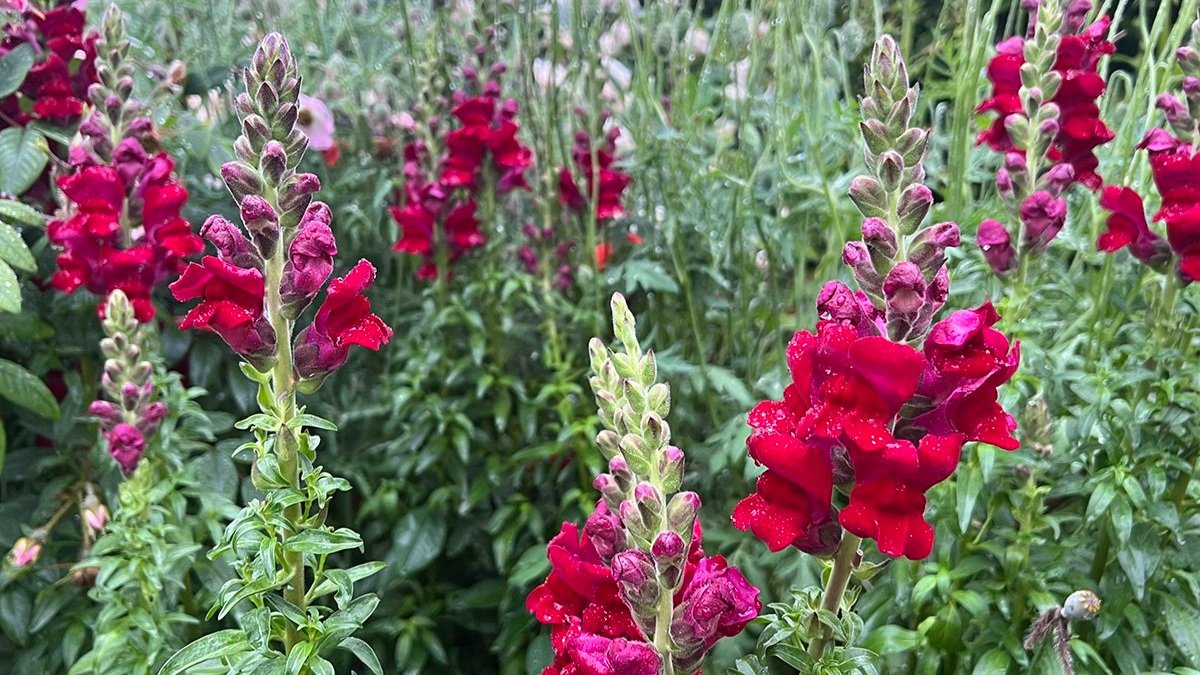
Antirrhinum Potomac Red 

******************************

Ideal for

Cut Flowers

The 'Potomac Series' takes snapdragons to a whole new level, making them an excellent choice for both long blooming gardens and cut flowers. With strong stems, a long vase life, and the ability to thrive in a variety of conditions, these hardy annuals are a must-grow for anyone who loves cut flowers. Their tall, sturdy stems make them easy to arrange in bouquets and can last 7-10 days in a vase. The Rocket series is another good variety for cuts.

Antirrhinum Potomac Deep Orange and Larkspur QIS Dark Blue

******************************

Growing Tips


  • Cool-Season Lovers: Plant out in early spring or fall. They thrive in cool weather and may struggle in extreme summer heat.

  • Support is Key: Provide staking or netting to keep stems upright, especially in windy locations.

  • Pinch for More Blooms: Pinching young plants encourages bushier growth and more flower-producing stems.

  • Harvest at the Right Stage: For the longest vase life, cut stems when only the lower third of the flowers have opened. Their blooms open sequentially from bottom to top.

    Vineyard Gardens December sown Snapdragons are ready to be planted out. By sowing them in the early winter it ensures a strong root system allowing them to bloom all summer long!

Snapdragons Potomac Series

******************************

Snapdragon

Varieties Available

This Season

  • The Potomac Series (Andrew’s Hardy Annual Project): We have a beautiful selection of Potomac Series snapdragons ready to plant now! Andrew seeded four varieties in December—‘Cherry Rose,’ ‘Dark Orange,’ ‘Potomac White,’ and ‘Royal’—which are in larger pots, with strong root systems and a long blooming season. In addition, we have early-arriving Potomac Snapdragons in 3” black pots in Royal, Pink, Orange, and Cherry Rose. These are the best cut-flower snapdragons we will have this season, and they’re hardened off outside and ready to go. 

  • The Rocket series: These are another good variety for cut flowers. Available in White.

  • Snaptini series: We are growing this dwarf series that are too short for cut flowers but extremely beautiful and very hardy. 4 packs are available in Red, White and Yellow.

  • Twinny Peach and the Candy Showers series  in Pink and White.

The ‘Potomac Series' is a rewarding flower to grow with their stunning color range, excellent vase life, and ability to withstand cool temperatures. Add these beauties to your garden, and you’ll enjoy their blooms from spring through fall!

******************************

Learn About : HARDY ANNUALS
In ANNUALS, PLANT PROFILES, APRIL Tags Snapdragons, Snapdragon Potomac Series, Cut Flowers, hardy annuals
Comment

ENGLISH DAISIES

April 3, 2026 Karen Logan

English Daisies illustration by karen blackerby logan

English Daisies

(Bellis perennis)

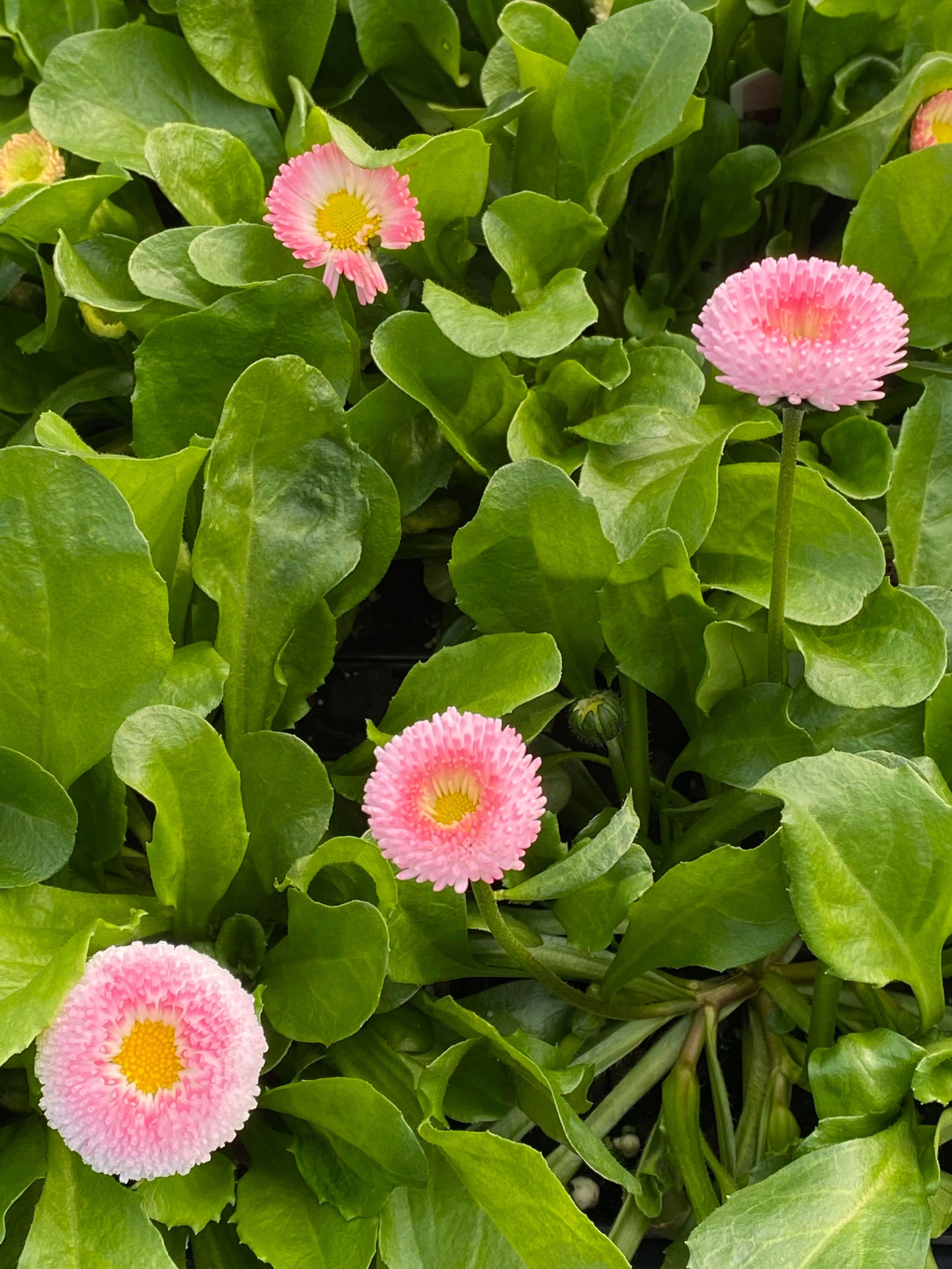
These charming, long-blooming English daisies (Bellis perennis) are native to western, central, and northern Europe. Their name reflects their nature—bellis meaning “pretty” and perennis meaning “everlasting.” An early-season favorite, they thrive in full sun to partial shade and are hardy in Zones 4–8. We offer them in 5” black perennial pots, grown in a cheerful mix of white, pink, and red flowers.

Many plants like the English Daisies, the Forget Me Nots and the Poppies are only available early in the season!

Bellis perennis Rose Bicolor

Bellis perennis Pomponette Mix

Bellis perennis Rose Bicolor

Bellis perennis Bellisima Red

GROWING ENGLISH DAISIES

  • Grow along a path or a border, in a rock garden or containers.

  • Plant in a well drained spot.

  • Plant the Bellis perennis white along a border so it can spread.

  • Try the Galaxy, the Bellisima or Pomponette Mix in a pot.

    Remember spring is the best time to plant English Daisies!

In SPRING PLANTS, APRIL, PLANT PROFILES Tags English Daisies, Bellis perennis, Astercacea family, Bellis perennis Bellisima Red, Bellis perennis Pomponette Mix, Bellis perennis Rose Bicolor
Comment

ASPARAGUS

March 28, 2026 Karen Logan

ASPARAGUS

“There are a few perennial vegetables which actually are some of the easiest ones to grow. My all-time favorite is asparagus which can live for 20 or more years. Asparagus continually get bigger and more productive with just a little bit of care. The most important way to care for them is to keep the weeds out in order for them to thrive. They are one of the first vegetables to come up every spring and are absolutely delicious and healthy.” -

Chuck Wiley, founder of Vineyard Gardens Landscaping

Bare root asparagus

GROWING ASPARAGUS

Asparagus are a long lived perennial and should be planted in a dedicated bed.

  • Asparagus requires well drained fertile soil and can not tolerate wet feet.

  • Ensure planting site is well weeded.

  • Plant in full sun.

  • An excellent weed killing technique is to cover with cardboard 8 weeks prior to planting.

  • Make an 8” deep trench with a 4” ridge and loose soil down the middle.

  • Plant one bare root asparagus every 1’ between plants and 3’ between rows.

  • Splay the long roots down the sides of the ridge.

  • Water well to establish.

  • Top dress asparagus bed with plenty of premium compost every fall.

  • Since the roots are deep, you can hoe out weeds to about 3” deep as long as you do it before March 15th.

HARVESTING

Plants need to establish for 2 or 3 seasons before their first harvest, then they have abundant yields.

  • In the third year, harvest tender spring shoots at about 4.5”.

  • Do not harvest until shoots are pencil thick.

ONCE BARE ROOT ASPARAGUS IS AVAILABLE THERE IS A SHORT PLANTING WINDOW!

In PERENNIALS, SPRING PLANTS, VEGETABLE GARDENS, MARCH, PLANT PROFILES Tags asparagus, bare root asparagus, growing asparagus, harvesting asparagus, Jersey Giant Asparagus, Purple Passion Asparagus
Comment

SERVICEBERRY

March 27, 2026 Karen Logan

Serviceberry (illuststration by karen blackerby logan)

SERVICEBERRY

(SHAD TREES)

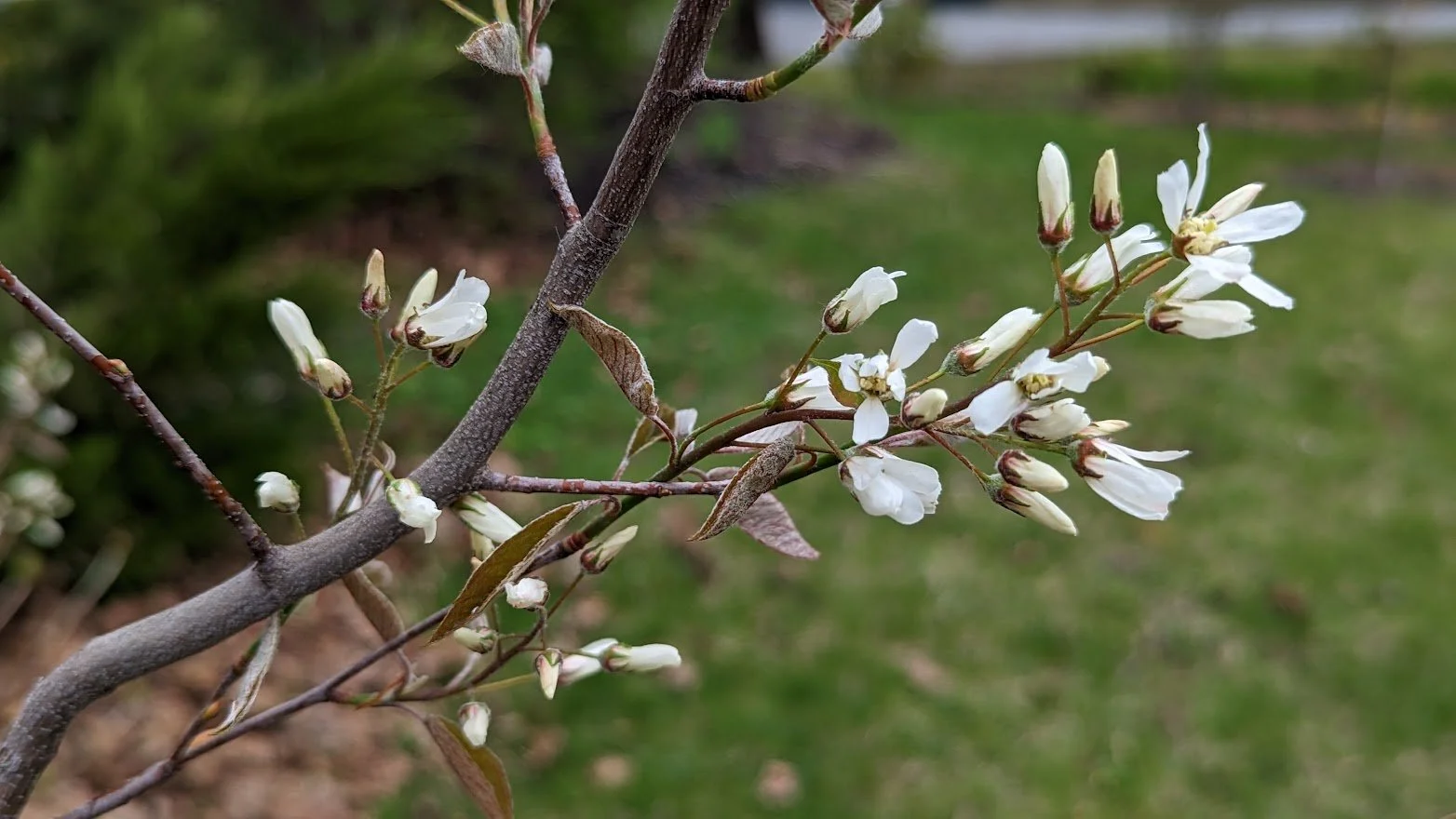
Amelanchier ×grandiflora ‘Autumn Brilliance’

Known as Shad Trees on Martha’s Vineyard because they bloom when the Shad (a type of small fish) swim up the creeks here on the island to breed.

A native multi-stemmed shrub or small tree, about 20 feet tall, has year round interest. Serviceberries are one of the first to burst into bloom in April with their showy white flowers. Once the flowers pass, tasty purple colored fruit, similar in flavor to blueberries, follow in mid June. The fall brings showstopping brilliant orange to red autumn color.

Attract more wildlife to your garden with native berry producing shrubs like Serviceberry!

***********************************

VALUABLE SHRUB FOR WILDLIFE

Native to eastern United States and Canada, Serviceberries support numerous butterfly and bird species These early bloomers support pollinators in spring and produce sweet berries in the summer that support birds like cedar waxwings, robins, and thrushes. Once the berries ripen, they provide a rich source of nutrition and are a crucial food source for early nesting birds and returning migratory species.

Serviceberries are a valuable shrub for wildlife. One of the earliest blooming shrubs in spring, Serviceberries burst into bloom typically in April, making it an essential early spring food source for pollinators.

native berry producing shrubs

attract wildlife to your garden

supporting birds

with native plants

***********************************

GROWING & CARE

Serviceberries have an upright habit with grayish to silver, smooth bark.

  • Easy to grow

  • Tolerant of most site conditions but does not tolerate salt or poor drainage. Prefers acidic, well drained soils in partial shade to sun.

  • It is susceptible to heat and drought stress.

  • Use as a small tree in mixed borders or foundation plantings.

  • Excellent companion with Carolina allspice (Calycanthus floridus), flowering dogwood (CornusBenthamidia florida), mountain laurel (Kalmia latifolia), pink-shell azalea (Rhododendron vaseyi), arrowwood (Viburnum dentatum), and whorled tickseed (Coreopsis verticillata).

***********************************

ATTRIBUTES

Attracts Wildlife: Host Plant / Other Pollinators & Wildlife / Attracts Songbirds / Attracts Bees

Tolerance: Deer & Rabbit Resistant / Urban Environment / Drought Tolerant

Additional Attributes: Edible / Low Maintenance

Landscape Use: Rain Garden / Specimen

Attractive Fall Foliage and/or Ornamental Fruit: Red to Purple Fruit / Fall Foliage

Height: 15-25 ft

Spread: 12-20 ft

Exposure: Sun / Part Shade

Soil Moisture: Average / Dry

Ornamental Interest: Spring Bloom / Summer Fruit / Fall Foliage

In APRIL, DEER RESISTANT, FLOWERING SHRUBS, NATIVE PLANTS, PLANT PROFILES, SHRUBS Tags native shrubs, host plant, deer resistant, Serviceberries, Amelanchier ×grandiflora ‘Autumn Brilliance’, Amelanchier laevis, Amelanchier canadensis
Comment

WITCH HAZEL

March 17, 2026 Karen Logan

******************************

WITCH HAZEL

Hamamelis × intermedia

A Four-Season

Marvel

Witch hazels are a captivating addition to any garden, offering year-round interest with their fragrant winter blooms, stunning fall color, and unique branching structure. At our nursery, we carry some of the finest cultivars of Hamamelis × intermedia: ‘Primavera,’ ‘Jelena,’ ‘Diane,’ and ‘Arnold’s Promise.’ For a beautiful display, a visit to the Polly Hill Arboretum is highly recommended, where their well-established collection showcases these plants in full bloom.

Hamamelis x intermedia 'Ostergold’ in it’s full spring glory at Poll Hill Arboretum [photo by Sofia Wiley]

******************************

Seasonal Interest

WINTER BLOOMS : One of the most enchanting qualities of Hamamelis × intermedia is its ability to bloom in mid- to late winter, long before other plants awaken from dormancy. Its delicate, ribbon-like flowers emerge in shades of yellow, copper, orange, and red, depending on the cultivar, filling the air with a sweet fragrance.

SPRING & SUMMER APPEAL : As spring arrives, witch hazels leaf out with fresh green foliage, blending seamlessly into a woodland setting. They serve as a lovely backdrop for later-blooming perennials and shrubs.

FALL COLOR : Come autumn, witch hazel foliage transforms into a vibrant display of gold, orange, and red. This seasonal transition adds another dimension to their beauty, making them a true multi-season performer.

YEAR-ROUND STRUCTURE : Even in winter, their distinctive branching pattern provides architectural interest in the landscape, making them a valuable addition for structure and texture.

Hamamelis mollis 'Princeton Gold' [photo by Sofia Wiley]

Hamamelis x intermedia 'Aphrodite' [photo by Sofia Wiley]

Hamamelis x intermedia 'Angelly' [photo by Sofia Wiley]

******************************

Growing & Care

  • Sunlight: Best flowering occurs in full sun, but witch hazels can also tolerate partial shade.

  • Soil: Prefers moist, acidic, and organically rich soils for optimal growth.

  • Watering: Keep the soil consistently moist, especially in dry periods.

  • Pruning: Minimal pruning is needed—just remove dead or crossing branches to maintain shape.

  • Spacing: These shrubs can spread 10-15 feet wide, so allow ample room for growth.

    ******************************

Low Maintenance

While Hamamelis × intermedia is not native, it does not self-seed or become invasive, making it a responsible choice for gardens that prioritize ecological harmony. It thrives in woodland settings, blending beautifully with native trees and shrubs while providing a much-needed splash of color during the bleakest months of the year.

Hamamelis mollis 'Princeton Gold' [photo by Sofia Wiley]

Hamamelis x intermedia 'Ostergold [photo by Sofia Wiley]

Hamamelis ‘Arnold’s Promise’ available at Vineyard Gardens [photo by Sofia Wiley]

Stop by Vineyard Gardens to explore our selection and then take a trip to the Polly Hill Arboretum to witness these stunning plants in full bloom!

******************************

Learn About : HARDY ANNUALS
In MARCH, TREES, NATIVE PLANTS, POLLINATORS, PLANT PROFILES Tags Witch Hazel, Hamamelis × intermedia, Polly Hill Arboretum, Spring flowering trees
Comment

NARCISSUS

March 16, 2026 Karen Logan

Narcissus poeticus ‘Pheasants Eye’ illustration by karen blackerby logan

NARCISSUS

(DAFFODIL)

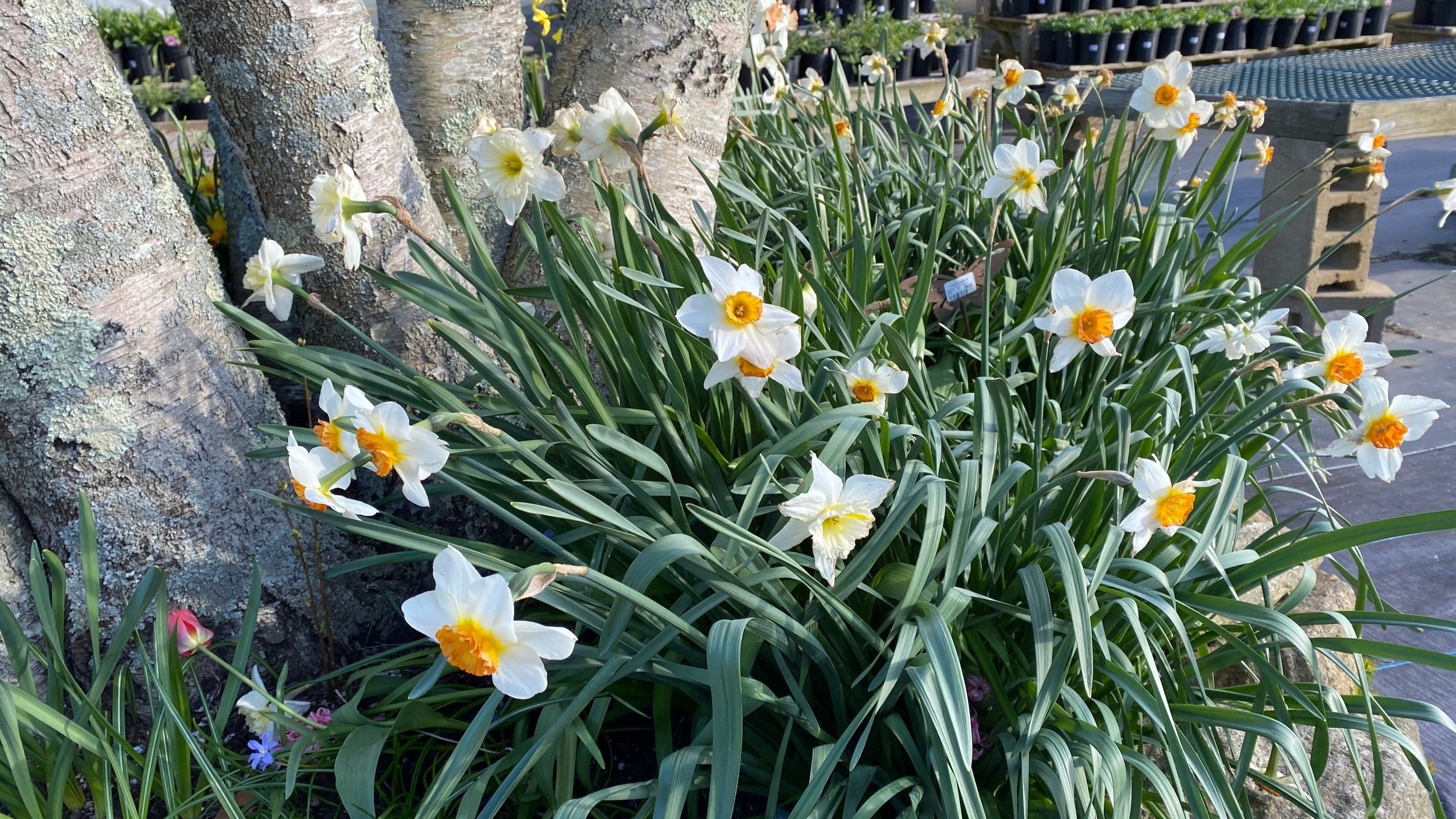
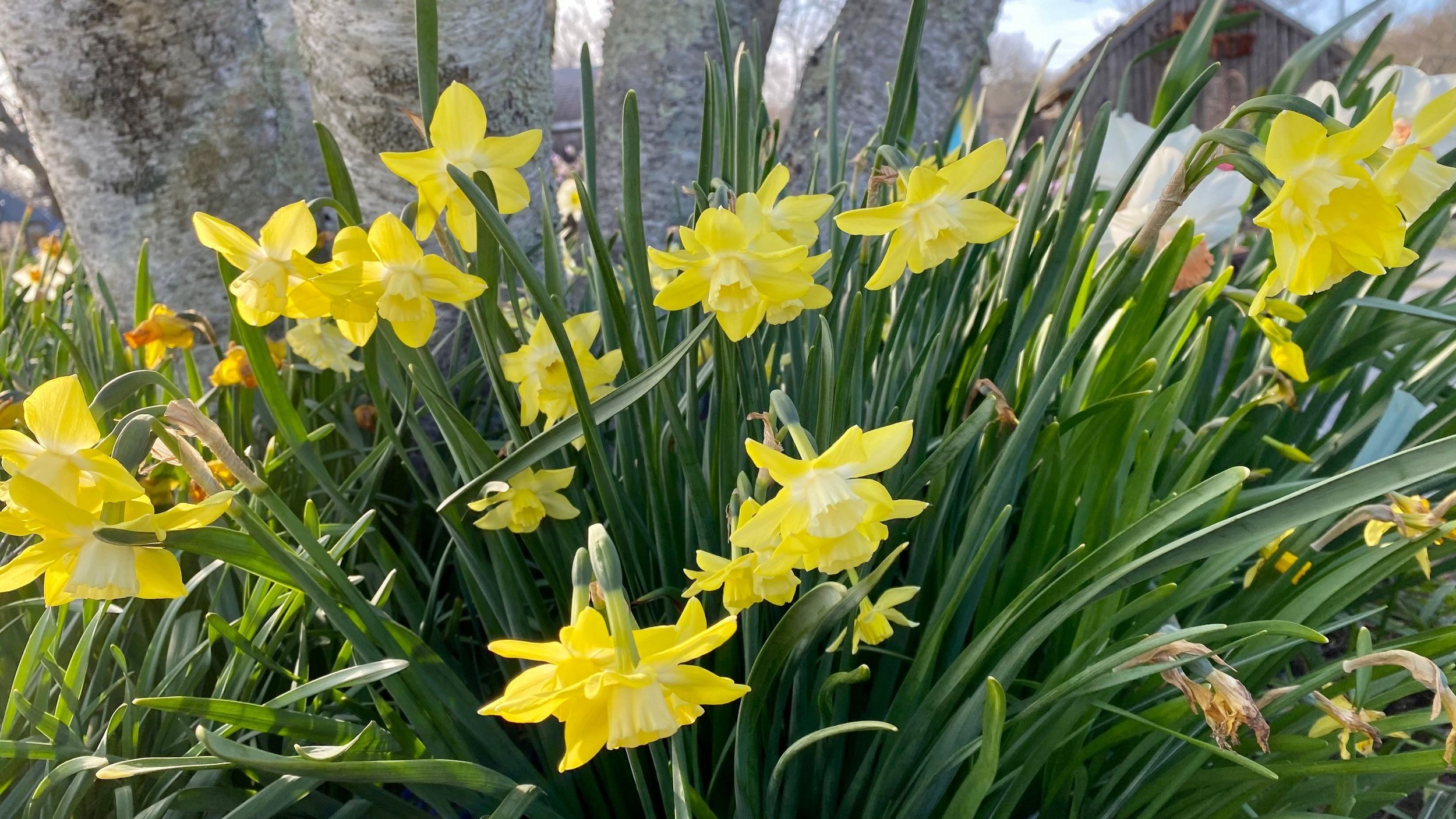
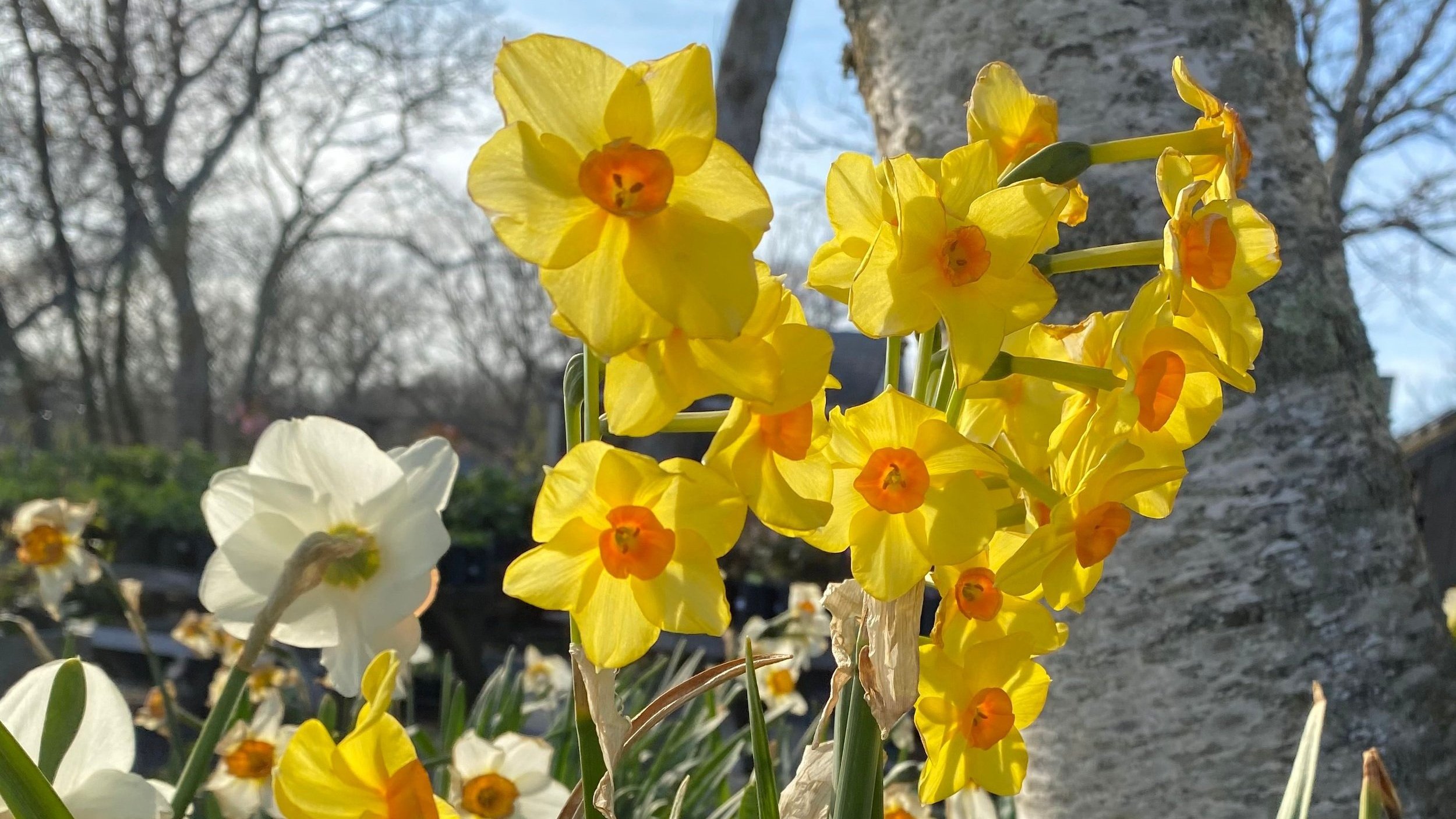
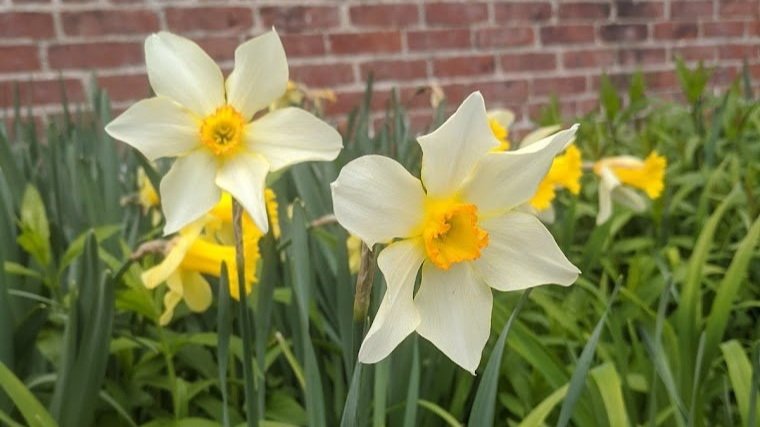
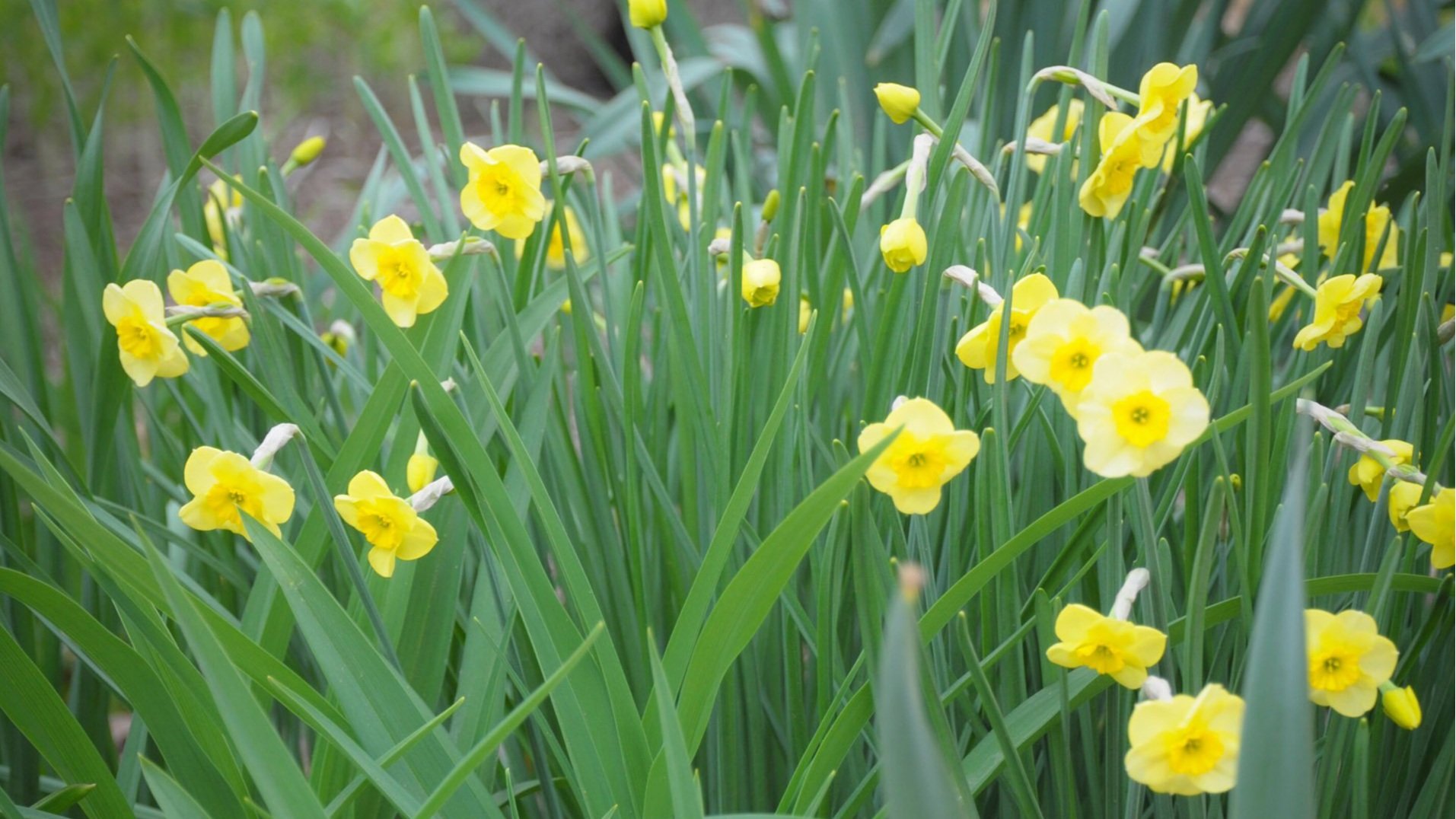
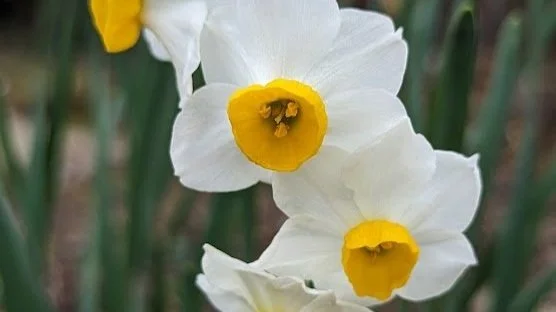
Narcissus, commonly called Daffodils, are hardy spring flowering perennials that come back year after year. They are harbingers of spring, announcing that winter is coming to an end. The large, yellow common daffodil is one of the most ubiquitous springtime plants. There are 40 different species of Narcissus varying in size and ranging in color from white to yellow. They are a great cut flower.

“Plant daffodils, tulips, hyacinths, and crocuses together at the edge of a path or walkway. As the flowers bloom in succession, they’ll mask each other’s dying foliage.” Gardenista

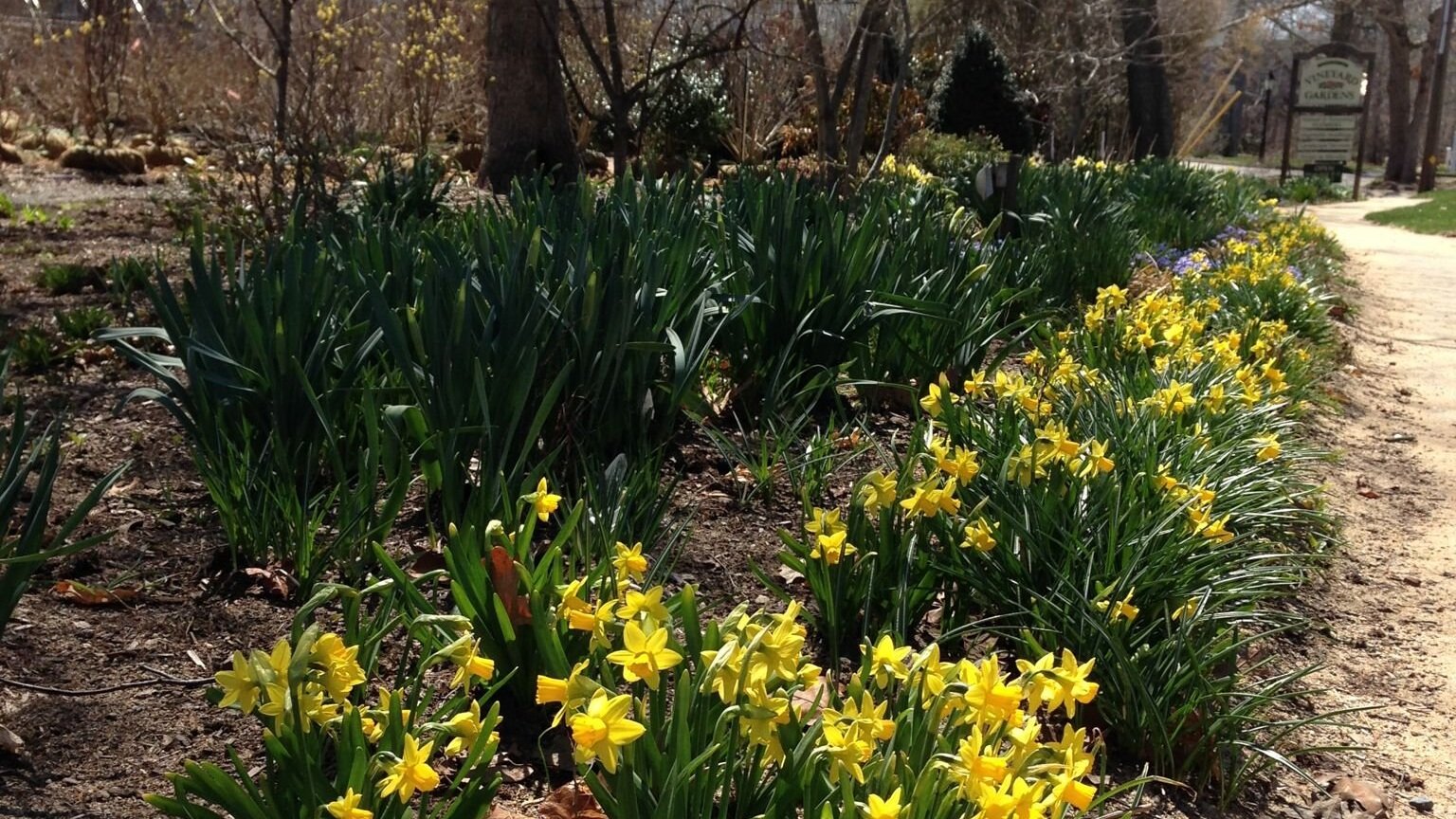
Vineyard Gardens Nursery Front Garden Bed filled with Narcissus

*****************

GROWING CONDITIONS & CARE

Narcissus are spring blooming bulbs that are best planted in September or October. They go dormant in the winter and will bloom year after year while multiplying.

  • Flowering bulbs best to plant in autumn

  • Light: Sun or some shade

  • Plant in clumps in well drained soil

  • Deer resistant!!

  • Flowers should be removed (deadheaded) as they fade.

  • After flowering, let the leaves die down naturally for at least six weeks before removal.

daffodils+tete+e+tete.jpg
daffodils.jpg
daffodils2.jpg
daffodils3.jpg
IMG_20220417_131148.jpg
RDHk_F59.jpg
daffodils.jpg
4O5GcDRX.jpg
daffodils+tete+e+tete.jpg daffodils.jpg daffodils2.jpg daffodils3.jpg IMG_20220417_131148.jpg RDHk_F59.jpg daffodils.jpg 4O5GcDRX.jpg

*****************

NARCISSUS AVAILABLE AT VINEYARD GARDENS THIS YEAR

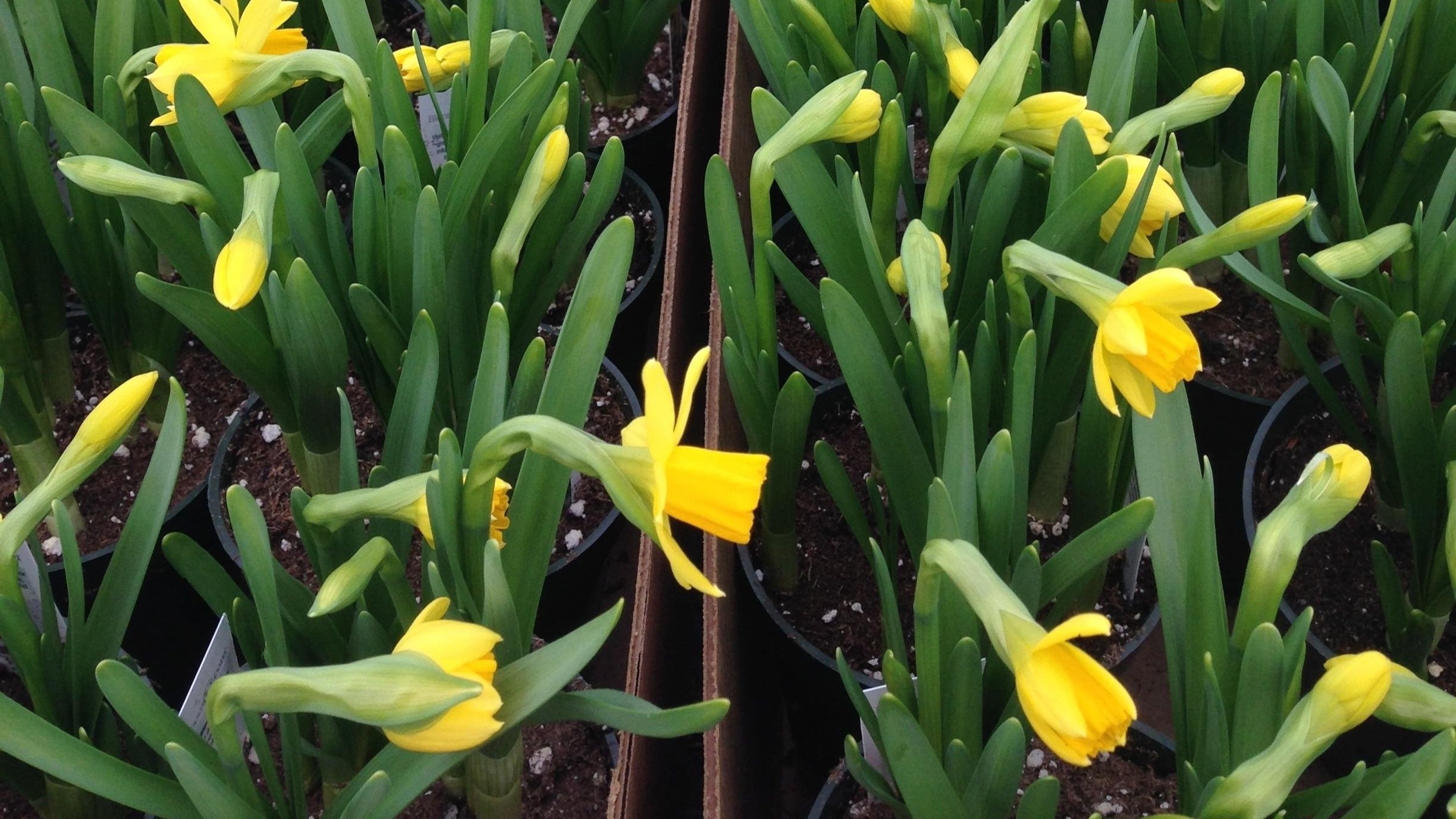
Our Netherland forced bulbs that we potted up in the fall are now available!

  • Narcissus Red Devon

  • Narcissus Double Flowering 'Tahiti'

  • Narcissus cyclamineus 'Jetfire'

  • Narcissus ‘Tete e tete’

  • Narcissus Trumpet 'Dutch Master'

  • Narcissus Fortune

  • Narcissus Large Cupped 'Ice Follies'

We have a lot of the Dutch master variety available!

Narcissus Trumpet 'Dutch Master'

Narcissus Large Cupped 'Ice Follies'

Narcissus cyclamineus 'Jetfire'

Narcissus Double Flowering 'Tahiti'

SUCCESSION GARDENING
MARCH GARDEN TIPS

HAPPY GARDENING!

In SPRING PLANTS, DEER RESISTANT, MARCH, PLANT PROFILES Tags Daffodils, Narcissus, spring perennials, fall planted bulbs
Comment

SWEET PEAS

March 14, 2026 Karen Logan

Sweet Peas [illustration by karen blackerby logan}

SWEET PEAS

Lathyrus odoratus 

A Fragrant Climbing Favorite

Sweet peas are a hardy annual that thrive in cool weather and full sun, producing an abundance of blooms from late spring through fall. Their delicate tendrils eagerly climb trellises, fences, or arbors, bringing vibrant color and a light, sweet fragrance to the garden. Reminiscent of classic cottage gardens, their scent and charm make them a favorite among gardeners and flower lovers alike.

Part of Andrew Wiley’s Hardy Annual Seed Project, these sweet peas were sown in the fall to develop stronger roots, resulting in longer-lasting flowers and a more robust growing season. Regular watering, deadheading, and support for climbing will keep them flourishing. When plants reach about 8 inches tall, pinching the central stem encourages more branching and fuller growth.

A top choice for cut flowers, sweet peas look stunning in bouquets and bloom more when harvested regularly. Whether left to climb in the garden or brought indoors, they bring beauty and fragrance wherever they grow.

SWEET PEAS A GREAT CHOICE FOR CUT FLOWERS!
Sweet Pea Zinfandel

Sweet Pea High Scent

Sweeet Pea April in Paris

*****************************

SOWING

SWEET PEAS

Follow these simple steps to set your plants up for success.

1. Prepare the Soil

  • Dig a large hole and mix in plenty of compost. Sweet peas thrive in rich, well-draining soil.

  • Choose a sunny spot for the best growth and yield.

2. Planting & Supporting

  • For best results, plant sweet pea seedlings before they become root-bound to avoid root disturbance.

  • Provide a support structure like bamboo canes or trellises to help vines climb.

3. Water & Feed

  • Keep soil consistently moist, but not waterlogged, especially as plants begin to grow and flower.

  • Apply a balanced fertilizer regularly. Peas are heavy feeders and need extra nutrients to thrive.

4. Maintenance for Continuous Growth

  • Deadhead (remove spent blooms) from sweet peas to encourage flowering into late summer or even fall.

  • Cut Sweet Peas frequently to keep plants producing.

WITH PROPER CARE, YOUR SWEET PEAS WILL REWARD YOU WITH LUSH BLOOMS ALL SEASON LONG!
*****************************

NOW AVAILABLE!

A variety of hardy annual Sweet Pea seedlings Andrew sowed in the fall are now ready to be planted out!

High Scent

Cupanis Original

Elegance Lavender

April in Paris

Raspberry Twirl

Queen of Hearts

Mermaids Dream

Enchante

Zinfandel

Royal Wedding

Watermelon

Strawberry Fields

*****************************

MARCH GARDEN TIPS
SPRING CHECKLIST
In ANNUALS, MARCH, PLANT PROFILES Tags spring blooms, hardy annuals, sweet peas
Comment

HELLEBORE

March 13, 2026 Karen Logan

HELLEBORES

LENTEN ROSE

*********************

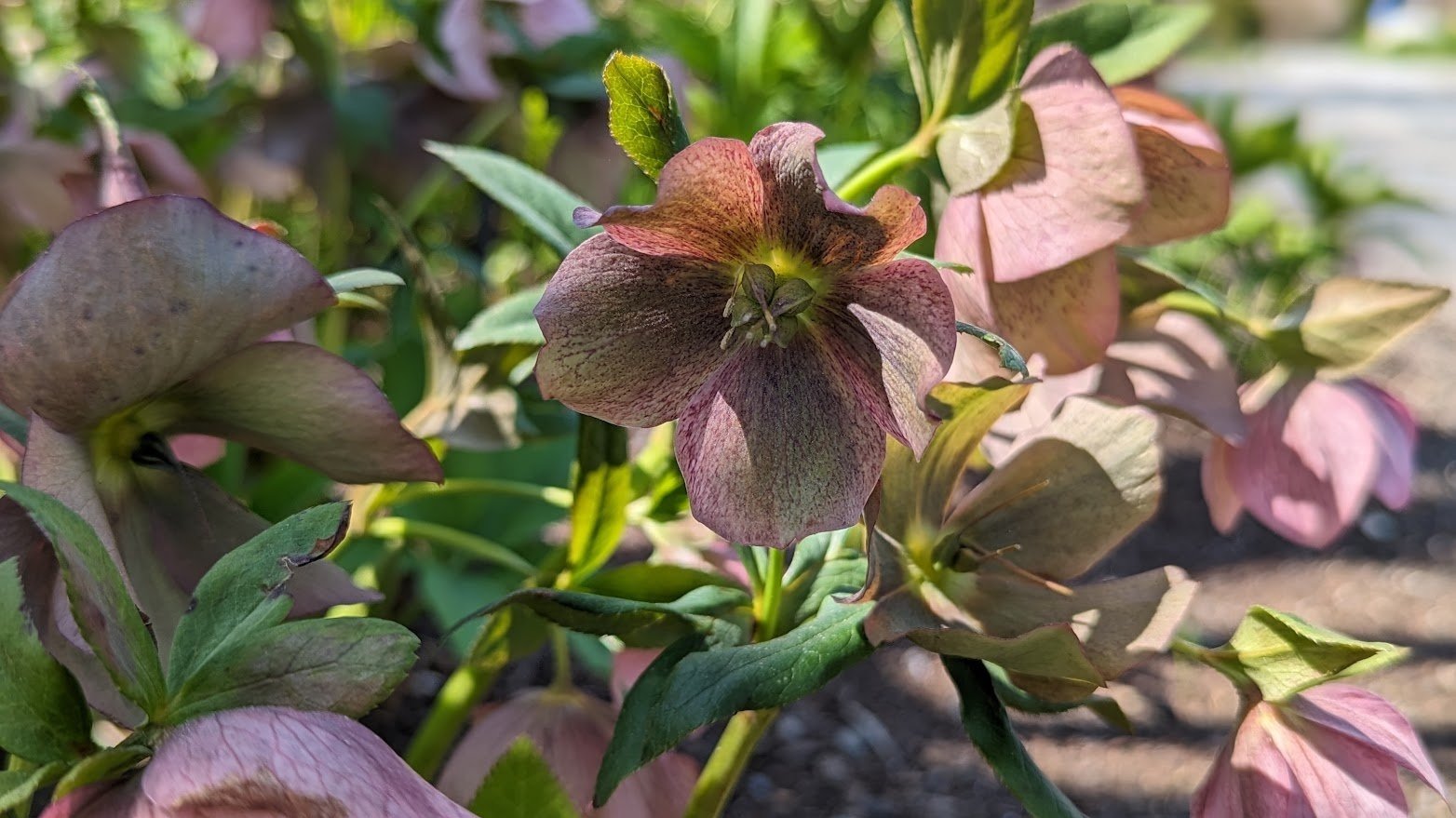
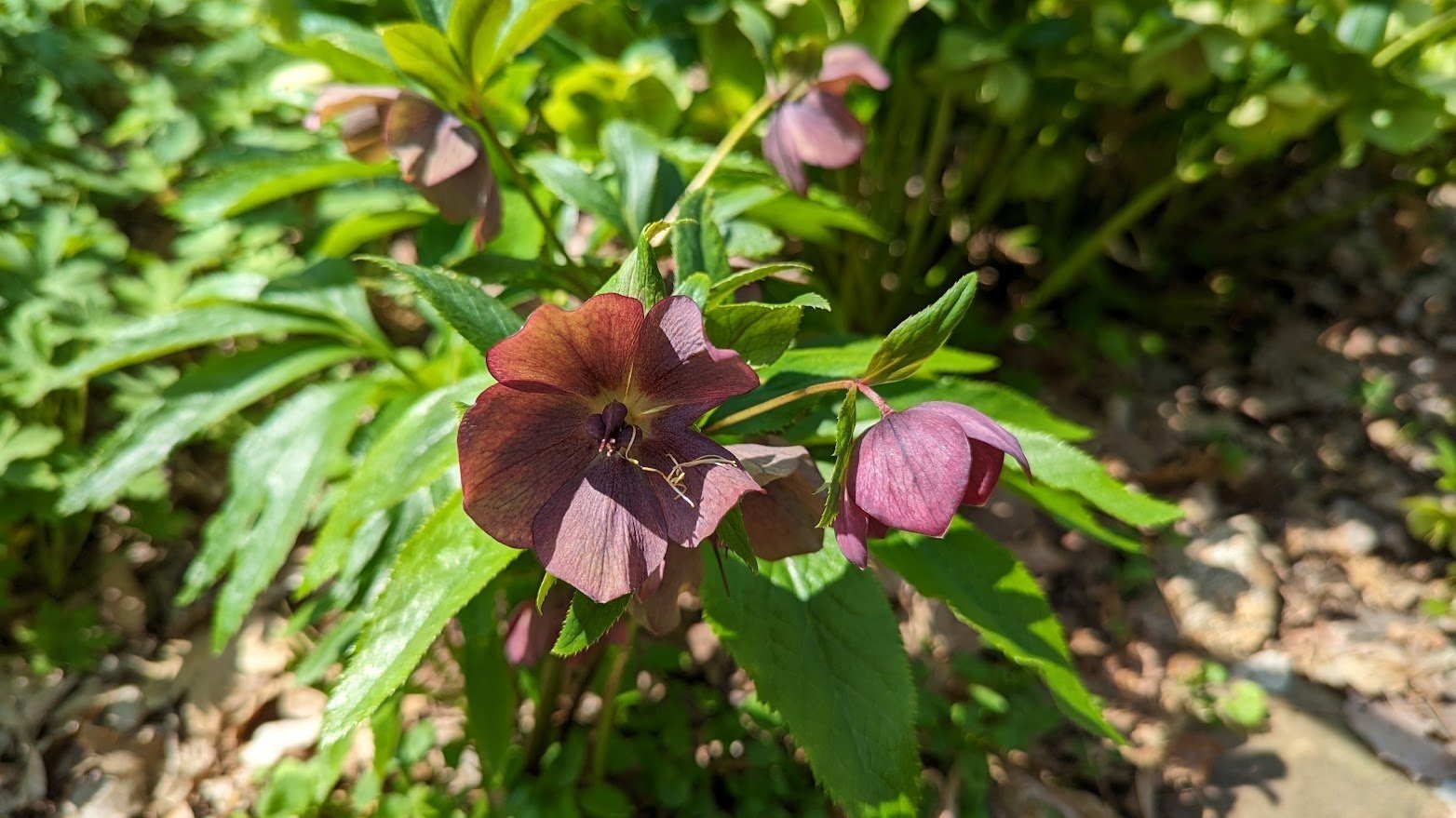
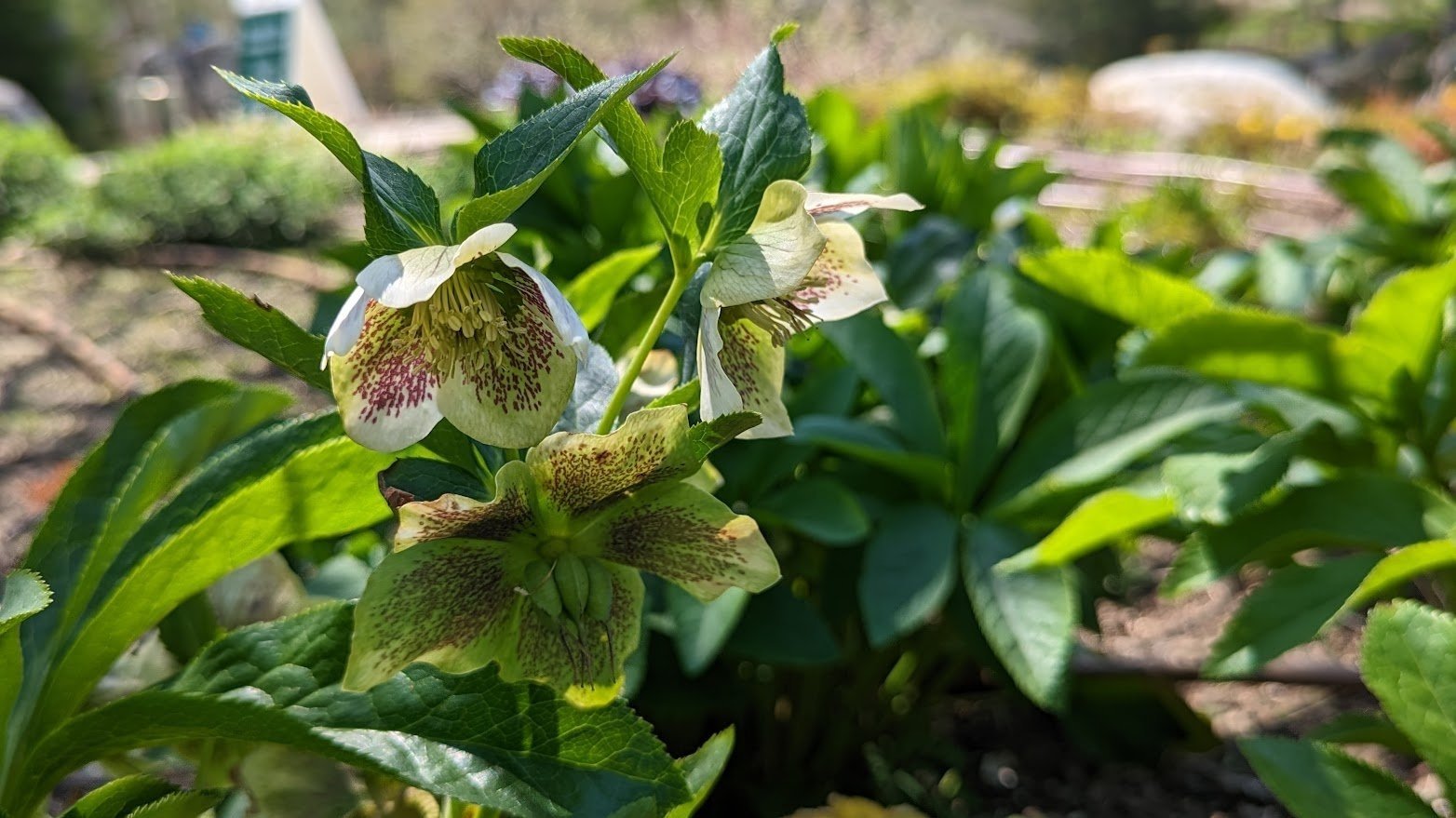
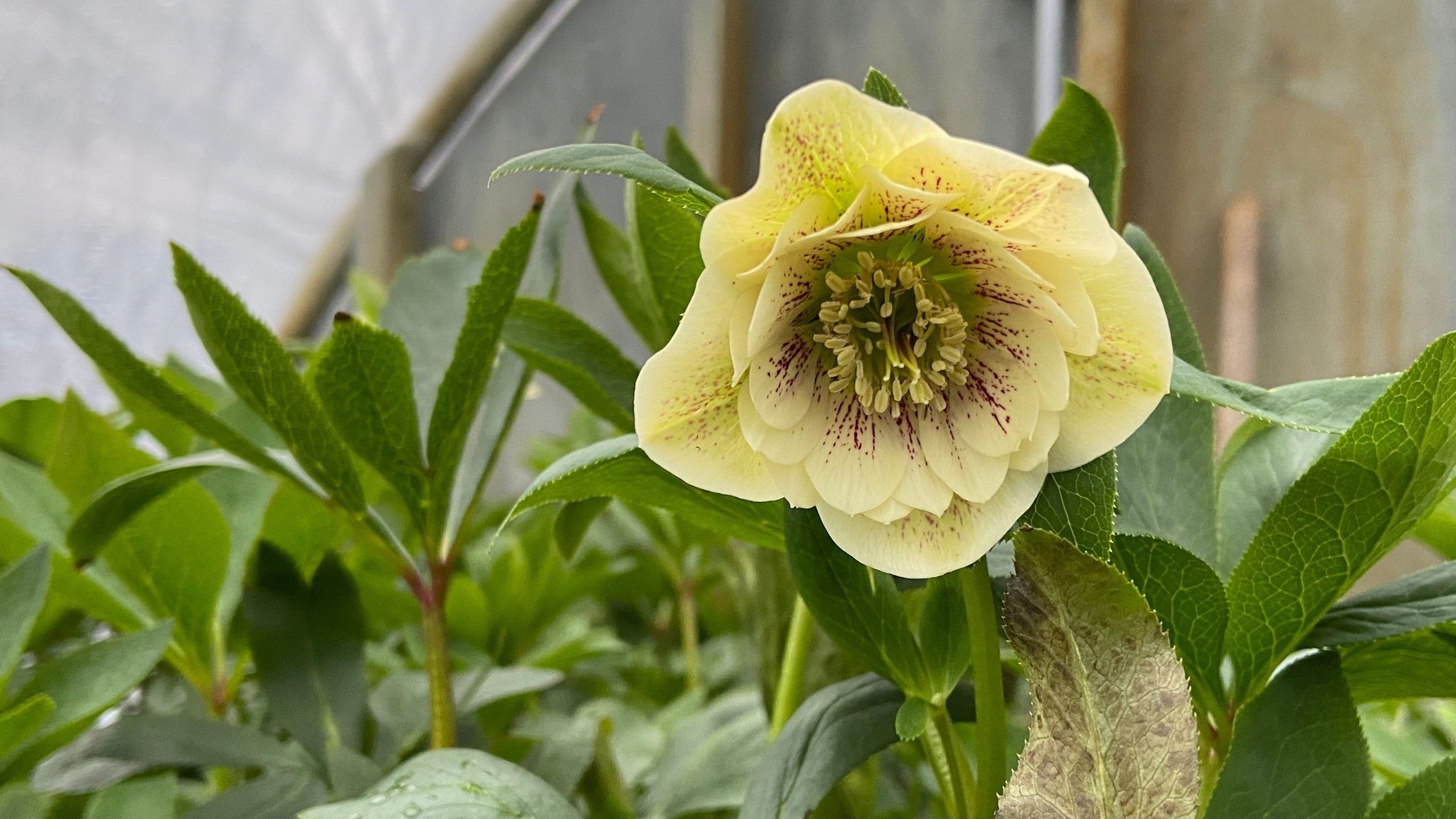
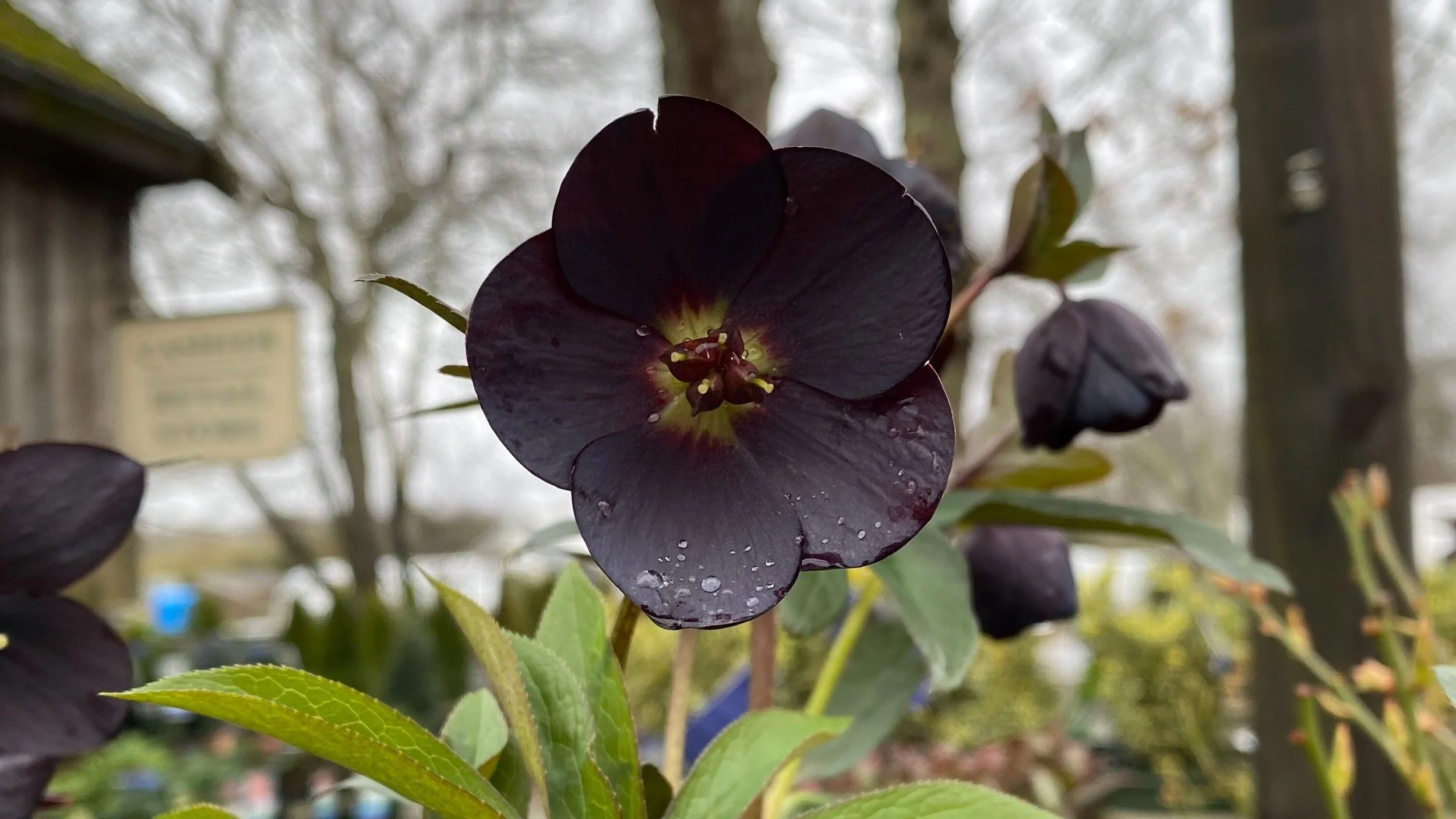
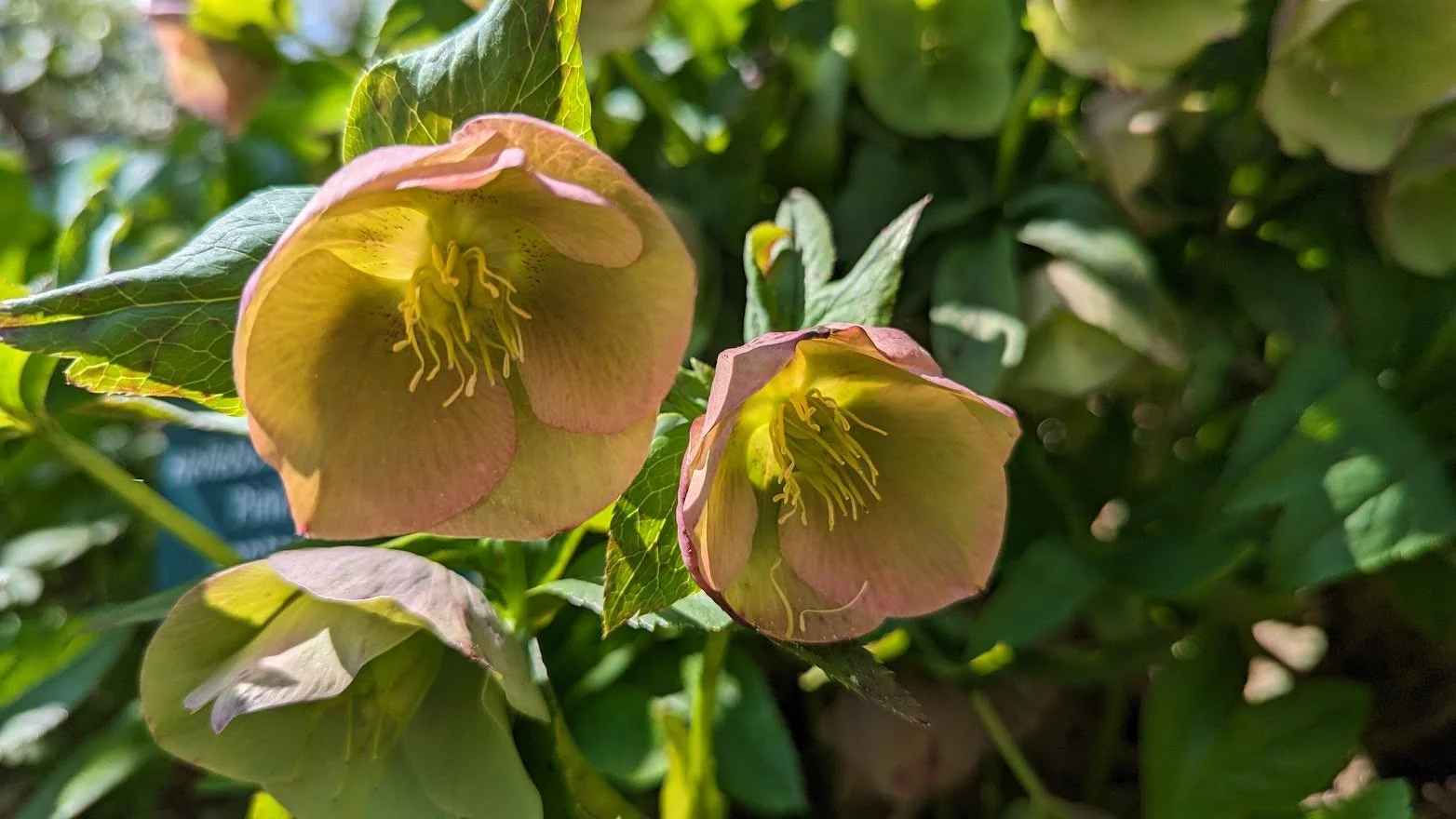
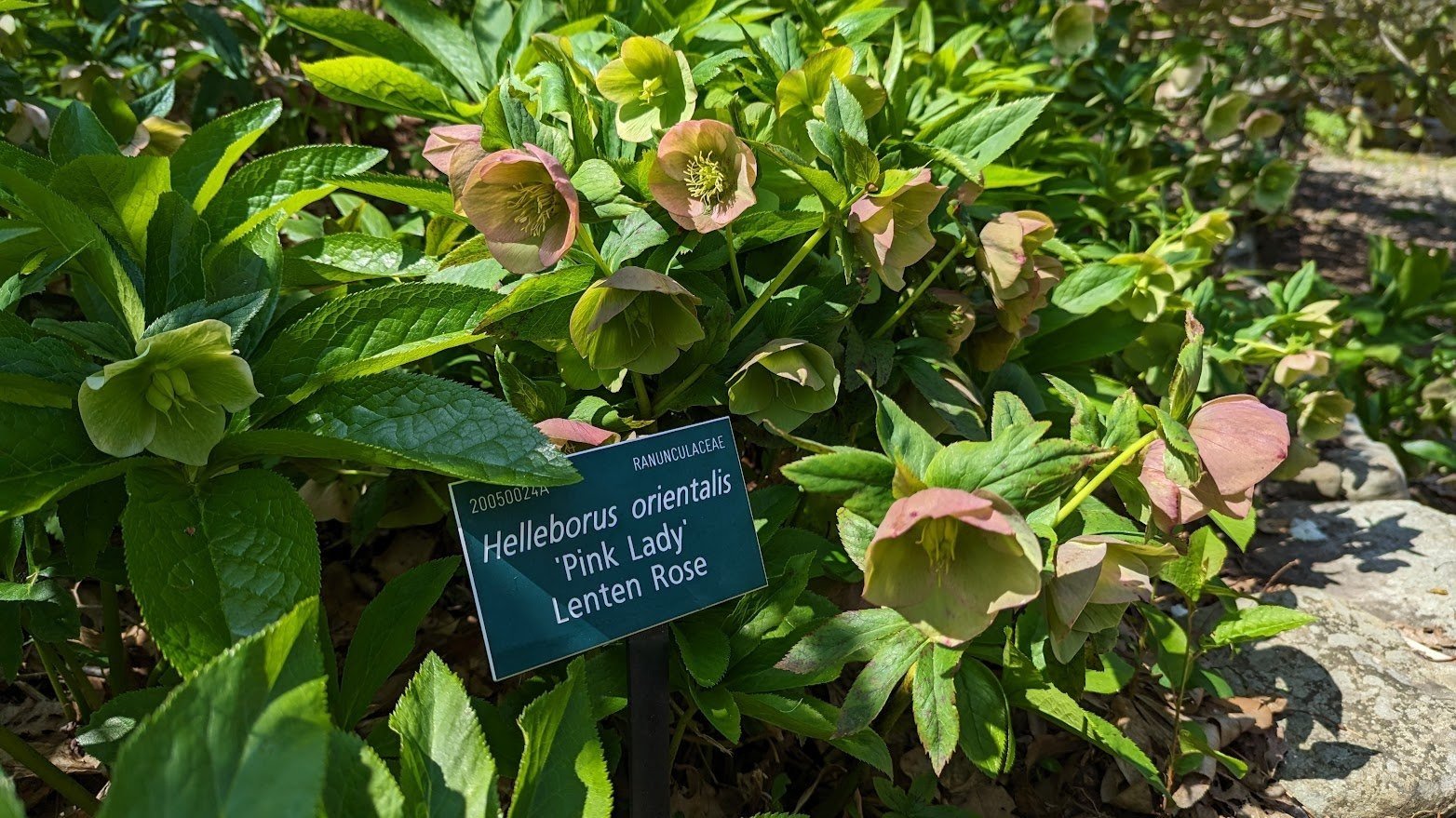
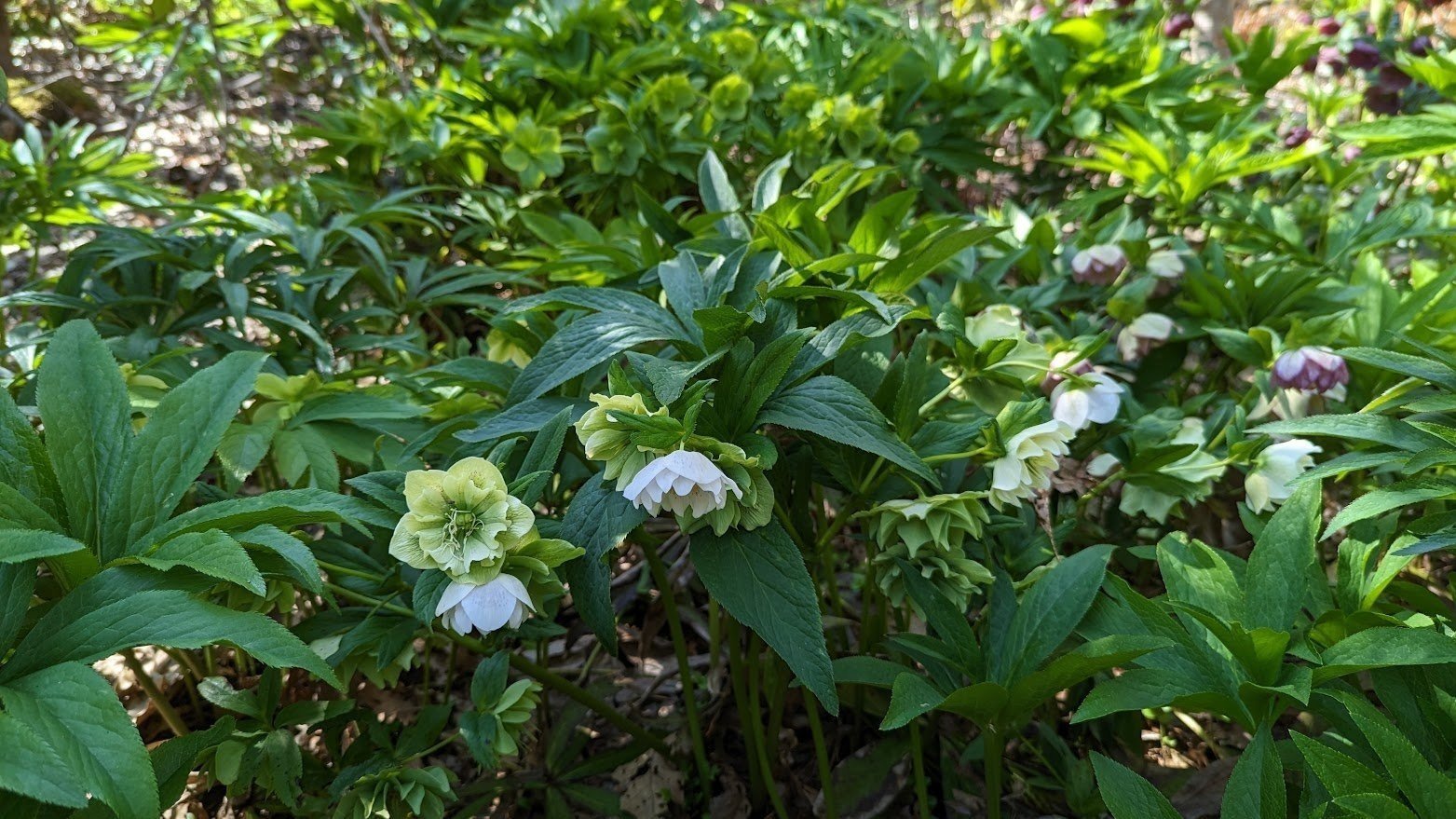
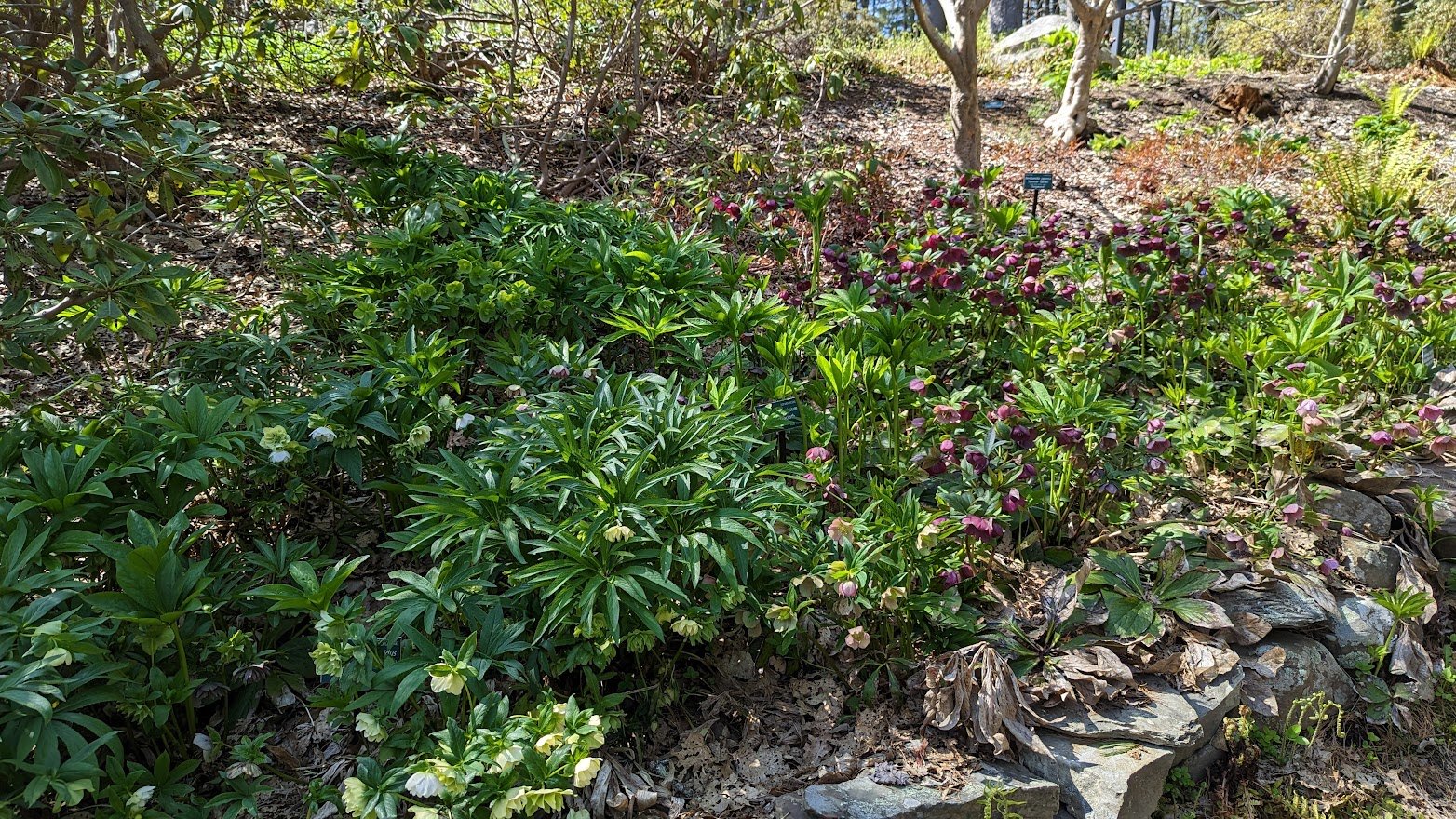
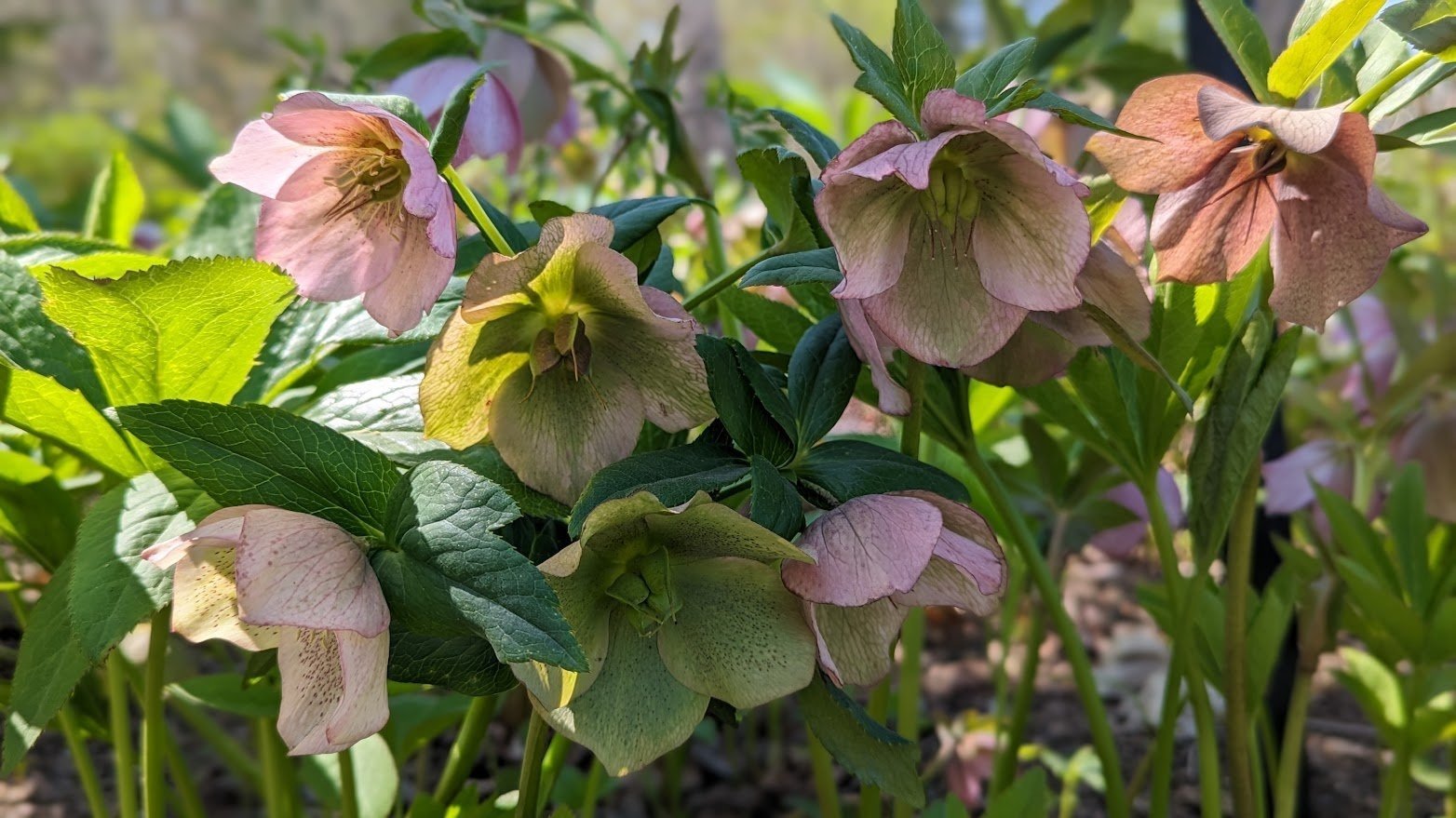
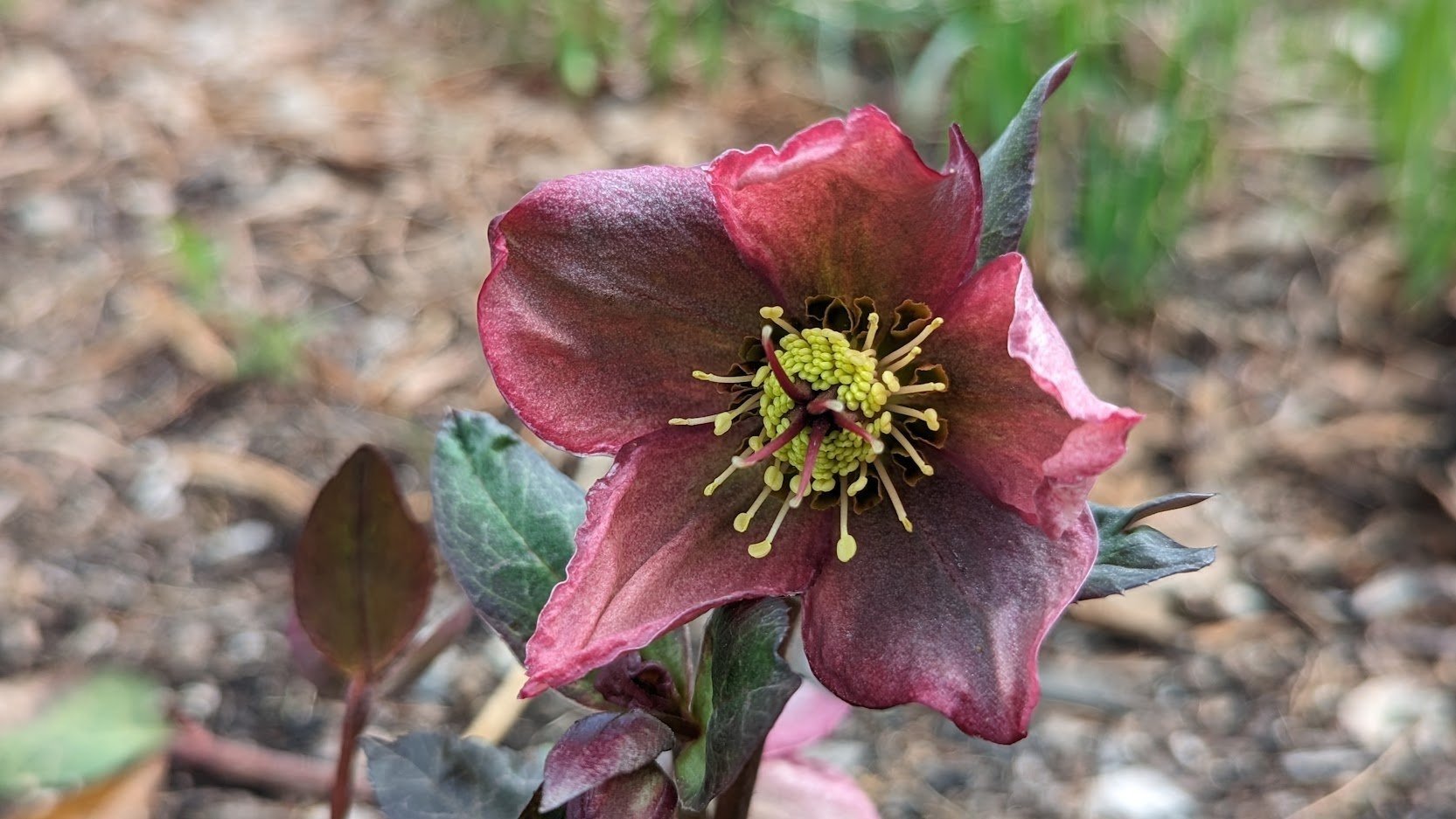
On a walk through Coastal Maine Botanical Garden last year at the beginning of May, one of the many surprises I stumbled upon were the enormous array of Hellebores dappled throughout the shade gardens. I was mesmerized by their range of colors from deep red to shades of pink and white. In the shade of the Giles Rhododendron and Perennial Garden, swaths of Hellebores were groundcover for the Rhododendrons and Azaleas. I have always been in awe of Hellebore’s unique flower structure and evergreen foliage but witnessing it in these numbers was just glorious.

Hellebores awaken in mid April when they begin to put on a show with their abundant blooms. Their flowers last for several weeks and once the petals have faded, the sepals, which look like a flower, remain attractive for several months. The sturdy evergreen foliage is appealing well into the winter months. With all their different stages they are the plant that keeps on giving from spring to winter.

Hellebores are perfect in woodland gardens and in shady areas under deciduous trees.

Helebore at Maine Coastal Botanical Garden

*********************

GROWING CONDITIONS & CARE

  • Easy to grow

  • 12 x 24” H. Spreads over time

  • Drought tolerant but thrives in slightly moist conditions

  • Sensitive to poor drainage

  • Cold hardy and tough

  • Rabbit and deer resistant

  • Perfect along shaded borders and woodland gardens

  • Beautiful when planted under deciduous trees as a ground cover

  • After a long winter, the large evergreen leaves look flattened and tattered. Remove the worst of these before the flower stalks begin to grow. Do not remove leaves prior to that or may harm plant.

PXL_20230510_182322269.PORTRAIT.jpg
PXL_20230510_184221067.jpg
PXL_20230510_182314019.PORTRAIT.jpg
PXL_20230510_162755129.PORTRAIT.jpg
Hellebore
Hellebore
U3fyPpqQ.jpg
Hellebore
Hellebore
PXL_20230510_184319741.jpg
Helleborus orientalis 'Pink Lady' Lenten Rose
Helleborus x hybridus
PXL_20230510_184501021.jpg
PXL_20230510_182322269.PORTRAIT.jpg PXL_20230510_184221067.jpg PXL_20230510_182314019.PORTRAIT.jpg PXL_20230510_162755129.PORTRAIT.jpg Hellebore U3fyPpqQ.jpg Hellebore PXL_20230510_184319741.jpg Helleborus orientalis 'Pink Lady' Lenten Rose Helleborus x hybridus PXL_20230510_184501021.jpg

*********************

HELLEBORES AVAILABLE AT VINEYARD GARDEN

  • Hellebore Ice N' Roses® Bianco (Monrovia)

  • Hellebore Ice N' Roses® Red (Monrovia)

  • HelleboreIce N' Roses® Rosado (Monrovia)

  • Helleborus x iburgensis Ice N' Roses® Merlot Hellebore (Monrovia)

  • Hellebore Ice N' Roses® Rose (Monrovia)

  • Helleborus Paris in Pink (Walter’s Garden)

  • Helleborus Rio Carnival (Walter’s Garden)

  • Helleborus Romantic Getaway (Walter’s Garden)

  • Helleborus Maid of Honor (Walter’s Garden)

  • Helleborus Wedding Bells (Walter’s Garden)

  • Helleborus Spanish Flare (Walter’s Garden)

  • Helleborus New York Night (Walter’s Garden)

  • Helleborus Rome in Red (Walter’s Garden)

  • Helleborus Snowbells (Walter’s Garden)

  • Helleborus French Kiss (Walter’s Garden)

  • Helleborus Sandy Shores (Walter’s Garden)

  • Helleborus Ivory Prince (Walter’s Garden)

  • Helleborus Irish Luck (Walter’s Garden)

A hardy, deer resistant perennial with evergreen foliage, long-blooming flowers and multi seasonal interest!

*********************

MARCH GARDEN TIPS
EARLY SPRING COLOR
In MARCH, DEER RESISTANT, PERENNIALS, PLANT PROFILES Tags perennial plant, Hellebore
Comment

PIERIS JAPONICA

March 7, 2026 Karen Logan

Pieris japonica illustration by karen blackerby logan

PIERIS JAPONICA

(ANDROMEDA)

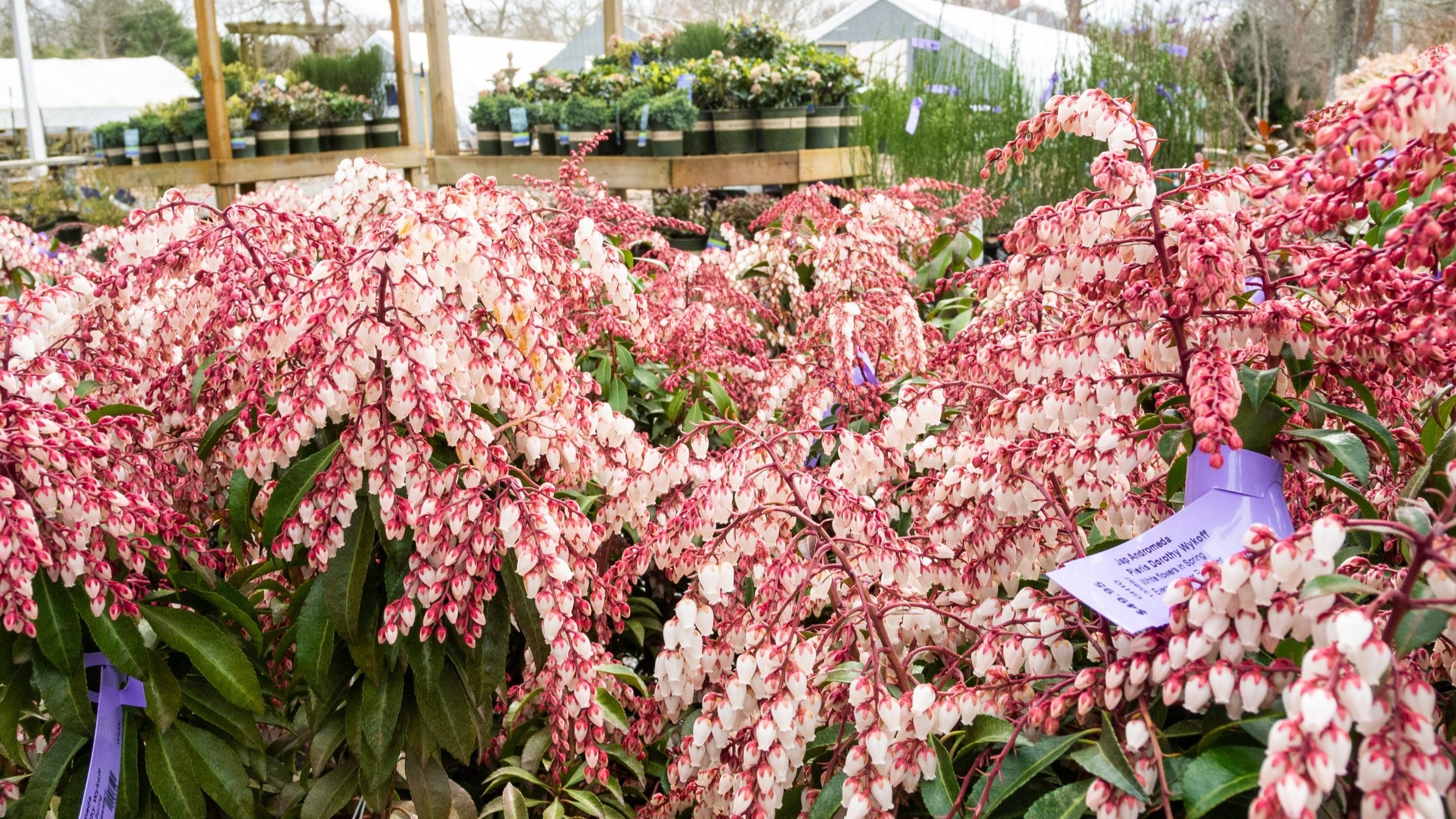
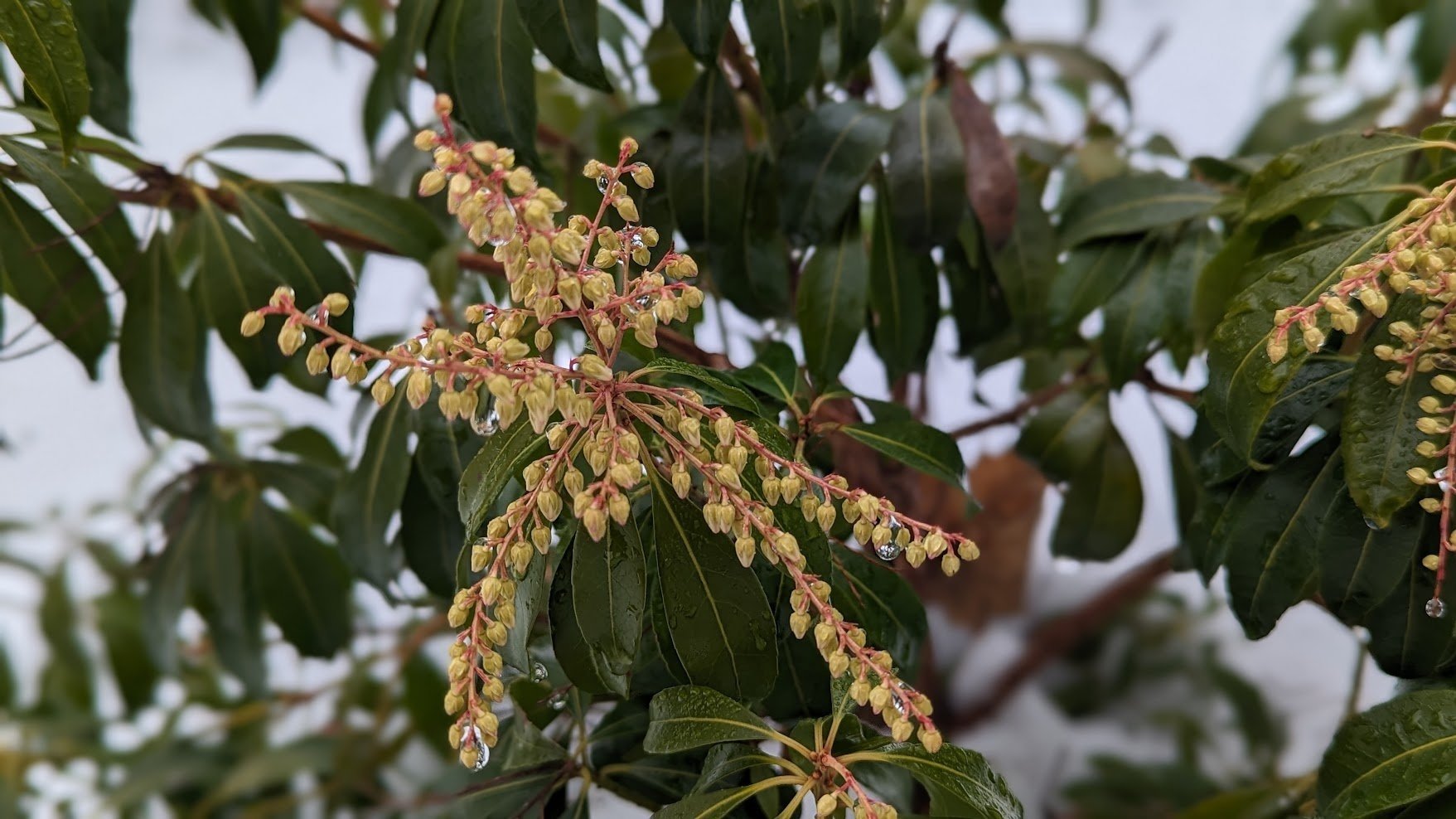
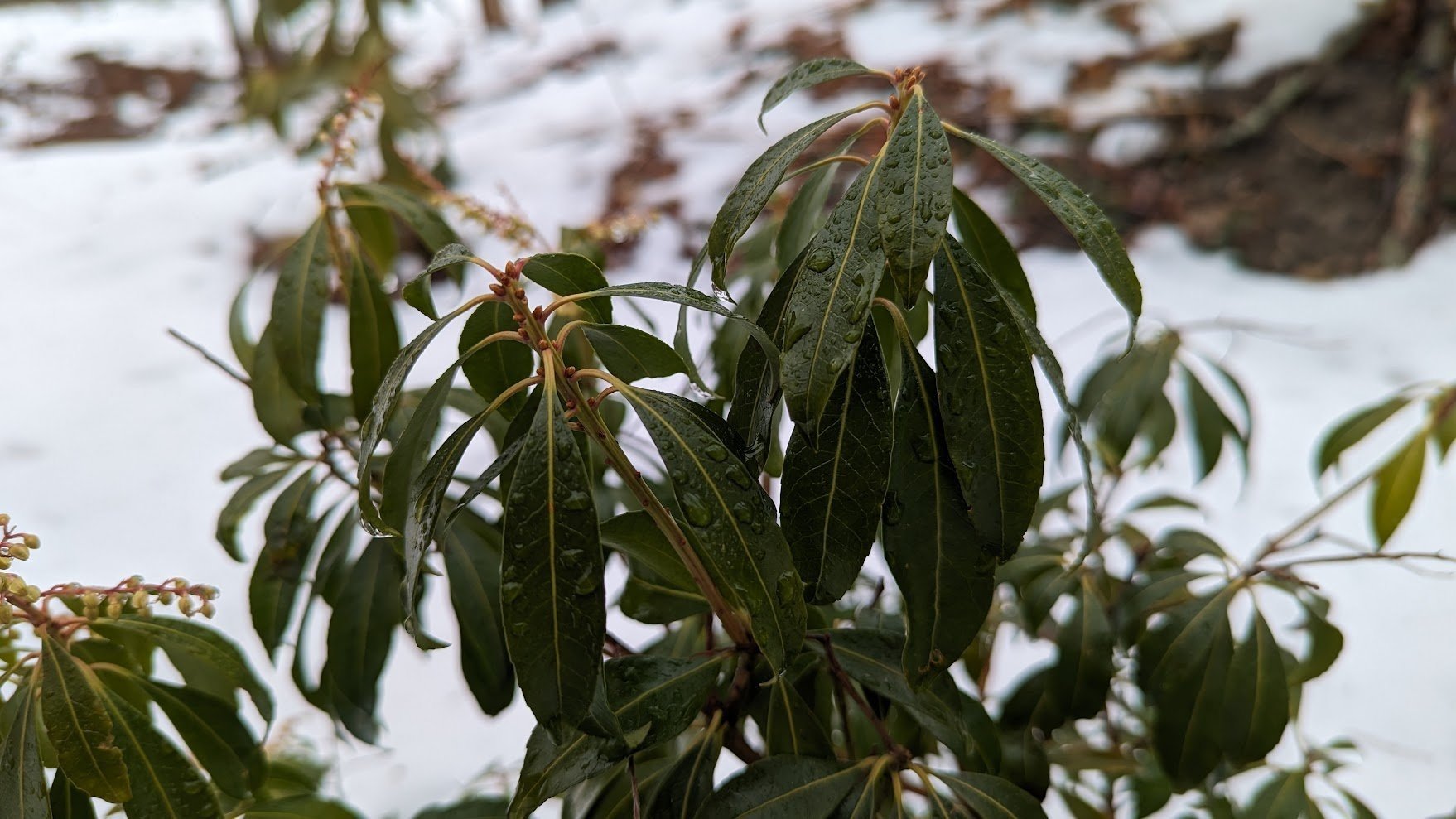
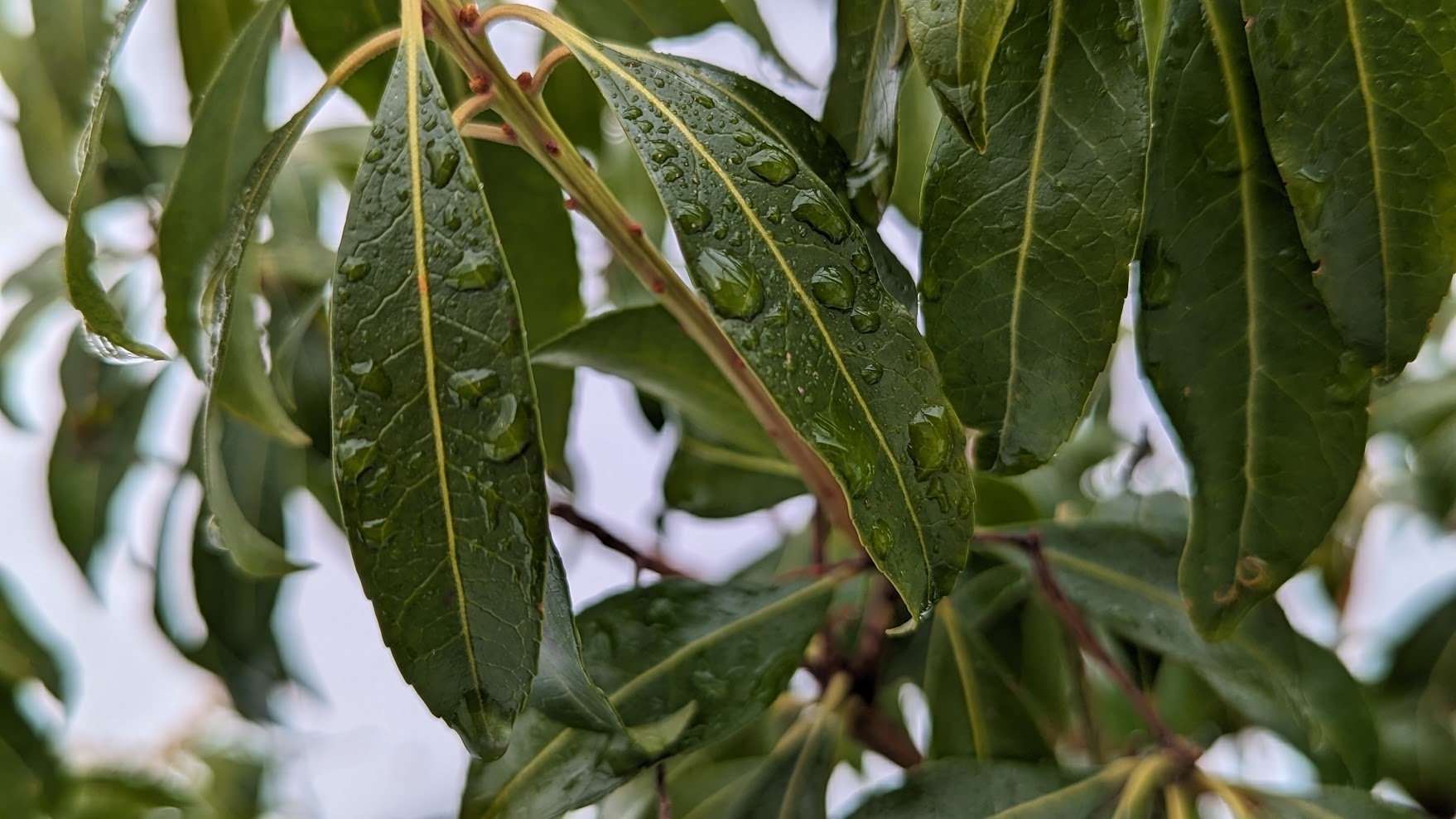
Pieris japonica is a broadleaf evergreen shrub that provides multiseason interest. In early spring, their cascading, delicate, bell shaped flowers bloom for about two weeks. The blooms range in color from white to pink. Simultaneously, bright pink, red, or bronze new foliage emerges, gradually transforming into glossy, oblong evergreen leaves. Beadlike flower buds form in late summer and hold steadfast through winter against their evergreen backdrop.

Deer resistant, slow growing and shade tolerant, Pieris japonica are ideal for adding year round color to mixed borders.

Pieris japonica in late winter

*********************

GROWING CONDITIONS & CARE

Pieris japonica are beautiful year round. They are easy to grow but need to be shielded from rough weather conditions, such as intense wind or rain and do not do well in soggy soil. Keep soil moist and well drained.

  • Growth: 9–12 ft. tall, 6–8 ft. wide, slow growing

  • Light: Sun, partial shade. In Martha’s Vineyard is can be treated as a full sun plant.

  • Soil: Prefers rich, acidic, moist but well-drained soil

  • Bloom Time: Late winter, early spring

  • Flower Color: White, pink

  • Deer resistant!!

  • Good choice for foundations and shrub borders

  • Smaller dwarf varieties can also be planted in containers

 (photo credit Ray Ewing)
(photo credit Ray Ewing)
photo: Ray Ewing
photo: Ray Ewing
pieris+japonica1.jpg
PXL_20230505_173639208.PORTRAIT.ORIGINAL.jpg
Pieris japonica in late winter
PXL_20240327_143707277.PORTRAIT.jpg
PXL_20240327_150005465.jpg
PXL_20240327_150028329.PORTRAIT.ORIGINAL.jpg
 (photo credit Ray Ewing) photo: Ray Ewing pieris+japonica1.jpg PXL_20230505_173639208.PORTRAIT.ORIGINAL.jpg Pieris japonica in late winter PXL_20240327_143707277.PORTRAIT.jpg PXL_20240327_150005465.jpg PXL_20240327_150028329.PORTRAIT.ORIGINAL.jpg

*********************

SUCCESSION GARDENING
(PLANT PROFILE) NARCISSUS

HAPPY GARDENING!

In DEER RESISTANT, MARCH, PLANT PROFILES Tags pieris japonica, broad leaf evergreens, spring blooming shrub
Comment

PANSIES & VIOLAS

March 5, 2026 Karen Logan

Pansy illustration by karen blackerby logan

pansies & tulips

PANSIES & VIOLAS

“Kids love the story of the fairy that lives in the pansy flower that Lauren Crosby made up. She would tell the story to kids during field trips to Vineyard Gardens. First she would carefully peel the outer 5 petals, one at a time. Exposing the female reproductive structure standing tall in the center. This was the fairy that lived inside the pansy.” -Chris Wiley, owner&founder at Vineyard Gardens Nursery

A BRIEF HISTORY

Pansies & Violas are of the genus Viola. The original plant species was viola tricolor, a wildflower of Europe and Central Asia. To the modern horticulturist, the pansy is the larger of the two flowering cultivars. The pansy is a hybrid plant cultivated as a garden flower. The name pansy is derived from the word pensee meaning “thought” and was regarded as a symbol of remembrance.

CARE & INFORMATION

  • Both do well in full sun or partial shade and need well drained soil. They like cool weather and can survive light frosts, snow and even sometimes overwinter. They are one of the first flowers available in spring.

  • They tend to get long and leggy in the heat of summer. Dead heading will extend bloom.

  • They dry beautifully when laid flat within pages of heavy books, and once dried can be used to make cards or other art projects.

In SPRING PLANTS, MARCH, PLANT PROFILES Tags Pansies, Violas, Care for pansies violas, pansies for art, pansy symbol of rememberance
Comment

ASTERACEAE: THE ASTER FAMILY

October 10, 2025 Karen Logan

Vineyard natives, white wood aster (Aster divaricatus) and hay-scented fern (Dennstaedtia punctilobula), pair nicely in the late-season garden.

ASTERACEAE

THE ASTER FAMILY

by Patrick Best

Asters are the hallmark of the late-season garden. While many associate plants like the native white wood aster (Aster divaricatus) or the long-blooming Monch aster (Aster frikartii) with the term “aster”, you may be surprised to learn that the aster family encompasses a huge variety of late-blooming perennials. From goldenrods (Solidago) to sunflowers (Helianthus), and from black-eyed Susans (Rudbeckia) to mums (Chrysanthemum), asters are everywhere!

Blue wood aster (Aster cordifolius) is a native aster that is well adapted to partial shade, unlike most asters which prefer sunny conditions.

Morphology

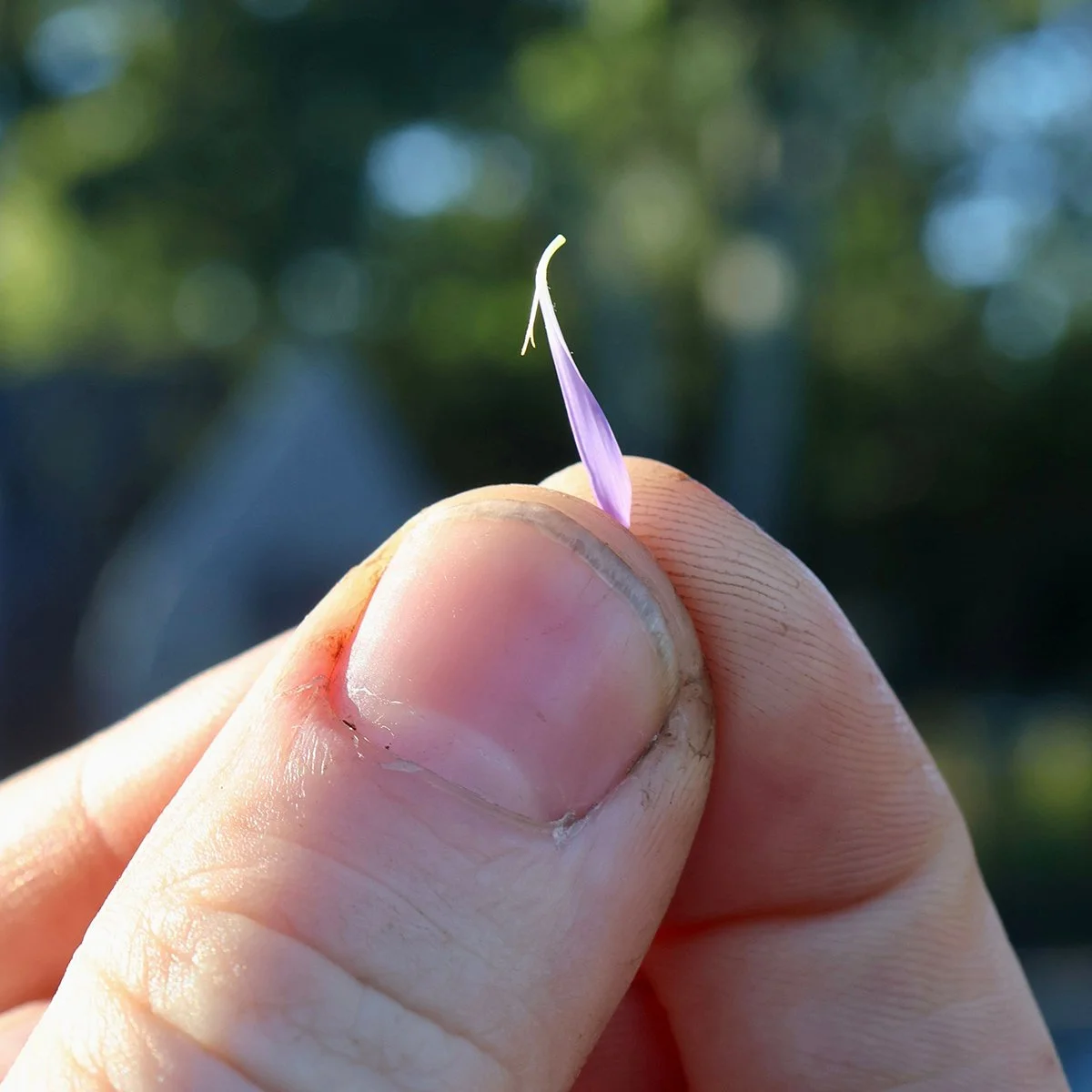
Looking closely at an aster flower, you can see that these compound flowers are actually made up of many smaller, individual florets. Disk flowers make up the center of the bloom and lack petals, while ray flowers encircle the central disk and have one petal each. Not all asteraceous plants have blooms consisting of both disk and ray flowers, but their presence is a helpful way to tell that you’re looking at a species in the aster family.

Aster ‘Raydon’s Favorite’ exhibits the dual-floret morphology typical of the family, with the yellow disk flowers in the center and the purple ray flowers around the edge.

A close-up of a single ray flower.

Ecosystem

In the ecosystem, these nectar-rich plants provide forage for a host of insects, especially the pollinators and bees looking for their final meals before the cold weather sets in. Native asters are far more valuable to the wider ecosystem than annual mums. Next time you walk by a mum, notice the absence of pollinators and then consider planting native asters in your fall pots!

Single-flowered annual mums offer the nectar-rich disk flowers valuable for late-season pollinators. The double-flowered mums only consist of ray flowers and are ecologically inert.

Dahlias are a popular late-season bloomer in the aster family and are well-suited to bouquets.

Garden Uses

Generally starting in August, the asters commonly grown on Martha’s Vineyard bloom well into October, allowing the Vineyard gardener to enjoy a profusion of flowers into the fall.

Zinnias, an aster-family annual, provide a long season of color in the landscape

In the garden, it is vital to ensure that a plant’s habit matches the goals you have for that space. Some plants are more useful for their clumping habit, others for their freely-seeding nature, and still others for their rhizomatous spread, more commonly thought of as groundcover behavior, which allows for colonization of larger spaces. As there are a host of beautiful native plants in the Aster family, it is nice to know that any accidental spread of these plants into the wildlands is an act of ecosystem restoration, and not a sign of invasiveness.

Helen’s Flower (Helenium autumnale) blooms throughout the summer in the Vineyard Gardens display bed.

This fall at the nursery, we have a large variety of Asteraceous plants available:

True Asters:

  • Twilight (rhizomatous spread)

  • Little Carlow (clumping)

  • Blue wood aster (clumping)

  • White wood aster (rhizomatous spread)

  • Vasterival (rhizomatous spread)

  • Prof. Anton von Kippenberg

  • Aster novi-angliae Alma Potschke (clumping)

  • Winston Churchill

Familiar Annuals:

(Dahlia, Cosmos, Marigold, Ageratum, Zinnia)

  • Coreopsis

    • Zagreb

    • Moonbeam

    • C. tripteris Gold Standard

  • Echinacea

    • E. pallida

  • Eupatorium/Eutrochium

    • Joe Pie Weed

    • Boneset

  • Helenium

    • Moerheim Beauty

    • Sombrero

    • H. autumnale

  • Helianthus

    • Lemon Queen (rhizomatous spread)

    • Maximillian (rhizomatous spread)

  • Heliopsis

    • Summer Sun

    • Summer Nights

    • Bleeding Hearts

  • Leucanthemum/Nipponanthemum

    • Shasta Daisies (cvs.)

    • Montauk Daisies

  • Liatris

    • L. microcephala

    • Kobold

    • Floristan White and Purple

  • Solidago

    • Loysden Crown

    • S. canadensis ‘Crown of Rays’

    • Little Lemon

  • Rudbeckia

    • R. triloba Prairie glow (short-lived, seeds around non-aggressively)

    • R. subtomentosa Little Henry (clumping)

    • R. laciniata Autumn Sun/Herbstsonne (clumping)

  • Vernonia

    • V. noveboracensis

  • Chrysanthemum

    • Hardy (Claire Curtis, Igloo Series, Matchstick…)

    • Annuals

In PLANT PROFILES, OCTOBER, FALL PLANTS Tags asters, dahlias, mums, fall blooming plants, late blooming pollinators
Comment

HYDRANGEA PANICULATA

July 24, 2025 Karen Logan

Hydrangea paniculata[illustration by karen blackerby logan]

****************************************

HYDRANGEA

PANICULATA

Panicle Hydrangeas

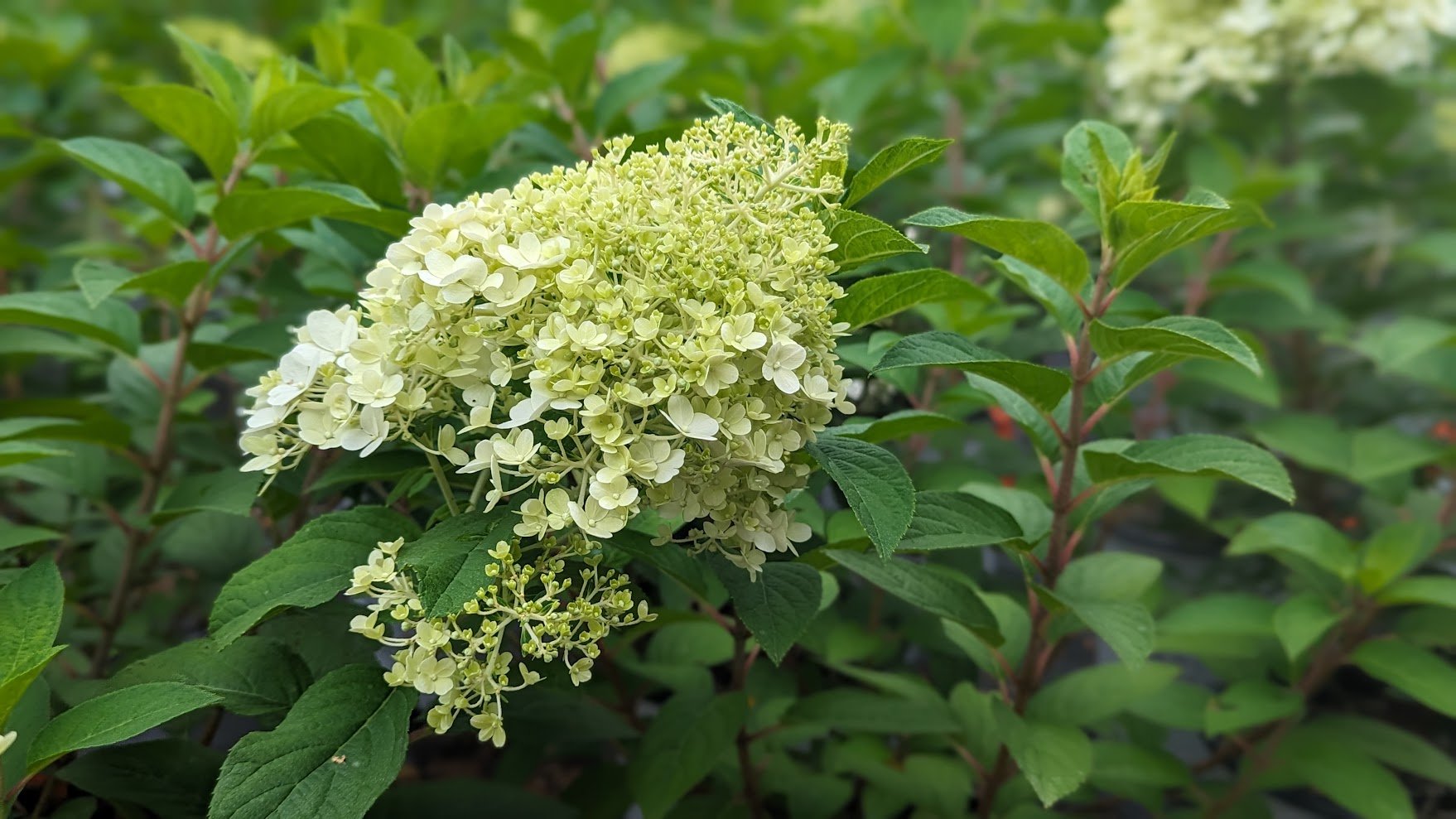
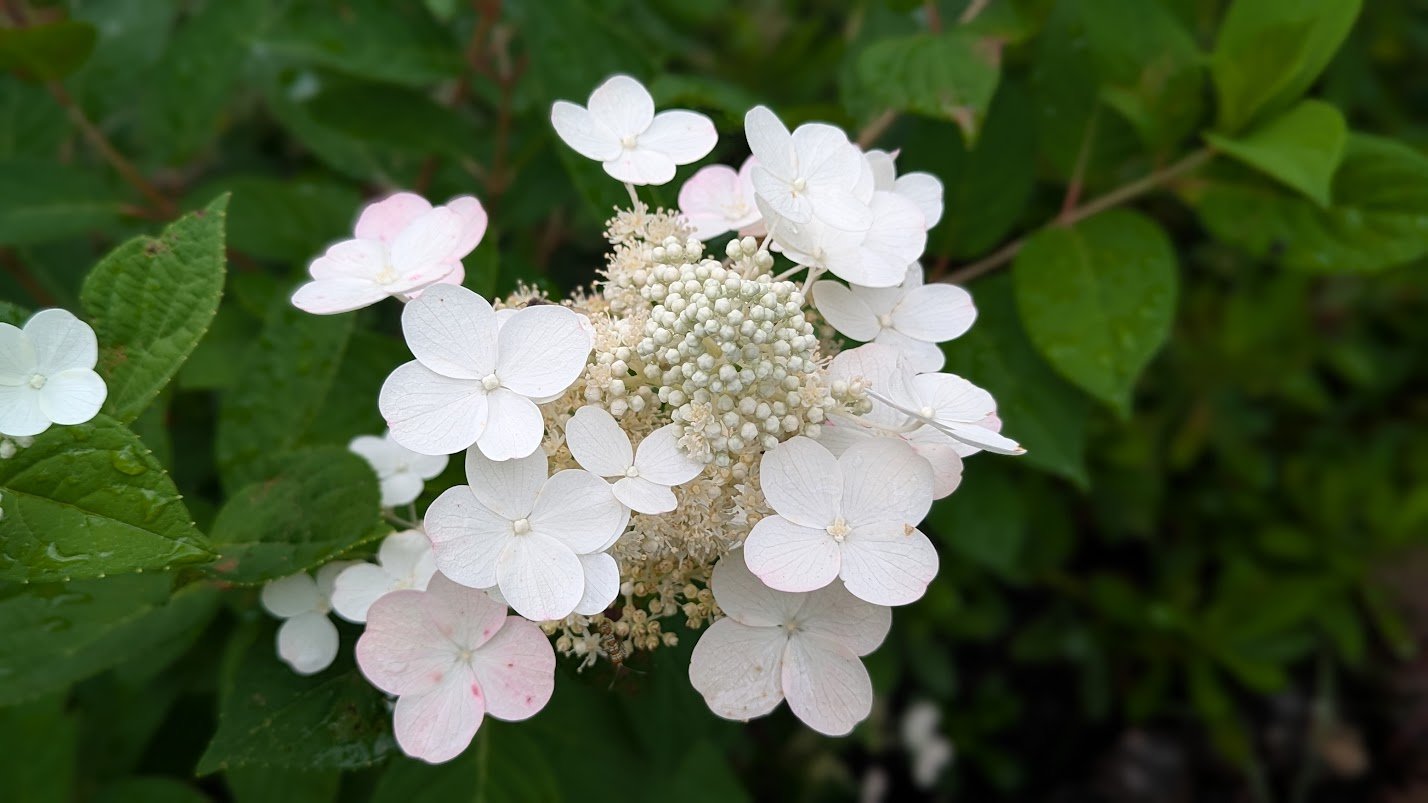
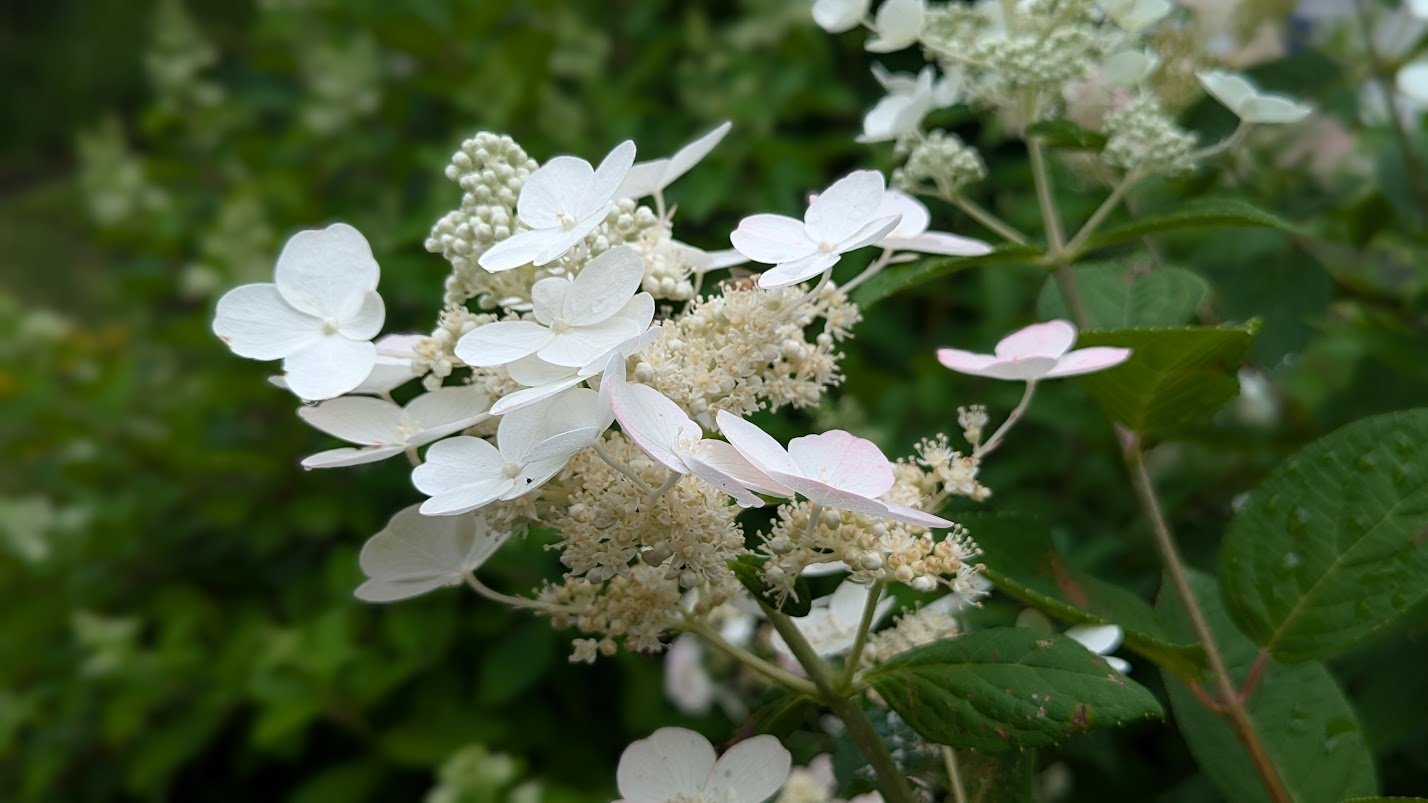
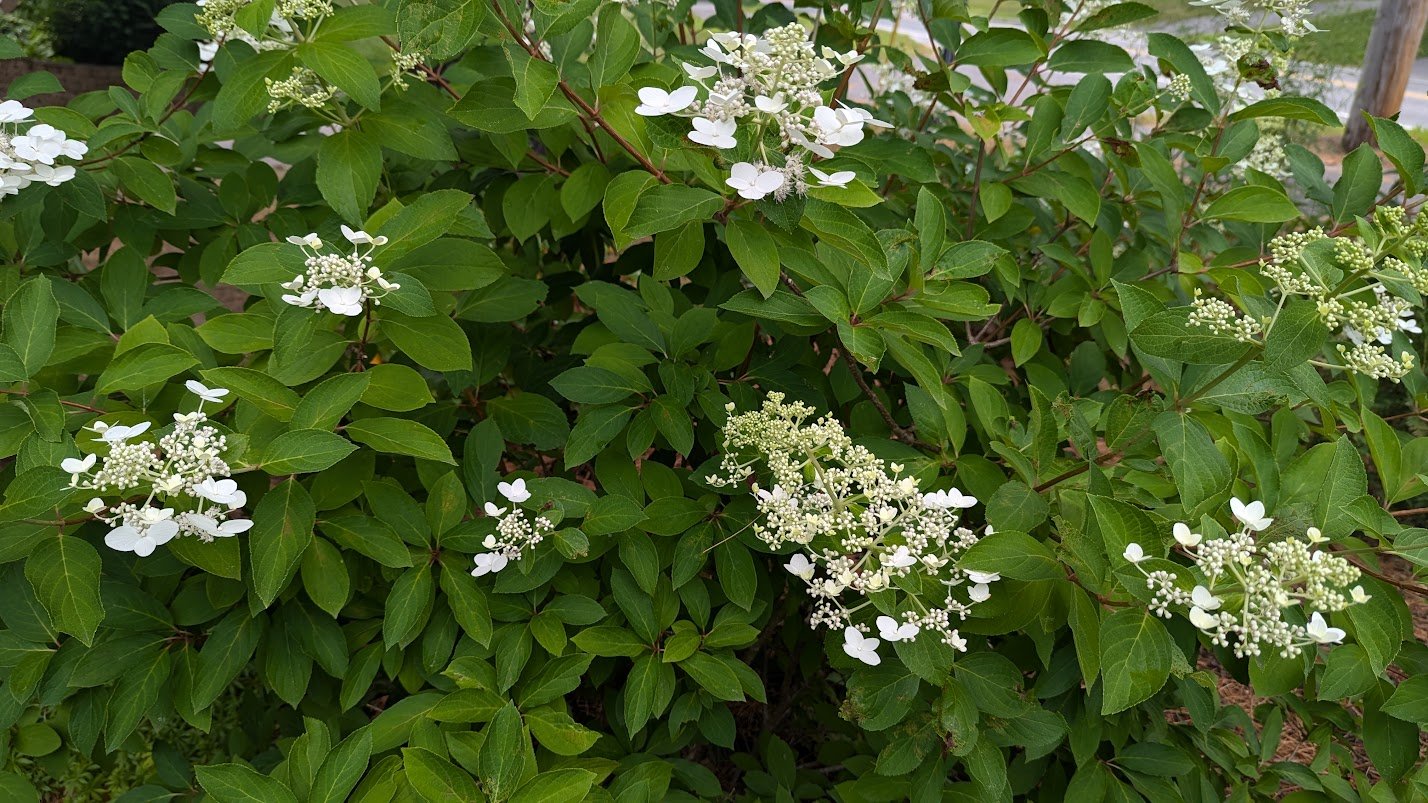
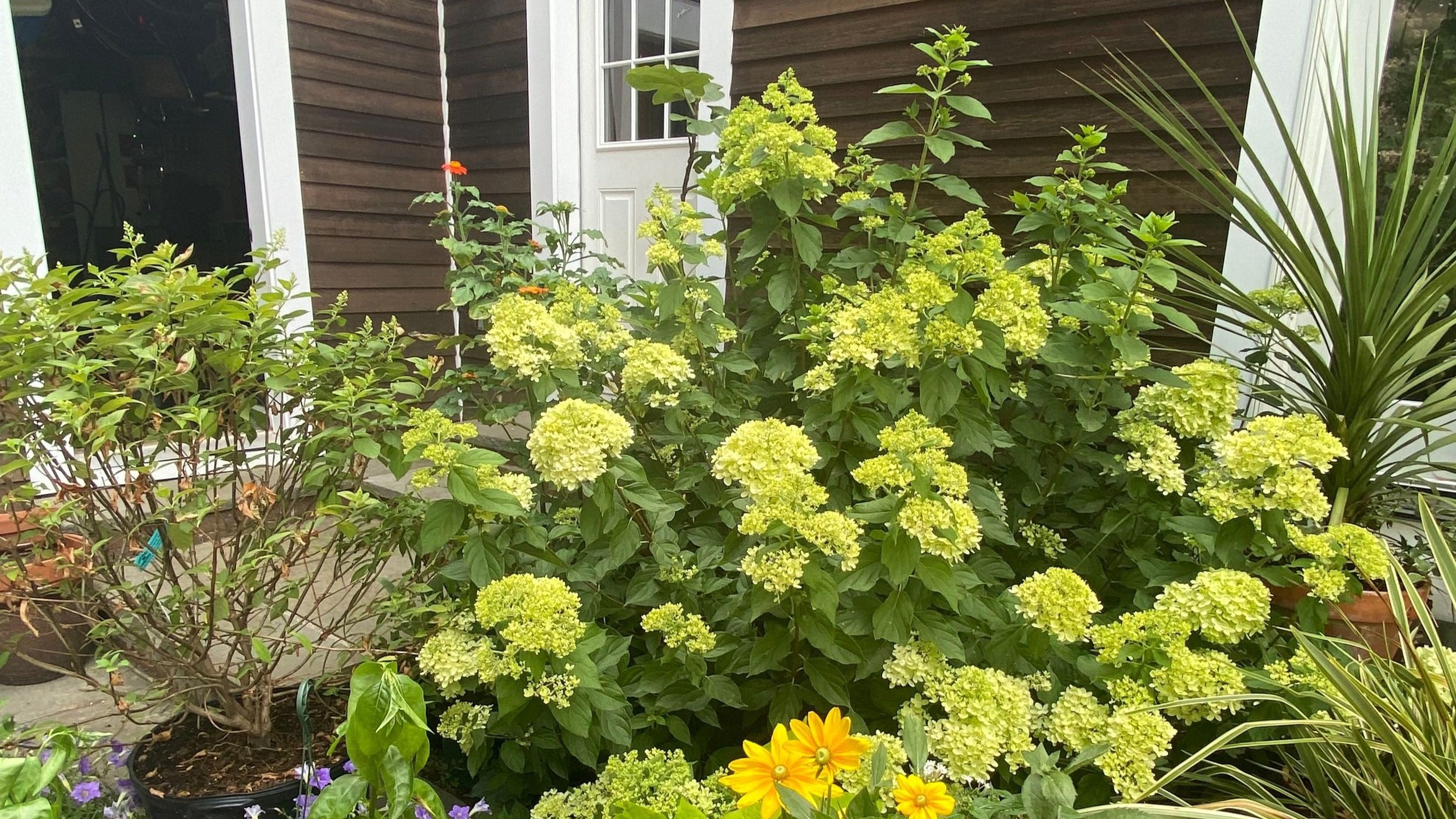
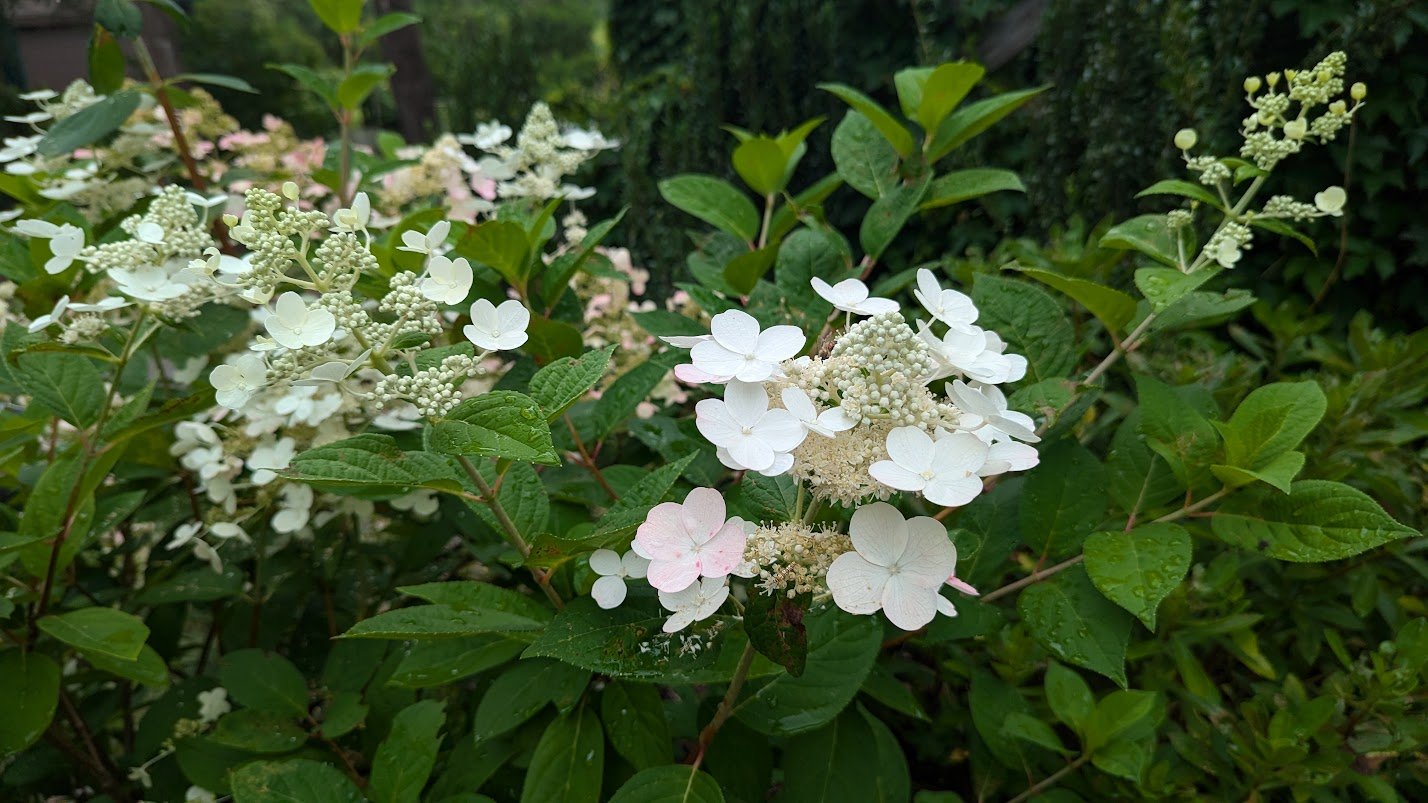
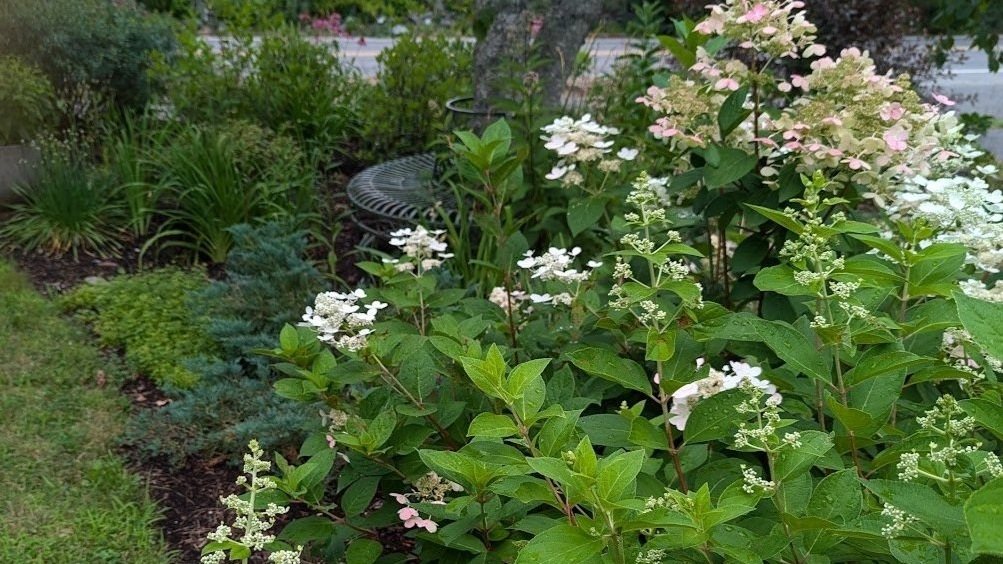
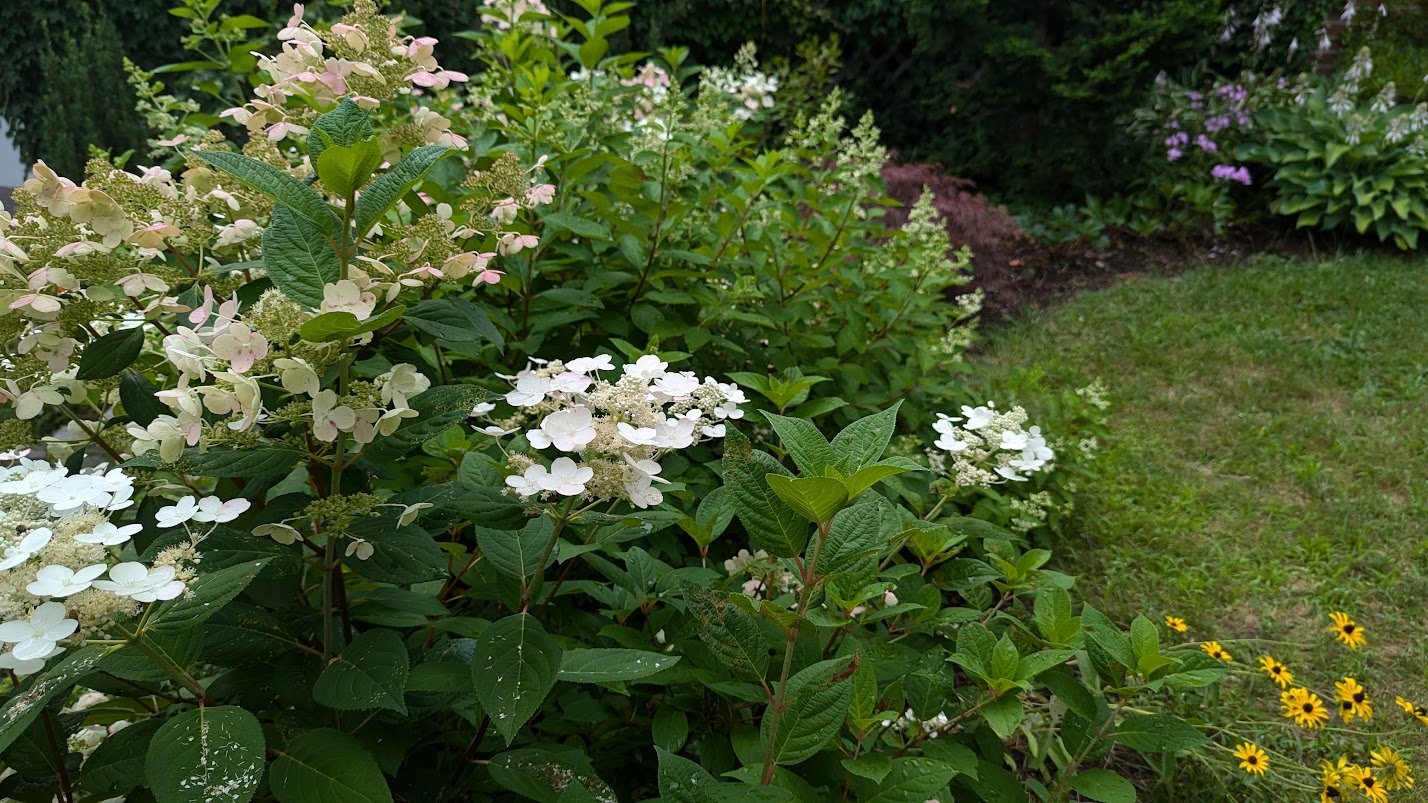
Panicle Hydrangeas are the no fuss hydrangea with long lasting blooms. They range in size from large to compact depending on variety, allowing for many planting options in the landscape. A late blooming shrub, they become the autumn stars when most other shrubs are no longer blooming. Triggered by air temperature fluctuations and day length Hydrangea paniculata go through a color transformation starting with an early summer white that fades to shades of pink or red before drying to beige in the winter. Their nectar-rich flowers attract butterflies and bees late into the season, providing them with a vital food source.

PXL_20230815_191347143.PORTRAIT.jpg
PXL_20240724_152051110.PORTRAIT.jpg
PXL_20240724_152154573.PORTRAIT.jpg
PXL_20240724_151752735.jpg
PXL_20240714_132440272.jpg
Hydrangea+paniculata+little+lime.jpg
PXL_20240724_152035460.jpg
PXL_20240724_152235117%2B%25281%2529.jpg
PXL_20240724_152313863.jpg
PXL_20230815_191347143.PORTRAIT.jpg PXL_20240724_152051110.PORTRAIT.jpg PXL_20240724_152154573.PORTRAIT.jpg PXL_20240724_151752735.jpg PXL_20240714_132440272.jpg Hydrangea+paniculata+little+lime.jpg PXL_20240724_152035460.jpg PXL_20240724_152235117%2B%25281%2529.jpg PXL_20240724_152313863.jpg

******************************************

HYDRANGEA PANICULATA ATTRIBUTES

  • Panicle Hydrangeas thrive in full sun or morning sun, a place in the garden that mophead hydrangeas don’t flourish.

  • They bloom on new growth each summer so prune early in spring. There is also no risk of flower buds being harmed by the cold winter or late frost because they bloom on this years growth.

  • As the rest of the garden winds down, the fall panicle hydrangeas take center stage.

  • Flowers can even be left to dry on the plant in the fall and can stay looking good into the winter.

Uses:

* Variety of sizes means there’s a perfect fit for most situations

* Smaller specimens ideal for foundation, mass or container planting

* Larger specimens ideal for hedges and back of the garden

Quick Fire Hydrangea

hydrangea paniculata

**********

Limelight

Limelight Prime

Little Lime

Quick Fire

Little Quick Fire

Bobo (dwarf variety)

Grandiflora

Phantom

Fire Light

Hydrangea paniulata Bobo

In SHRUBS, JULY, PLANT PROFILES Tags hydrangeas, hydrangea paniculata, quickfire hydrangea, hydrangea bobo, hydrangea limelight
Comment

SEDUMS

August 5, 2024 Karen Logan

SEDUMS

There are over 400 species of sedums, in the family Crassulacea. They are known for their succulent foliage and drought tolerance. Sedums are easy to grow, hardy perennials that come in a range of sizes, colors and shapes and flower beautifully. Plant them in full sun and well drained soil and they will be happy campers. Some even do fine with afternoon shade.

Sedums are terrific low maintenance plants which really stand out in late summer to fall.

Sedums grown at our on site production location

SEDUM PLANT TYPES

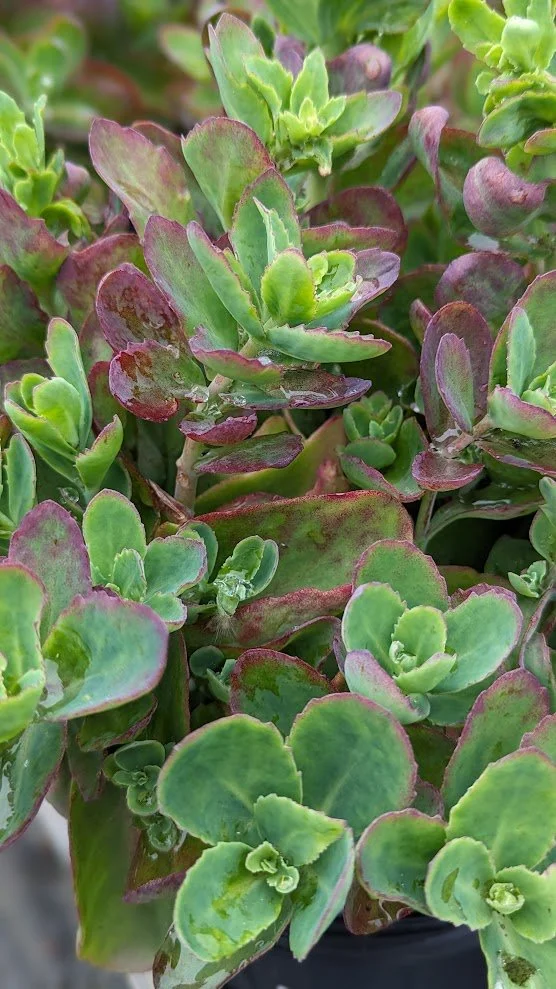
  • Creeping Sedum: Groundcover that can spread up to 3 feet. This low growing sedum usually spreads quite wide like a carpet. Many of them have little rosettes for foliage which look like flowers but are actually foliage. The Sedum major is a great example of foliage that resembles flowers.

  • Tall Sedum: Upright habit that can reach 2-3’ tall and wide. These taller sedums are like small shrubs. They can even work as hedges.

  • Trailing Sedum: Used in containers, hanging baskets or spill over rock walls.

Vineyard Gardens usually divides Sedums into the low growing, spreading type referred to as rock garden sedums and the taller more upright type many of which are in the species spectabile, which means showy.

View fullsize A8l7z2Fg.jpeg
View fullsize IMG_20220610_092422.jpg
View fullsize MUNSTEAD DARK RED SEDUM.jpg
View fullsize prima angelina sedum stonecrop.jpg
View fullsize sedum frosted fire.jpeg
View fullsize sedum lemon ball.jpeg
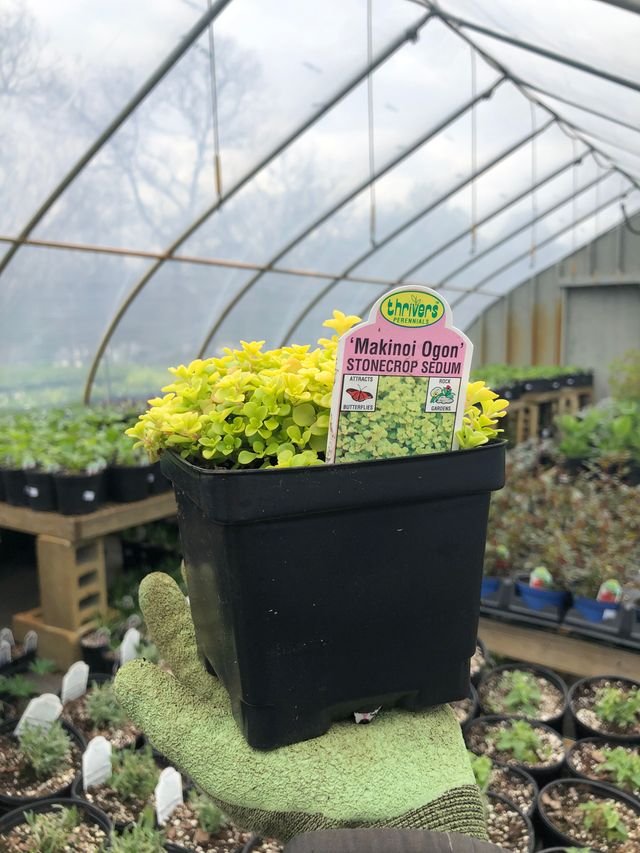
View fullsize sedum makinoi ogon.jpeg
View fullsize sedum matrona.jpeg
View fullsize sedum munstead dark red.jpeg
View fullsize spellbound SEDUM1.jpg
View fullsize stonecrop.jpg
View fullsize PXL_20230925_152658407.PORTRAIT.jpg
View fullsize PXL_20240416_131740333.jpg
View fullsize IMG_20220506_111415.jpg
View fullsize IMG_20220513_152347.jpg
View fullsize PXL_20240613_144008271.jpg

SEDUMS AT VINEYARD GARDENS

  • Sedum rupestris Angelina: A rock garden spreader with yellow foliage and yellow flowers.

  • Sedum reflexum Blue Spruce: Great in rock gardens and have bluish gray foliage.

  • Sedum Steel the Show: This sedum is the perfect ground cover for a sunny garden. It has bright blue green foliage.

  • Sedum dasphyllum Major: A rock garden type whose foliage looks like tiny little blue flowers.

  • Sedum Sunsparkler Series: This series is medium size and the foliage ranges from plum purple to green with cream variegation.

    We carry Dazzleberry, Plum Dazzler, Cherry Tart, Lime Zinger, Firecracker and Blue Elf.

  • Sedum Munstead Dark Red: A spectabile type that grows 15-18” tall with greenish foliage and dark red flowers.

  • Sedum Mojave Jewels Saphire: A plum colored upright sedum.

  • Sedum Night Light: Flower color in shades of yellow to gold. 22-26” tall; 30-36” spread.

    Sedum blooms attract pollinators. Birds, butterflies and many insects love them!

Sedum in a planted container

Flowering yellow sedum with Butterfly Bush and Hydrangea paniculata

In AUGUST, GROUNDCOVERS, PLANT PROFILES Tags Sedums, creeping sedums, trailing sedums, Tall sedums
Comment

CAMELLIAS

October 24, 2023 Karen Logan

CAMELLIAS

Broad leaf evergreens with showy flowers and shiny foliage. They are native to Eastern and Southern Asia.

Protect your Camellias, the deer will eat them!

******************

CAMELLIA JAPONICA

Camellia japonica is the species most available in the trade. It is cultivated for its beautiful flowers and it’s shiny leaves. There are over than 200 cultivars of C japonica. First seen in Europe in late 1800’s but originated in Asia hundreds of years earlier. They have a variety of flowers from singles to doubles to anemone flowered. C. japonica flowers in late winter into spring. They can get 6-8 ft tall here on Martha’s Vineyard. Polly Hill Arboretum in West Tisbury is a great place to see them when they are in bloom. C. japonica tend to have hardiness issues this far North so make sure to plant them in a protected spot. They are much more popular in the south where they grow much bigger.

The Ice Angel series are the hardiest of camellias we know.

  • “Winter Snowman” has a double white flowered bloom.

  • “April Remembered” has a soft pink bloom. It is a hardy Camellia developed and introduced at the University of North Carolina and Camellia Forest Nursery in Chapel Hill, NC. Growing Camellia’s on the Vineyard can be frustrating but when successful, very rewarding. There are many species and selections but most often grown are C. japonica and C. sasanqua. The plants themselves are reliably hardy outdoors but because they tend to flower in late winter/early spring the flowers are often burnt by freezing temperatures. This doesn’t seem to daunt those who desire their large, formally structured flowers. The plants can become large in time or easily kept trimmed to a neat, tight shrub.

care

*******

* Prefers soil rich

in organic matter

* Likes lots of water

yet well drained soil

* They are not

drought tolerant

* Must be protected

from deer

*Afternoon shade is best

Camellia japonica

plant

*******

* Plant against the

house or a stone wall to

offer some winter

protection

* Prefers a protected

spot because this

far north they are at the

marginsof their

hardiness zone.

******************

CAMELLIA SASANQUA

The flowers on the C. sasanqua’s tend to be smaller and less formal but are produced in abundance in the late autumn. This works in our favor here on the Island since we tend to have a long, languorous fall season. The sasanqua’s flowers also come in a range of colors from red through pink to white in singles and doubles and have the added advantage of being fragrant. Its not sweet or pungent its more a clean, fresh, woodsy scent that is delightful and unexpected.

Camellia Sasanqua

C. sasanqua

*******

Think ahead for

what your garden

will be like in the

Vineyard’s long,

mild autumn.

Camellia sasanqua

augment the fall garden

and make lovely, hardy

additions to it.

Camellia Sasanqua

******************

Camellia Sinensis

The tea we drink comes from the steeped and fermented leaves of C. sinensis. The preparations determines whether it is green or black tea. [We do not carry C sinensis but mention it only as a point of interest.]

In FALL PLANTS, OCTOBER, PLANT PROFILES Tags camellias, fall flowers, broad leaf evergreens, camillia japonica
← Newer Posts Older Posts →

484 State Rd. West Tisbury, MA 02575

Mon - Fri : 8am - 4:30pm

Sat : 8am-4:00pm

Closed Sundays

(508) 693.8512