• Home
  • ABOUT
    • PROJECTS
    • SPRING CHECKLIST 2026
    • Landscape Teams
    • LANDSCAPE DESIGN
    • LANDSCAPE CONSTRUCTION
    • LANDSCAPE MAINTENANCE
    • Nursery
    • BULK MATERIAL
    • PLANT PROFILES
  • Application
  • EVENTS
  • FIELD NOTES
  • TESTIMONIALS
  • Contact
Menu

Vineyard Gardens

484 State Road
West Tisbury, MA, 02575
508.693.8512
Landscaping & Garden Center

Your Custom Text Here

Vineyard Gardens

  • Home
  • ABOUT
  • LANDSCAPING
    • PROJECTS
    • SPRING CHECKLIST 2026
    • Landscape Teams
    • LANDSCAPE DESIGN
    • LANDSCAPE CONSTRUCTION
    • LANDSCAPE MAINTENANCE
  • NURSERY
    • Nursery
    • BULK MATERIAL
    • PLANT PROFILES
  • Application
  • EVENTS
  • FIELD NOTES
  • TESTIMONIALS
  • Contact

[PLANT PROFILE] CRAPE MYRTLE

September 6, 2022 Karen Logan

September Border: Crape Myrtle is the white ‘Natchez’ & Vitex

Lagerstroemia

[CRAPE MYRTLE]

An all-season performer that shows off colorful foliage in fall, attractive exfoliating bark in winter and showy flowers in the summer! Crape Myrtle bloom from July to September, with some varieties blooming until first frost. Flowers have a crepe like texture and range in color from red, purple, pink, orchid and white. There are several varieties that range in size from 2-foot shrubby dwarfs to large trees.

Crape Myrtles’ showy flowers adds a punch of color in late summer & early fall.

Crape Myrtle (front), Rudbeckia & Hibiscus

*************************

HISTORY

Better known by their common name of Crape Myrtle, Lagerstroemia is a genus of about 50 plants native to the Indian subcontinent and Southeast Asia. The Genus is named after the director of the Swedish East India Company, Magnus van Lagerstrom, who supplied Carl Linnaeus with plants he collected.

Only 2 species are primarily used in gardening and landscape horticulture. The Lagerstroemia indica from China and Korea was introduced to Charleston, North Carolina in 1790 by French botanist Andre Michaux. In the wild it is a large multi stemmed shrub but 200 years of cultivation have resulted in a huge number of cultivars with varying characteristics.

Another species from Japan Lagerstroemia fauriei is becoming increasingly important as a landscape plant and as a parent in hybrids with L. Indica. This species is more resistant to fungal diseases, has highly ornamental bark and is more cold hardy than L. Indica making it valuable as genetic material for hybridization.

FALL IS A GREAT TIME TO PLANT. allowS CRAPE MYRTLE time to establish their roots before going dormant in winter.

Lagerstroemia Berry Dazzle

CARE

  • Prefer full sun. The more sun the more blooms!

  • Once established, Crape Myrtles are quite drought tolerant.

  • They need good drainage.

  • A common mistake is over-pruning.

    *************************

    USES

    Crape myrtles make great additions to any size garden. Some ideas for how to use them:

  • Plant multiple dwarf or medium-size varieties together to form a hedge.

  • Use dwarf varieties as colorful additions in borders and beds.

  • Dwarf varieties make excellent choices for large containers.

  • A good choice near walkways and driveways.

  • Use larger varieties as an individual accent

*************************

we have dwarf varieties available to add to your garden if you don’t have space for a larger speciman.

Crape Myrtle ‘Like a Latte’ [photo: walters gardens]

CRAPE MYRTLE VARIETIES WE HAVE AVAILABLE

Lagerstroemia 'Like A Latte' (Dwarf)

Lagerstroemia 'Barista Cherry Mocha' (Dwarf)

Lagerstroemia 'Tuscarora'

Lagerstroemia 'Tonto'

Lagerstroemia 'Muskogee'

Lagerstroemia 'Muskogee Lavender'

Lagerstroemia 'Natchez White'


Lagerstroemia 'Cherry Mocha' [photo: walters garden]

Crape Myrtle ‘Tuscarora’ [photo: monrovia]

Crape Myrtle ‘Muskogee’ [photo credit: monrovia]

Tonto Crape Myrtle [photo: monrovia]

Fall Trees & Shrubs

Autumn Garden

In GARDEN TIPS, FALL PLANTS, SEPTEMBER, PLANT PROFILES Tags perennial plant, fall blooms, crape myrtle, fall tree
Comment

[PLANT PROFILE] ANEMONE

September 1, 2022 Karen Logan

Anemone [illustration by karen blackerby logan]

JAPANESE ANEMONE

[WINDFLOWER]

A common name for Anemone is windflower because the delicate poppy-like flowers sway in the breeze. The Greek word anemos translates as "wind."

Japanese Anemones add a wonderful splash of color to the autumn garden when other perennials are beginning to fade. With one of the longest bloom times, they are a great season extender in a perennial garden. They spread when they are happy and can tolerate moist soils!

*************************

CARE

  • Japanese Anemones are fabulous perennials that thrive ideally in a little afternoon shade. They can tolerate full sun as long as the soil is moist.

  • They prefer rich, moist soil. Water the plants regularly when it does not rain.

  • Bloom time: Mid-Summer to Late Fall 6-8 weeks

USES

Borders, cottage gardens, coastal gardens, naturalized areas such as meadows

White anemomes stand out nicely at night. White gardens are sometimes called moonlight gardens .where the white flowers light up at night.

Japanese Anemone and Impatiens balfourii [photo by keith kurman] Anemones contain basal leaf clumps from which long flower stems grow to support delicate flowers.

Japanese anemone bloom abundantly from mid-summer to late fall, giving gardeners a shade-loving alternative to the autumn mums and asters.

**********************************

JAPANESE ANEMONES WE CARRY AT VINEYARD GARDENS

Japanese Anemones are mostly hybrids. Some are taller than others, up to 3 feet. The more popular ones are single flowers but we often carry a pink double called Pamina. Next year we are ordering a white double called Whirlwind.

  • Wild Swan: White with a bluish tinge behind the petals

  • Honorine Jobert: White single flowers

  • September Charm: Pink single flowers

  • Robustissima: Pink single flowers

  • Bressingham Glow: Pink flowers

  • Pamina: Pink double flowers


    **********************************

Japanese Anemone in their full glory and the bees taking it all in!

Anemones

fall blooming anemones

Autumn Garden

In GARDEN TIPS, FALL PLANTS, SEPTEMBER, PLANT PROFILES Tags perennial plant, Anemone, Japanese Anemone, fall blooms
Comment

[PLANT PROFILE] CLERODENDRUM

August 1, 2022 Karen Logan

Clerodendrum trichotomum

CLERODENDRUM TRICHOTOMUM

[HARLEQUIN GLORY-BOWER]

In mid-summer and fall Clerodendrum adds a striking show when other woody plants are not in bloom!

MID-SUMMER BLOOM

Clerodendrum trichotomum (Harlequin Glory-Bower) is the only Clerodendrum hardy this far north. A deer resistant, flowering, deciduous shrub that begins blooming mid-summer with fragrant soft white flowers. The flowers have a sweet delicate aroma and are large enough to make a statement. A great addition to a late season garden when many other shrubs are not in bloom.

FALL INTEREST

In the fall, Clerodendrum has a wonderful effect. The flowers turn into a very interesting seed pod, bright purplish-blue berries adorned by thick star-shaped red calyces. In addition, the foliage changes into a beautiful yellow fall color. A show stopper indeed!

Clerodendrum has large heart shaped leaves which produce a peanut odor when crushed.

attracts Hummingbirds, butterflies, honeybees & other pollinators!


WHERE TO PLANT

  • Clerodendrum is a large shrub that grows between 8-10’ tall.

  • Stands best alone because it takes over. Plant it where it has plenty of room to spread and colonize. It will spread as far as you let it but it can be controlled.

  • Full sun to part shade. Clerodendrum prefers full sun for best shape and flowering but can tolerate and flower in partial shade. In partial shade, it’s already loose habit will be even more open.

“Our Clerodendrum is blooming now and fills our entire patio with a sweet fragrance!” Chris Wiley, co-owner Vineyard Gardens

Clerodendrum trichotomum in the spring/early summer

Clerodendrum trichotomum in the summer

Clerodendrum trichotomum in the fall.

Clerodendrum

Clerodendrum

deer resistant

PLANTS

August Plants

In GARDEN TIPS, AUGUST, DEER RESISTANT, PLANT PROFILES Tags flowering shrubs, Deer resistant shrubs, pollinator friendly shrubs, harlequin glory bower, mid summer flowering shrub, Clerodendrum trichotomum
Comment

FERTILIZING HYDRANGEAS

July 7, 2022 Karen Logan

Hydrangea [illustration by karen blackerby logan]

FERTILIZING HYDRANGEAS IN EARLY SUMMER

by Lorraine Ballato

July 5, 2022 / Fertilizing Hydrangeas, Hydrangea macrophylla (Bigleaf), Hydrangea serrata (Mountain)

I have spent the past 2 days fertilizing my hydrangeas. Which ones, you ask. Well, read on about Fertilizing Hydrangeas In Early Summer.

My experience is that all hydrangeas grow better when they are fertilized, even the native ones. It’s one of the lessons I learned from our Covid lockdown. I actually had the time to do this and, WOW! did it pay off.

WHY FEED YOUR PLANTS IN EARLY SUMMER

If you missed feeding your plants early in the season when you did your spring clean up, you can make up for that now. BTW, “now” in the northern hemisphere means before August 1. That’s because fertilizing will stimulate your plant and you don’t want to do that too late in the season.

The plants that respond best to fertilizer this time of year are the rebloomers: big leaf (macrophylla), mountain (serrata) and woodland/smooth (arborescens) varieties. You want to help them produce those reblooming flowers to carry your garden through to the end of the season.

HOW TO DETERMINE IF YOU HAVE A REBLOOMER

If you don’t know if your mountain or big leaf hydrangea is a rebloomer, look to see where the flowers are positioned. If they are coming from along the sides of the stems, you have rebloomer. It’s that simple.

Reblooming hydrangea flowers along length of the stem

FEEDING YOUR PLANTS

There are differing opinions on fertilizing your hydrangeas. I am firmly in the camp of helping hydrangeas thrive and have learned it is especially beneficial if your soil needs  improvement. A soil test will help you figure that out. The results of fertilizing are more than encouraging and I am convinced this is a worthwhile practice.

THE REASONS TO FERTILIZE HYDRANGEAS IN EARLY SUMMER

Remember that on rebloomers, the more you cut the tips, the more flowers you will get along the stem for later season color. So your rebloomers will appreciate the extra nutrients to continue to put out new flowers. Deadheading and/or cutting flowers for bouquets also stimulate the plant to grow new stems for future flowers. So don’t be reluctant to do that and add beauty to your indoor spaces (office, kitchen, etc.).

Even if your plant is not a rebloomer, the mid-season fertilizer will help it set buds for next year later this season. It’s not rocket science.

FEEDING OTHER KINDS OF HYDRANGEAS

Feeding your other hydrangeas, although helpful, isn’t necessary. The old wood bloomers are all pretty self sufficient, unless you have an issue that needs to be remedied. Or you missed feeding them earlier this season.

Panicle hydrangea used as companion plant for a stand of woodland hydrangeas

THE BEST FERTILIZER FOR HYDRANGEAS

Rose food is ideal as is any granulated shrub fertilizer, either organic or a time release product. I don’t recommend products like 10-10-10. No plant uses nutrients in equal amounts so when you use 10-10-10, what you are doing is contributing to run-off and local pollution issues.

Rose-tone Fertilizer Is very good for hydrangeas

WATCH OUT FOR TICKS

Fertilizing hydrangeas forces you to get down at the ground level, sometimes crawling beneath your plant. That action may disturb ticks that then light on you. Whenever I do this early summer fertilizing, I always pick up several ticks. So do be aware and do a tick check regularly, especially after fertilizing. 

One type of tick

PINCH PRUNING COMES NEXT

I’ll be back in a few days to discuss mid-season pinch-pruning, maybe topping your plant, and using those cuttings to propagate new plants. The fun is just beginning!

****************************************

Check out hydrangea specialist, Lorraine Ballato’s insightful website packed with excellent information on all things hydrangea!

SUCCESS WITH HYDRANGEAS

book by lorraine ballato

HYDRANGEA LOVERS

facts about hydrangeas

Hydrangea [illustration by karen blackerby logan]

In GARDEN TIPS, JULY, SHRUBS, FIELD NOTES Tags hydrangeas, fertilizing hydrangeas, lorraine ballato, success with hydrangeas
Comment

[PLANT PROFILE] HEUCHERA

June 30, 2022 Karen Logan

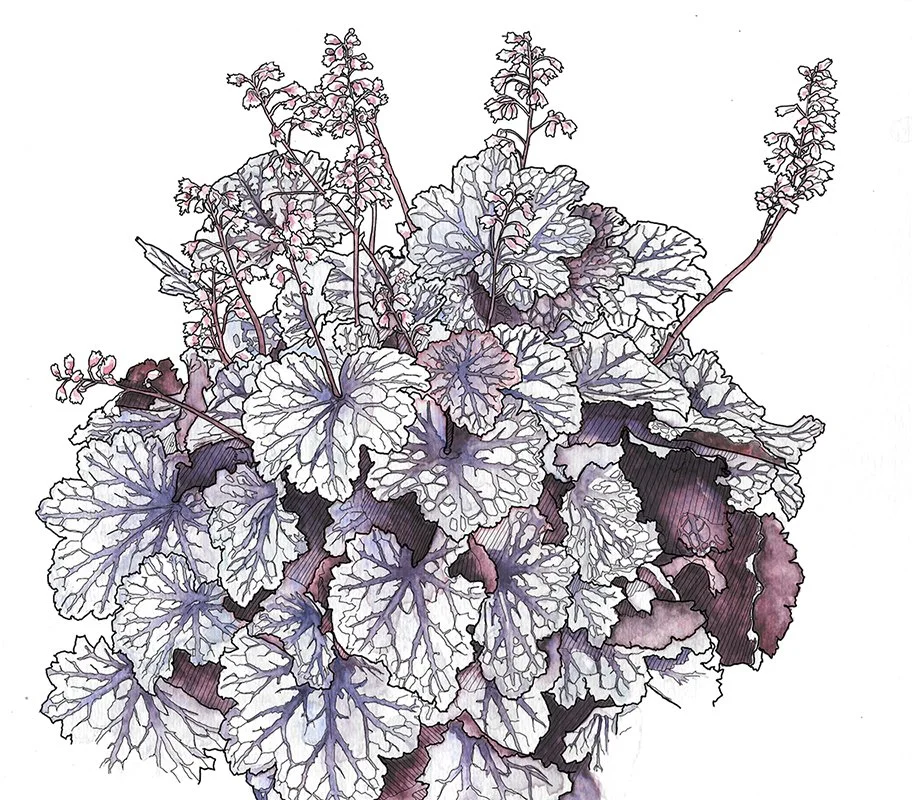
Heuchera [illustration by karen blackerby logan]

HEUCHERA

(CORAL BELLS)

Foliage Stars of the Shade Garden

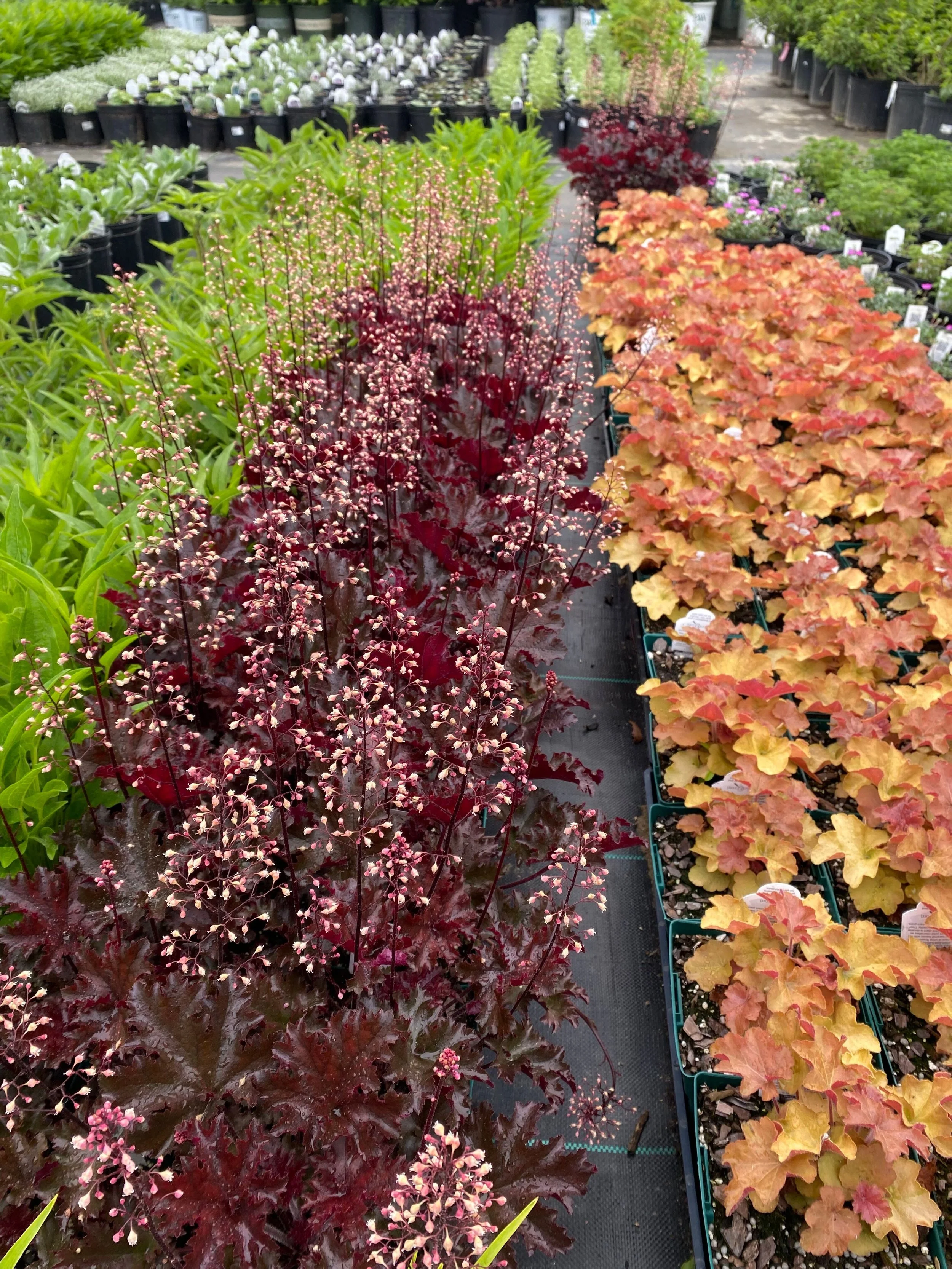
When it comes to perennials that combine long-lasting beauty, versatility, and ecological benefits, few plants rival Heuchera, commonly known as Coral Bells. These North American natives are prized for their dazzling foliage and delicate blooms, making them a favorite in shade gardens, woodland edges, and even containers.

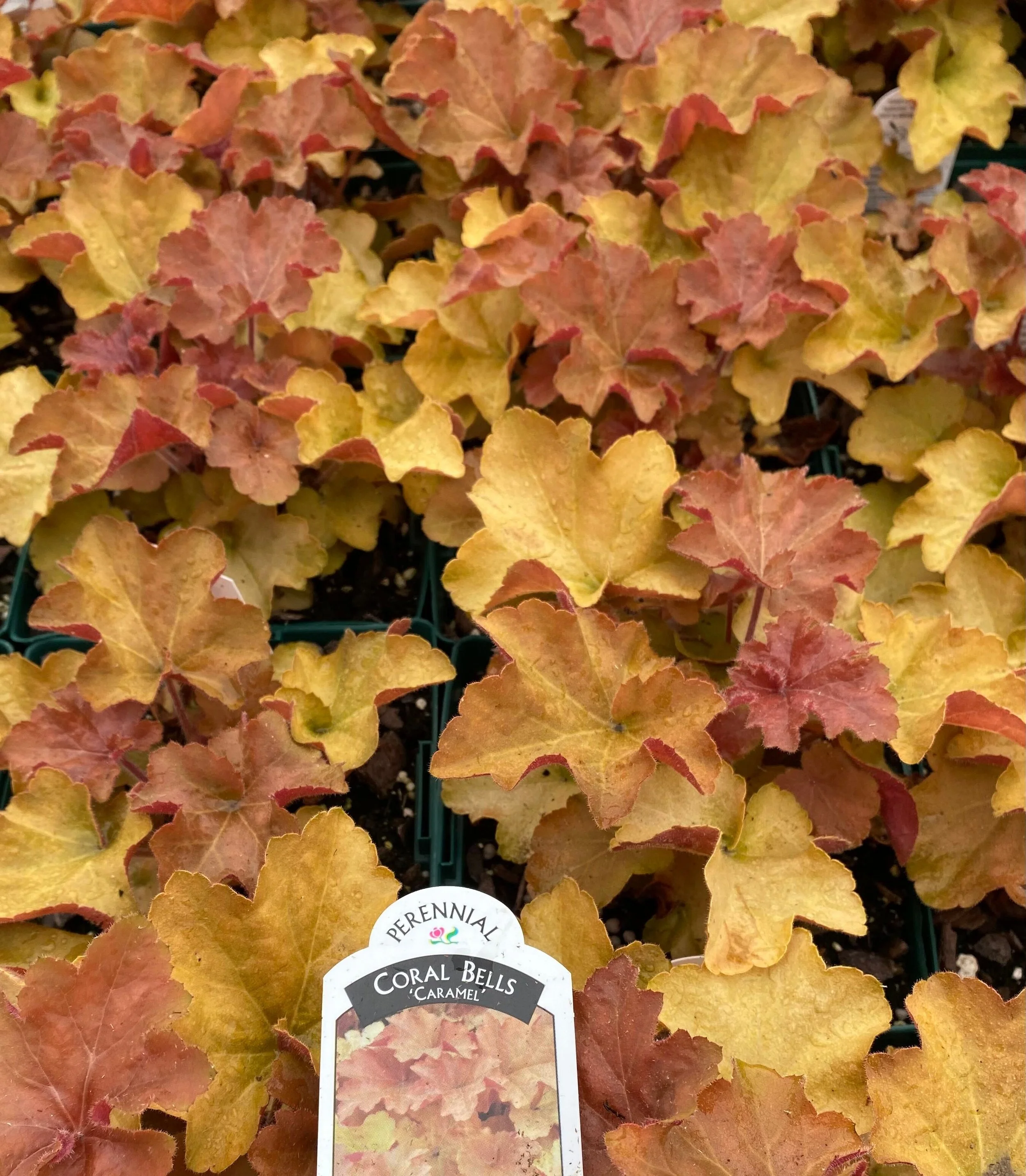
Heuchera ‘Dolce Silver Gumdrop’

Not Just Pretty Leaves

While many gardeners love Heucheras for their richly colored leaves, from lime green to burgundy and even dark purple, their graceful flowers are not to be overlooked. Each summer, tall flower stalks rise above the foliage, blooming for 3-4 weeks with airy, bell-shaped flowers that attract hummingbirds. The flowers of Heuchera sanguinea give the plant its common name, Coral Bells, with vivid cerise blooms native to warm, dry canyons in Mexico, Arizona, and New Mexico.

A Foliage Powerhouse

Heucheras are truly standout foliage plants. Their rosettes of textured leaves stick around from early spring through late fall, and some cultivars are even semi-evergreen in mild climates. With a low, mounding habit, most varieties reach 8–12 inches in height and 1–2 feet in spread, while the flower spikes add height, 1-3 feet, during bloom.

There has been an explosion of Heucheras cultivars in the last decade. Hybridization is common, due to the fact that the species often intergrade with one another. The increasingly popular Heucherellas (Heuchera × Tiarella) combine the best traits of both parent plants.

Try planting ground covers instead of mulching. They are just as effective, if not more so, at keeping out the weeds!

Heuchera ‘Dolce ‘Cherry Truffles’

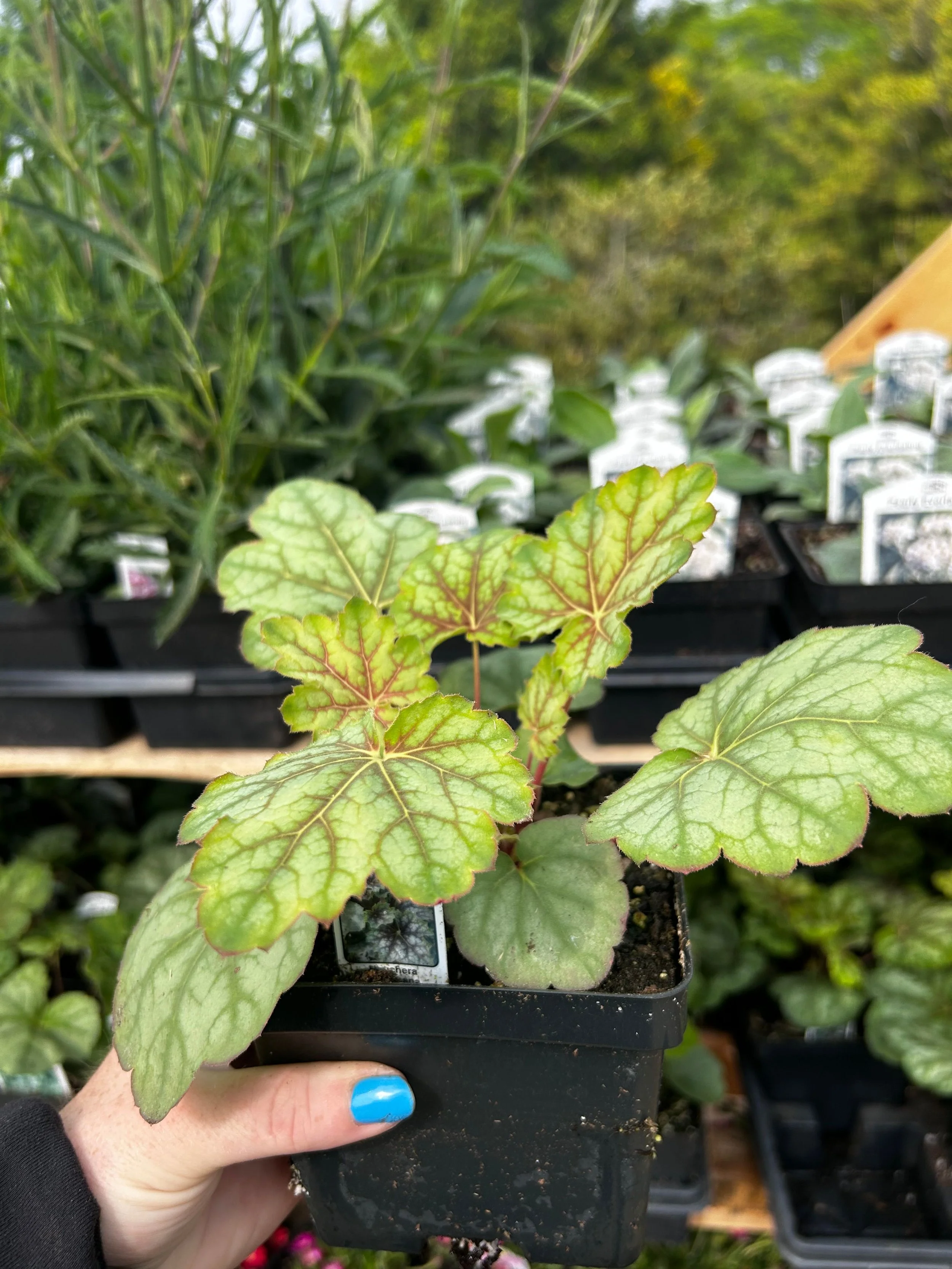
Heuchera

Heuchera americana ‘Dales Strain’, the one we do from seed.

Where & How to Plant

Light:

  • Most Heucheras thrive in partial shade or dappled sunlight, but many red and yellow-leafed varieties tolerate more sun.

  • In the Mid-Atlantic and Northeast, shade is usually best for optimal performance.

Soil & Water:

  • Plant in well-drained, compost-rich soil. Keep consistently moist, especially in containers.

  • Heucheras are ideal for woodland gardens, rock gardens, slopes, and as ground covers beneath trees and shrubs.

Heucheras are DEER REISISTANT!

Heucherella Pink Revolution

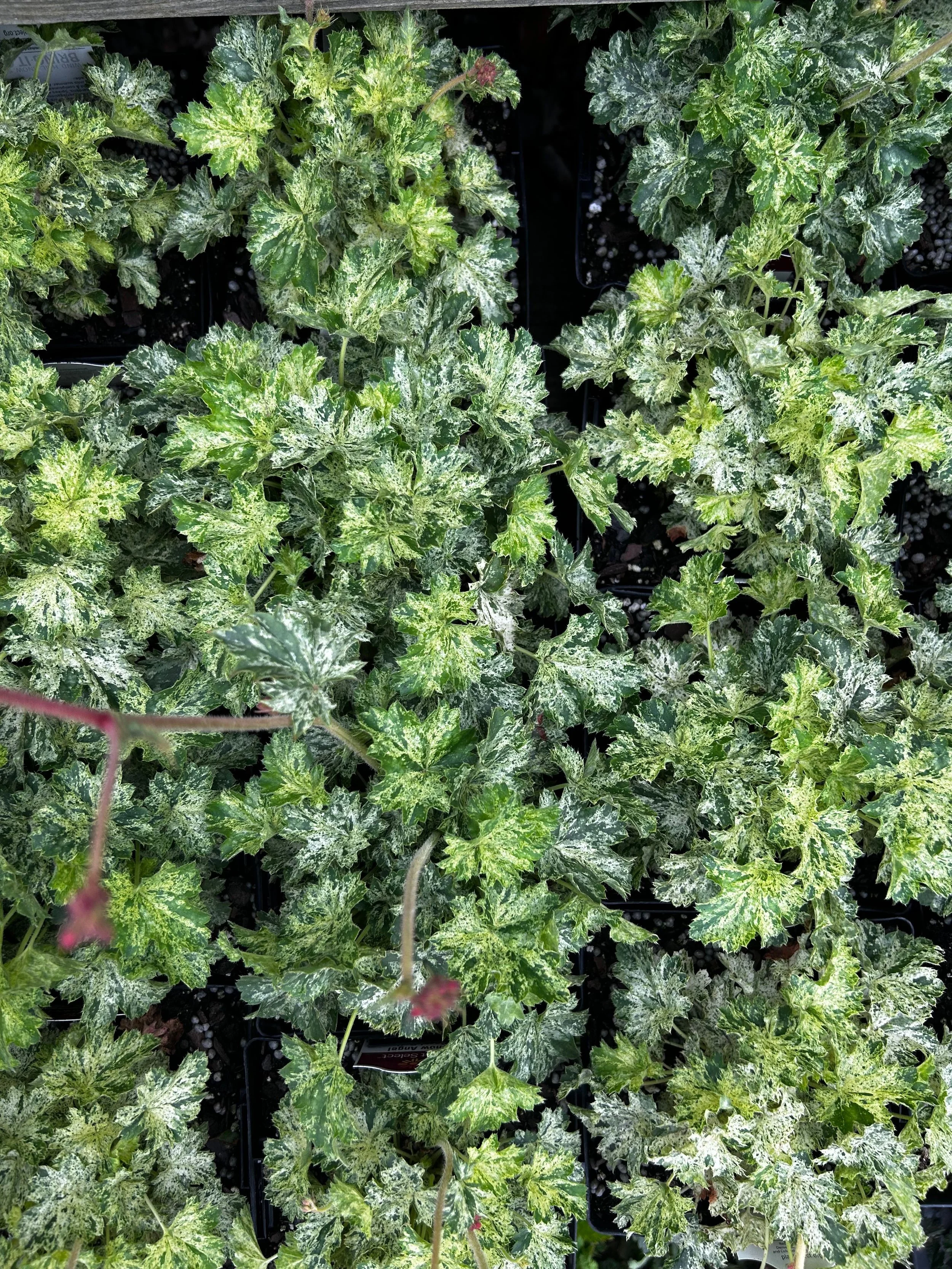
Heuchera Snow Angel

Heucherella Dayglow pink

Design Pairings & Garden Uses

Heucheras are beautiful alone but shine even more when paired with other foliage-rich or shade-loving perennials:

  • Great companions: Ferns, caladiums, hostas, bleeding hearts, iris, astilbe

  • Ideal uses: Mass plantings, underplanting for trees and shrubs, borders, container gardens, and ground cover alternatives to mulch

    Tip: Consider replacing traditional mulch with ground covers like Heuchera. Not only are they effective at suppressing weeds, they add beauty and habitat too.

Our Favorites

  • Heuchera villosa ‘Autumn Bride’: A native cultivar with large green leaves and tall white blooms. Especially striking when planted in mass and blends beautifully with other plants.

  • Heuchera americana ‘Dale’s Strain’: One of several we grow from seed. It’s a reliable, low-maintenance ground cover under shrubs.

There are 37 species of Heuchera and dozens of cultivars now available, the diversity of Heucheras is greater than ever. Their ability to hybridize easily has led to a stunning array of colors and leaf textures, so whether you're designing a native garden or adding structure to your shaded beds, Coral Bells deliver beauty that lasts well beyond their bloom.

Looking to add more color and habitat to your garden? Visit our nursery to explore our vast array of Heuchera and discover the perfect variety for your landscape.

groundcover

sweet woodruff

groundcover

forget me nots

In GARDEN TIPS, GROUNDCOVERS, JUNE, PLANT PROFILES Tags Heuchera, ground cover, foliage plants, Coral Bells
Comment

EAT LOCAL, GROW IT IN YOUR OWN BACKYARD

March 20, 2022 Karen Logan

Strawberry illustration by karen blackerby logan

GROWING EARLY SPRING EDIBLES


Getting Strawberries started early is important for this season's production. We give them a jump start but you should be planting them out as soon as we're 'frost-free'

Bare root berries

STRAWBERRIES

TIPS FOR PLANTING STRAWBERRIES

  • The most economical way for planting strawberries is bare root. They are only available early and must be planted in the ground right away.

  • Prepare your strawberry garden area by tilling or turning over the soil.

  • Add organic matter, such as cow manure, compost or the Fafard Complete Planting Mix.

  • Turn that into the soil.

  • Plant out the strawberry plants. Straight rows would be typical but you can be creative and turn it into an herb garden with a strawberry patch.


    This year we are carrying 4 cultivars of strawberries

    We like the June bearing over the Everbearing. The June bearing have bigger berries, although a shorter season.

  • Honeoye is our favorite, but all of them are good.

  • Fort Laramie

  • All Star

  • Quinalt

  • We also grow the fraise de bois or wild strawberries, find them under Fragaria vesca, its proper Genus and species name.

    These are my choice for an herb garden. They also do well in containers. They bloom with beautiful little white flowers (in the rose family) .The pot with multiple openings is called a strawberry jar. I love when we carry these!

    ******************************

BERRIES

We have a great selection of raspberries, blackberries, blueberries. The early spring selection is best!

All these should be planted very soon!

******************************

Asparagus roots

ASPARAGUS

Now available bare root in bundles of 10. We have Jersey Knight and Purple Passion.

******************************

greens

Red Leaf Lettuce

Mustard Greens

GREENS & COOL WEATHER VEGGIES

Grow your own Greens

Salad material, lettuce, spinach, endive, mignonette

The lettuces and the cilantro, in particular, can be done by direct seeding in Mid April.

Start the other herbs and cool weather veggies inside first and then plant out as seedlings.

WE GROW ALL THESE IN PACKS FROM SEED . WE HAVE A WONDERFUL SELECTION OF SEEDS & WILL HAVE A GREAT VARIETY OF PACK SELECTIONS!


COOL WEATHER VEGGIES

Brassicas (like broccoli), Cauliflower, Cabbage, Kale, Swiss Chard, Mustards, Collards

******************************

Vineyard Gardens Herb House and Herb Garden

Cilantro

HERBS

NOW IS THE TIME TO PLANT SOME HERBS! COME CHECK OUT OUR HERB HOUSE & HERB GARDEN!

ANNUAL HERBS: Cilantro, Parsley, Dill, Chervil, Lemon Grass, Lemon Verbena and Rosemary
PERENNIAL HERBS: Thyme. Sage, Mint, Tarragon, Savory and Lemon Balm

TIMING IS KEY IN GARDENING! DON’T WAIT TO GET STARTED!

In SPRING PLANTS, VEGETABLE GARDENS, GARDEN TIPS, MARCH, FIELD NOTES Tags strawberries, bare root strawberries, spring edibles, asparagus, bare root asparagus, spring herbs, herb gardens, cool weather vegetables
Comment

WHY TO TEST SOIL & THE IMPORTANCE OF A PH TEST

May 4, 2021 Karen Logan

Hydrangea illustration by karen blackerby logan

“It is always a good idea to test the soil for your lawns, flowers, vegetable gardens and almost anything you’re trying to grow!” Chuck Wiley, co-owner of Vineyard Gardens

Soil samples can be sent to the University of Massachusetts. The test will tell you what is in your soil, the amount and then what to add. This can save you money and most importantly protect our environment by not overusing fertilizer.

Fertilizer bags have three numbers showing the percentage of nitrogen, phosphorus and potassium in the bag. A bag labeled 5-10-5 is 5% nitrogen, 10% phosphorus, and 5% potassium.

  • Nitrogen is the element usually most needed to be added for plant health, as it is either used up by plants or can be leached out of the soil with rain and irrigation.

  • Phosphorous and potassium once added are more stable in the soil and usually only need to be added every two or three years.

These three nutrients are in most of the garden and lawn fertilizers we sell. We sell several lawn fertilizers with a 0 middle number, meaning no phosphorus, because that nutrient can cause problems with our ponds by encouraging algae blooms.

05-10-05

05-10-05

Step 1: Lawn Fertilizer 20-0-3 (Nitrogen, Phosphorous, Potassium).

Step 1: Lawn Fertilizer 20-0-3 (Nitrogen, Phosphorous, Potassium).

Step 2: Lawn Fertilizer 21-0-3 (Nitrogen, Phosphorous, Potassium).

Step 2: Lawn Fertilizer 21-0-3 (Nitrogen, Phosphorous, Potassium).

Vegetable Fertilizer 3-4-4 (Nitrogen, Phosphorous, Potassium)

Vegetable Fertilizer 3-4-4 (Nitrogen, Phosphorous, Potassium)

Organic fertilizers are slow release and also add some organic matter to the soil. Lawn fertilizers, like Jonathan Green Green-up 20-0-3, often have a higher first number as nitrogen is what causes them to be darker green, faster growing and healthier. Most vegetables like a lower first number Espoma Organic Garden-tone 3-4-4 to encourage fruiting like tomatoes and squash.

** Now is the last chance this season to apply Jonathan Green Green-Up Crabgrass Preventer before moving onto step 2 Jonathan Green Green-Up Weed and Feed!

photo credit: keith kurman

color block-gray.jpg

landscape work

schedule us for your next project!

color block-gray.jpg

learn about

our bulk material selection

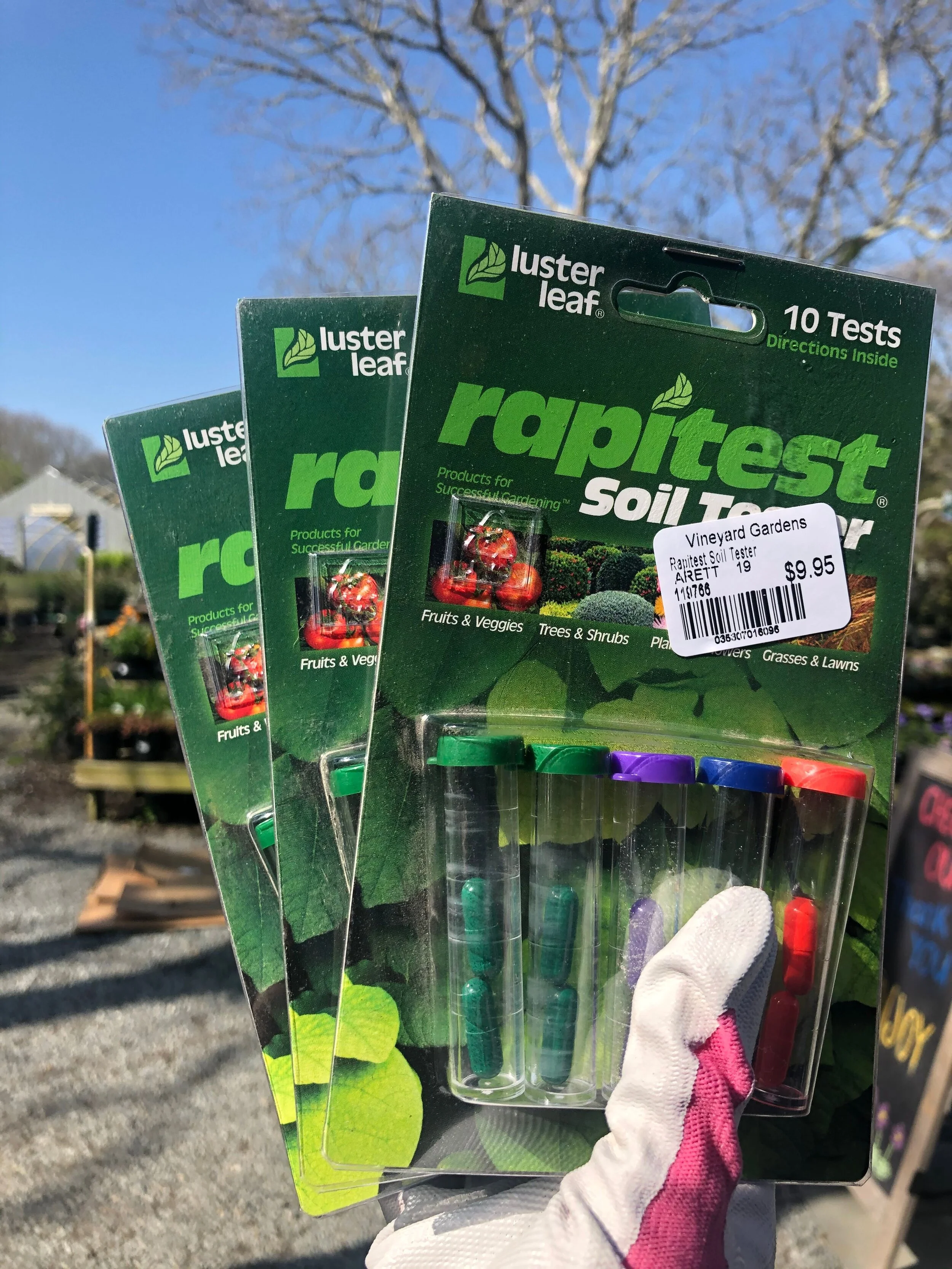
THE IMPORTANCE OF A pH TEST

Soil testing kit-1.jpeg
Soiling Testing Kit-2.jpeg

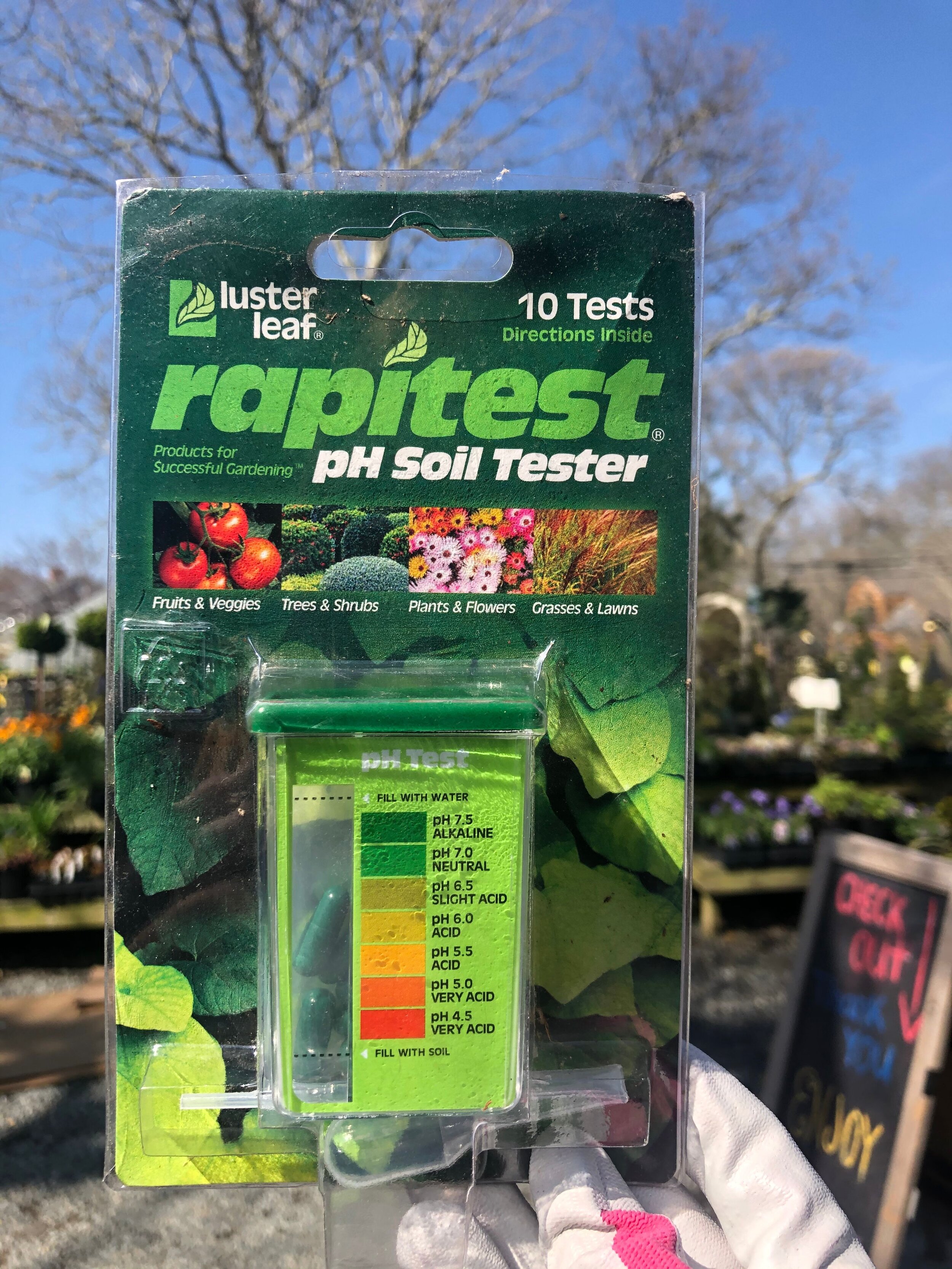
A pH test tells us how acidic or alkaline our soils are

  • Numbers under 7 are acidic

  • Numbers over 7 are basic or alkaline

When soils are at or near neutral most nutrients are more easily taken up by plants and at the high range of acid or basic some nutrients are unavailable to plants even if they are in the soil. Our soils tend to be acidic which is good for blueberries, most evergreens , potatoes and Blue Mop head Hydrangeas, which are our traditional August flowering hydrangeas and Nikko Blue and Endless summer being the most popular. The reason for wanting low pH for the hydrangeas is this causes the flowers to be bluer. High pH turns them pinker and neutral pH gives them a color between the two. This is the only plant I know that the flower color is affected by the pH which allows aluminum in the soil to be more readily taken up at lower ph.

Espoma Garden lime.jpeg
Espoma soil acidifier 6lbs.jpeg

If you want bluer flowers add sulfur or aluminum sulfate, ideally mixed into the soil when planting. You can add these materials to existing plants but it will take longer for them to have an effect on the color. If you want pink flowers, add lime to the soil. Most vegetables like a neutral soil, with the exception of potatoes which are more prone to a particular disease at higher pH. I like to keep a special area in the garden for them that I don't lime. Lawns like the pH to be close to neutral so light yearly liming is recommend here.

color block-gray-narrow.jpg

fertilizing hydrangeas

In GARDEN TIPS, GARDEN MATERIAL, FIELD NOTES Tags ph test soil test, fertilizing lawn, fertilizing gardens, soil sample test kit
Comment
← Newer Posts

484 State Rd. West Tisbury, MA 02575

Mon - Fri : 8am - 4pm / Sat : 8am-1pm

Closed Sundays

(508) 693.8512