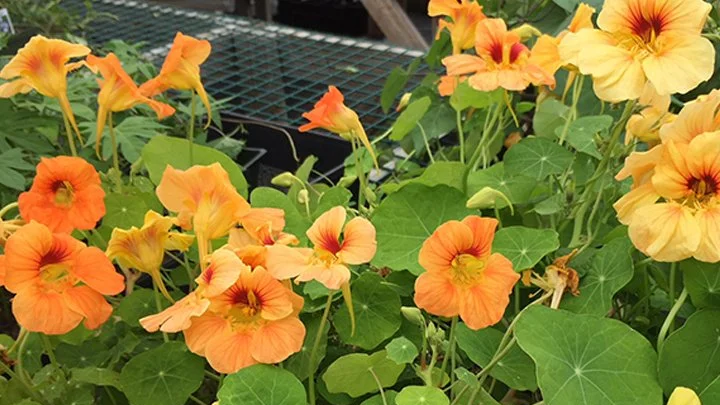
AUTUMN CLIMBERS
THE LATE SEASON VERTICAL GARDEN
As summer annuals fade, late-season blooming vines step up to bring dramatic color, texture, and ecological value to the autumn landscape. Vertical gardening maximizes limited footprints, creating living walls that cool the surrounding air, absorb carbon dioxide, and provide crucial late-season food and shelter for birds, butterflies, and native pollinators. Even in small spaces, potted vines weaving up porch railings bring vital energy to underutilized structures.
Here are four vines to elevate your autumn garden.
*****************
HONEYSUCKLE
Trumpet Honeysuckle (Lonicera sempervirens), an eastern native vine produces rich clusters of tubular, bright coral-red flowers with yellow interiors. While it begins it’s blooms in late spring, it reliably reblooms throughout late summer and into autumn. The tubular flowers are a primary nectar source for hummingbirds and native bees, while fall berries feed songbirds. Goldflame honeysuckle (Lonicera × heckrottii 'Goldflame') are closely related and share a similar vining habit.
Cultivation: Extremely adaptable, it thrives in full sun to partial shade, though full sun yields the most blooms. Unlike invasive exotic honeysuckles, it is non-invasive and performs exceptionally well in large containers alongside a patio trellis.

Goldflame Honeysuckle
Scentsation Honeysuckle
Goldflame Honeysuckle
*****************
WISTERIA
For gardeners who love the dramatic look of cascading purple blooms American Wisteria (Wisteria frutescens) is the ideal native (to North America). Producing compact, grape-like clusters of fragrant lavender-blue flowers, American Wisteria blooms in early summer and frequently produces repeat blooms into early autumn.
Pruning: This woody vine requires a sturdy, heavy-duty arbor or metal trellis for support. Because American Wisteria sets flower buds on new wood (the current season's growth), pruning in late winter or early spring encourages vigorous new stems and abundant flower clusters.

*****************
CLEMATIS VITICELLA HYBRIDS
Small-flowered Clematis viticella cultivars and hybrids, such as the fragrant bell-shaped 'Betty Corning' or the deep indigo 'Rooguchi', are prized for their disease resistance and exceptional late-season blooms. These vines climb by wrapping delicate leaf petioles around trellis wire or neighboring shrubs, making them excellent companions for growing up and through late-blooming shrubs.
Spring Pruning: Most late-blooming clematis require hard pruning. Cutting the stems back in early spring, to about 12–18 inches above the soil, stimulates a flush of fresh new stems from the crown, resulting in a denser plant with far more flowers in autumn.
Roguchi Clematis

Clematis Rooguchi seed pod
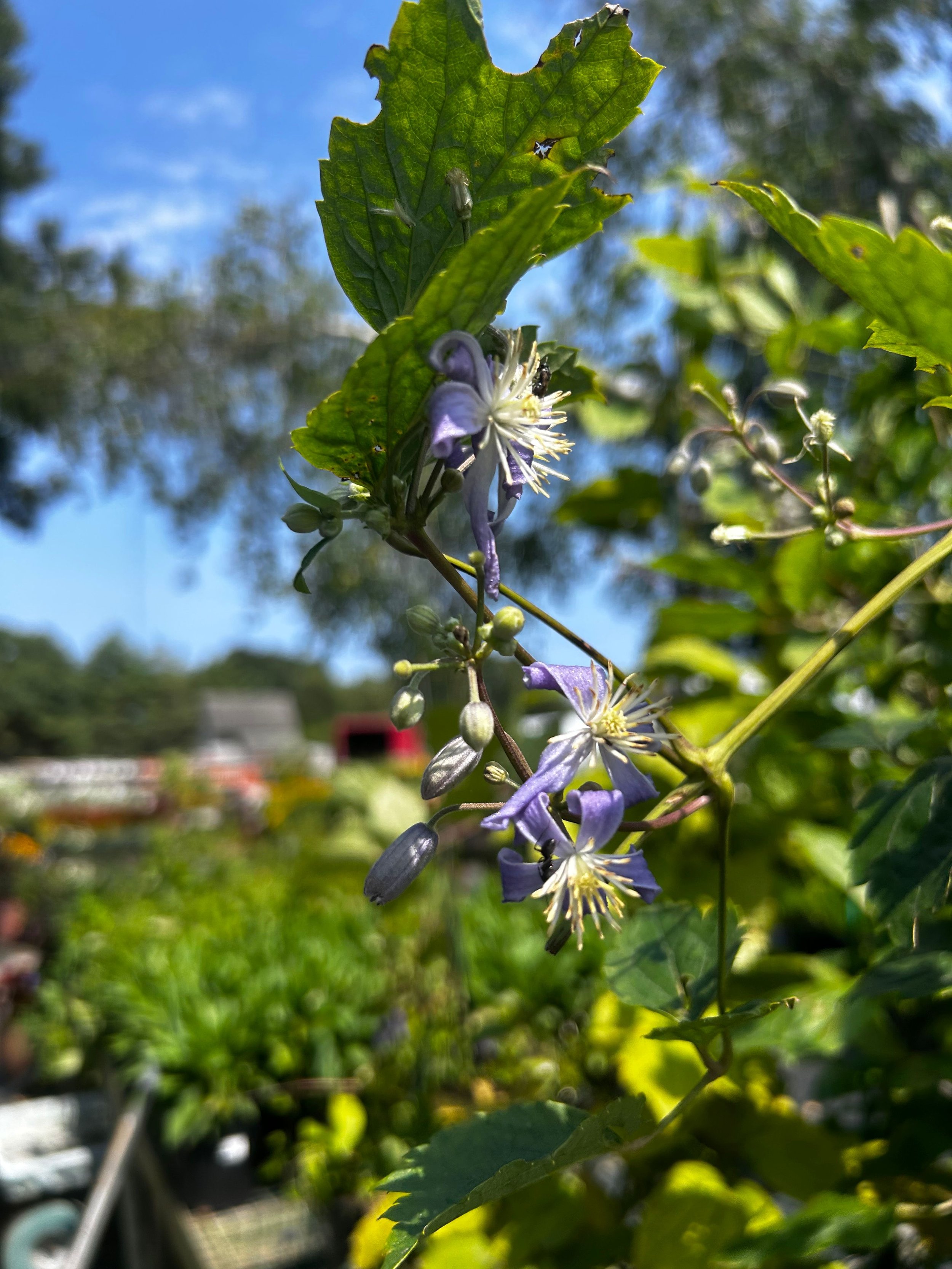
Clematis Mrs. Robert Brydor
*****************
VIRGIN’S BOWER (Clematis virginiana)
A tough, fast-growing vine native to eastern North America, Virgin's Bower lights up the late-summer and early-autumn garden with swaths of sweet-smelling white blooms. Blooming from late August through September, its small, four-petaled white flowers attract a wide array of native bees, beneficial wasps, and syrphid flies. In late autumn, female plants form silvery, feathery seed heads and persist into winter, providing nesting material and winter interest.
Cultivation: Like most clematis species, it prefers roots in the shade flowers in the sun. Keep the root area cool and moist with organic mulch or companion plantings, while allowing the climbing vines to reach full sun for maximum blooms.
*****************
Whether trained over a pergola, woven along a porch railing, or spilling over a large patio container, late-blooming vines turn vertical spaces into dynamic, living tapestries that keep your garden vibrant and full of life long after summer fades.