• Home
  • ABOUT
    • PROJECTS
    • SPRING CHECKLIST 2026
    • Landscape Teams
    • LANDSCAPE DESIGN
    • LANDSCAPE CONSTRUCTION
    • LANDSCAPE MAINTENANCE
    • Nursery
    • BULK MATERIAL
    • PLANT PROFILES
  • Application
  • EVENTS
  • FIELD NOTES
  • TESTIMONIALS
  • Contact
Menu

Vineyard Gardens

484 State Road
West Tisbury, MA, 02575
508.693.8512
Landscaping & Garden Center

Your Custom Text Here

Vineyard Gardens

  • Home
  • ABOUT
  • LANDSCAPING
    • PROJECTS
    • SPRING CHECKLIST 2026
    • Landscape Teams
    • LANDSCAPE DESIGN
    • LANDSCAPE CONSTRUCTION
    • LANDSCAPE MAINTENANCE
  • NURSERY
    • Nursery
    • BULK MATERIAL
    • PLANT PROFILES
  • Application
  • EVENTS
  • FIELD NOTES
  • TESTIMONIALS
  • Contact

[PLANT PROFILE] HYDRANGEA MACROPHYLLA

June 27, 2023 Karen Logan

Hydrangea [illustration by karen blackerby logan]

Hydrangea

macrophylla

Big Leaf Hydrangea

******************************************

HYDRANGEA MACROPHYLLA (Big Leaf Hydrangea)

The genus name Hydrangea comes from hydor meaning "water" and aggeion meaning "vessel", in reference to the cup-like capsular fruit.

  • A deciduous shrub with a rounded habit that typically grows 3-6’ tall and as wide unless damaged by harsh winters or pruned smaller.

  • Generally features serrate, obovate to elliptic, dark green leaves (4-8” long) and large clusters of long-blooming summer flowers in either lacecap form (flattened flower clusters of small fertile florets with scattered showy sterile florets often forming a marginal ring) or mophead form (globose flower clusters of mostly showy sterile florets).

'Penny Mac' was first introduced into commerce by Penny McHenry of Atlanta, Georgia

(founder of The American Hydrangea Society)

Hydrangea Seaside Serenade Cape Lookout

GROWING HYDRANGEA MACROPHYLLA

******************************************

  • Best grown in rich, medium moisture, well-drained soils in part shade. Tolerates full sun only if grown in consistently moist soils.

  • Soil pH affects the flower color of most cultivars except white (blue in highly acidic soils and lilac to pink in slightly acidic to alkaline soils). Add aluminum sulfate to the soil to make the flowers bluer or add lime to the soil to make the flowers pinker. Begin soil treatments well in advance of flowering, as in late autumn or early spring.

  • Plants generally need little pruning. If needed, prune immediately after flowering by cutting back flowering stems to a pair of healthy buds. Prune out weak or winter-damaged stems in late winter/early spring.

  • Best to mulch plants year-round with 3" of shredded bark, peat or compost.

  • Winter hardy to USDA Zone 6. For added protection, however, plants grown in USDA Zone 5 should be sited in sheltered locations and given additional winter protection, as needed, for the purposes of minimizing the risk of loss of significant numbers of flower buds or possible die-back to the ground in an extremely harsh winter. A burlap wrap of stems or circle of chicken wire filled with leaves or straw to 8-12" are time-consuming and visually unattractive landscape options, but can be effective. Regardless of protective measures taken, most bigleaf hydrangeas simply will not bloom (or will bloom poorly) in some years because of a variety of winter occurrences beyond the control of the gardener (e.g. low temperatures, sudden wide temperature fluctuations, icy conditions, late frosts). Some newer cultivars have been selected that flower on both old and new wood. Their pruning and flowering can differ from that of the species.

    'Penny Mac' blooms on both old and new growth and is winter hardy to USDA Zone 5. This means ‘Penny Mac’ will reliably flower each year, regardless of winter temperature or added protection.

USES

____________

* Group or mass in the

shrub boarder.

* A specimen or accent

for foundations and

other locations

near homes or patios.

* Hedges

* Containers

Late season spent flowers of Hydrangea macrophylla

****************************************

FERTILIZE HYDRANGEAS IN EARLY SUMMER

All hydrangeas tend to grow better when they are fertilized, even the native ones.

If you missed feeding your plants early in the season when you did your spring clean up, you can make up for that now (before August 1). The plants that respond best to fertilizer this time of year are the rebloomers: big leaf (macrophylla), mountain (serrata) and woodland/smooth (arborescens) varieties. You want to help them produce those reblooming flowers to carry your garden through to the end of the season

****************************************

Fertilizing Hydrangeas

Early Summer

Pollinator Garden Styles

Inspirations

Hydrangea [illustration by karen blackerby logan]

In GARDEN TIPS, SHRUBS, JUNE, PLANT PROFILES Tags hydrangeas, fertilizing hydrangeas, hydrangea macrophylla, big leaf hydrangea, Penny Mac Hydrangea
Comment

[PLANT PROFILE] GERBER DAISIES

June 12, 2023 Karen Logan

Gerber Daisies

GERBER DAISIES

Vividly colored Gerber Daisies are best planted in spring after all chances of frost have passed. In our zone, they are considered annuals. They bloom beautifully throughout the summer and die off in winter.

Varieties

_______

* Patio Series:

Tall larger flower

Available in two colors.

* Jaguar Series:

Short & ornamental

GROWING TIPS

____________

* Bred for the outdoors

* Flourish all summer

* Best grown in 7” pots or

larger

* Large bloom size 4”-5”

* Height 15-18” with

flowers

Gerber Daisy, Jaguar Series

Gerber Daisy, Jaguar Series

Gerber Daisy, Jaguar Series

unleash the wild on your yard

doug tallamy

Perennials

summer blooming perennials

In JUNE, ANNUALS, PLANT PROFILES Tags summer blooms, annuals, gerber daisies
Comment

TOMATOES

May 16, 2023 Karen Logan

TOMATOES

(Solanum lycopersicon)

History of the tomatoes goes back to 500 BC. Apparently many different cultivars were displayed at an Aztec Market in Tenochtitlan, ranging in color from the brightest red to the deepest yellow.

Tomato season is upon us and there are so many varieties available. How do you choose which to grow? At Vineyard Gardens we are very proud of our heirloom selection that we grow from seed. Fedco is one of our major sources for heirloom tomato seeds. We grow disease resistant tomatoes as well. We order our cherry, grape tomatoes, mid-size sandwich tomatoes and the big extra large tomatoes.

PLANTING TOMATOES

  • Right now, we recommend you start with a plant because it’s too late in the season to start tomatoes from seed.

  • It is best to start with a young plant that has been greenhouse grown because of the long growing season needed.

  • It is a heat loving plant that likes rich soil and lots of sun.

  • Plant it after the last frost.

  • If you are going to grow it in a pot make sure it is a big pot with good drainage.

  • Cherry tomatoes do well in large pots. Coast of Maine potting soil is a good choice because it has some compost in it. Potting soil has been developed to have good drainage so always use potting soil in pots.

Heirloom vs

Hybrid Tomatoes

At Vineyard Gardens we carry both hybrid and heirloom tomatoes. A few of the  hybrids we carry are Burpees Big Boy and Big Beef, two of the largest ones, and Celebrity, a mid size disease resistant tomato.

HEIRLOOM TOMATOES

Heirloom tomatoes have been grown for around 40 plus years without crossbreeding. They are open-pollinated, which means pollinated by insects or wind without human intervention. That allows them to remain stable in their characteristics from one year to the next. Gardeners appreciate their consistency in taste and agree that most heirloom varieties tend to have greater flavor than hybrids. Heirloom tomatoes are often grown locally and allowed to ripen on the vine, then harvested. This method enhances their flavor. They often produce only a small number of fruit. Since they have not had the selective crossbreeding as hybrids, Heirloom Tomatoes tend to be more susceptible to pest disease, especially fungus, which makes them crack and split. **

HEIRLOOM PLUSES

  • STABILITY: Heirlooms produce large numbers of seeds and bear tomatoes identical to parents

  • TASTE: Heirlooms are considered flavorful, and even superior to commercially-produced varieties

  • INDIVIDUALITY: Many heirlooms have unique shapes and sport a variety of colors, including purple, yellow, white, orange, pink, red, green, black and striped.

 HEIRLOOM MINUSES

  • INDIVIDUALITY: Unusual, misshapen or inconsistent tomatoes.

  • PRODUCTIVITY: Heirlooms take longer to mature and produce fewer tomatoes than hybrids.

  • DISEASE-RESISTANCE: More susceptible to disease.

HYBRID

Hybrid tomatoes typically yield a crop that is uniform in both appearance and timing. Typical supermarket tomatoes are hybrids that have been carefully crossbred to achieve a desired combination.  Some of those characteristics may be bigger in size, better disease resistance, dependability, less required care, early maturity, higher yield, and/or specific plant size.**

 HYBRID PLUSES

  • PRODUCTIVITY: You'll harvest more tomatoes

  • DISEASE-RESISTANCE: Hybrids have a reputation for not being as susceptible to diseases and pests as their heirloom counterparts.

  • STRENGTH: Hybrids are known for yielding tomatoes of similar size and with fewer blemishes.

  • LONGEVITY: Harvested hybrid tomatoes have staying power. They endure the long hours on at the roadside farm stand better than heirlooms

 HYBRID MINUSES

  • FLAVOR: Most gardeners agree that hybrids are not as flavorful as heirlooms

  • INSTABILITY: Long term hybrids don't produce seeds as strong as what birthed them- according to experts. However, many gardeners claim they save hybrid seeds year to year which produce seedlings and fruit that is true to the original hybrid.

Big Beef

Sungold

Supersweet 100

HEIRLOOM TOMATOES VARIETIES at VINEYARD GARDENS

COSMONAUT VOLKOV - ORGANIC (65 days) What makes Cosmonaut so special is it’s sweet, rich and full bodied juice. Fedco catalog editor noted her “Cosmonauts ripened nice fruits outdoors into early October one year, weeks after her other slicers had croaked.” (*Fedco)

BIZHIKI - ORGANIC (75 days)

RUTGERS 250 TOMATO - ORGANIC (75 days) This ½ lb deep red slicer is smooth, solid, blemish and crack free. It’s a perfect palm size, holding and ripening off the vine for at least 10 days. And a real sandwich-maker: tangy-tart with tomato-y depth, and lightly sweet. But it’s also meaty, juicy and firm without being hybrid fiberboard dry or grainy. (*Fedco)

ROSE DE BERNE TOMATO - ORGANIC (80 days) It is widely considered in France, Germany and Switzerland to be the best-flavored tomato. Only medium-sized yet delivers the robust flavor of the bigger types. A recent taste test confirmed it’s the "best pink for it’s size unblemished globes are perfectly round. The only “heirloom to resist the onslaught of tomato diseases in the cold of August 2017 and then ripen beautifully in the warmth of Sept”. (*Fedco)

GERMAN JOHNSON - ORGANIC: An heirloom known for it’s copious yields of pink meaty fruits often exceeding 1lb. Mild with some sweetness.(*Fedco)

PINK BRANDYWINE TOMATO - ORGANIC (82 days) Pink Brandywine is the heirloom that launched a movement, leading many gardeners to be flavor-positive preservation-aware seed-savers. Oblate meaty beefsteak with deep flavor and perfect hints of tart. Fruits average right around a pound, ripening unevenly throughout the season, often preferring cool early fall to peak heat of August. (*Fedco)

WEISNICHT'S UKRAINIAN TOMATO - ORGANIC (85 days) In 2015 it won first prize in the heirloom category in Boston. The oft-bi-lobed medium large 8-18oz scrumptious pink fruits are sparse seed bearers. The flavor is sweet rich and complex with delicious acid overtones. (*Fedco)

GARDEN PEACH TOMATO - ORGANIC (71 days) Yellow fruits blush pink when ripe and have thin fuzzy skins somewhat like peaches, soft-skinned, juicy and very sweet. Light fruity taste is not what you’d expect in a tomato. Burpee in 1893 called it “delicate, melting in the mouth like a grape.” Jim Stockwell from North Carolina would not be without it. “Not only are they early and prolific but their unusual flavor and no core sizes make them perfect for grilling without falling apart.” (*Fedco)

GOLDIE - ORGANIC (75 days) Deep orange beefsteak fruits. Several people who grew our Heirloom Mix said Goldie was their favorite. (*Fedco)

CHEROKEE PURPLE TOMATO - ORGANIC (77 days) Said to have originated with the Cherokee Indians. Best tasting heirloom. Dusky brownish-purple skin, dark green shoulders and brick-red flesh. The real attraction is their rich taste, described as “sweet rich juicy winey,” “delicious sweet,” and “rich Brandywine flavor”. (*Fedco)

BLACK KRIM TOMATO - ORGANIC (80 days) At half green and still firm they are already dead ripe and perfectly delicious. Iridescent purple on the outside usually with dark green-black shoulders.an unusual juicy yet meaty taste and texture. (*Fedco)

PINEAPPLE TOMATO OG (85 days) ”I roast these exceptionally sweet red streaked yellow tomatoes in a hot oven, then saute with garlic, rosemary and extra virgin olive oil and throw over pasta.” Michelle Owen garden author. Pineapple may be the best striped tomato. Typically grows huge fruits in excess of 1lb. Cut in half it looks like the interior of a pineapple except with yellow and red marbling. Doesn’t taste like a pineapple, unique, mild, low, acid fruity sweetness. (*Fedco)

AUNT RUBY'S GERMAN GREEN TOMATO - ORGANIC (85 days) Until you try it, you won’t believe a green tomato could be this good. I rate it second only to Brandywine for flavor and it is on just about everyone’s top-ten list. Don’t allow them to get too soft before picking. The green flesh of this beefsteak is faintly marbled with pink. Flavor sweet and tart, rich and spicy. Flavor deteriorates when cold weather sets in. (*Fedco)

AMISH PASTE TOMATO - ORGANIC (85 days) Listed members’ comments tell all: “large red meaty fruit,” “wonderful paste variety,” “great flavor for cooking, canning or fresh eating,” “the standard by which I judge canning tomatoes,” “huge production,” “great for sauces, salsa, canning.” Larger and better than Roma. Wisconsin heirloom from Amish farmers in the 1870s.(*Fedco)

BEEFSTEAK POLE - ORGANIC “Century-old favorite not only for sandwiches, but also any dish calling for rich, tomato flavor. Vines are so vigorous (up to 6' or more) you will need a sturdy wire cage to support them and the 1–2-pound fruits! Produces summer to fall.” (Botanical Interest)

WATERMELON BEEFSTEAK “Perhaps the best-tasting pink tomato we have ever eaten, this variety is a winner for its refreshing flavor. Super prolific, easy to grow and mighty fine flavor! We love to scoop the firm meaty flesh with a melon baller for salads and snacking.” (Baker Creek Heirloom Seeds)

MORTGAGE LIFTER- Huge heirloom beefsteak. Mild sweet flavor.

ROMA -

CHERRY TOMATOES

HONEYDROP CHERRY TOMATO - ORGANIC (62 days) Honeydrop’s sweet juicy fruity honey-colored treats taste almost like white grapes. They are much less prone to cracking in wet weather than Sun Gold. Great for earliness, sweetness and complexity. (*Fedco) According to Fedco Honeydrop Cherries are better than Sungold.

BLACK CHERRY TOMATO - ORGANIC (75 days) Dusky color and complex flavor typical of the best black tomatoes, juicy and delicious. Somewhat late for a cherry tomato, fruit ripens slowly and individually until frost, but worth the wait. (*Fedco)

PRINCIPE BORGHESE - ORGANIC (75days) Used for sundried tomatoes as it has few seeds and little juice Bears small red fruits in prolific clusters over a long season. (*Fedco)

AOSTA VALLEY We had seed from 2021

HYBRID CHERRY TOMATOES

SUN GOLD CHERRY TOMATO  (57 days) To quote one customer, “Without these little babies, there’s no summer.” A perfect combination of deep sweetness with a hint of acid tartness. They ripen very early to a rich apricot color and keep producing till frost. Very prone to split so pick early when rains are forecast. (*Fedco)

JULIET (60days) Little plum shaped fruits come in clusters everywhere, each truss bearing 6-8 of the 1-2oz grapes. “Juliet is my favorite tomato for drying. Cut them in half, flip out the seeds and dehydrate…they are like tomato raisins, chewy and sweet to just eat or on a pizza” Lynn Sagalyn (*Fedco)

SWEET TREATS (75days) Large fruits come in clusters of 12-15 per truss. Ripens from pink to deep rose. Wait for full color to harvest. (*Fedco)

SUPER SWEET 100 CHERRY TOMATO (78 days) Like the famous Sweet 100, but with more disease resistance. Very popular hybrid cherry tomato ripens clusters of 1" round sweet fruits. Should be staked. Will split in rainy conditions.

YELLOW PEAR FARGO - (82 days) About twice the size of regular pear tomatoes, the meaty morsels are crack resistant. (*Fedco)

HONEY BUNCH GRAPE (62 days) Crack resistant. Sweet with honeyed nuance. Wait until it ripens fully to a bright red in the field. (*Fedco)

HARTMAN’S YELLOW GOOSEBERRY (70-75 days) Sweet, mild, tasty and light golden-yellow in color.

SEEDS

“Saving Tomato Seed is easy. Remove stem-end and crush the fully ripe fruit into a container. Ferment uncovered for a few days until slurry forms a moldy cap. Rinse in a fine strainer and dry seed on a coffee filter. To ensure true-to-type seed, grow open-pollinated varieties and separate by 50ft.” (*Fedco)

We had seed left over from last year that we have planted out. Tomato seed can last up to 5 years!

________________________________________________

REFERENCE

*Description of tomatoes comes from the Fedco Catalog
In VEGETABLE GARDENS, MAY, PLANT PROFILES Tags tomatoes, heirloom tomatoes, cherry tomatoes, hybrid tomatoes, tomato seeds
Comment

VIBURNUM

September 21, 2022 Karen Logan

Viburnum plicatum

VIBURNUM

Viburnum are a very popular landscape shrub, both attractive and useful. With the many cultivars available it’s likely to find one to suit your garden. Fragrant viburnums flower in the spring and gives way to berries in the fall. If you’d like your viburnum to produce berries for the birds, you'll need to plant several different varieties that bloom at the same time so plants can cross-pollinate.
***************************************

Fall Interest Viburnums

There are many viburnums which have fabulous fall color and berries.

  • Viburnum trilobum (Highbush Cranberry): Known for its berry production in the fall. Dark green leaves turn purplish-red in autumn, alongside drooping clusters of bright red berries. Typically matures to 8-12 feet tall.

  • Viburnum plicatum: These are Chris Wiley’s favorite Viburnum in flower.

  • Viburnum dilatatum 'Cardinal Candy': Known for their drooping red berries.

  • Viburnum dilatatum 'Michael Dodge': Known for their drooping yellow berries.

Viburnum dilatatum ‘Michael Dodge’ and some Virginia Creeper

Viburnum plicatum

Native Viburnums

  • Viburnum dentatum (arrowwood viburnum): Native to Martha’s Vineyard, Viburnum dentatum grows wild all over Chilmark and the woods of West Tisbury.. Non-fragrant flat-topped white flowers appear in late spring. Flowers give way to blue-black, berries which are quite attractive to birds and wildlife. Tolerates light shade. It is useful in restoration projects or in natural plantings. Deer resistant. We carry a cultivar called Blue Muffin.


Evergreen Viburnums

  • Viburnum 'Pragense (Prague viburnum): Creamy white flowers in spring gives way to berries in early fall which first appear red and then change to glossy black. Typically matures to 10-12 feet tall. Plant in full sun to part shade.

  • Viburnum rhytidophyllum (Leatherleaf viburnum): A large rough textured evergreen shrub. Creamy white flowers in spring.


Fragrant Spring Blooming Viburnums

  • Viburnum carlessi (Korean Spice viburnum): A wonderfully fragrant cultivar. Reddish pink buds open in late March/early April and progress into 3” snowball like clusters of fragrant blooms. Plant in sun to part shade. Typically matures to 4-5 feet tall but may reach a height of 8' in the right conditions.

  • Viburnum carlocephalum (Fragrant Viburnum): A multi stemmed shrub with an open and rounded form. Fragrant snow-ball type blooms in the spring and reddish fall color. Fruit production happens best when planted in groups. Good drought tolerance once established. Grows 6-10 feet tall and wide.

  • Viburnum burkwoodii (Burkwood Viburnum): An early spring beauty is Viburnum x burkwoodii which is from a group of Viburnums called Korean Spice or Snowball Viburnum. Burkwood Viburnum grows quite large, under ideal conditions 10’ x 10. It blooms clusters of pinkish white spring flowers with an insanely delicious fragrance in late April-early May. Beautiful dark green foliage. Use as a hedge, screen or accent plant.

Fragrant Viburnum

Viburnum x burkwoodii

Viburnum x burkwoodii [photo credit: keith kurman]

autumn garden

maple trees

for best fall color

In SEPTEMBER, SHRUBS, FALL PLANTS, PLANT PROFILES Tags fall shrubs, viburnum, fragrant viburnums
Comment

[PLANT PROFILE] LOBELIA

September 12, 2022 Karen Logan

Lobelia ‘Great Blue’. A blue counterpart of the Cardinal Flower. Desirable plant for woodland gardens especially since it blooms bright blue in late summer.

LOBELIA

30% off

A North American native plant that has spires of colorful hood-like flowers that open from bottom to top. Lobelias are typically found in wet, swampy soil or woodlands. They are a perfect choice for low spots in your garden that stay too wet for most plants. Although, given enough water Lobelias will be fine with more sun. They are an excellent choice for partial shade gardens.

Two perennial species we carry are Lobelia siphilitica, the Native Great Blue, and Lobelia cardinalis, Cardinal flower.

We carry the Lobelia cardinalis in its native green leaf form, as well as Queen Victoria, a red leaf form that won the Royal Horticultural Society’s Award of Garden Merit. A newer cardinalis hybrid we are offering is the Starship Series. This series is a little shorter and better branched. We usually have it in scarlet, rose and sometimes blue.

Lobelia Starship Deep Rose & Scarlet Bronze Leaf

Lobelia Starship Deep Rose & Scarlet Bronze Leaf. Rich bronze or purple foliage throughout the growing season. Adds a bold color for the late summer to early autumn garden.

*************************

CARE

  • Prefer fertile, evenly moist soil.

  • Can be divided every 2-3 years in spring.

  • Allow to self sow.

  • Winter over with stems on.

  • Can be pinched back before flowering to produce more compact plants

*************************

USES

  • Woodland paths

  • Perennial beds and border gardens with moist, well-drained soil.

  • Given enough water they can be fine with more sun.

  • Great choice for partial shade gardens

  • Well-suited for use in rain gardens, around ponds and streams and other moist areas.

Attracts butterflies and hummingbirds. Pairs well with ferns or heuchera.

Lobelia siphilitica and Aster

Ornamental Grasses

Autumn Garden

In GARDEN TIPS, FALL PLANTS, SEPTEMBER, PLANT PROFILES Tags perennial plant, fall blooms, Lobelia, Lobelia Great Blue, Lobelia Starship Deep Rose, Lobelia Starship Scarlet, Cardinal Flower
Comment

[PLANT PROFILE] CRAPE MYRTLE

September 6, 2022 Karen Logan

September Border: Crape Myrtle is the white ‘Natchez’ & Vitex

Lagerstroemia

[CRAPE MYRTLE]

An all-season performer that shows off colorful foliage in fall, attractive exfoliating bark in winter and showy flowers in the summer! Crape Myrtle bloom from July to September, with some varieties blooming until first frost. Flowers have a crepe like texture and range in color from red, purple, pink, orchid and white. There are several varieties that range in size from 2-foot shrubby dwarfs to large trees.

Crape Myrtles’ showy flowers adds a punch of color in late summer & early fall.

Crape Myrtle (front), Rudbeckia & Hibiscus

*************************

HISTORY

Better known by their common name of Crape Myrtle, Lagerstroemia is a genus of about 50 plants native to the Indian subcontinent and Southeast Asia. The Genus is named after the director of the Swedish East India Company, Magnus van Lagerstrom, who supplied Carl Linnaeus with plants he collected.

Only 2 species are primarily used in gardening and landscape horticulture. The Lagerstroemia indica from China and Korea was introduced to Charleston, North Carolina in 1790 by French botanist Andre Michaux. In the wild it is a large multi stemmed shrub but 200 years of cultivation have resulted in a huge number of cultivars with varying characteristics.

Another species from Japan Lagerstroemia fauriei is becoming increasingly important as a landscape plant and as a parent in hybrids with L. Indica. This species is more resistant to fungal diseases, has highly ornamental bark and is more cold hardy than L. Indica making it valuable as genetic material for hybridization.

FALL IS A GREAT TIME TO PLANT. allowS CRAPE MYRTLE time to establish their roots before going dormant in winter.

Lagerstroemia Berry Dazzle

CARE

  • Prefer full sun. The more sun the more blooms!

  • Once established, Crape Myrtles are quite drought tolerant.

  • They need good drainage.

  • A common mistake is over-pruning.

    *************************

    USES

    Crape myrtles make great additions to any size garden. Some ideas for how to use them:

  • Plant multiple dwarf or medium-size varieties together to form a hedge.

  • Use dwarf varieties as colorful additions in borders and beds.

  • Dwarf varieties make excellent choices for large containers.

  • A good choice near walkways and driveways.

  • Use larger varieties as an individual accent

*************************

we have dwarf varieties available to add to your garden if you don’t have space for a larger speciman.

Crape Myrtle ‘Like a Latte’ [photo: walters gardens]

CRAPE MYRTLE VARIETIES WE HAVE AVAILABLE

Lagerstroemia 'Like A Latte' (Dwarf)

Lagerstroemia 'Barista Cherry Mocha' (Dwarf)

Lagerstroemia 'Tuscarora'

Lagerstroemia 'Tonto'

Lagerstroemia 'Muskogee'

Lagerstroemia 'Muskogee Lavender'

Lagerstroemia 'Natchez White'


Lagerstroemia 'Cherry Mocha' [photo: walters garden]

Crape Myrtle ‘Tuscarora’ [photo: monrovia]

Crape Myrtle ‘Muskogee’ [photo credit: monrovia]

Tonto Crape Myrtle [photo: monrovia]

Fall Trees & Shrubs

Autumn Garden

In GARDEN TIPS, FALL PLANTS, SEPTEMBER, PLANT PROFILES Tags perennial plant, fall blooms, crape myrtle, fall tree
Comment

[PLANT PROFILE] ANEMONE

September 1, 2022 Karen Logan

Anemone [illustration by karen blackerby logan]

JAPANESE ANEMONE

[WINDFLOWER]

A common name for Anemone is windflower because the delicate poppy-like flowers sway in the breeze. The Greek word anemos translates as "wind."

Japanese Anemones add a wonderful splash of color to the autumn garden when other perennials are beginning to fade. With one of the longest bloom times, they are a great season extender in a perennial garden. They spread when they are happy and can tolerate moist soils!

*************************

CARE

  • Japanese Anemones are fabulous perennials that thrive ideally in a little afternoon shade. They can tolerate full sun as long as the soil is moist.

  • They prefer rich, moist soil. Water the plants regularly when it does not rain.

  • Bloom time: Mid-Summer to Late Fall 6-8 weeks

USES

Borders, cottage gardens, coastal gardens, naturalized areas such as meadows

White anemomes stand out nicely at night. White gardens are sometimes called moonlight gardens .where the white flowers light up at night.

Japanese Anemone and Impatiens balfourii [photo by keith kurman] Anemones contain basal leaf clumps from which long flower stems grow to support delicate flowers.

Japanese anemone bloom abundantly from mid-summer to late fall, giving gardeners a shade-loving alternative to the autumn mums and asters.

**********************************

JAPANESE ANEMONES WE CARRY AT VINEYARD GARDENS

Japanese Anemones are mostly hybrids. Some are taller than others, up to 3 feet. The more popular ones are single flowers but we often carry a pink double called Pamina. Next year we are ordering a white double called Whirlwind.

  • Wild Swan: White with a bluish tinge behind the petals

  • Honorine Jobert: White single flowers

  • September Charm: Pink single flowers

  • Robustissima: Pink single flowers

  • Bressingham Glow: Pink flowers

  • Pamina: Pink double flowers


    **********************************

Japanese Anemone in their full glory and the bees taking it all in!

Anemones

fall blooming anemones

Autumn Garden

In GARDEN TIPS, FALL PLANTS, SEPTEMBER, PLANT PROFILES Tags perennial plant, Anemone, Japanese Anemone, fall blooms
Comment

[PLANT PROFILE] CLERODENDRUM

August 1, 2022 Karen Logan

Clerodendrum trichotomum

CLERODENDRUM TRICHOTOMUM

[HARLEQUIN GLORY-BOWER]

In mid-summer and fall Clerodendrum adds a striking show when other woody plants are not in bloom!

MID-SUMMER BLOOM

Clerodendrum trichotomum (Harlequin Glory-Bower) is the only Clerodendrum hardy this far north. A deer resistant, flowering, deciduous shrub that begins blooming mid-summer with fragrant soft white flowers. The flowers have a sweet delicate aroma and are large enough to make a statement. A great addition to a late season garden when many other shrubs are not in bloom.

FALL INTEREST

In the fall, Clerodendrum has a wonderful effect. The flowers turn into a very interesting seed pod, bright purplish-blue berries adorned by thick star-shaped red calyces. In addition, the foliage changes into a beautiful yellow fall color. A show stopper indeed!

Clerodendrum has large heart shaped leaves which produce a peanut odor when crushed.

attracts Hummingbirds, butterflies, honeybees & other pollinators!


WHERE TO PLANT

  • Clerodendrum is a large shrub that grows between 8-10’ tall.

  • Stands best alone because it takes over. Plant it where it has plenty of room to spread and colonize. It will spread as far as you let it but it can be controlled.

  • Full sun to part shade. Clerodendrum prefers full sun for best shape and flowering but can tolerate and flower in partial shade. In partial shade, it’s already loose habit will be even more open.

“Our Clerodendrum is blooming now and fills our entire patio with a sweet fragrance!” Chris Wiley, co-owner Vineyard Gardens

Clerodendrum trichotomum in the spring/early summer

Clerodendrum trichotomum in the summer

Clerodendrum trichotomum in the fall.

Clerodendrum

Clerodendrum

deer resistant

PLANTS

August Plants

In GARDEN TIPS, AUGUST, DEER RESISTANT, PLANT PROFILES Tags flowering shrubs, Deer resistant shrubs, pollinator friendly shrubs, harlequin glory bower, mid summer flowering shrub, Clerodendrum trichotomum
Comment

[PLANT PROFILE] CALYCANTHUS

July 19, 2022 Karen Logan

CALYCANTHUS 'APHRODITE’

Calycanthus 'Aphrodite', a Proven Winners selection, is a cross between our native calycanthus and Asian species x Sinocalycanthus. It is a large shrub with glossy leaves that can grow between 5-10ft tall by 5-10ft wide. Calycanthus 'Aprodite' does well in full sun and can also handle partial shade.

In JULY, SHRUBS, PLANT PROFILES Tags Calycanthus 'Aphrodite', shrub, flowering shrub
Comment

[PLANT PROFILE] HEUCHERA

June 30, 2022 Karen Logan

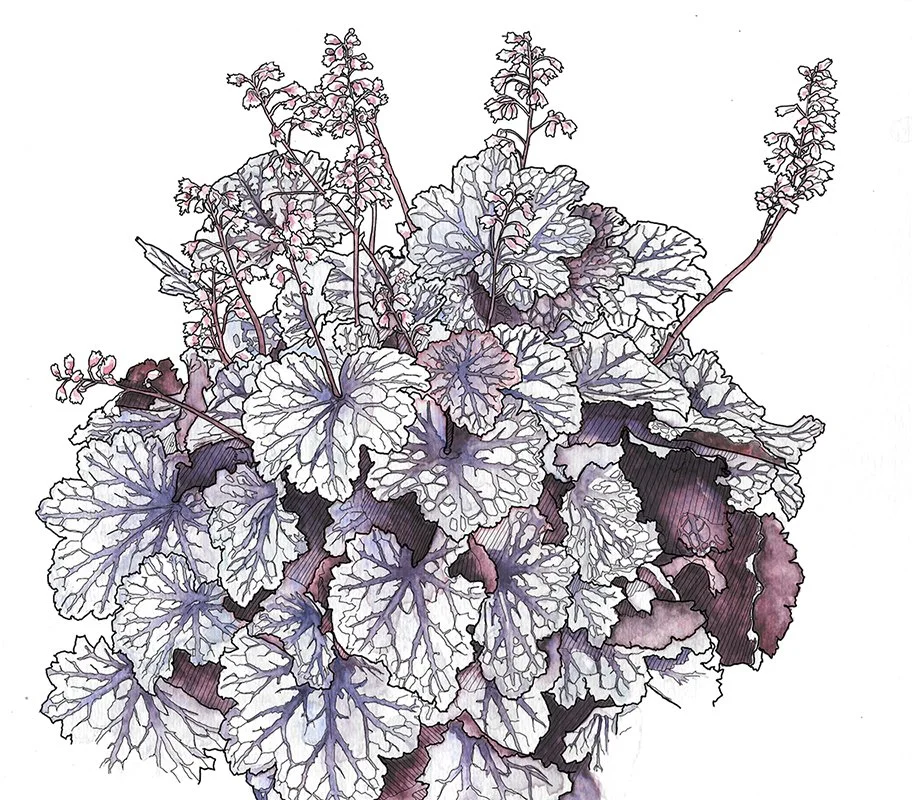
Heuchera [illustration by karen blackerby logan]

HEUCHERA

(CORAL BELLS)

Foliage Stars of the Shade Garden

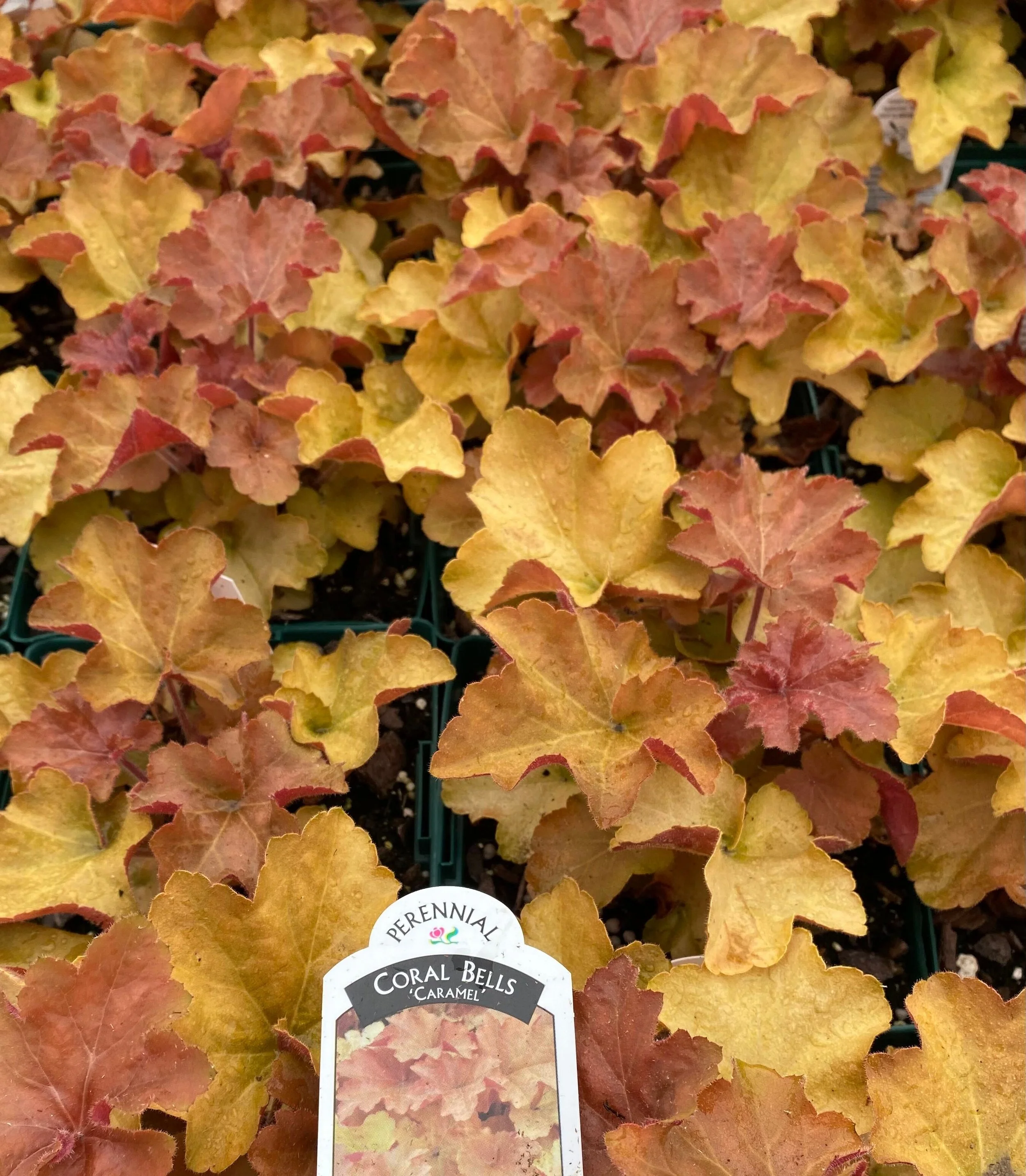
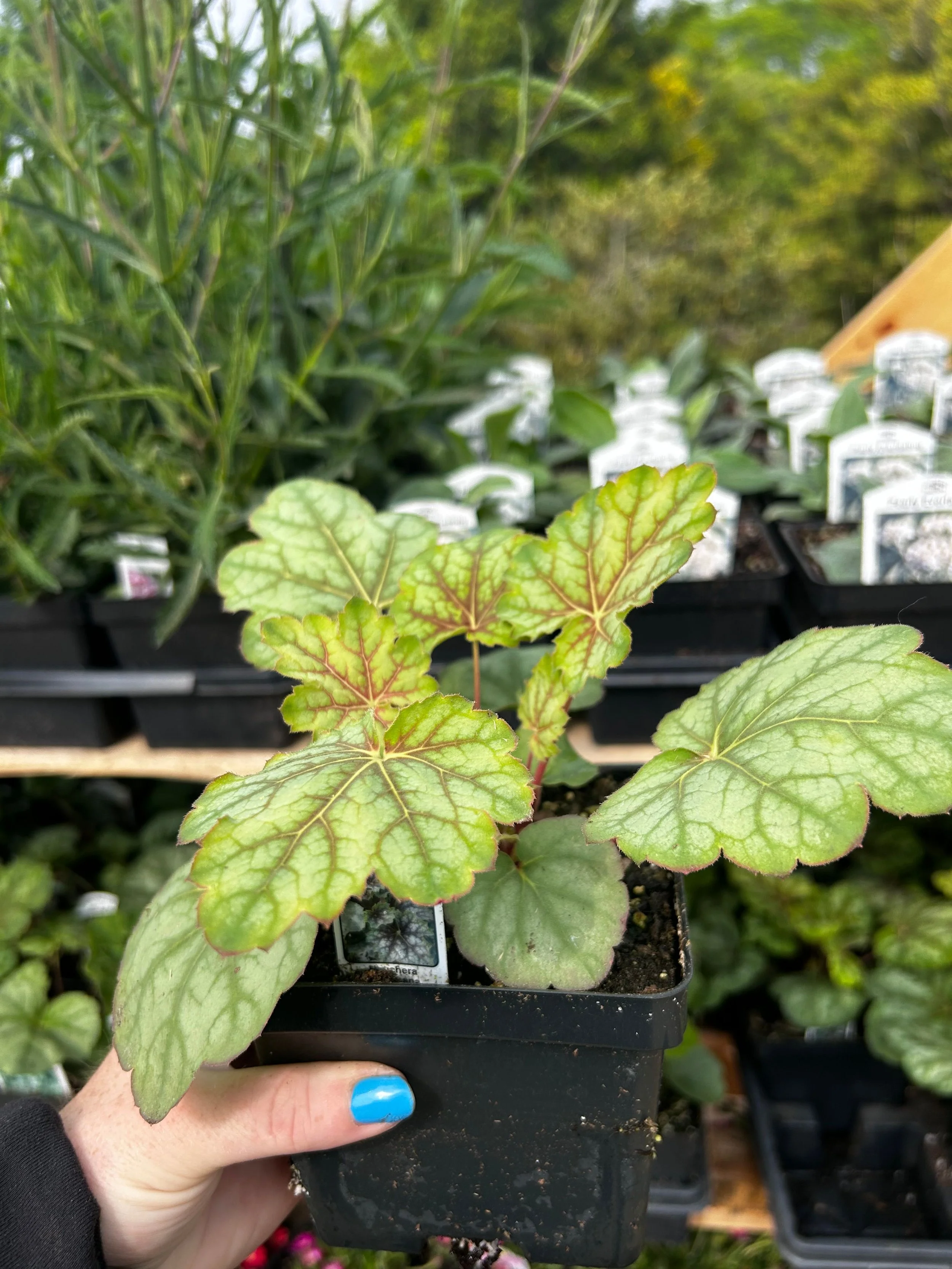
When it comes to perennials that combine long-lasting beauty, versatility, and ecological benefits, few plants rival Heuchera, commonly known as Coral Bells. These North American natives are prized for their dazzling foliage and delicate blooms, making them a favorite in shade gardens, woodland edges, and even containers.

Heuchera ‘Dolce Silver Gumdrop’

Not Just Pretty Leaves

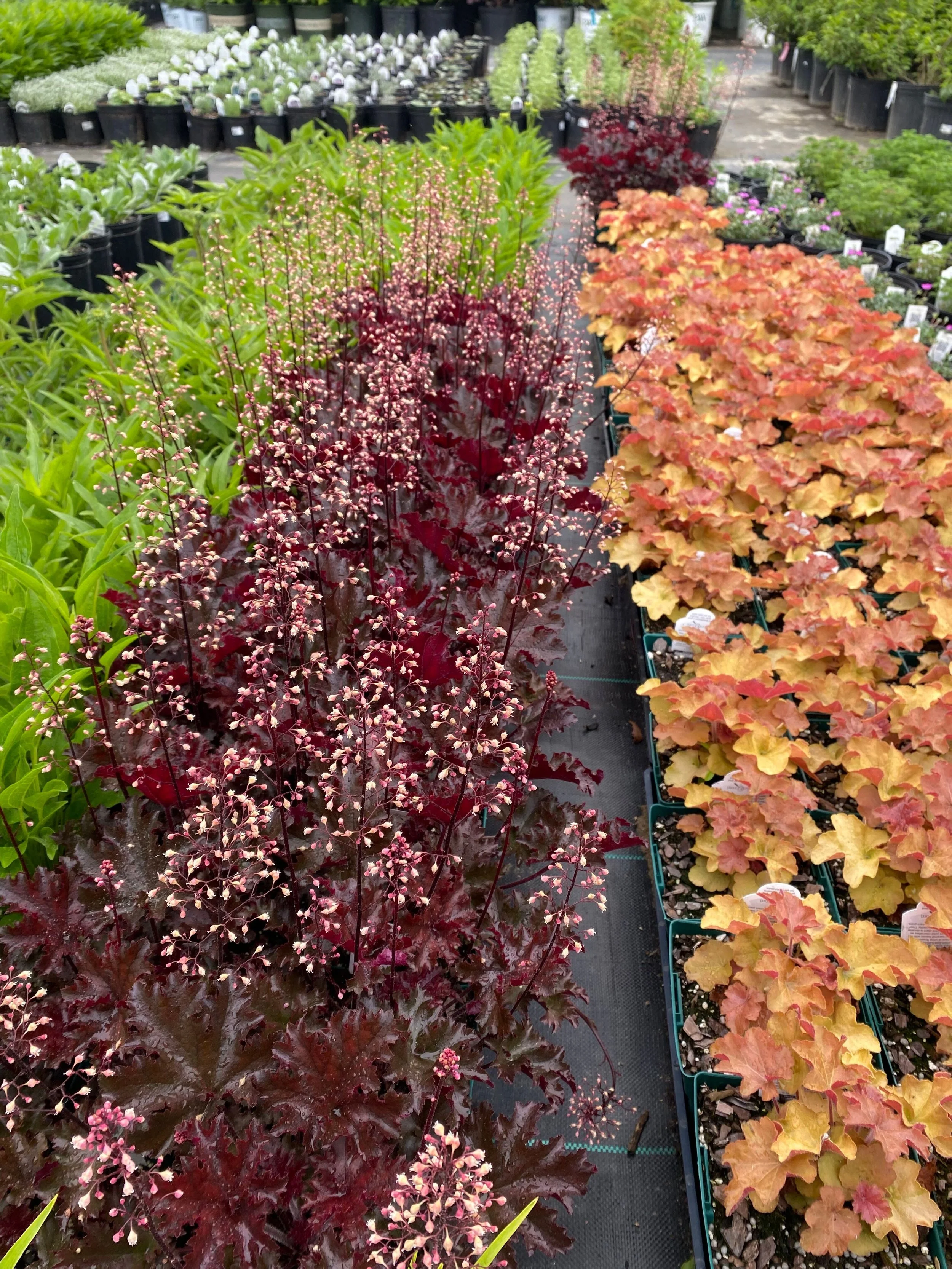
While many gardeners love Heucheras for their richly colored leaves, from lime green to burgundy and even dark purple, their graceful flowers are not to be overlooked. Each summer, tall flower stalks rise above the foliage, blooming for 3-4 weeks with airy, bell-shaped flowers that attract hummingbirds. The flowers of Heuchera sanguinea give the plant its common name, Coral Bells, with vivid cerise blooms native to warm, dry canyons in Mexico, Arizona, and New Mexico.

A Foliage Powerhouse

Heucheras are truly standout foliage plants. Their rosettes of textured leaves stick around from early spring through late fall, and some cultivars are even semi-evergreen in mild climates. With a low, mounding habit, most varieties reach 8–12 inches in height and 1–2 feet in spread, while the flower spikes add height, 1-3 feet, during bloom.

There has been an explosion of Heucheras cultivars in the last decade. Hybridization is common, due to the fact that the species often intergrade with one another. The increasingly popular Heucherellas (Heuchera × Tiarella) combine the best traits of both parent plants.

Try planting ground covers instead of mulching. They are just as effective, if not more so, at keeping out the weeds!

Heuchera ‘Dolce ‘Cherry Truffles’

Heuchera

Heuchera americana ‘Dales Strain’, the one we do from seed.

Where & How to Plant

Light:

  • Most Heucheras thrive in partial shade or dappled sunlight, but many red and yellow-leafed varieties tolerate more sun.

  • In the Mid-Atlantic and Northeast, shade is usually best for optimal performance.

Soil & Water:

  • Plant in well-drained, compost-rich soil. Keep consistently moist, especially in containers.

  • Heucheras are ideal for woodland gardens, rock gardens, slopes, and as ground covers beneath trees and shrubs.

Heucheras are DEER REISISTANT!

Heucherella Pink Revolution

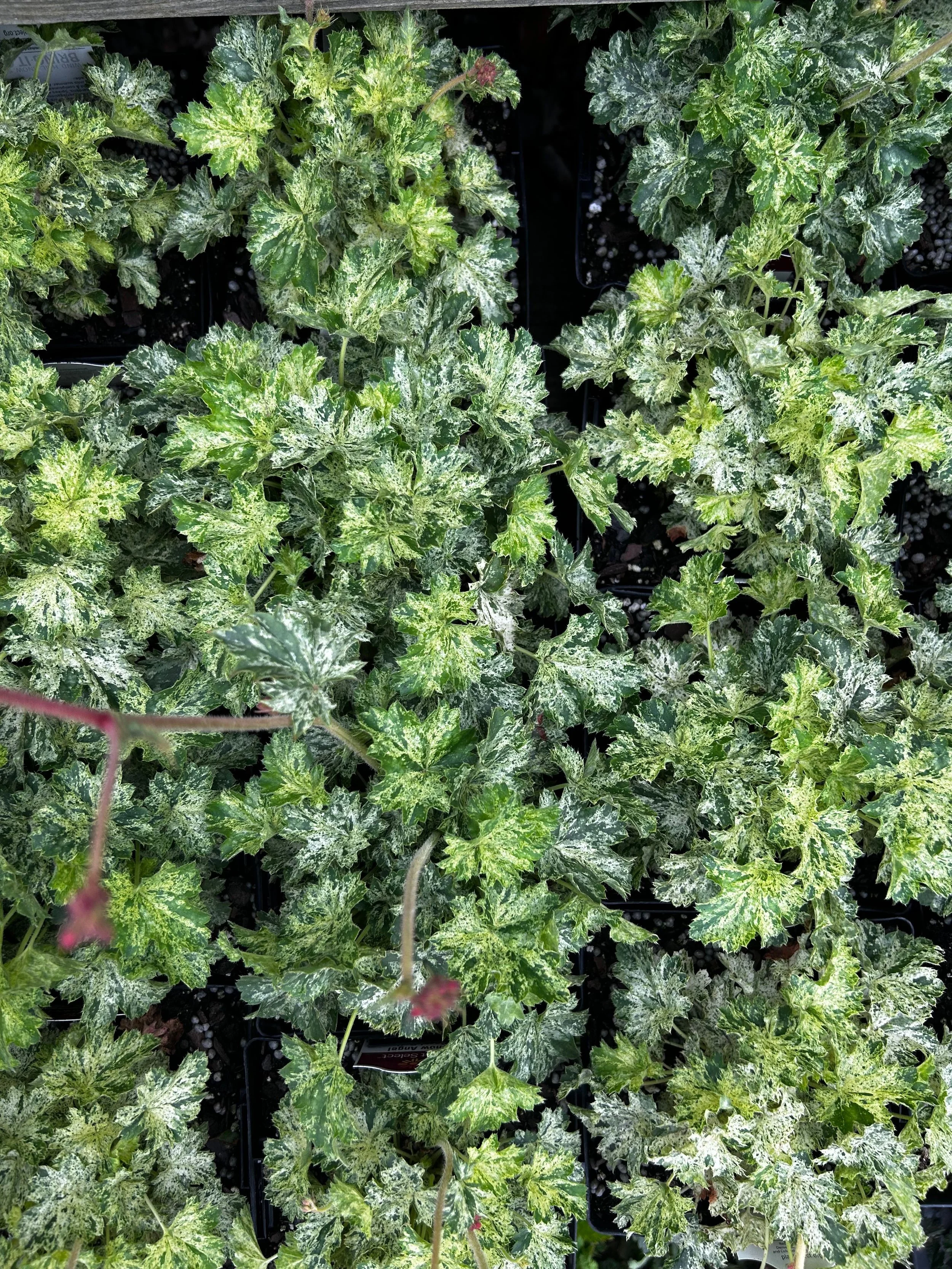
Heuchera Snow Angel

Heucherella Dayglow pink

Design Pairings & Garden Uses

Heucheras are beautiful alone but shine even more when paired with other foliage-rich or shade-loving perennials:

  • Great companions: Ferns, caladiums, hostas, bleeding hearts, iris, astilbe

  • Ideal uses: Mass plantings, underplanting for trees and shrubs, borders, container gardens, and ground cover alternatives to mulch

    Tip: Consider replacing traditional mulch with ground covers like Heuchera. Not only are they effective at suppressing weeds, they add beauty and habitat too.

Our Favorites

  • Heuchera villosa ‘Autumn Bride’: A native cultivar with large green leaves and tall white blooms. Especially striking when planted in mass and blends beautifully with other plants.

  • Heuchera americana ‘Dale’s Strain’: One of several we grow from seed. It’s a reliable, low-maintenance ground cover under shrubs.

There are 37 species of Heuchera and dozens of cultivars now available, the diversity of Heucheras is greater than ever. Their ability to hybridize easily has led to a stunning array of colors and leaf textures, so whether you're designing a native garden or adding structure to your shaded beds, Coral Bells deliver beauty that lasts well beyond their bloom.

Looking to add more color and habitat to your garden? Visit our nursery to explore our vast array of Heuchera and discover the perfect variety for your landscape.

groundcover

sweet woodruff

groundcover

forget me nots

In GARDEN TIPS, GROUNDCOVERS, JUNE, PLANT PROFILES Tags Heuchera, ground cover, foliage plants, Coral Bells
Comment

[PLANT PROFILE] SWEET WOODRUFF

May 11, 2022 Karen Logan

Sweet Woodruff

SWEET WOODRUFF

(Galium odoratum)

Sweet Woodruff is a lovely plant that will spread like a ground cover in your garden. It has small white flowers in spring through early summer. It’s vigorous but not aggressive and can coexist nicely with bulbs that will come right up through it. They spread stoloniferously by sending out stolons or side shoots just beneath the soil surface.

Sweet Woodruff

WHERE TO PLANT SWEET WOODRUFF

  • An ideal ground cover. Plant as a ground cover around shrubs.

  • A wonderful border accent in woodland gardens.

  • It thrives in rich garden soil, in part to full shade.

OTHER GROUNDCOVERS

  • Other ground covers that do well in shade include the more common evergreen pachysandra and Vinca minor, Periwinkle.

  • Pachysandra: We carry the Japanese spurge, pachysandra terminalis. Our favorite is the native one, Pachysandra procumbens.

  • Vinca: We carry Vinca minor Bowles, with the early summer blooming blue flowers and the white flowering Vinca minor. We also carry Illumination, a vinca cultivar with yellow variegated foliage and a blue flower.

  • Epimedium, barrenwort: Another less common groundcover that thrives in shade is Epimedium. Epimedium Spine Tingler is a cultivar that is available now. This year we also have Frohnleiten, Rubrum, Sulphureum, Niveum, Pink Champagne, Domino and Amber Queen, which won the RHA (Royal Horticultural Award) of Merit.

  • Ferns: Ferns can spread nicely like ground covers such as Matteuca struthiopteris (the Ostrich fern), Dennstaedtia punctiloba (Hay Scented Fern) and Onoclea sensibilis. Dennstaedtia punctiloba and Onoclea sensibilis are both hard to find. We don’t have either in stock right now.

  • Geum: The native Geum has been mentioned as a good ground cover. Geum triflorum has beautiful seed pods.

  • Thyme: Creeping and wooly thymes are ground covers we like to recommend for sun. Creeping thyme comes in white flowers (albiflorus), red flowers (coccineus) or pink chintz with pink flowers. We also carry creeping lemon and Elfin thyme.

  • Laurentia fluviatilis, Blue Star Creeper and Pratia: Two other interesting plants that spread like ground covers.

    And there are plenty more! 

Try planting ground covers at the base of your shrubs instead of mulching. Ground covers are very effective at keeping weeds out!

Pachysandra

Sweet Woodruff and French Lavender

Pachysandra

Epimedium Spine Tingler

Epimedium x Domino

Epimedium new growth

Viinca, white flower

GARDEN TIPS

MAY

PLANT PROFILE

CREEPING PHLOX

In PERENNIALS, EVERGREENS, GROUNDCOVERS, MAY, PLANT PROFILES Tags Sweet Woodruff, Epimedium, groundcover, creeping thyme, Blue star creeper, perennial groundcovers, evergreen groundcover, Geum, ferns
Comment
← Newer Posts

484 State Rd. West Tisbury, MA 02575

Mon - Fri : 8am - 4pm / Sat : 8am-1pm

Closed Sundays

(508) 693.8512