• Home
  • ABOUT
    • PROJECTS
    • SPRING CHECKLIST 2026
    • Landscape Teams
    • LANDSCAPE DESIGN
    • LANDSCAPE CONSTRUCTION
    • LANDSCAPE MAINTENANCE
    • Nursery
    • BULK MATERIAL
    • PLANT PROFILES
  • Application
  • EVENTS
  • FIELD NOTES
  • TESTIMONIALS
  • Contact
Menu

Vineyard Gardens

484 State Road
West Tisbury, MA, 02575
508.693.8512
Landscaping & Garden Center

Your Custom Text Here

Vineyard Gardens

  • Home
  • ABOUT
  • LANDSCAPING
    • PROJECTS
    • SPRING CHECKLIST 2026
    • Landscape Teams
    • LANDSCAPE DESIGN
    • LANDSCAPE CONSTRUCTION
    • LANDSCAPE MAINTENANCE
  • NURSERY
    • Nursery
    • BULK MATERIAL
    • PLANT PROFILES
  • Application
  • EVENTS
  • FIELD NOTES
  • TESTIMONIALS
  • Contact

EARLY SPRING COLOR

March 30, 2026 Karen Logan

Azaleas [illustration karen blackerby logan]

*******************************

EARLY

SPRING BLOOMS

A Splash of Color for Your Landscape

Spring is here! The air is crisp, birds are filling the trees with song, and our garden center on State Road is open. Our greenhouse teams have been hard at work, waking up bulbs and sowing seeds, while landscape crews tackle spring clean-ups. With nature waking up, now is the perfect time to add vibrant color to your landscape! Here are some top early bloomers to consider:

Viburnum plicatum

*******************

VIBURNUM

A Spring Favorite

Viburnums are a must-have for spring gardens, blooming from early spring through June. Their attractive fruit and beautiful fall foliage make them a year-round winner. The early spring blooming viburnum flowers are extremely fragrant. Viburnums will do well in full sun to part shade. They are used as specimens in shrub borders, foundation plantings, as hedges or screens. They are attractive to butterflies and birds and tolerate a broad range of soil conditions, including poor or compacted soils. Prune right after flowering. We carry several varieties, including the native Viburnum dentatum and the compact ‘Blue Muffin’ Viburnum for smaller spaces.

Viburnum burkwoodii

Viburnum burkwoodii

Viburnum pragense

Learn more: VIBURNUMS

*******************

MAGNOLIA

Magnolia ‘Royal Star’ : A Fragrant Beauty

One of the first trees to bloom in spring, Magnolia ‘Royal Star’ dazzles with large, fragrant white flowers that appear before the foliage. With excellent cold and heat tolerance, this small specimen tree or large shrub is a standout in any garden.

Magnolia Royal Stars

Magnolia Royal Stars

*******************

FORSYTHIA

‘Lynwood Gold’: A Golden Welcome

For a burst of sunshine in early spring, Forsythia ‘Lynwood Gold’ is unbeatable. Its brilliant yellow flowers cover branches before lush green foliage emerges, with a hint of purple in the fall. A perfect way to brighten your landscape!

Forsythia 'Lynwood Gold'

Forsythia 'Lynwood Gold'

Forsythia 'Lynwood Gold'

*******************

PIERIS JAPONICA

Year-Round Interest

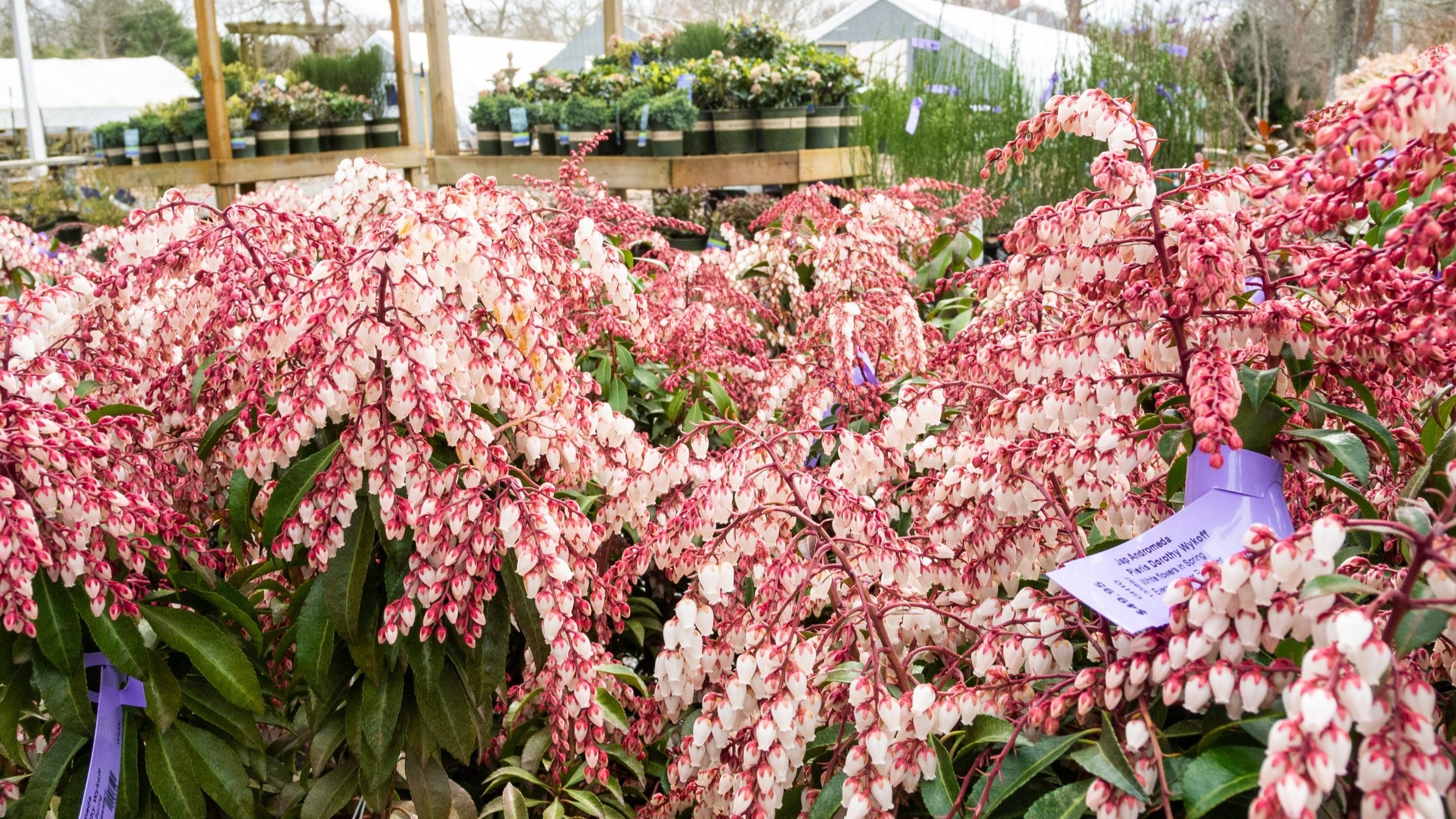
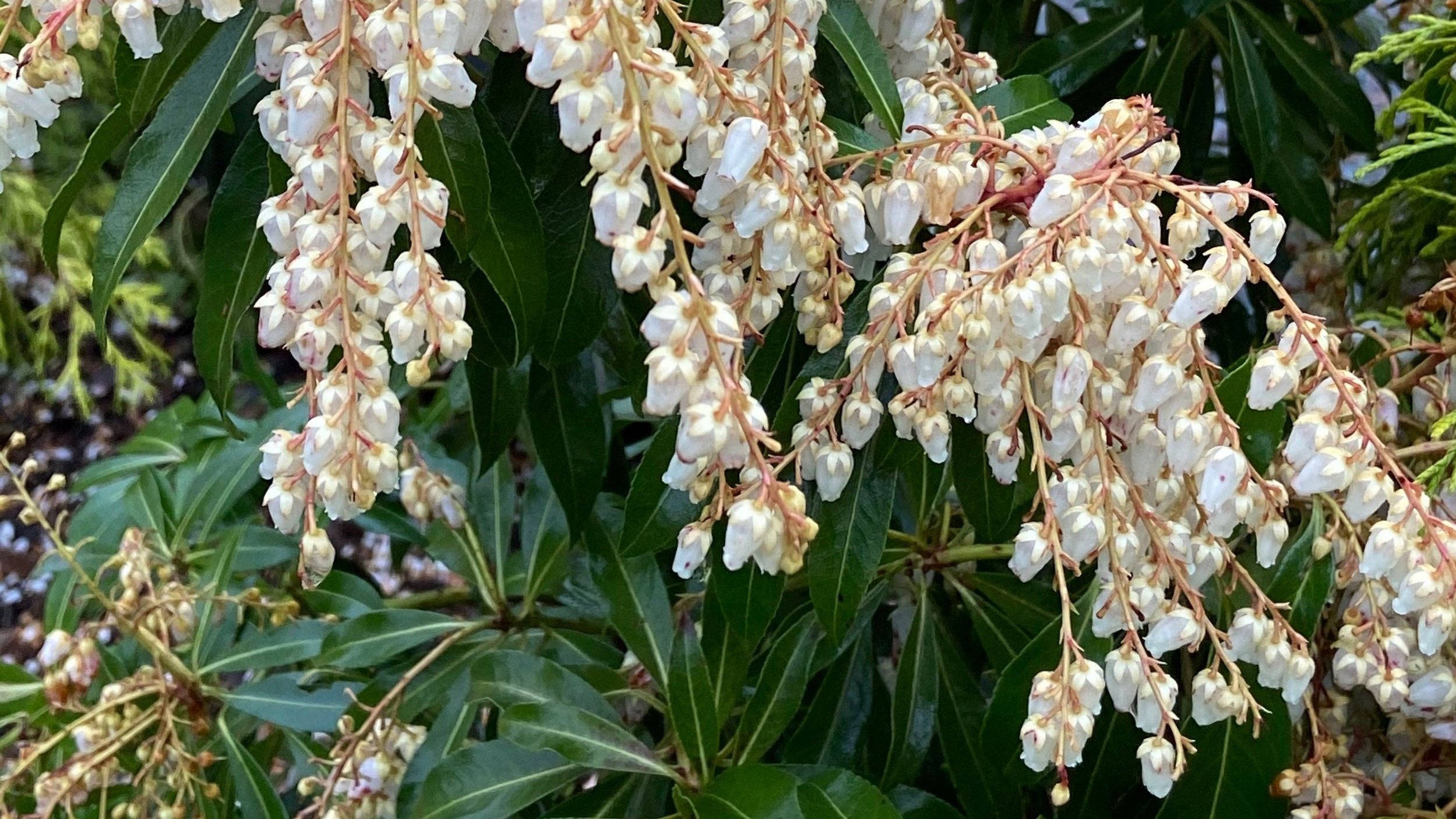
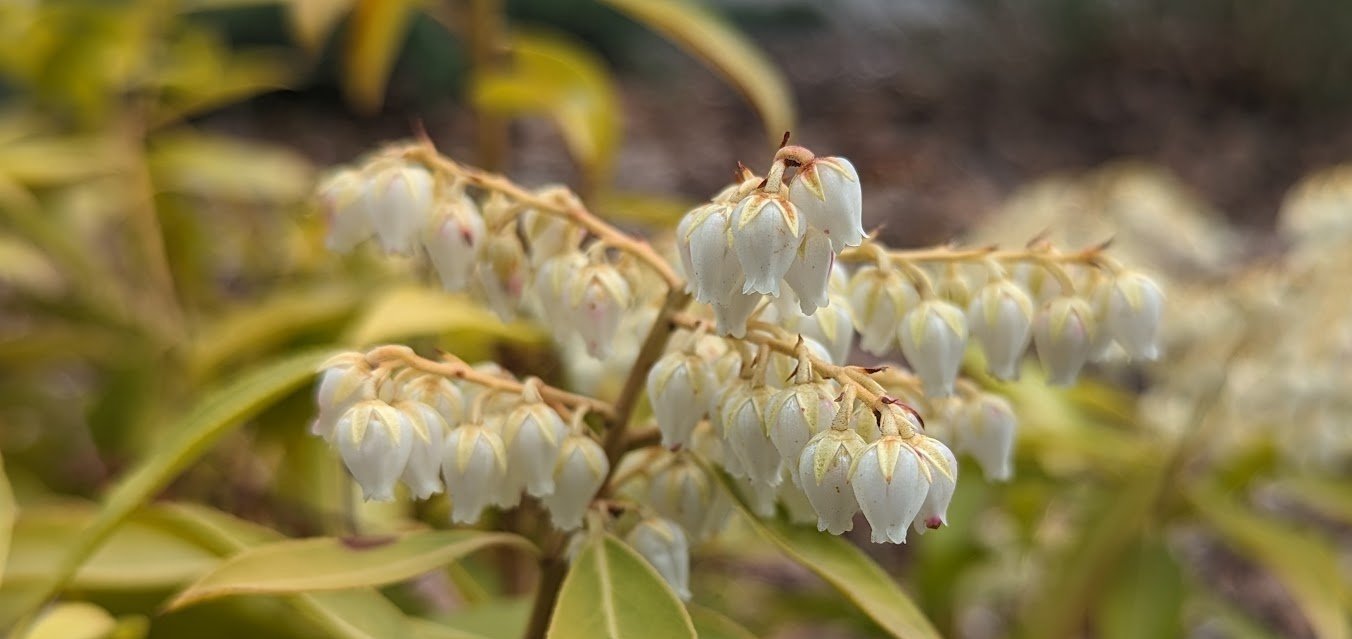
Pieris japonica is a broadleaf evergreen shrub that provides multiseason interest. In early spring, their cascading, delicate, bell shaped flowers bloom for about two weeks. The blooms range in color from white to pink. Simultaneously, bright pink, red, or bronze new foliage emerges, gradually transforming into glossy, oblong evergreen leaves. Beadlike flower buds form in late summer and hold steadfast through winter against their evergreen backdrop.

Deer resistant, slow growing and shade tolerant, Pieris japonica are ideal for adding year round color to mixed borders.

Learn more : PIERIS JAPONICA

*******************

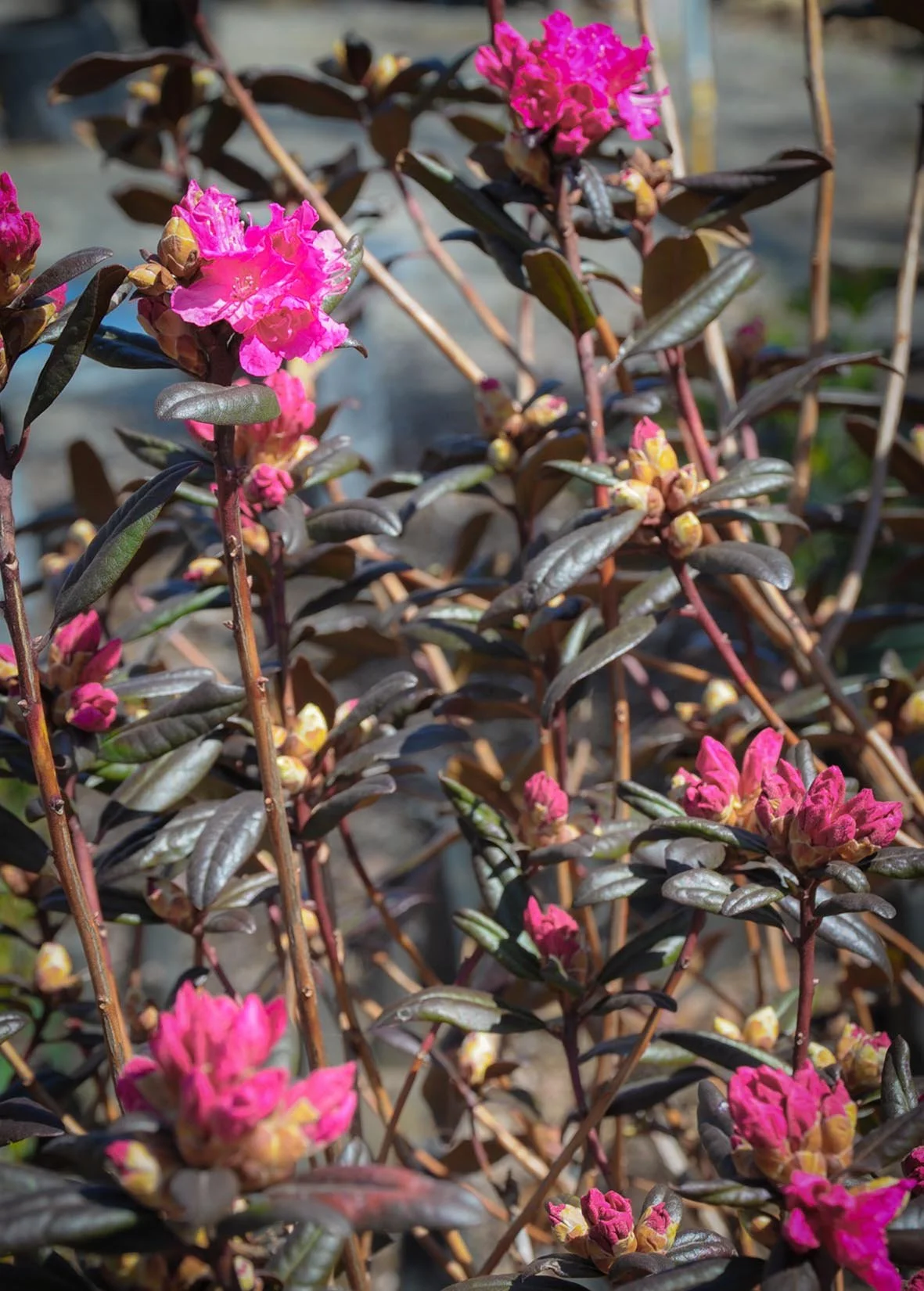
AZALEAS &

RHODODENDRONS

Bold Spring Color

These beloved spring bloomers provide vibrant color and lush greenery. Rhododendrons and Azaleas abundant blooms are welcomed first thing in spring. Rhododendrons dark green leaves, mature height and width make great screening! Azaleas are in the rhododendron family. There are both evergreen and deciduous varieties available. ‘Most’ deciduous azaleas bloom after the evergreen azaleas. They will bloom on old wood before the plant has leafed out for the year.

Rhododendrons are shallow rooted plants that grow as an understory in the woodlands, like in the Blue Ridge Mountains. They are also found in various parts of Asia, like China and Nepal. They grow in high elevations because they like it cool.

  • Rhododendron maximum : (Native) A large broadleaf evergreen reaching up to 15ft by 12ft wide. They prefer to grow in cool, moist spots with well drained soil, part shade to full shade. They have dense, large leathery leaves with rose-purplish to pink to white blooms.

  • Grandiflorum Catawba: (Native)The Catawba evergreen rhody reaches 6-8’ ft tall & wide and has lilac-purple, trumpet-shaped flowers. It is beautiful planted in a grouping, as an informal hedge or a mixed or woodland border.

  • Rhododendron cawtabiense, also called cawtaba rhododendrons:

  • Roseum Elegans: Medium sized broadleaf evergreen shrub that reaches 9-12’ tall and wide. Beautiful rose-lilac colored flowers. Best along a woodland border.

  • Chinoides Rhododendrons: A smaller rhody that gets to about 4’ with white bell shaped flowers. Outstanding for use as an informal hedge or foundation plant.

  • Cunningham’s White: A smaller rhody that gets to about 4’. It’s a perfect middle-of-the-border flowering shrub. A natural under oaks and older coniferous trees. Also perfect in the woodland understory and in wild gardens.

Hybrids developed by Weston Nurseries.

  • PJM: A durable rhody that tolerates heat as well as cold. An excellent choice for borders, mass plantings, or containers. PJM’s are smaller leafed rhodies with bright laveder purple blooms.

  • Olga Mezzit: A compact smaller leaf evergreen. More heat and sun tolerant than other varieties. An excellent choice for borders, mass planting, or containers.

Many of the deciduous azaleas are native, including viscosum and its hybrids.

  • Rhododendron viscosum: (Native) Native to Martha’s Vineyard! Gorgeous and fragrant.

They need to be watered often when newly planted!
Rhododendrons benefit from an application of mulch to keep moisture in the soil for their shallow roots.

Azalea ‘Landmark’

Deciduous Azalea

Rhododendron

To see these deciduous azaleas in their full splendor they will be blooming in a few weeks at the Polly Hill Arboretum!

Learn More: BROADLEAF EVERGREENS

*******************

MORE SPRING

BLOOMING SHRUBS

ORNAMENTAL CHERRIES, RED BUD, AND SAND CHERRIES

Dwarf Cherry

Cercis canadensis Pendula

Sand Cherry

Spring is short—make the most of it! Visit us on State Road to find the perfect shrubs for your garden and bring your landscape to life.

*******************

Learn About: HARDY ANNUALS
COOL WEATHER VEGGIES
In FLOWERING SHRUBS, MARCH, SPRING PLANTS, FIELD NOTES Tags Spring gardens, spring flowering shrubs, viburnums, magnolia trees, forsythia, rhododendrons, azalea, pieris japonica
Comment

ASPARAGUS

March 28, 2026 Karen Logan

ASPARAGUS

“There are a few perennial vegetables which actually are some of the easiest ones to grow. My all-time favorite is asparagus which can live for 20 or more years. Asparagus continually get bigger and more productive with just a little bit of care. The most important way to care for them is to keep the weeds out in order for them to thrive. They are one of the first vegetables to come up every spring and are absolutely delicious and healthy.” -

Chuck Wiley, founder of Vineyard Gardens Landscaping

Bare root asparagus

GROWING ASPARAGUS

Asparagus are a long lived perennial and should be planted in a dedicated bed.

  • Asparagus requires well drained fertile soil and can not tolerate wet feet.

  • Ensure planting site is well weeded.

  • Plant in full sun.

  • An excellent weed killing technique is to cover with cardboard 8 weeks prior to planting.

  • Make an 8” deep trench with a 4” ridge and loose soil down the middle.

  • Plant one bare root asparagus every 1’ between plants and 3’ between rows.

  • Splay the long roots down the sides of the ridge.

  • Water well to establish.

  • Top dress asparagus bed with plenty of premium compost every fall.

  • Since the roots are deep, you can hoe out weeds to about 3” deep as long as you do it before March 15th.

HARVESTING

Plants need to establish for 2 or 3 seasons before their first harvest, then they have abundant yields.

  • In the third year, harvest tender spring shoots at about 4.5”.

  • Do not harvest until shoots are pencil thick.

ONCE BARE ROOT ASPARAGUS IS AVAILABLE THERE IS A SHORT PLANTING WINDOW!

In PERENNIALS, SPRING PLANTS, VEGETABLE GARDENS, MARCH, PLANT PROFILES Tags asparagus, bare root asparagus, growing asparagus, harvesting asparagus, Jersey Giant Asparagus, Purple Passion Asparagus
Comment

SERVICEBERRY

March 27, 2026 Karen Logan

Serviceberry (illuststration by karen blackerby logan)

SERVICEBERRY

(SHAD TREES)

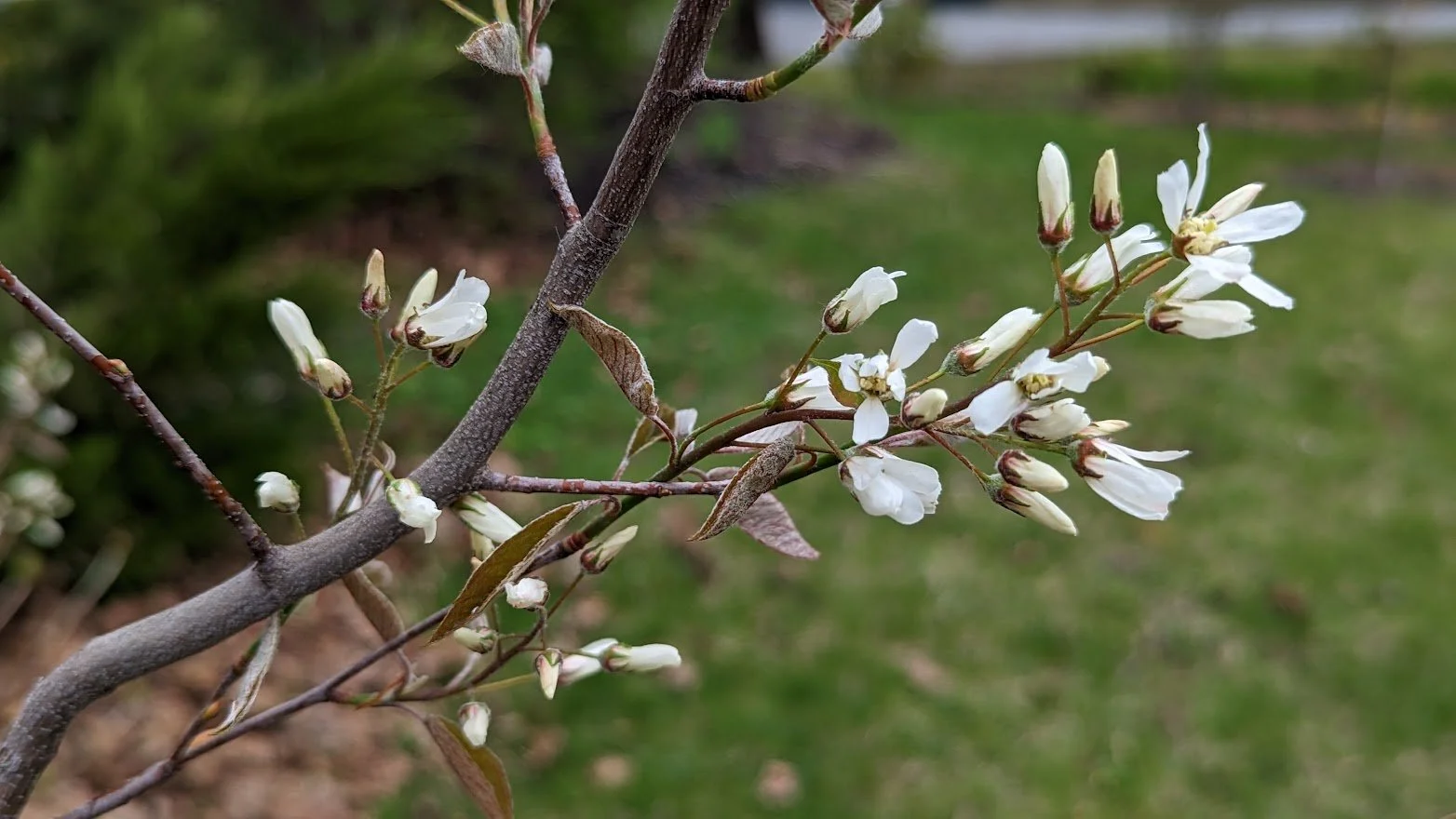
Amelanchier ×grandiflora ‘Autumn Brilliance’

Known as Shad Trees on Martha’s Vineyard because they bloom when the Shad (a type of small fish) swim up the creeks here on the island to breed.

A native multi-stemmed shrub or small tree, about 20 feet tall, has year round interest. Serviceberries are one of the first to burst into bloom in April with their showy white flowers. Once the flowers pass, tasty purple colored fruit, similar in flavor to blueberries, follow in mid June. The fall brings showstopping brilliant orange to red autumn color.

Attract more wildlife to your garden with native berry producing shrubs like Serviceberry!

***********************************

VALUABLE SHRUB FOR WILDLIFE

Native to eastern United States and Canada, Serviceberries support numerous butterfly and bird species These early bloomers support pollinators in spring and produce sweet berries in the summer that support birds like cedar waxwings, robins, and thrushes. Once the berries ripen, they provide a rich source of nutrition and are a crucial food source for early nesting birds and returning migratory species.

Serviceberries are a valuable shrub for wildlife. One of the earliest blooming shrubs in spring, Serviceberries burst into bloom typically in April, making it an essential early spring food source for pollinators.

native berry producing shrubs

attract wildlife to your garden

supporting birds

with native plants

***********************************

GROWING & CARE

Serviceberries have an upright habit with grayish to silver, smooth bark.

  • Easy to grow

  • Tolerant of most site conditions but does not tolerate salt or poor drainage. Prefers acidic, well drained soils in partial shade to sun.

  • It is susceptible to heat and drought stress.

  • Use as a small tree in mixed borders or foundation plantings.

  • Excellent companion with Carolina allspice (Calycanthus floridus), flowering dogwood (CornusBenthamidia florida), mountain laurel (Kalmia latifolia), pink-shell azalea (Rhododendron vaseyi), arrowwood (Viburnum dentatum), and whorled tickseed (Coreopsis verticillata).

***********************************

ATTRIBUTES

Attracts Wildlife: Host Plant / Other Pollinators & Wildlife / Attracts Songbirds / Attracts Bees

Tolerance: Deer & Rabbit Resistant / Urban Environment / Drought Tolerant

Additional Attributes: Edible / Low Maintenance

Landscape Use: Rain Garden / Specimen

Attractive Fall Foliage and/or Ornamental Fruit: Red to Purple Fruit / Fall Foliage

Height: 15-25 ft

Spread: 12-20 ft

Exposure: Sun / Part Shade

Soil Moisture: Average / Dry

Ornamental Interest: Spring Bloom / Summer Fruit / Fall Foliage

In APRIL, DEER RESISTANT, FLOWERING SHRUBS, NATIVE PLANTS, PLANT PROFILES, SHRUBS Tags native shrubs, host plant, deer resistant, Serviceberries, Amelanchier ×grandiflora ‘Autumn Brilliance’, Amelanchier laevis, Amelanchier canadensis
Comment

COOL WEATHER VEGGIES

March 24, 2026 Karen Logan

Lettuce, herbs and lavender illustration by karen blackerby logan

COOL WEATHER

VEGGIES & GREENS

Grow Your Own Greens!

Fresh, homegrown greens bring vibrant flavor and nutrition to your table. Cool weather veggies like lettuce, spinach, arugula, kale, endive and broccoli thrive in early spring, making them perfect for an early start to your garden. Onions thrive in northern climates, and timing is key for a flavorful harvest. Whether you’re growing bunching onions, leeks, or classic yellow and red varieties, planting them early gives them a strong start before summer’s heat. These cool-season crops develop robust roots when started early, ensuring a crisp, homegrown bounty for your kitchen. Don’t wait, get these cool weather veggies and greens in the ground and watch them flourish!

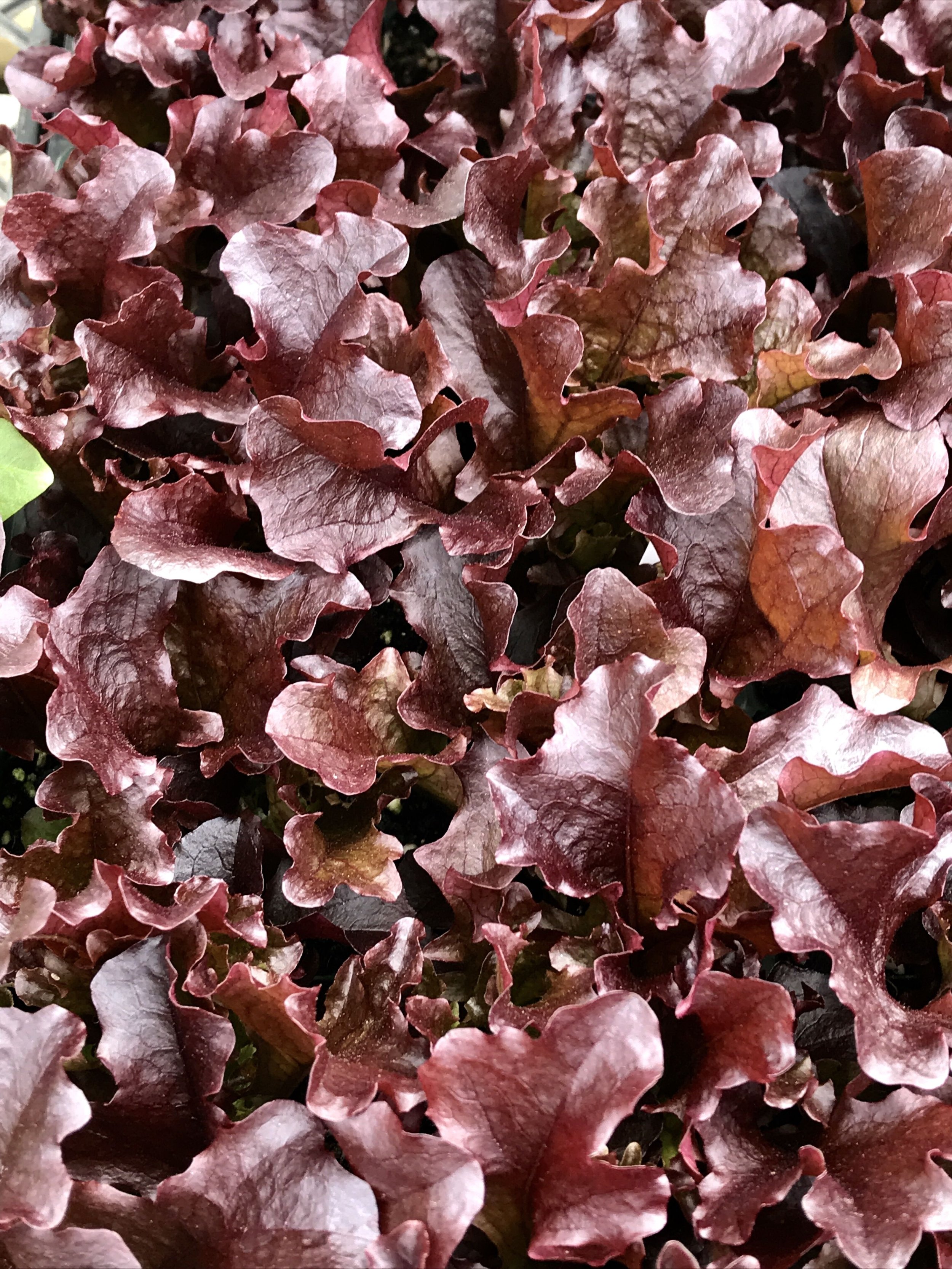
Cool weather greens growing in our greenhouse

First plant a round of our early seeded six packs of greens, then direct sow a second batch in mid April for a continuous harvest!.

  • Start Indoors First: Other herbs and cool-weather vegetables benefit from an early start indoors before transplanting as seedlings.

  • Direct Seed in Mid-April: Lettuces and cilantro can be sown directly into the garden once the soil is workable.

We’ve Got You Covered!

🌿 We grow a wonderful selection of greens and cool-weather veggies from seed, available in convenient plant packs.
🌿 Looking to start from scratch? We also offer a diverse variety of high-quality seeds from Fedco and Botanical Interest to get your garden growing!

Leafy greens like cooler temperatures to produce quick, tender leaves for your salads and cooking. The earlier you get them in the ground the better!

St. Patrick's Day is traditionally when you plant your peas out in the garden. If you missed it we've got you covered. Peas like to do most of their growth in cool temperatures.

We always start a bountiful selection of leafy salad greens.

“It's nearly springtime when a person’s thoughts should hopefully turn to ....... vegetables! That's right it's time to start our vegetable gardens. Even though our frost free date is technically May 1st, this is a great time of year to start our cool loving vegetables. There are many vegetables that can handle the light frosts we get this time of year. If a colder night were to be predicted, in the high 20s, you can cover your freshly planted vegetables with Reemay, plastic or an old sheet to protect them from the frost. At this point, most greens can be planted and some, like spinach, do much better in cooler weather than in the summer. Broccoli, cauliflower and cabbage are known as cole crops, which sounds like cold crops, all do very well planted at this time a year too. While kids don't always like the spicy taste of radishes, they are a great vegetable for them to plant as they come up in a matter of days and are ready to pick in a few short weeks. “ - Chuck Wiley, founder of Vineyard Gardens Landscaping

The Spring Vegetable Garden

Lettuces

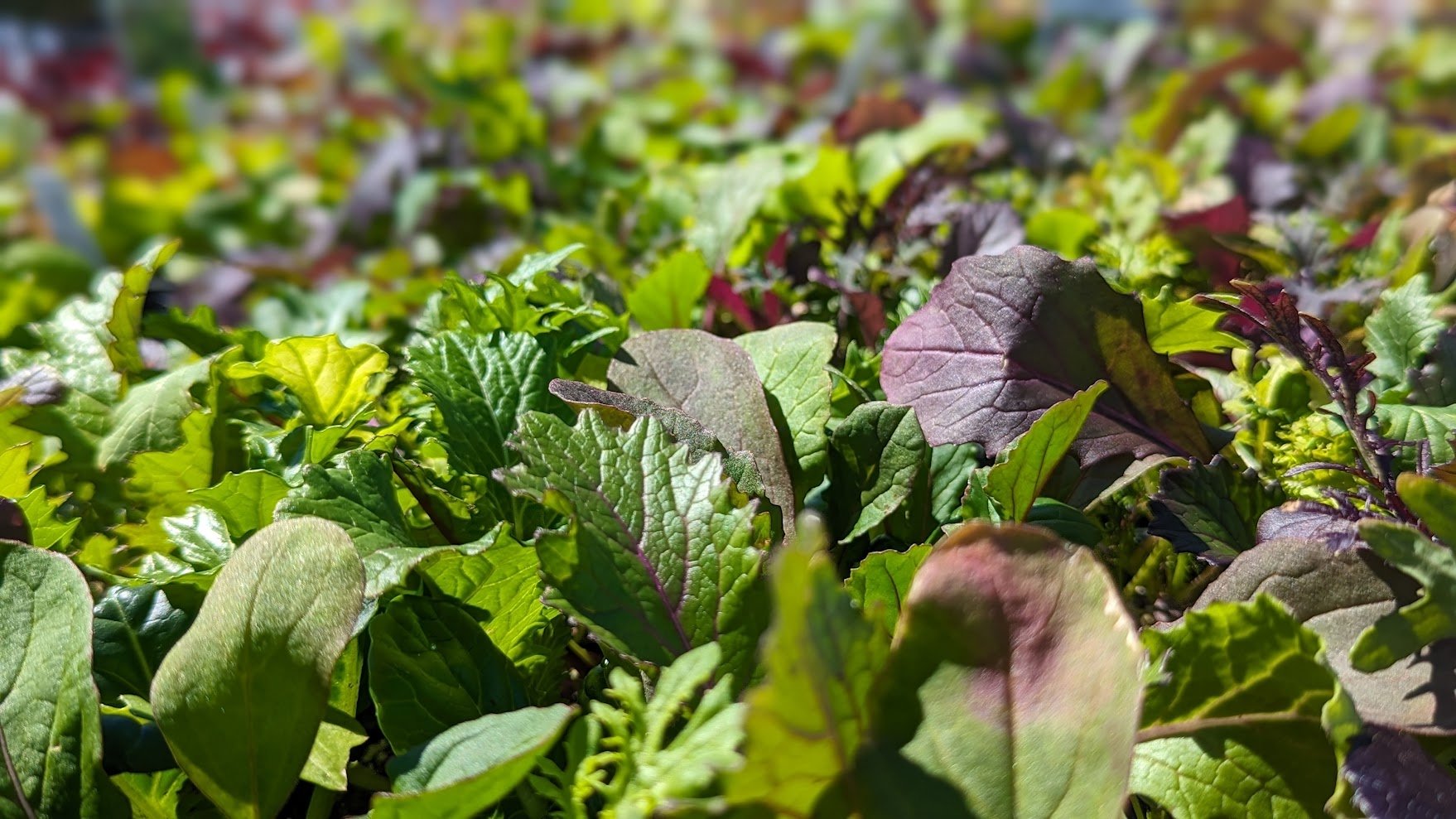
Mixed Mesclun Greens

Red Leaf Lettuce

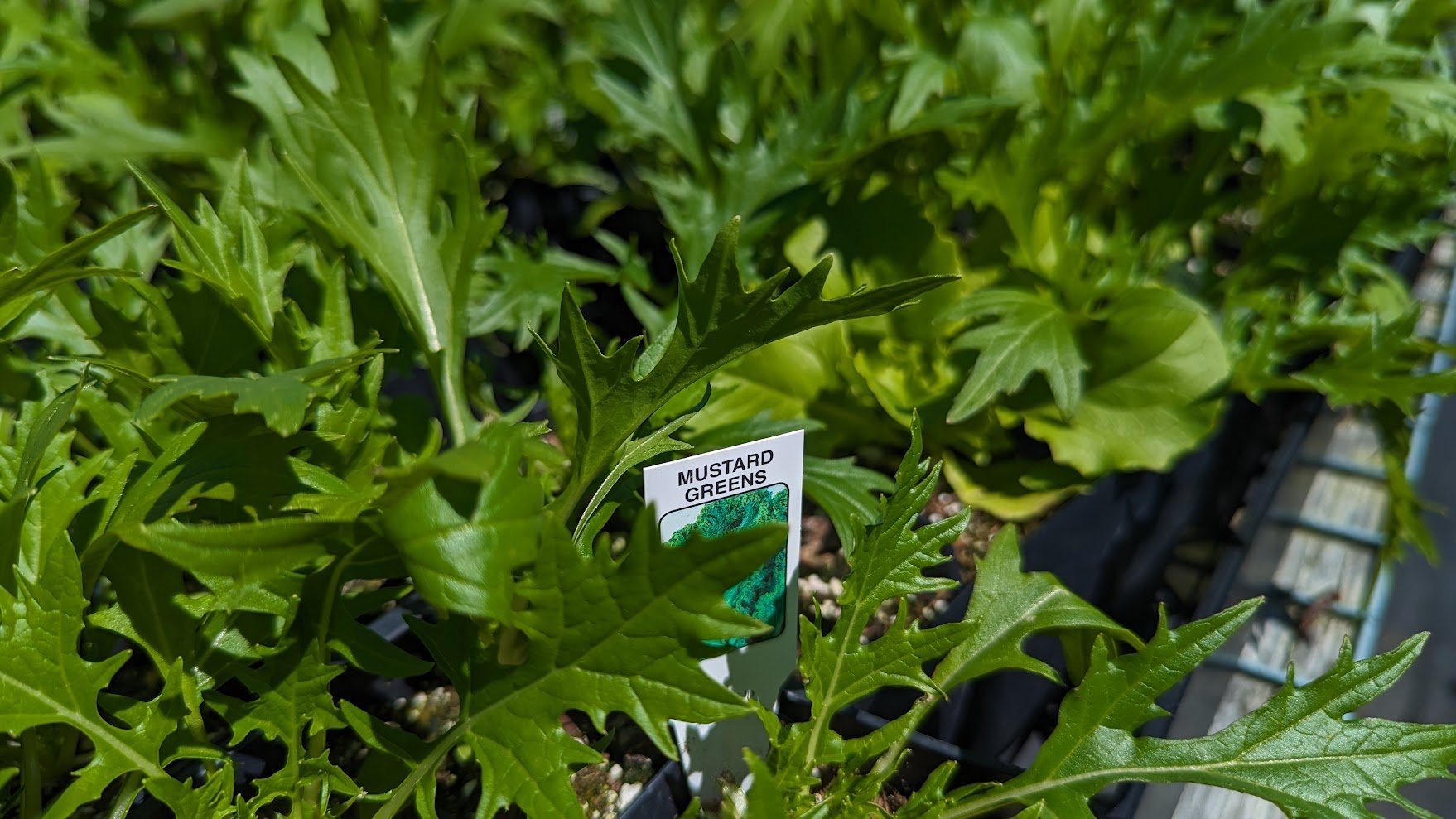
Mustard Greens

Cool Weather Veggies to Plant

These hardy crops thrive in spring’s crisp temperatures:

  • Leafy Greens: Many types of lettuce including Spinach, Endive, Swiss Chard, Mustards and Collards

  • Peas: Don’t forget to plant your peas. Soak before seeding, it speeds up germination. They imbibe and more easily split the seed coat so the radicle can anchor itself down to become the root system. The two cotyledons then emerge, sometimes the seed coat stays attached to one of the cotyledons. It’s so beautiful watching the birth of a plant. We have hundreds of plants being born every day at Vineyard Gardens.

  • Brassicas: We will have a variety of broccolis in packs, such as Calabrese, Romanesco, Waltham, Cauliflower Snowball, Cabbage & Kale

*****************

Herbs

NOW IS THE TIME TO PLANT SOME HERBS! COME CHECK OUT OUR HERB HOUSE & HERB GARDEN!

ANNUAL HERBS: Cilantro, Parsley, Dill, Chervil, Lemon Grass, Lemon Verbena and Rosemary
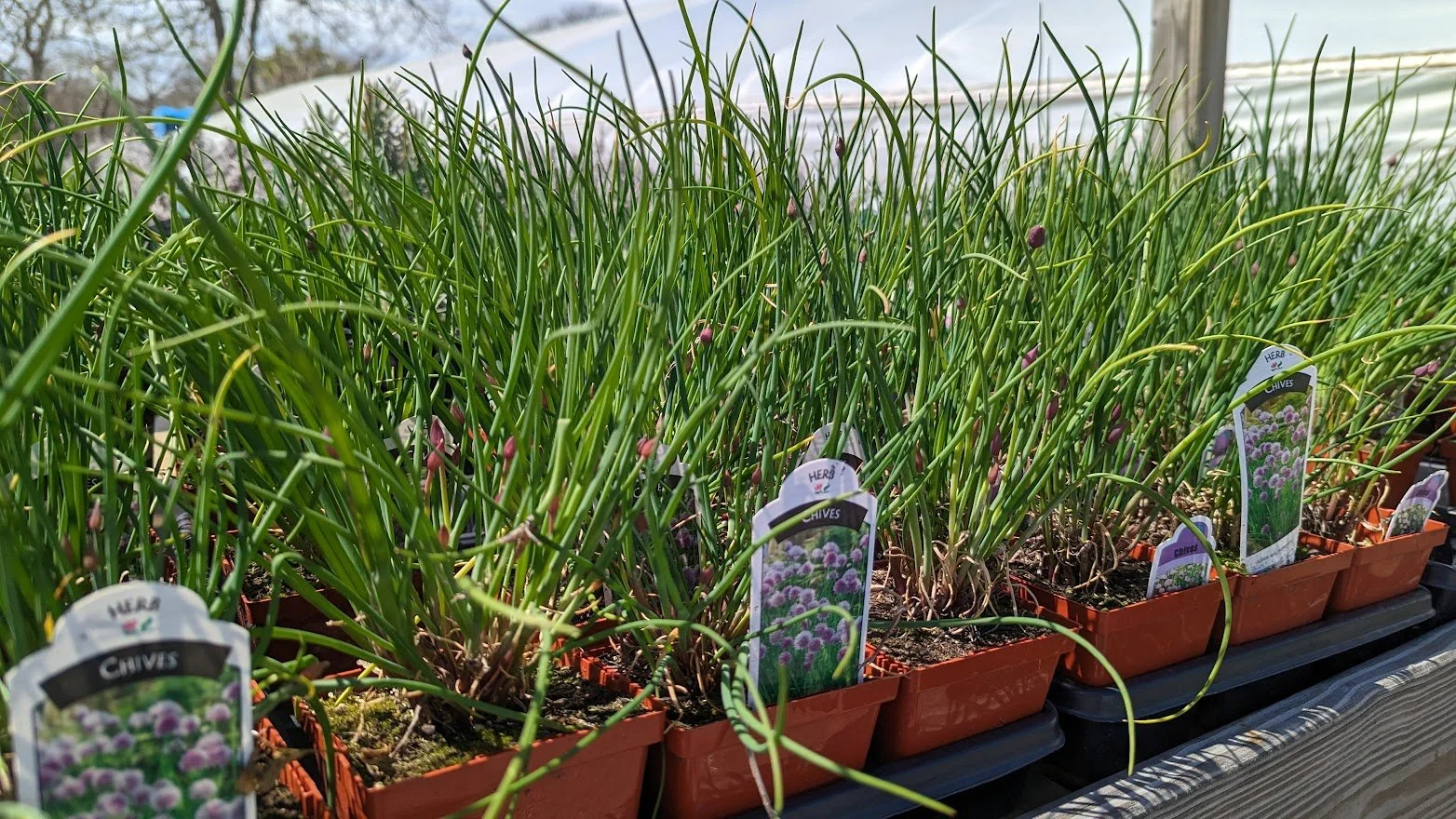
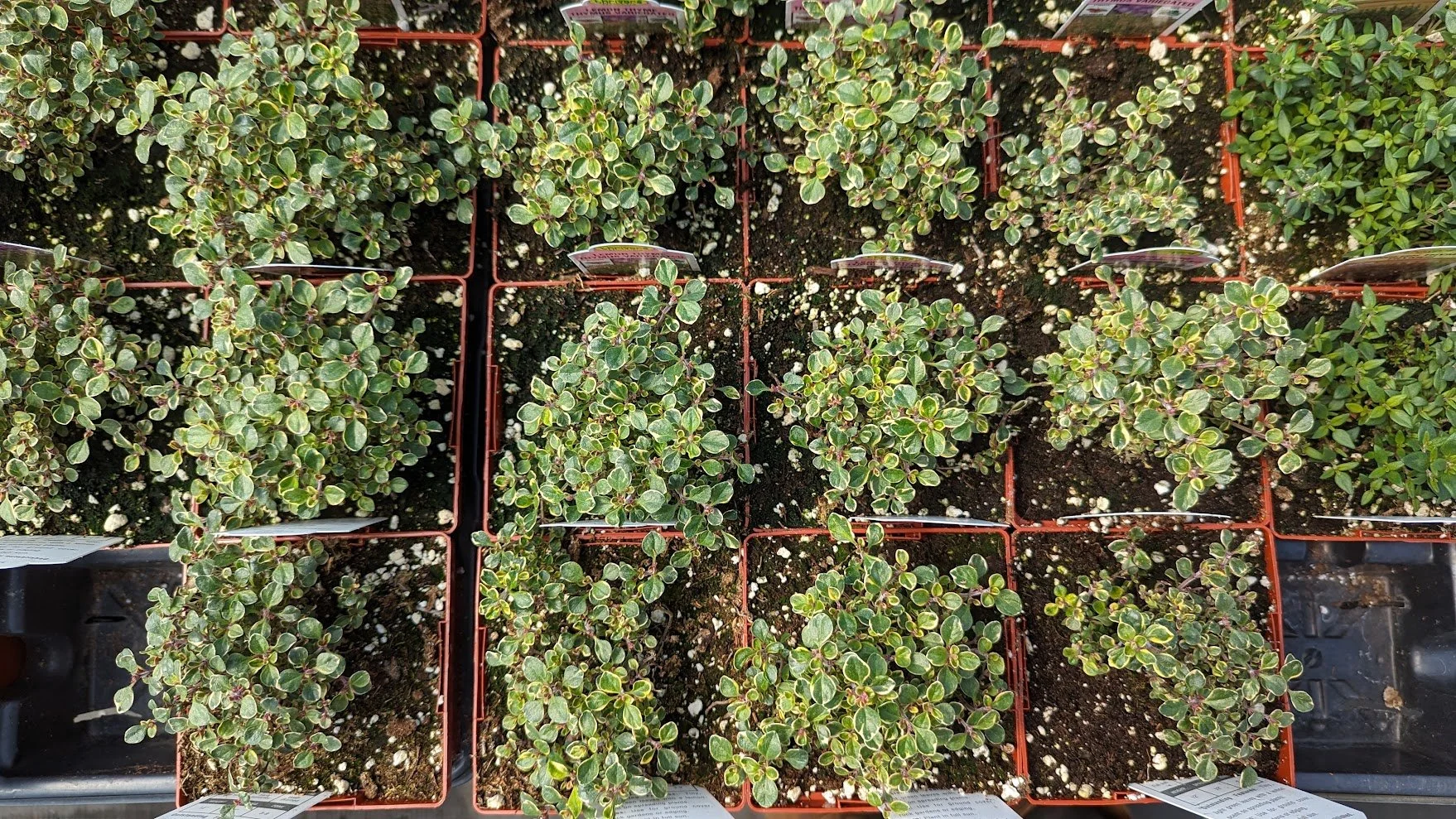
PERENNIAL HERBS: Thyme. Sage, Mint, Tarragon, Savory and Lemon Balm

Eat Local Grow It in Your Own Backyard!

There’s nothing fresher than harvesting your own greens straight from the garden. Start early, plant with care, and enjoy delicious, homegrown goodness all season long!

SPRING CHECKLIST
MARCH GARDEN TIPS
In MARCH, VEGETABLE GARDENS, FIELD NOTES Tags cool weather vegetables, lettuces, mustard greens, cool weather veggies, leafy greens, onions, seeds
Comment

HARDY ANNUALS

March 17, 2026 Karen Logan

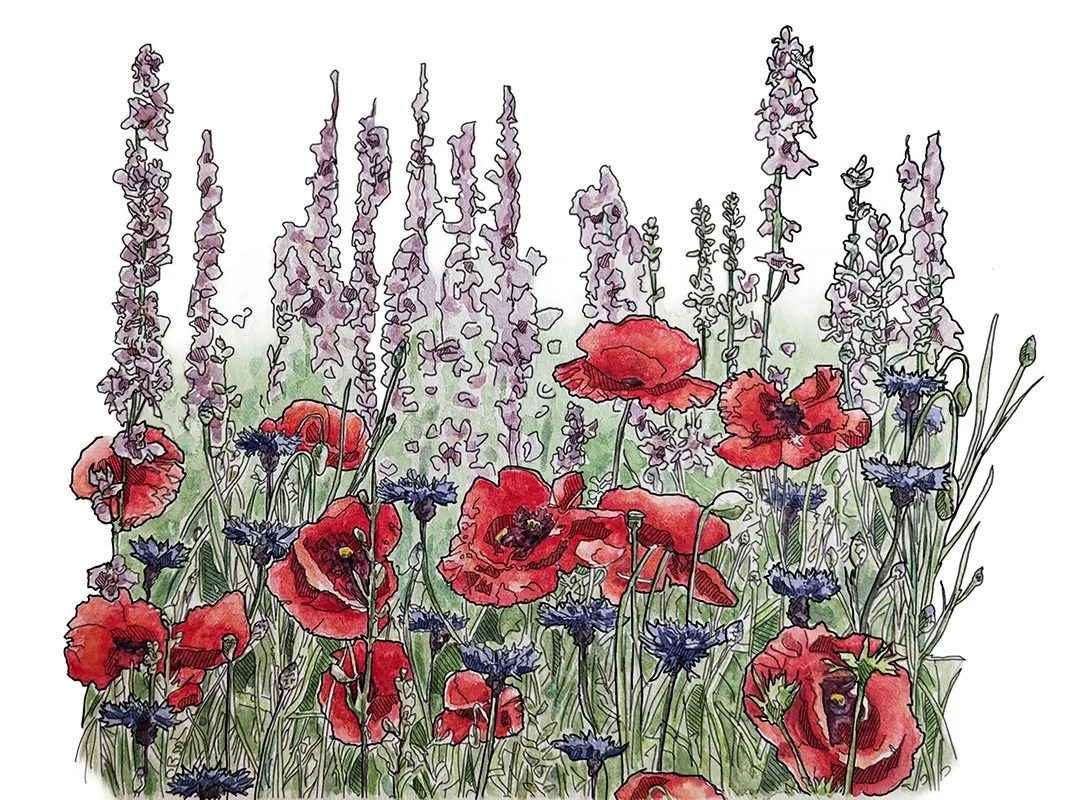
Hardy Annuals: Ladybird Poppies, Cornflower, Larkspur [illustration by karen blackerby logan]

*********************

HARDY ANNUALS

The Magic of Succession Gardening

Ever notice a lull in your garden between spring’s bloom and summer’s peak? That’s where hardy annuals shine, seamlessly filling the gaps and keeping the garden alive with color and movement. This technique, known as succession gardening, ensures a continuous display while supporting pollinators.

In December, we seeded a vibrant mix of cornflowers, poppies, Queen Anne’s lace, larkspur, and sweet peas, all carefully timed to establish strong root systems before winter. With early planting (as soon as March or April), these hardy annuals burst into bloom just when the garden needs them most, creating a dynamic, ever-changing landscape. Hardy annuals bloom early and will flower through June and some into July. In addition to blooming in June, these annuals knit together a beautiful planting scheme with the evolving summer perennials.

Learn more about Andrew Wiley's poetic gardening style

Vineyard Gardens Display bed in June filled with hardy annuals and biennials

******************************

Why Hardy Annuals?

  • Extended bloom time: Last year, poppies planted on March 15 bloomed through July 4!

  • Strong root systems: Early winter seeding promotes healthier, more resilient plants.

  • Pollinator-friendly: A rich nectar source when other flowers are scarce.

  • Seamless integration: They blend naturally into garden beds as perennials take over.

******************************

Best Uses for

Hardy Annuals


🌿 GARDEN BEDS: Hardy Annuals fill empty spaces and create a natural flow with perennials. All the hardy annuals we carry are perfect for your formal or informal flower gardens, landscapes or cottage gardens.

🌿 MASS PLANTINGS: A striking, meadow-like effect with minimal effort.

🌿 CUT FLOWERS: Hardy Annuals are great cut flowers! Below is a selection that are beautiful in your garden and on your table.

  • Larkspur 

  • Sweet peas

  • Centaurea (Corn Flowers) 

  • Scabiosa 

  • Snap dragons (Antirrhinum)

  • Ammi majus/ Ammi majus 'Select White' 

  • Ammi visnaga 'Green Mist'

  • Agrostemma (Both Colors) 

  • Orlaya 

  • Papaver: You must cauterize them (burn the tip of the stem with a lighter) in order for the bloom to last longer after cut.

🌿 CONTAINERS: Hardy Annuals provide early-season lush foliage and color with a mix of tall and trailing varieties. All the hardy annuals we carry are beautiful in containers.

  • Tall Plants: Cornflowers (36”), Queen Anne’s Lace, Larkspur

  • Front of Border/Containers: Asperula orientalis ‘Cloud Nine’ (long-blooming)

  • Other Selections: Poppies, Bellis, Variegated Vinca

🌿 WINDOW BOXES: Shorter hardy annuals are great for lining the front edge of a window boxes.

  • Asperula: Bloom mid April through the end of June 

  • Papaver : Bloom May through second week of July

With a little planning, hardy annuals transform a garden’s “quiet moments” into a season of abundance.

Want to dig deeper? Explore a couple of our favorite varieties below and tips for planting success!

******************************

Available Now!

List of flowering annuals that we have grown from seed that are available now!

  • Lobularia benthamii

  • Malcolmia maritima

  • Malcolmia maritima ‘Choice Mix’

  • Mathiola bicornis

  • Nigella ‘African Bride’

  • Nigella ‘Delft Blue’

  • Nigella ‘Miss Jekyll Indigo’

  • Nigella ‘Miss Jekyll Light Blue’

  • Papaver ‘Amazing Grey’

  • Papaver ‘Angel’s Choir’

  • Papaver ‘Drama Queen’

  • Papaver ‘Hungarian Blue’

  • Papaver ‘Ladybird’

  • Papaver ‘Monet’

  • Papaver rhoeas

  • Papaver ‘Sissinghurst White’

  • Papaver ‘White Cloud’

  • Salvia coccinea

  • Salvia sclarea ‘Blue Monday’

  • Salvia viridis ‘Rose’

  • Scabiosa ‘Blue Cocade’

  • Scabiosa ‘Fata Morgana’ 

  • Agrostemma 'Ocean Pearl'

  • Ammobium grandiflorum

  • Ammi majus

  • Ammi visnaga 'Green Mist'

  • Antirrhinum ‘Black Prince’

  • Antirrhinum ‘F1 Lavender’

  • Antirrhinum ‘Potomac Cherry Rose’

  • Antirrhinum ‘Potomac Orange’

  • Antirrhinum ‘Potomac White’

  • Bellis perennis

  • Calendula ‘Neon’

  • Calendula ‘Pacific Beauty Apricot’

  • Centaurea cyanus 'Blue Boy'

  • Centaurea ‘Pinkie’

  • Dahlia coccinea

  • Daucus carota

  • Eschscholzia ‘Purple Gleam’

  • Eschscholzia ‘White Linen’

  • Foeniculum vulgare

  • Gypsophila ‘Covent Garden’

  • Larkspur 'Light Blue'

  • Linaria ‘Northern Lights’

Antirrhinum (Snapdragons) are part of the Potomac series and Centaurea cyanus (Bachelor Buttons or Cornflowers), are both excellent cut flowers.

Sweet Peas
Hardy Annual Cut Flowers
Snapdragons

******************************

VINEYARD GARDENS

DISPLAY BED

In June our display bed is in it’s full glory filled with hardy annuals and biennials. A tapestry of texture and color.

Poppy Ladybird.jpeg
IMG_1544.jpg
IMG_1549.jpg
IMG_1554.jpg
IMG_1559.jpg
IMG_1566.jpg
IMG_1573.jpg
IMG_2266[1].jpg
IMG_2396[1].jpg
IMG_2398[1].jpg
IMG_2467[1].jpg
IMG_2579[1].jpg
March Gardening Tips
Spring Checklist
In SPRING PLANTS, MARCH, ANNUALS, FIELD NOTES Tags hardy annuals, succession gardening, ladybird poppies, cornflower, sweetpeas
Comment

WITCH HAZEL

March 17, 2026 Karen Logan

******************************

WITCH HAZEL

Hamamelis × intermedia

A Four-Season

Marvel

Witch hazels are a captivating addition to any garden, offering year-round interest with their fragrant winter blooms, stunning fall color, and unique branching structure. At our nursery, we carry some of the finest cultivars of Hamamelis × intermedia: ‘Primavera,’ ‘Jelena,’ ‘Diane,’ and ‘Arnold’s Promise.’ For a beautiful display, a visit to the Polly Hill Arboretum is highly recommended, where their well-established collection showcases these plants in full bloom.

Hamamelis x intermedia 'Ostergold’ in it’s full spring glory at Poll Hill Arboretum [photo by Sofia Wiley]

******************************

Seasonal Interest

WINTER BLOOMS : One of the most enchanting qualities of Hamamelis × intermedia is its ability to bloom in mid- to late winter, long before other plants awaken from dormancy. Its delicate, ribbon-like flowers emerge in shades of yellow, copper, orange, and red, depending on the cultivar, filling the air with a sweet fragrance.

SPRING & SUMMER APPEAL : As spring arrives, witch hazels leaf out with fresh green foliage, blending seamlessly into a woodland setting. They serve as a lovely backdrop for later-blooming perennials and shrubs.

FALL COLOR : Come autumn, witch hazel foliage transforms into a vibrant display of gold, orange, and red. This seasonal transition adds another dimension to their beauty, making them a true multi-season performer.

YEAR-ROUND STRUCTURE : Even in winter, their distinctive branching pattern provides architectural interest in the landscape, making them a valuable addition for structure and texture.

Hamamelis mollis 'Princeton Gold' [photo by Sofia Wiley]

Hamamelis x intermedia 'Aphrodite' [photo by Sofia Wiley]

Hamamelis x intermedia 'Angelly' [photo by Sofia Wiley]

******************************

Growing & Care

  • Sunlight: Best flowering occurs in full sun, but witch hazels can also tolerate partial shade.

  • Soil: Prefers moist, acidic, and organically rich soils for optimal growth.

  • Watering: Keep the soil consistently moist, especially in dry periods.

  • Pruning: Minimal pruning is needed—just remove dead or crossing branches to maintain shape.

  • Spacing: These shrubs can spread 10-15 feet wide, so allow ample room for growth.

    ******************************

Low Maintenance

While Hamamelis × intermedia is not native, it does not self-seed or become invasive, making it a responsible choice for gardens that prioritize ecological harmony. It thrives in woodland settings, blending beautifully with native trees and shrubs while providing a much-needed splash of color during the bleakest months of the year.

Hamamelis mollis 'Princeton Gold' [photo by Sofia Wiley]

Hamamelis x intermedia 'Ostergold [photo by Sofia Wiley]

Hamamelis ‘Arnold’s Promise’ available at Vineyard Gardens [photo by Sofia Wiley]

Stop by Vineyard Gardens to explore our selection and then take a trip to the Polly Hill Arboretum to witness these stunning plants in full bloom!

******************************

Learn About : HARDY ANNUALS
In MARCH, TREES, NATIVE PLANTS, POLLINATORS, PLANT PROFILES Tags Witch Hazel, Hamamelis × intermedia, Polly Hill Arboretum, Spring flowering trees
Comment

NARCISSUS

March 16, 2026 Karen Logan

Narcissus poeticus ‘Pheasants Eye’ illustration by karen blackerby logan

NARCISSUS

(DAFFODIL)

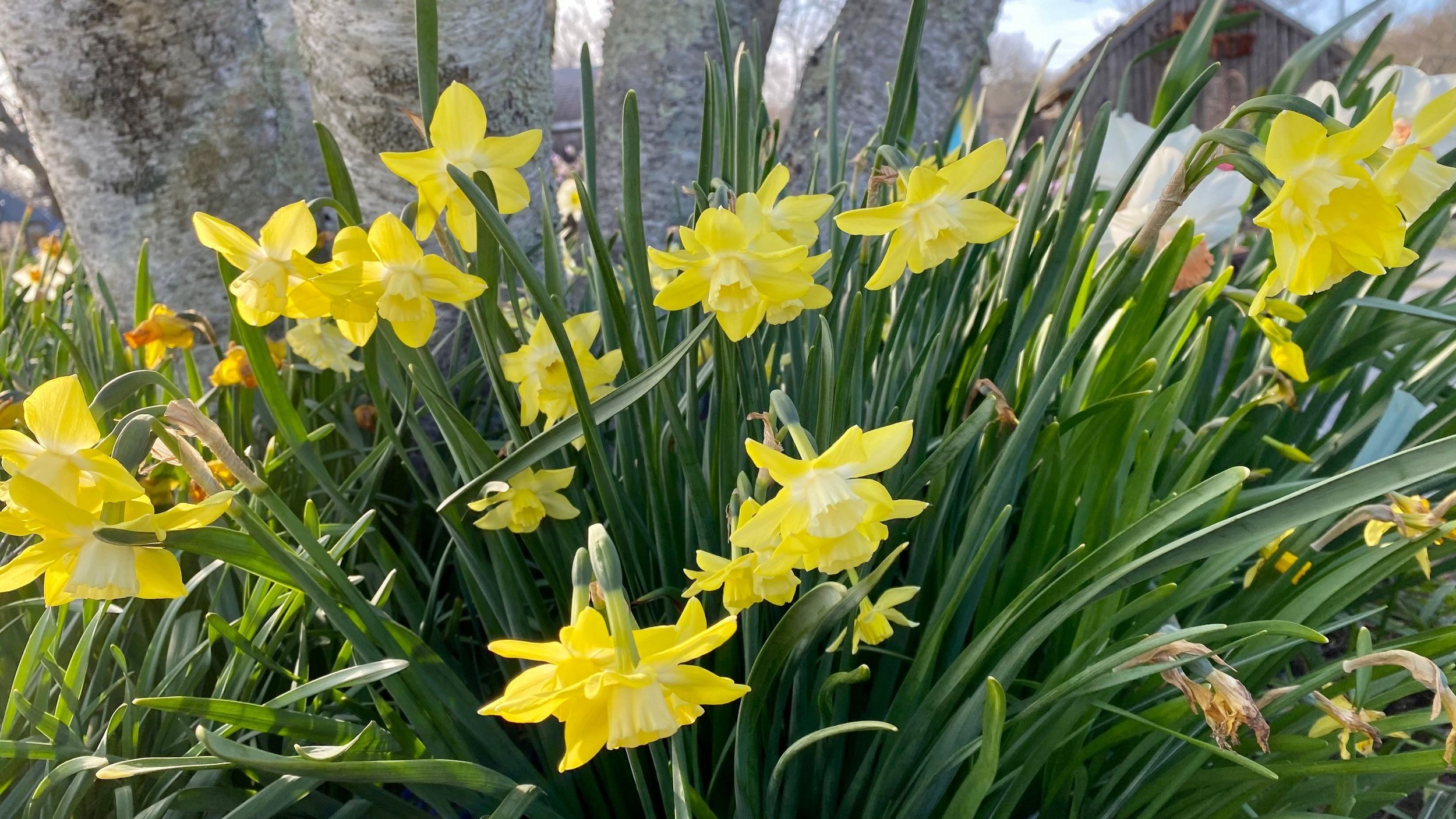
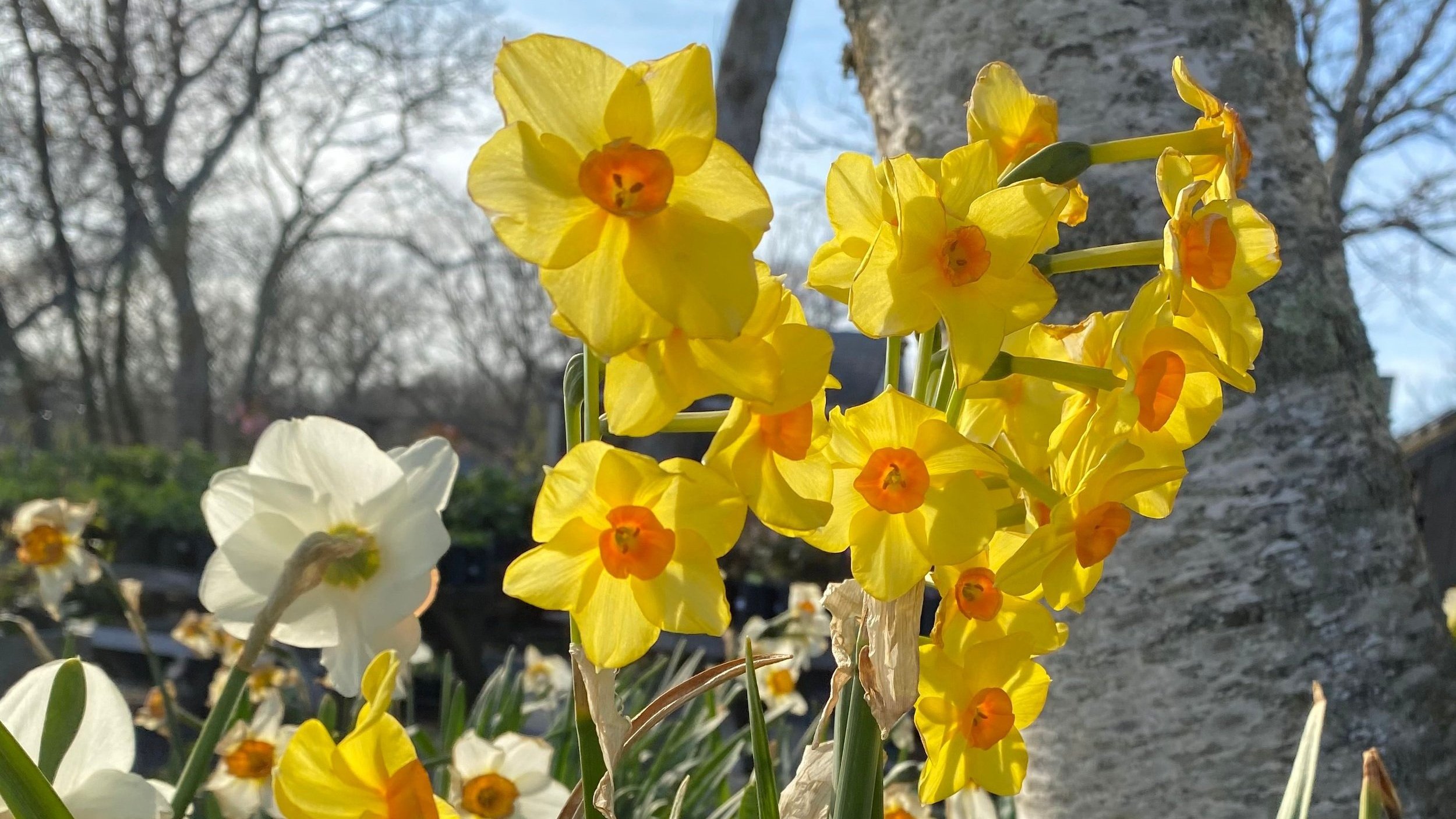
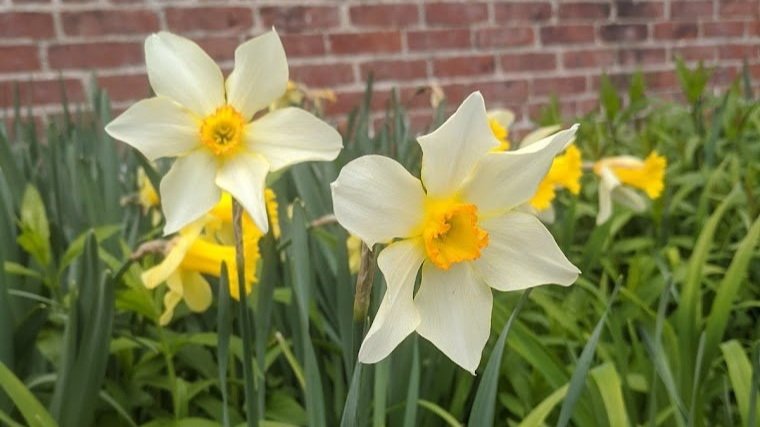
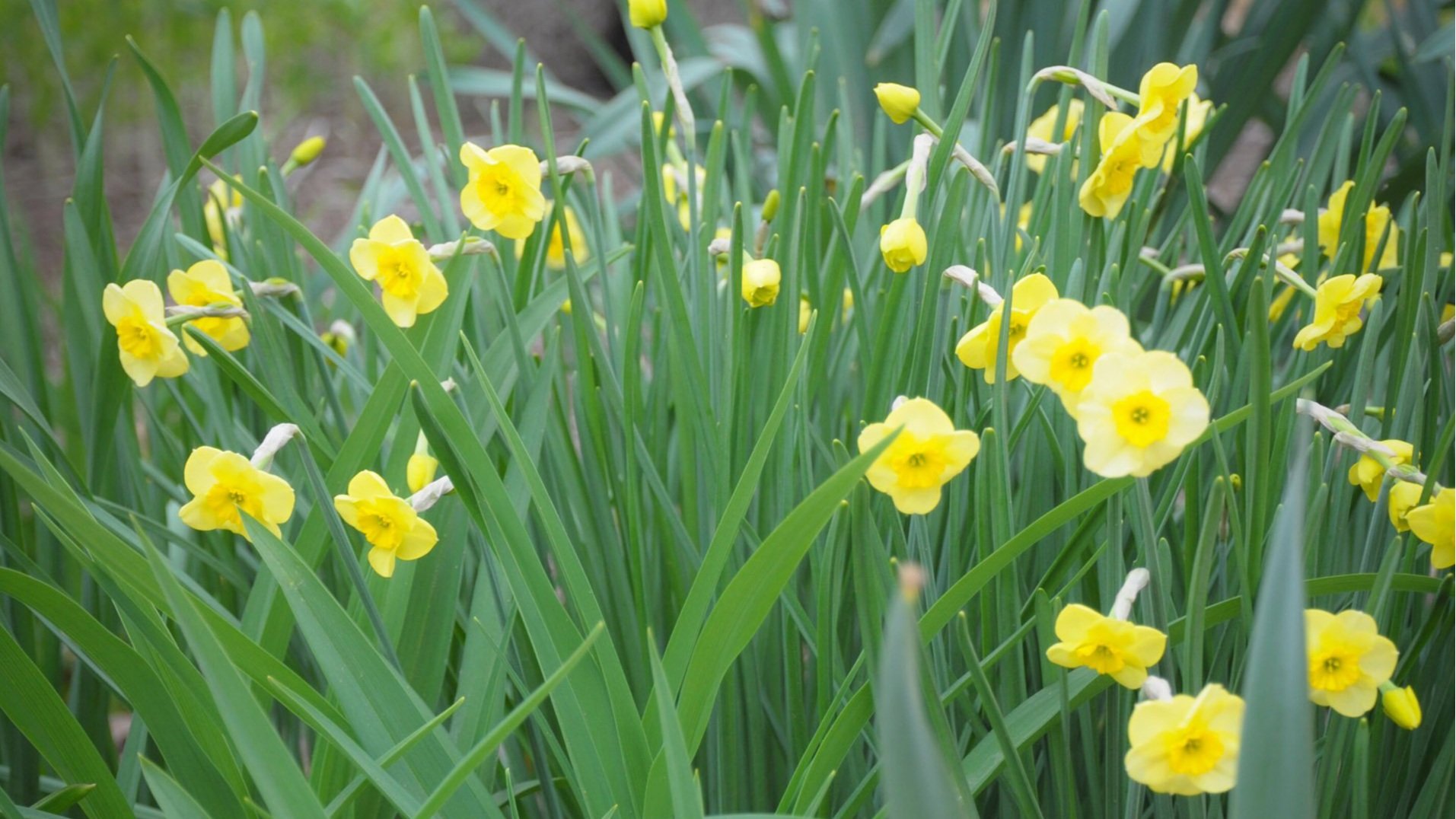
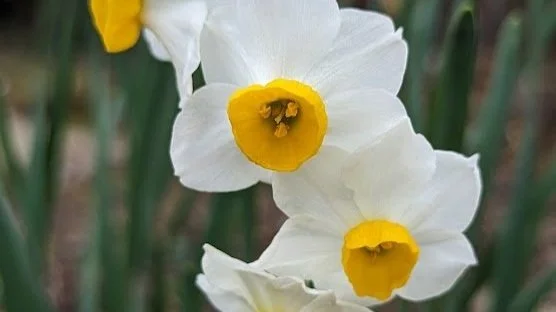
Narcissus, commonly called Daffodils, are hardy spring flowering perennials that come back year after year. They are harbingers of spring, announcing that winter is coming to an end. The large, yellow common daffodil is one of the most ubiquitous springtime plants. There are 40 different species of Narcissus varying in size and ranging in color from white to yellow. They are a great cut flower.

“Plant daffodils, tulips, hyacinths, and crocuses together at the edge of a path or walkway. As the flowers bloom in succession, they’ll mask each other’s dying foliage.” Gardenista

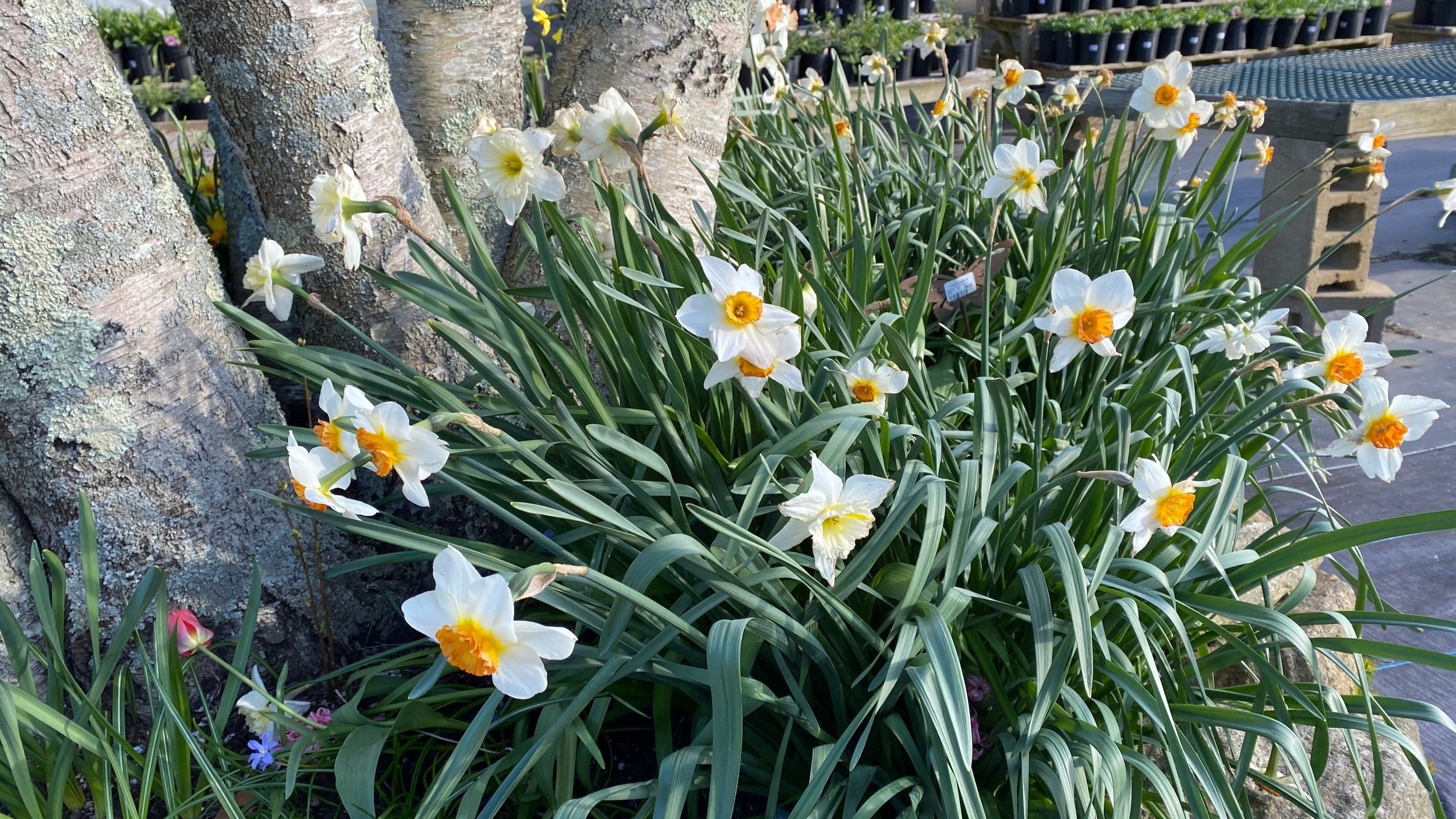
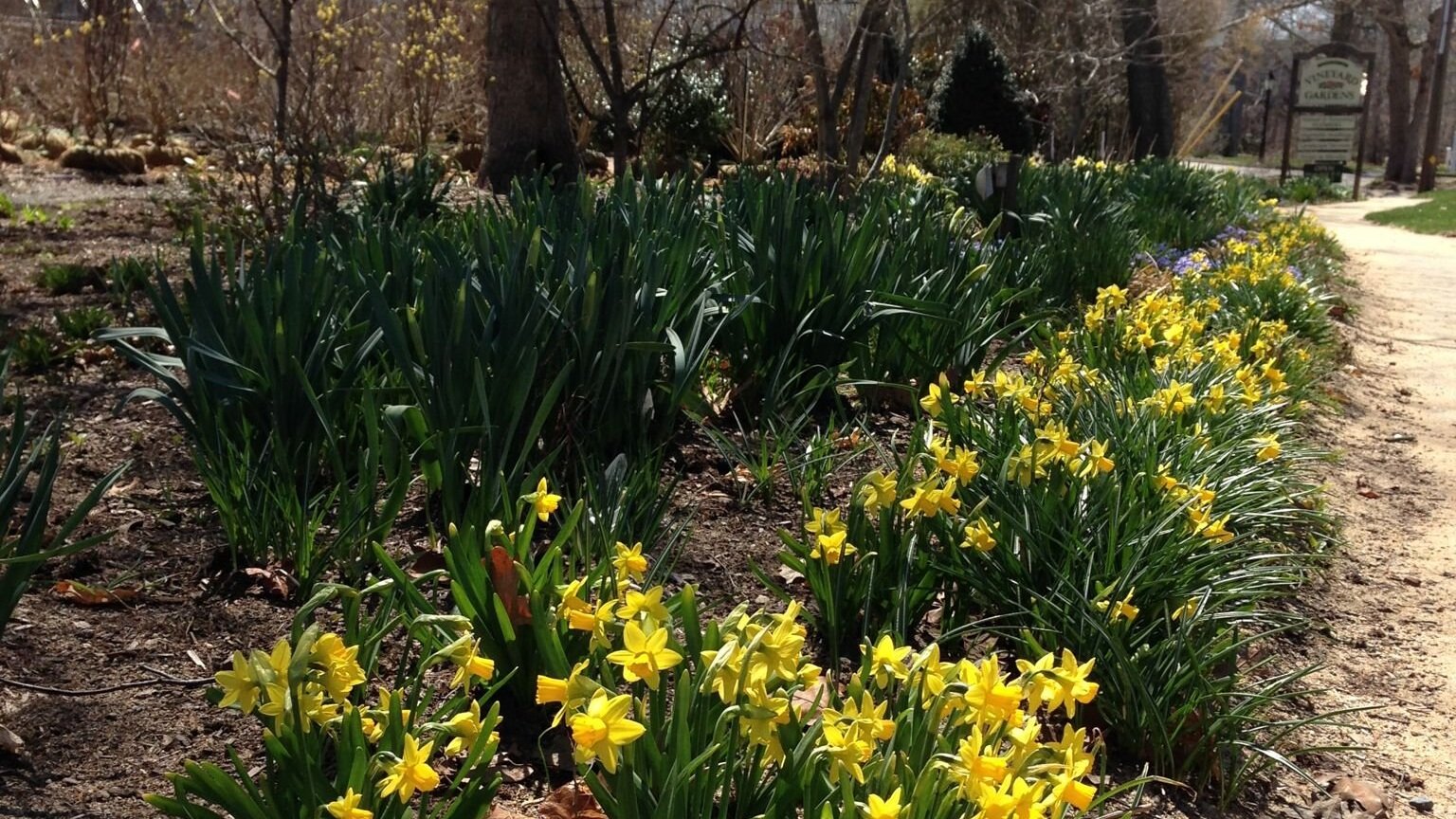
Vineyard Gardens Nursery Front Garden Bed filled with Narcissus

*****************

GROWING CONDITIONS & CARE

Narcissus are spring blooming bulbs that are best planted in September or October. They go dormant in the winter and will bloom year after year while multiplying.

  • Flowering bulbs best to plant in autumn

  • Light: Sun or some shade

  • Plant in clumps in well drained soil

  • Deer resistant!!

  • Flowers should be removed (deadheaded) as they fade.

  • After flowering, let the leaves die down naturally for at least six weeks before removal.

daffodils+tete+e+tete.jpg
daffodils.jpg
daffodils2.jpg
daffodils3.jpg
IMG_20220417_131148.jpg
RDHk_F59.jpg
daffodils.jpg
4O5GcDRX.jpg
daffodils+tete+e+tete.jpg daffodils.jpg daffodils2.jpg daffodils3.jpg IMG_20220417_131148.jpg RDHk_F59.jpg daffodils.jpg 4O5GcDRX.jpg

*****************

NARCISSUS AVAILABLE AT VINEYARD GARDENS THIS YEAR

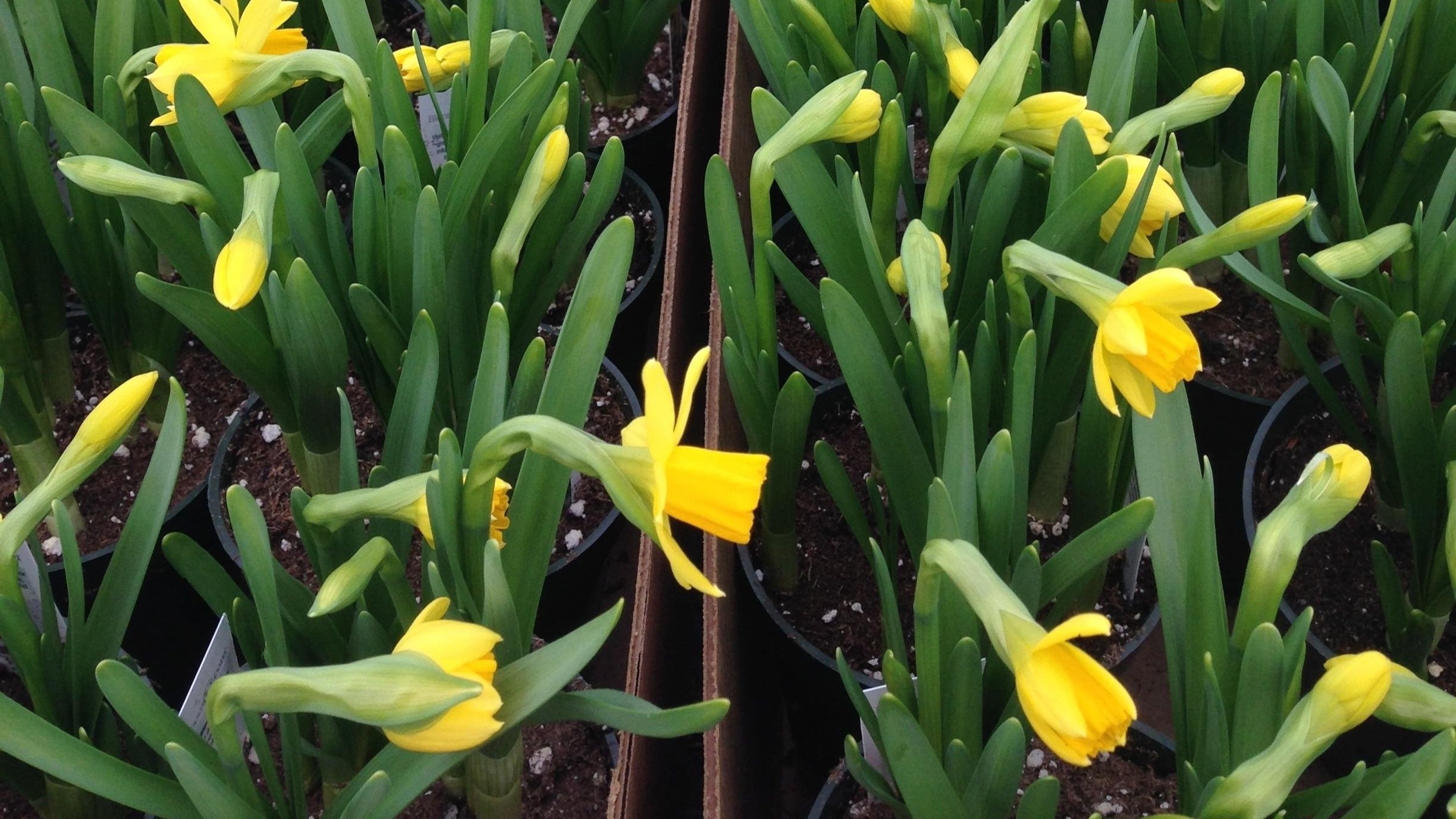
Our Netherland forced bulbs that we potted up in the fall are now available!

  • Narcissus Red Devon

  • Narcissus Double Flowering 'Tahiti'

  • Narcissus cyclamineus 'Jetfire'

  • Narcissus ‘Tete e tete’

  • Narcissus Trumpet 'Dutch Master'

  • Narcissus Fortune

  • Narcissus Large Cupped 'Ice Follies'

We have a lot of the Dutch master variety available!

Narcissus Trumpet 'Dutch Master'

Narcissus Large Cupped 'Ice Follies'

Narcissus cyclamineus 'Jetfire'

Narcissus Double Flowering 'Tahiti'

SUCCESSION GARDENING
MARCH GARDEN TIPS

HAPPY GARDENING!

In SPRING PLANTS, DEER RESISTANT, MARCH, PLANT PROFILES Tags Daffodils, Narcissus, spring perennials, fall planted bulbs
Comment

SUCCESSION GARDENING

March 15, 2026 Karen Logan

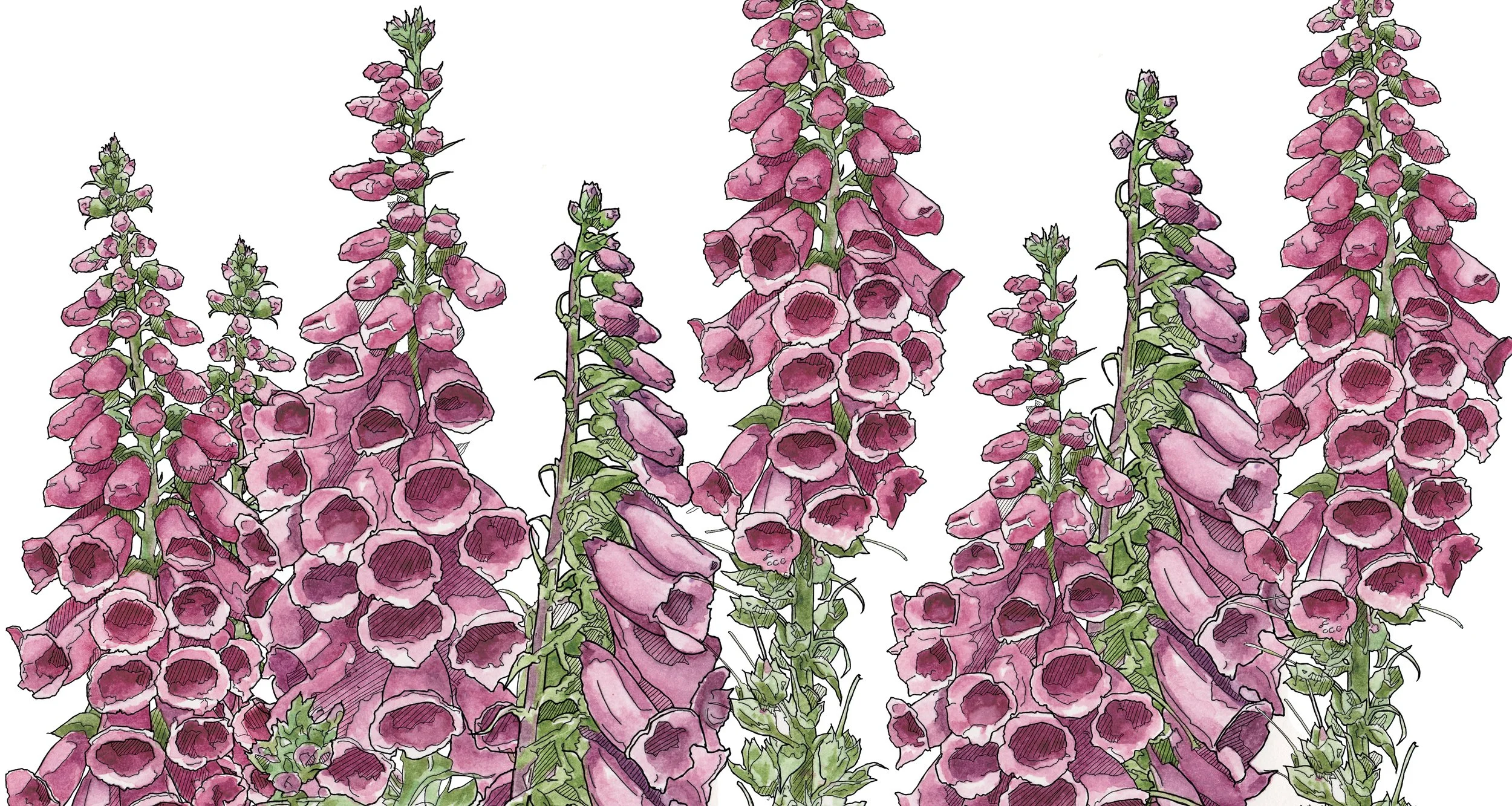
Digitalis purpurea illustration by karen blackerby logan

SUCCESSION

GARDENING

*********************

There is a time in early summer when groups of perennials are either ending their season or just starting their growth spurts. During this ‘in-between’ period in June, the addition of hardy annuals effectively bridges the blooming gap filling in the empty space of spent perennials. This strategic planting is known as succession gardening, a layered gardening style that has continuous blooms throughout the season. Succession gardening breathes more color, cut flowers, birds and bees into the garden.

Vineyard Gardens Nursery

We seeded an assortment of hardy annuals last fall, such as Cornflowers (Centaurea cyanus), Ladybird poppies (Papaver commutatum), Rose of Heaven (Silene ‘Blue Angel’), Larkspurs, Feverfew, Queen Anne’s Lace (Ammi Majus), Snapdragons (Antirrhinum) and some biennials like Lychnis coronaria, Digitalis purpurea (hybrids) and Verbascums that bloom early and will flower through June and some into July. In addition to blooming in June, these annuals knit together a beautiful planting scheme with the evolving summer perennials.

Hardy annuals can be used both in formal gardens and natural settings.

Digitalis purpurea

Feverfew

Verbascum thapsis

SUCCESSION GARDENING TIPS

*********************

The flowers of hardy annuals can occupy negative space in June and then the foliage of neighboring perennials fill that space in July.

  • Hardy annuals are best planted early, typically around mid march, depending on the weather. Planted early they will give you the maximum desired effect.

  • Vineyard Gardens has a great selection of our fall sown hardy annuals that are available now and ready to plant.

  • These plants can be directly sown in the spring but will not give you the size, vigor or highly anticipated jaw dropping display due to the warmer temperatures as spring progresses.

Alternatively, hardy annuals can be removed in July and replaced with tender annuals.

Tender annuals include Cosmos, Dahlias, Tagetes, Browalia, Ageratum, Coleus, Impatiens or Cleome. 

*********************

Cornflowers (Centaurea cyanus)

Verbascum thapsis

Digitalis purpurea ‘Apricot’

SUCCESSION PLANTING - GREAT DIXTER
MARCH GARDEN TIPS

Digitalis purpurea 'Cream'

In GARDEN TIPS, MARCH, ANNUALS, FIELD NOTES Tags hardy annuals, succession gardening, Digitalis purpurea
Comment

SWEET PEAS

March 14, 2026 Karen Logan

Sweet Peas [illustration by karen blackerby logan}

SWEET PEAS

Lathyrus odoratus 

A Fragrant Climbing Favorite

Sweet peas are a hardy annual that thrive in cool weather and full sun, producing an abundance of blooms from late spring through fall. Their delicate tendrils eagerly climb trellises, fences, or arbors, bringing vibrant color and a light, sweet fragrance to the garden. Reminiscent of classic cottage gardens, their scent and charm make them a favorite among gardeners and flower lovers alike.

Part of Andrew Wiley’s Hardy Annual Seed Project, these sweet peas were sown in the fall to develop stronger roots, resulting in longer-lasting flowers and a more robust growing season. Regular watering, deadheading, and support for climbing will keep them flourishing. When plants reach about 8 inches tall, pinching the central stem encourages more branching and fuller growth.

A top choice for cut flowers, sweet peas look stunning in bouquets and bloom more when harvested regularly. Whether left to climb in the garden or brought indoors, they bring beauty and fragrance wherever they grow.

SWEET PEAS A GREAT CHOICE FOR CUT FLOWERS!

Sweet Pea Zinfandel

Sweet Pea High Scent

Sweeet Pea April in Paris

*****************************

SOWING

SWEET PEAS

Follow these simple steps to set your plants up for success.

1. Prepare the Soil

  • Dig a large hole and mix in plenty of compost. Sweet peas thrive in rich, well-draining soil.

  • Choose a sunny spot for the best growth and yield.

2. Planting & Supporting

  • For best results, plant sweet pea seedlings before they become root-bound to avoid root disturbance.

  • Provide a support structure like bamboo canes or trellises to help vines climb.

3. Water & Feed

  • Keep soil consistently moist, but not waterlogged, especially as plants begin to grow and flower.

  • Apply a balanced fertilizer regularly. Peas are heavy feeders and need extra nutrients to thrive.

4. Maintenance for Continuous Growth

  • Deadhead (remove spent blooms) from sweet peas to encourage flowering into late summer or even fall.

  • Cut Sweet Peas frequently to keep plants producing.

WITH PROPER CARE, YOUR SWEET PEAS WILL REWARD YOU WITH LUSH BLOOMS ALL SEASON LONG!

*****************************

NOW AVAILABLE!

A variety of hardy annual Sweet Pea seedlings Andrew sowed in the fall are now ready to be planted out!

High Scent

Cupanis Original

Elegance Lavender

April in Paris

Raspberry Twirl

Queen of Hearts

Mermaids Dream

Enchante

Zinfandel

Royal Wedding

Watermelon

Strawberry Fields

*****************************

MARCH GARDEN TIPS
SPRING CHECKLIST
In ANNUALS, MARCH, PLANT PROFILES Tags spring blooms, hardy annuals, sweet peas
Comment

HELLEBORE

March 13, 2026 Karen Logan

HELLEBORES

LENTEN ROSE

*********************

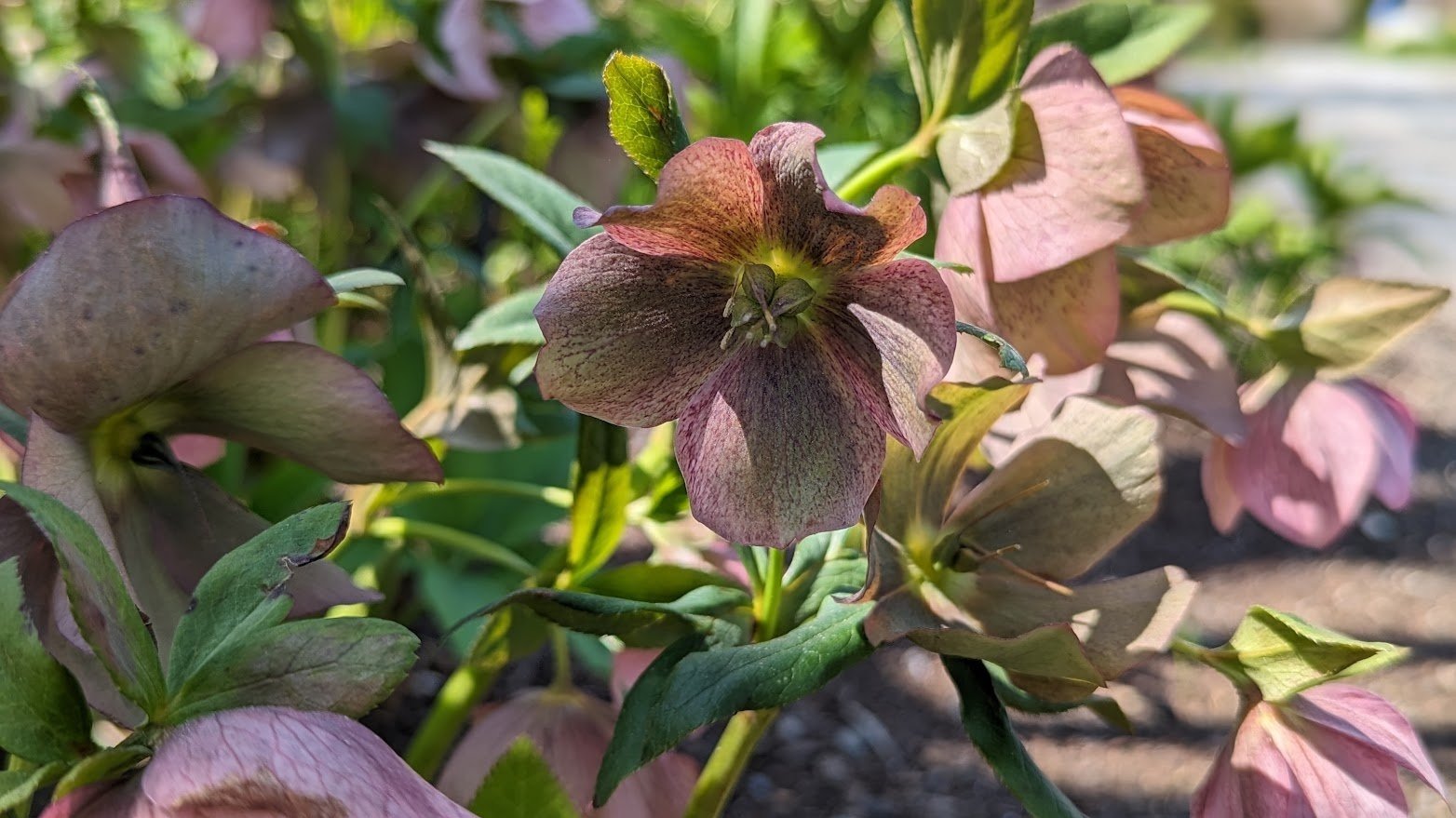
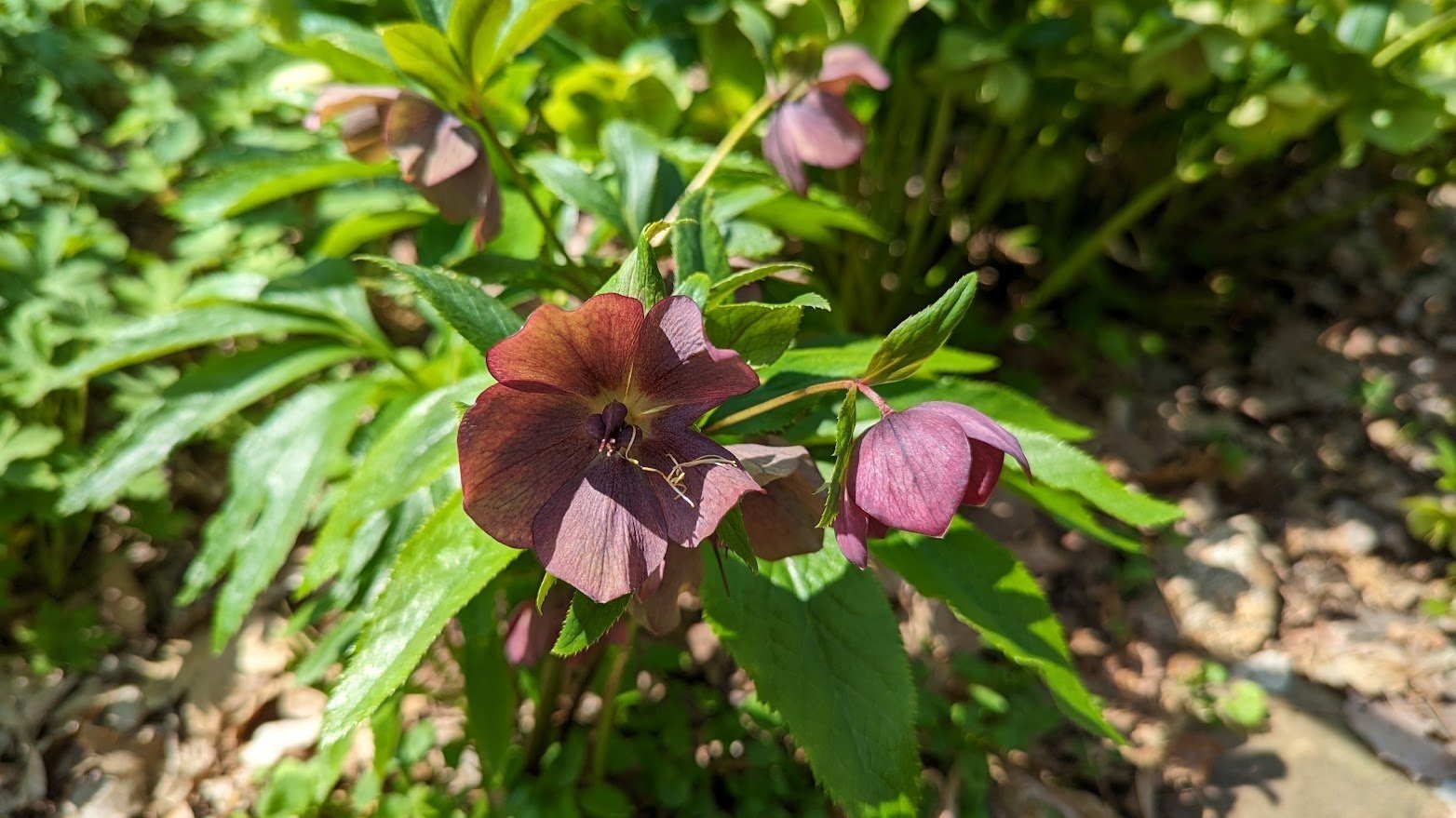
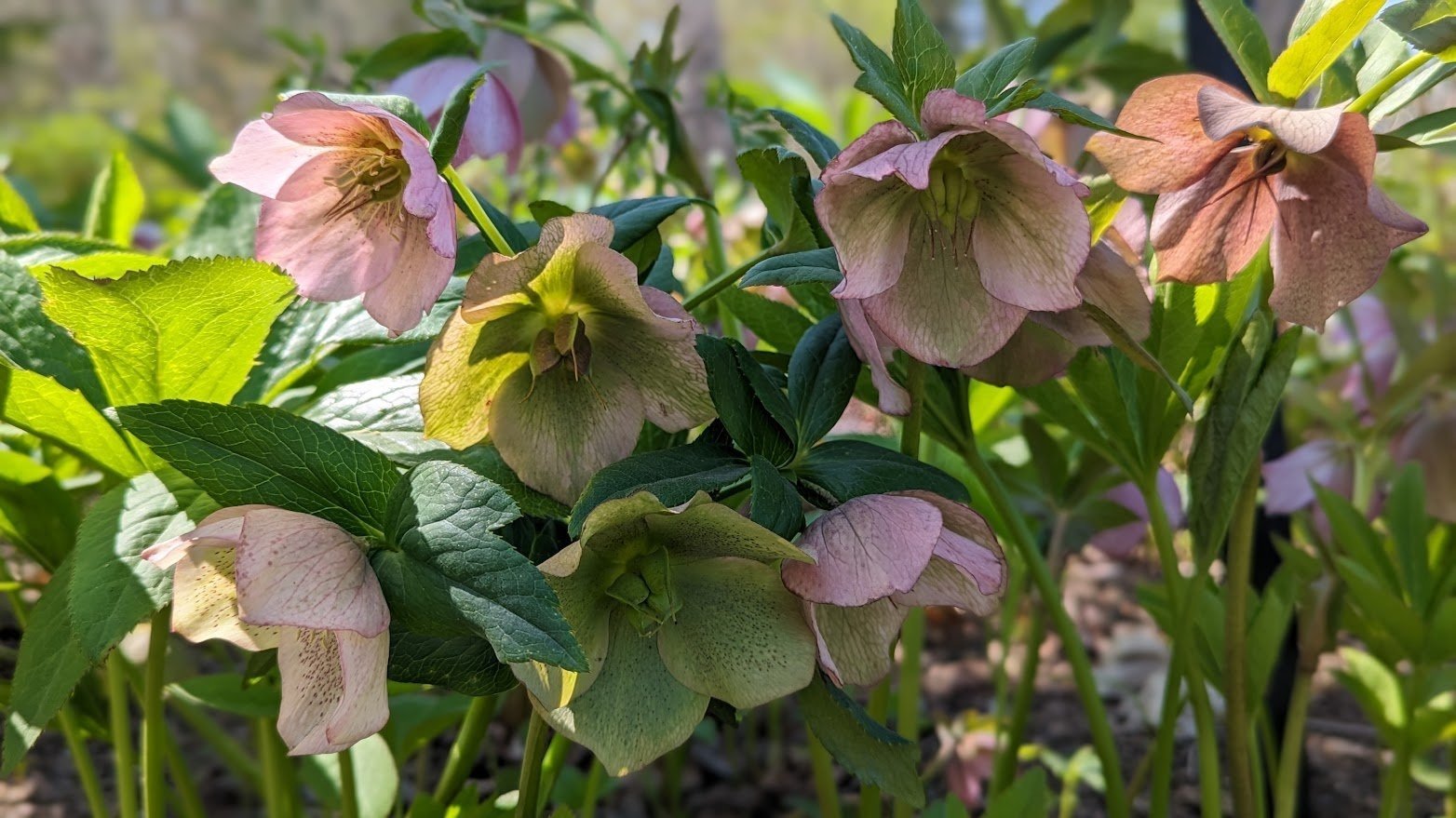
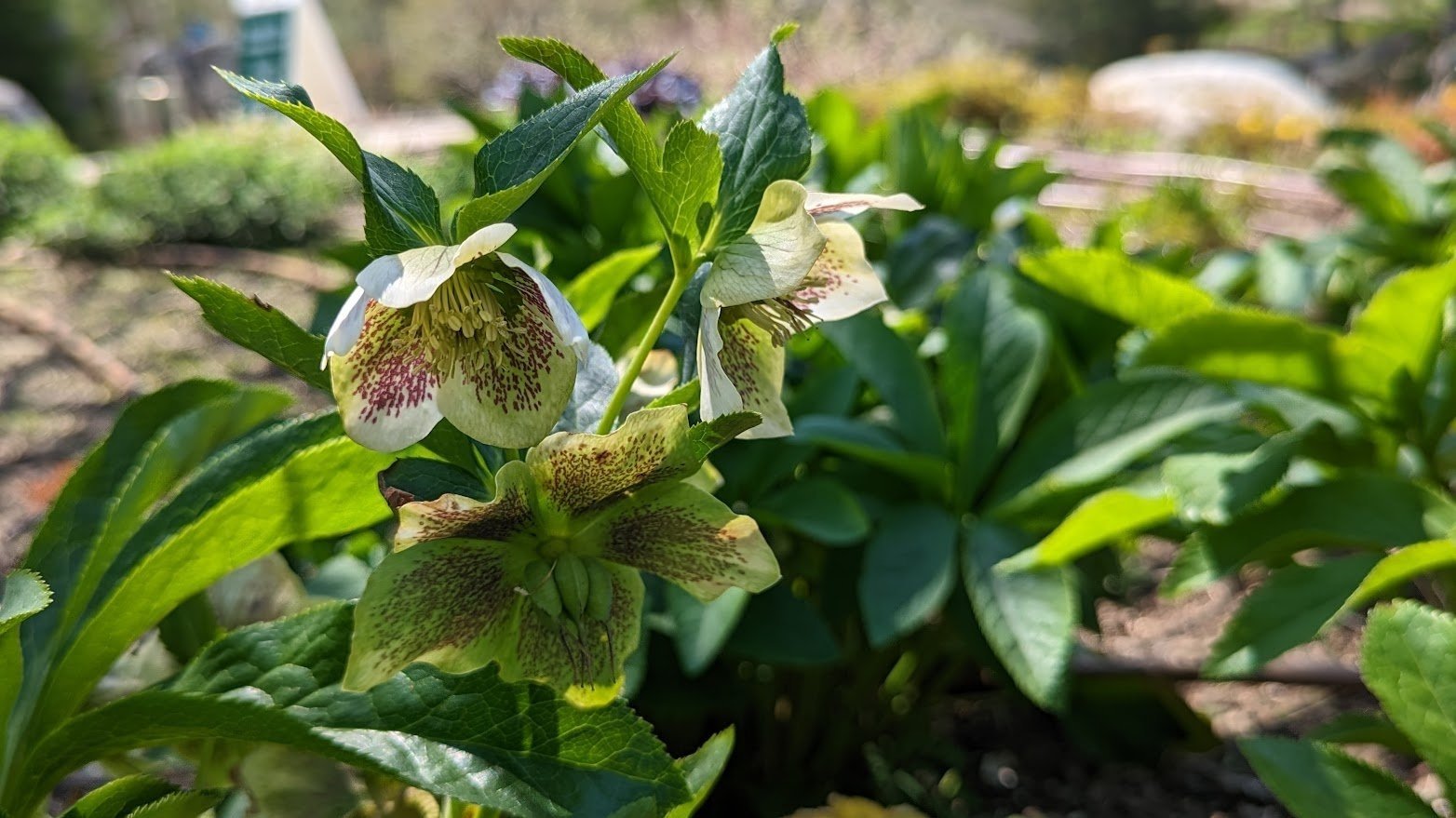
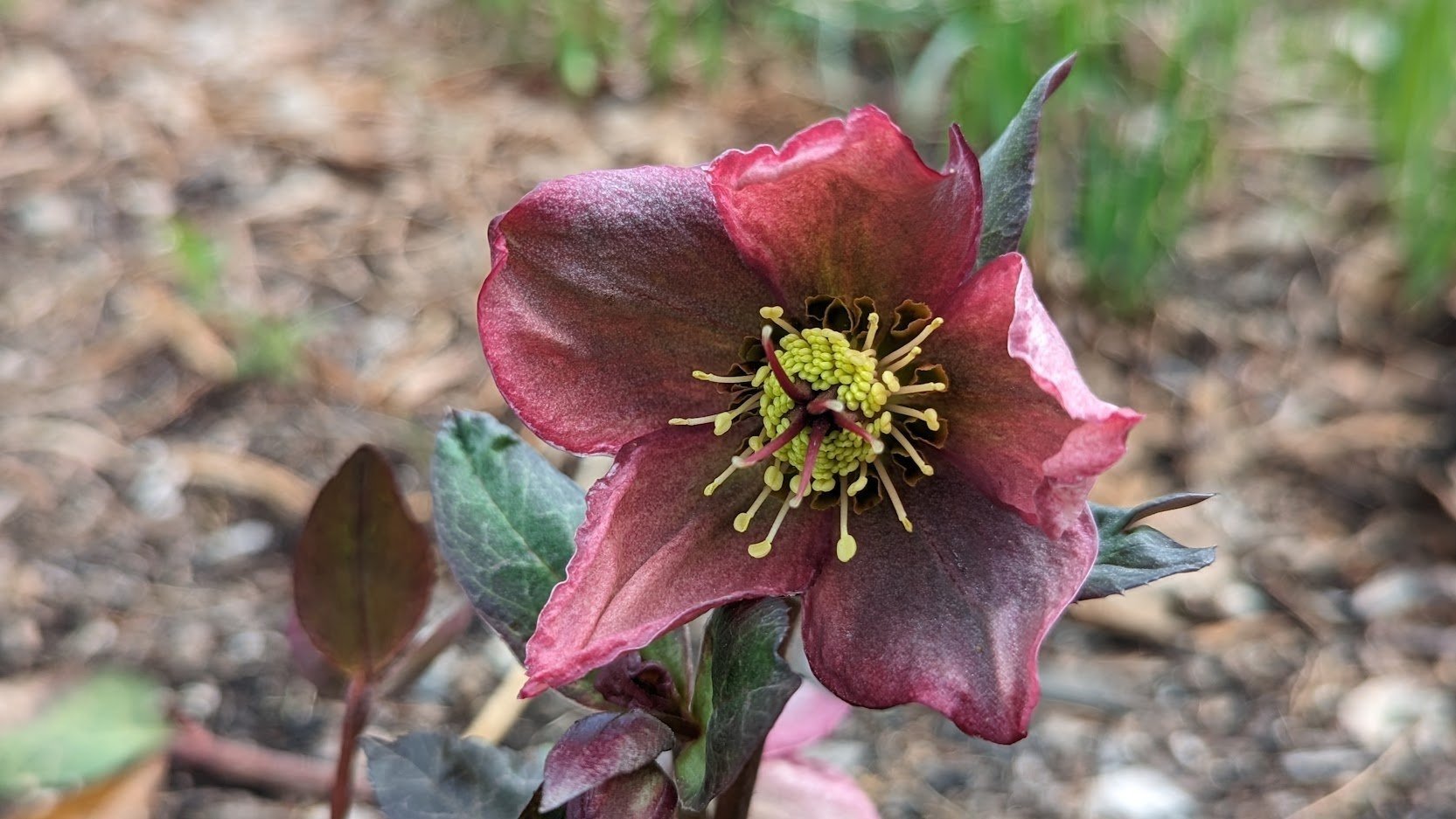
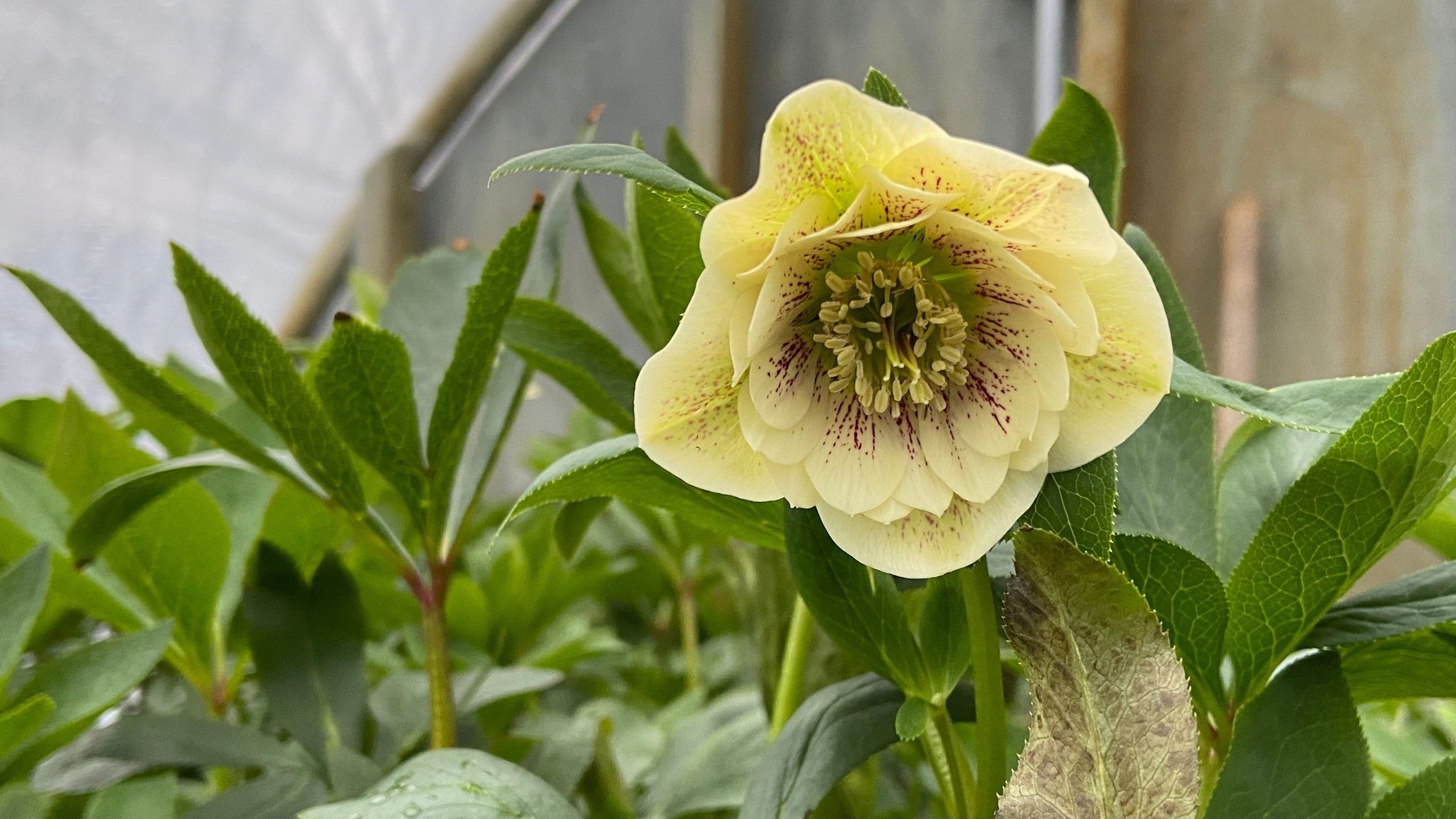
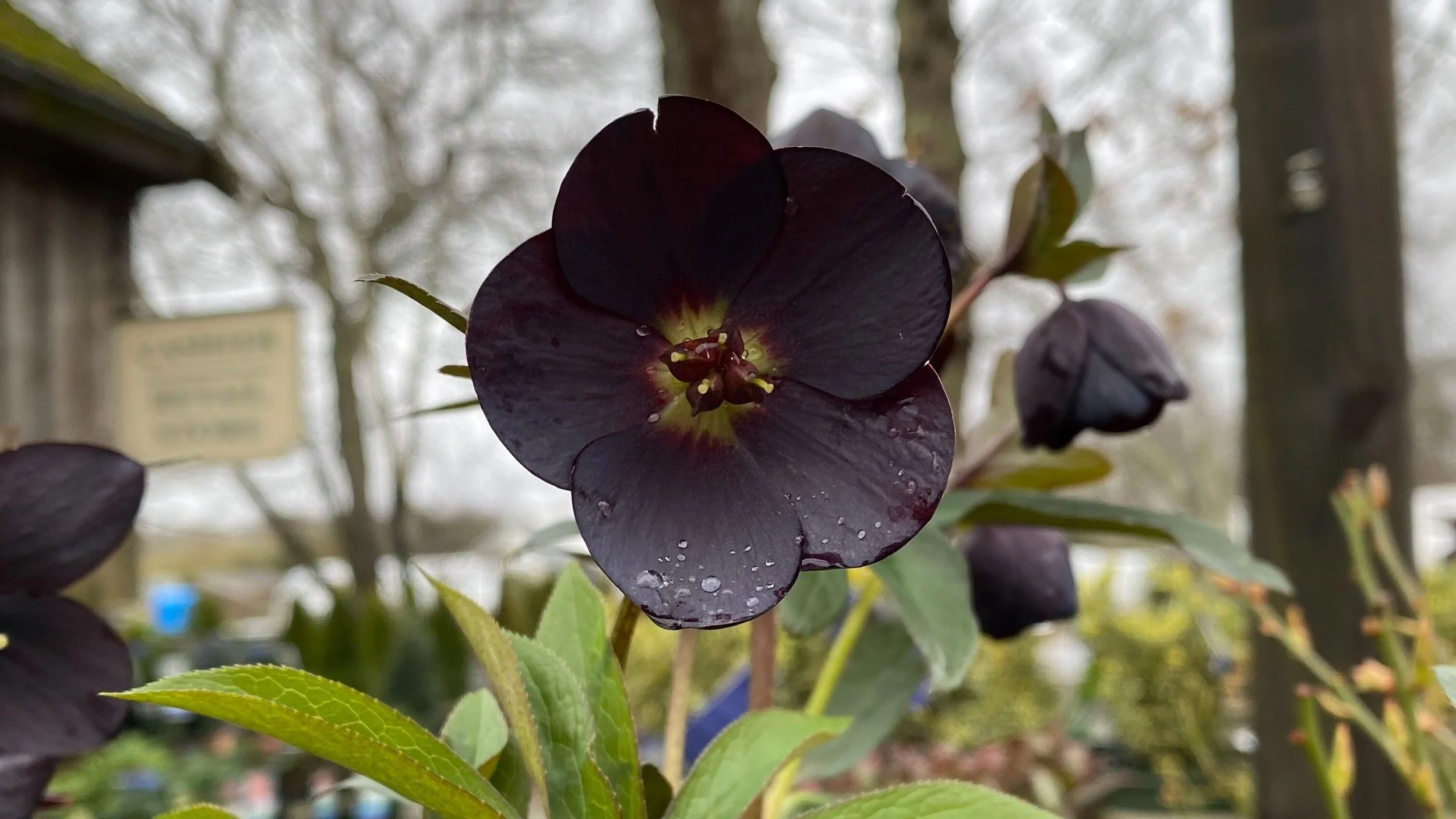
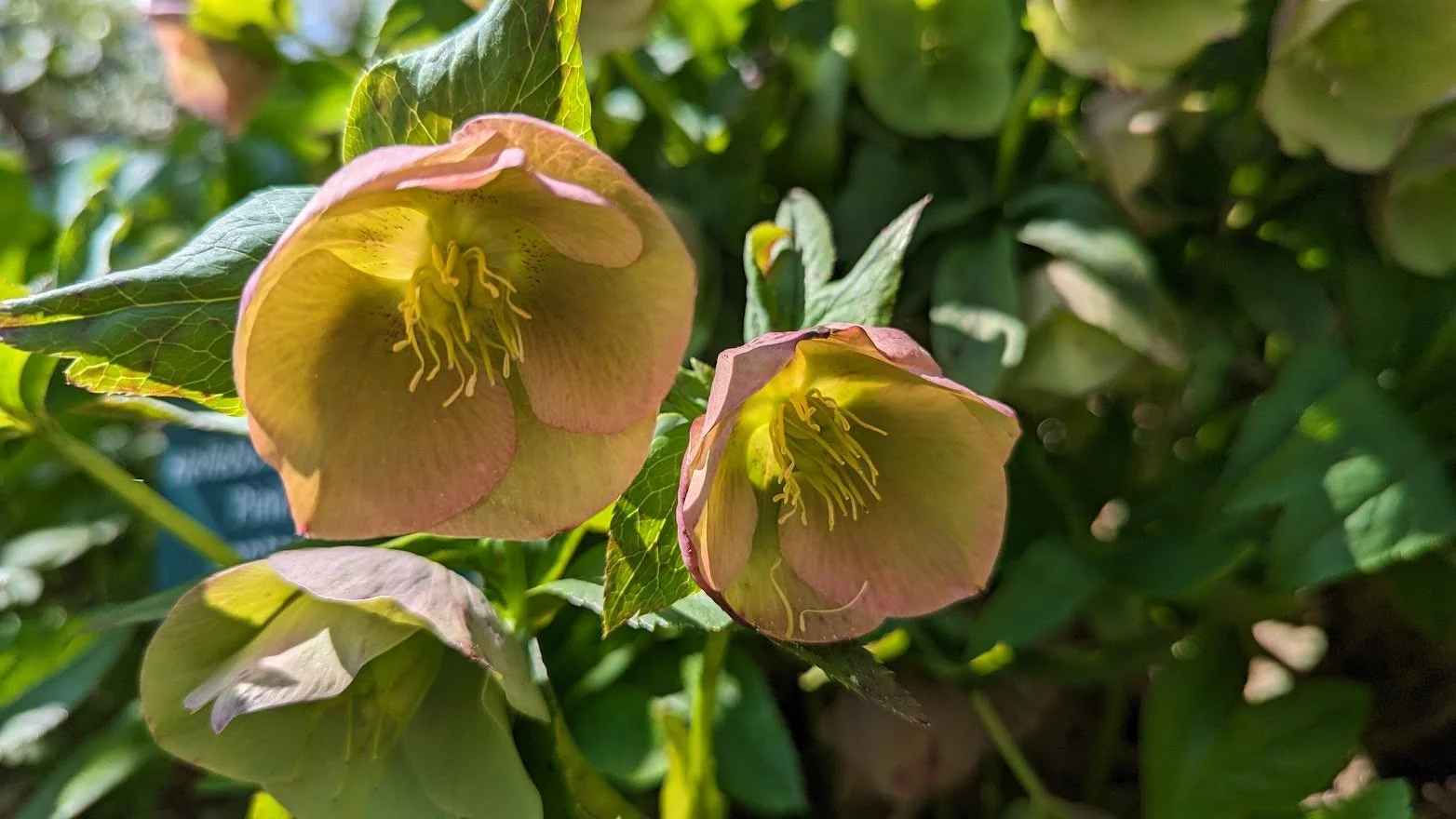
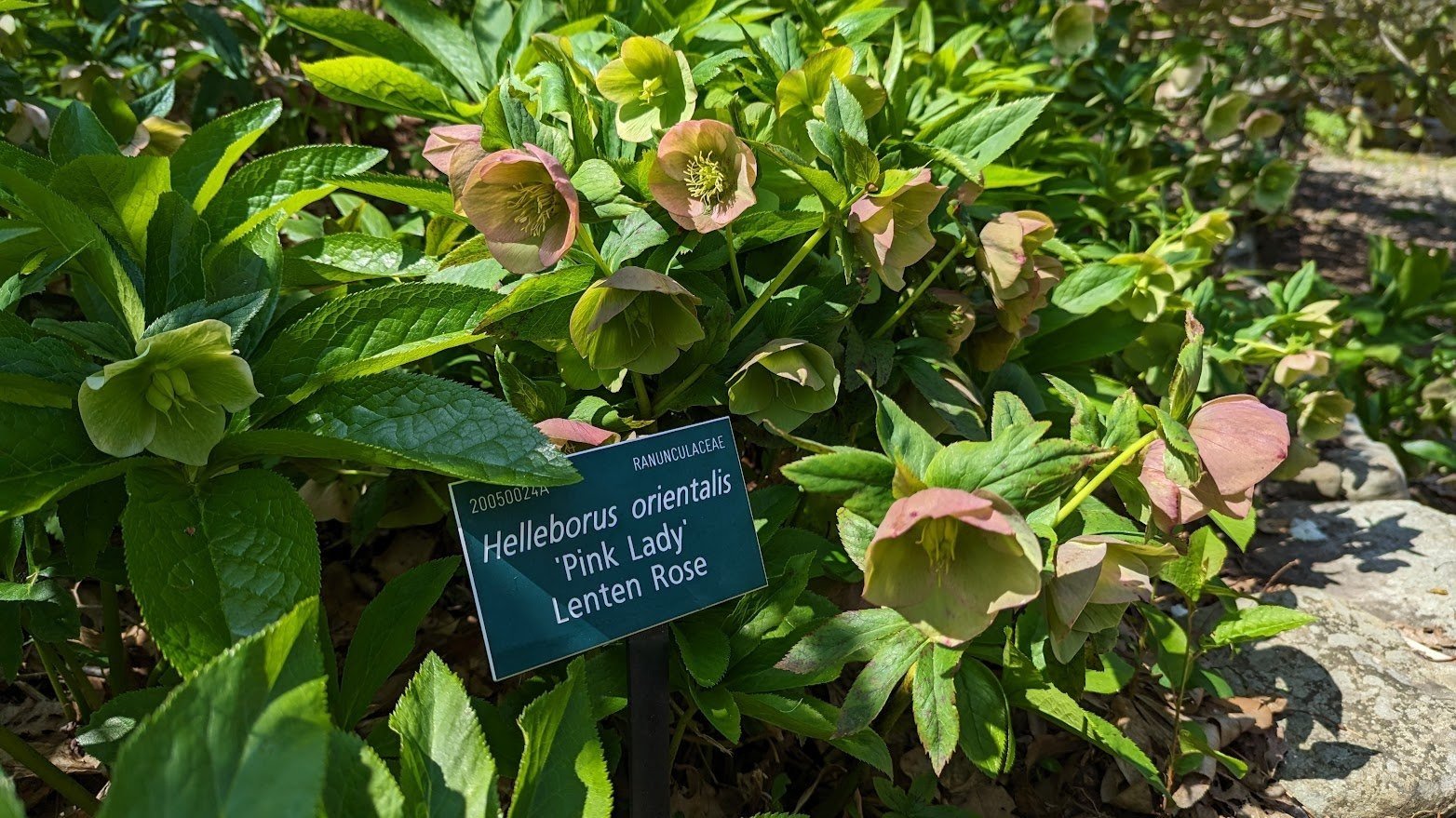
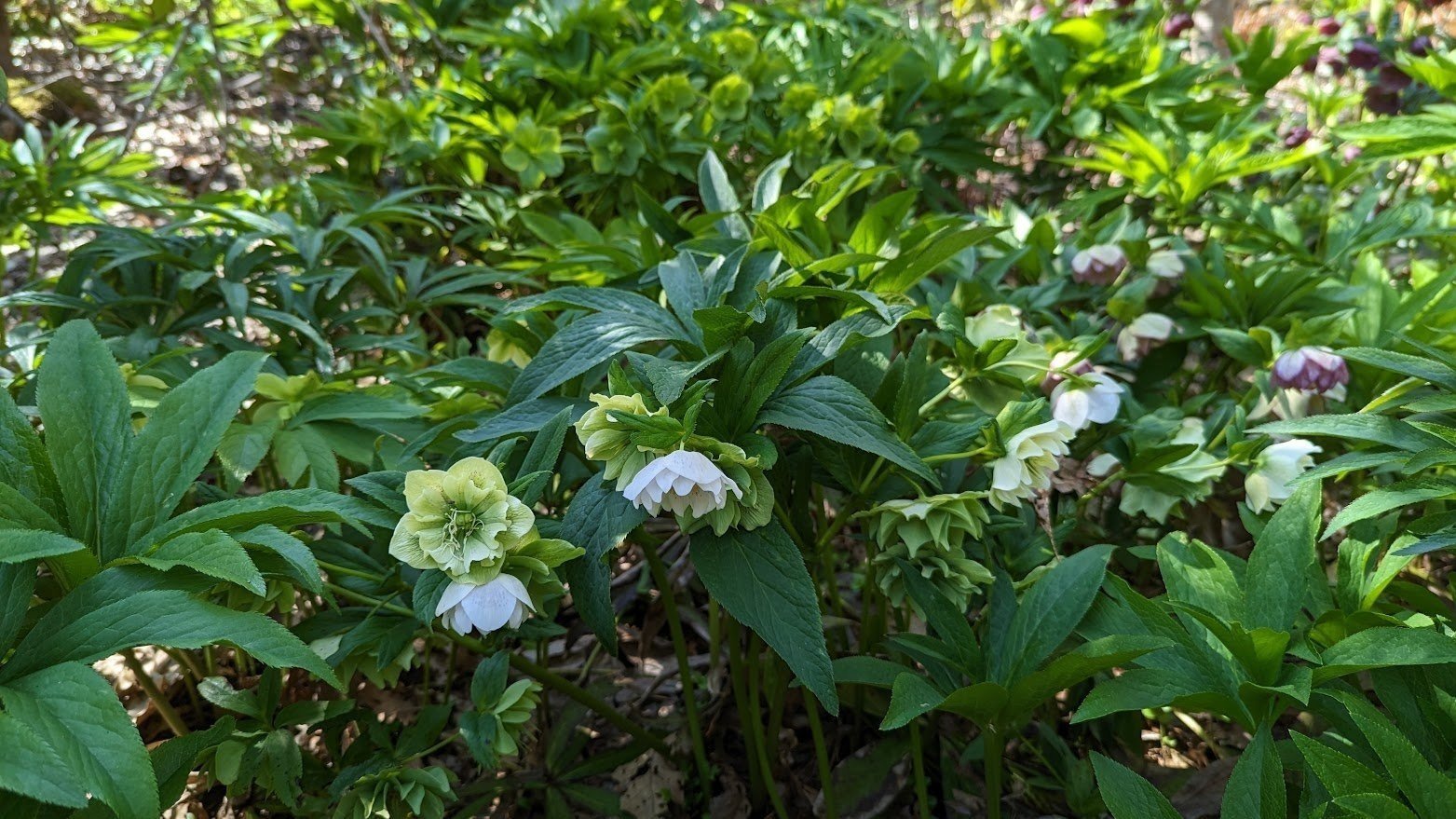
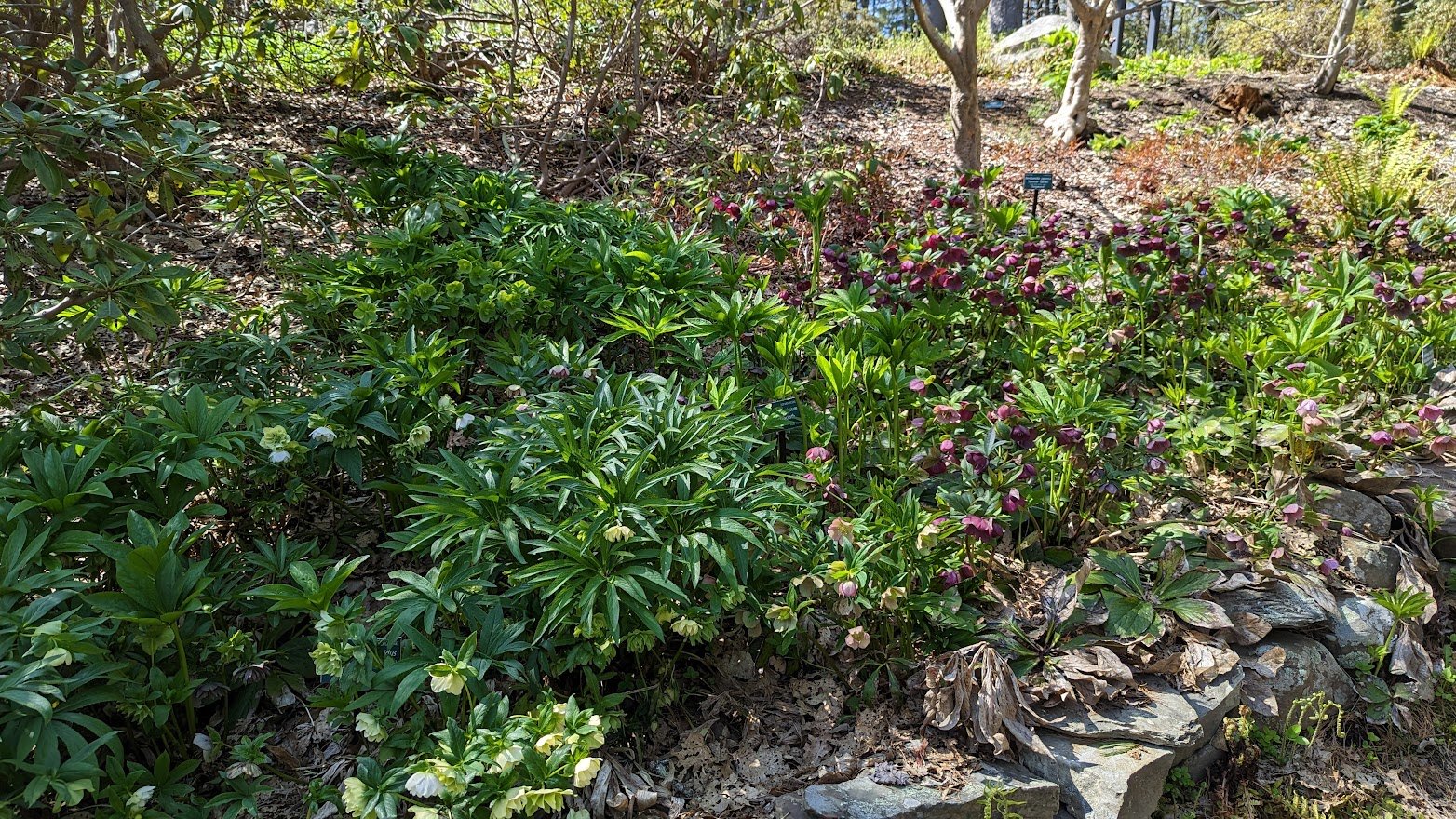
On a walk through Coastal Maine Botanical Garden last year at the beginning of May, one of the many surprises I stumbled upon were the enormous array of Hellebores dappled throughout the shade gardens. I was mesmerized by their range of colors from deep red to shades of pink and white. In the shade of the Giles Rhododendron and Perennial Garden, swaths of Hellebores were groundcover for the Rhododendrons and Azaleas. I have always been in awe of Hellebore’s unique flower structure and evergreen foliage but witnessing it in these numbers was just glorious.

Hellebores awaken in mid April when they begin to put on a show with their abundant blooms. Their flowers last for several weeks and once the petals have faded, the sepals, which look like a flower, remain attractive for several months. The sturdy evergreen foliage is appealing well into the winter months. With all their different stages they are the plant that keeps on giving from spring to winter.

Hellebores are perfect in woodland gardens and in shady areas under deciduous trees.

Helebore at Maine Coastal Botanical Garden

*********************

GROWING CONDITIONS & CARE

  • Easy to grow

  • 12 x 24” H. Spreads over time

  • Drought tolerant but thrives in slightly moist conditions

  • Sensitive to poor drainage

  • Cold hardy and tough

  • Rabbit and deer resistant

  • Perfect along shaded borders and woodland gardens

  • Beautiful when planted under deciduous trees as a ground cover

  • After a long winter, the large evergreen leaves look flattened and tattered. Remove the worst of these before the flower stalks begin to grow. Do not remove leaves prior to that or may harm plant.

PXL_20230510_182322269.PORTRAIT.jpg
PXL_20230510_184221067.jpg
PXL_20230510_182314019.PORTRAIT.jpg
PXL_20230510_162755129.PORTRAIT.jpg
Hellebore
Hellebore
U3fyPpqQ.jpg
Hellebore
Hellebore
PXL_20230510_184319741.jpg
Helleborus orientalis 'Pink Lady' Lenten Rose
Helleborus x hybridus
PXL_20230510_184501021.jpg
PXL_20230510_182322269.PORTRAIT.jpg PXL_20230510_184221067.jpg PXL_20230510_182314019.PORTRAIT.jpg PXL_20230510_162755129.PORTRAIT.jpg Hellebore U3fyPpqQ.jpg Hellebore PXL_20230510_184319741.jpg Helleborus orientalis 'Pink Lady' Lenten Rose Helleborus x hybridus PXL_20230510_184501021.jpg

*********************

HELLEBORES AVAILABLE AT VINEYARD GARDEN

  • Hellebore Ice N' Roses® Bianco (Monrovia)

  • Hellebore Ice N' Roses® Red (Monrovia)

  • HelleboreIce N' Roses® Rosado (Monrovia)

  • Helleborus x iburgensis Ice N' Roses® Merlot Hellebore (Monrovia)

  • Hellebore Ice N' Roses® Rose (Monrovia)

  • Helleborus Paris in Pink (Walter’s Garden)

  • Helleborus Rio Carnival (Walter’s Garden)

  • Helleborus Romantic Getaway (Walter’s Garden)

  • Helleborus Maid of Honor (Walter’s Garden)

  • Helleborus Wedding Bells (Walter’s Garden)

  • Helleborus Spanish Flare (Walter’s Garden)

  • Helleborus New York Night (Walter’s Garden)

  • Helleborus Rome in Red (Walter’s Garden)

  • Helleborus Snowbells (Walter’s Garden)

  • Helleborus French Kiss (Walter’s Garden)

  • Helleborus Sandy Shores (Walter’s Garden)

  • Helleborus Ivory Prince (Walter’s Garden)

  • Helleborus Irish Luck (Walter’s Garden)

A hardy, deer resistant perennial with evergreen foliage, long-blooming flowers and multi seasonal interest!

*********************

MARCH GARDEN TIPS
EARLY SPRING COLOR
In MARCH, DEER RESISTANT, PERENNIALS, PLANT PROFILES Tags perennial plant, Hellebore
Comment

VINEYARD GARDEN'S SEED PROJECT

March 9, 2026 Karen Logan

VINEYARD GARDENS

SEED PROJECT

Believe it or not, spring is just around the corner! At our in-house growing facility, seedlings are beginning to emerge, and a new season is taking shape. The anticipation is palpable as we prepare for another year of vibrant growth.

A Botanical Haven on Martha’s Vineyard

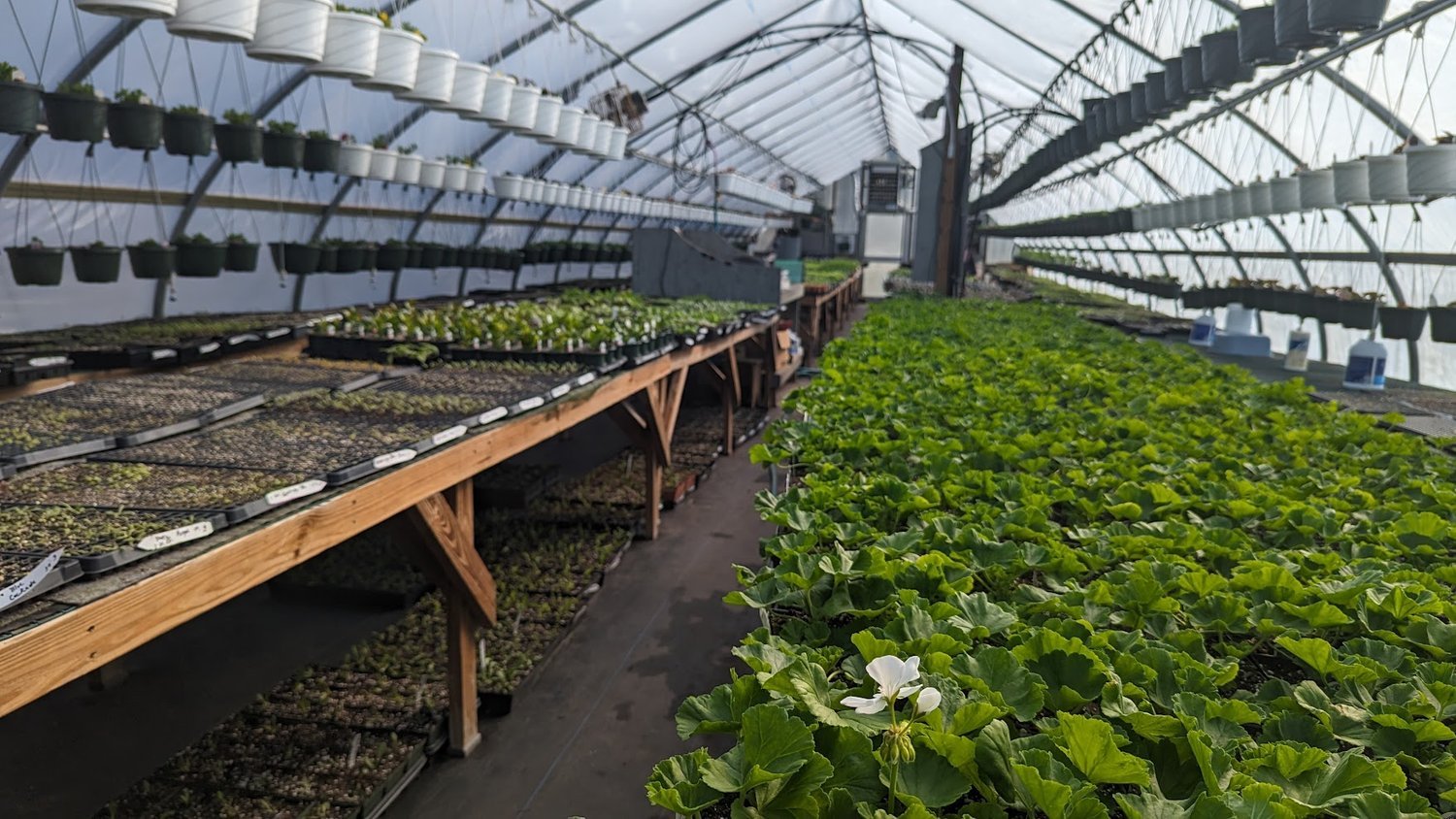
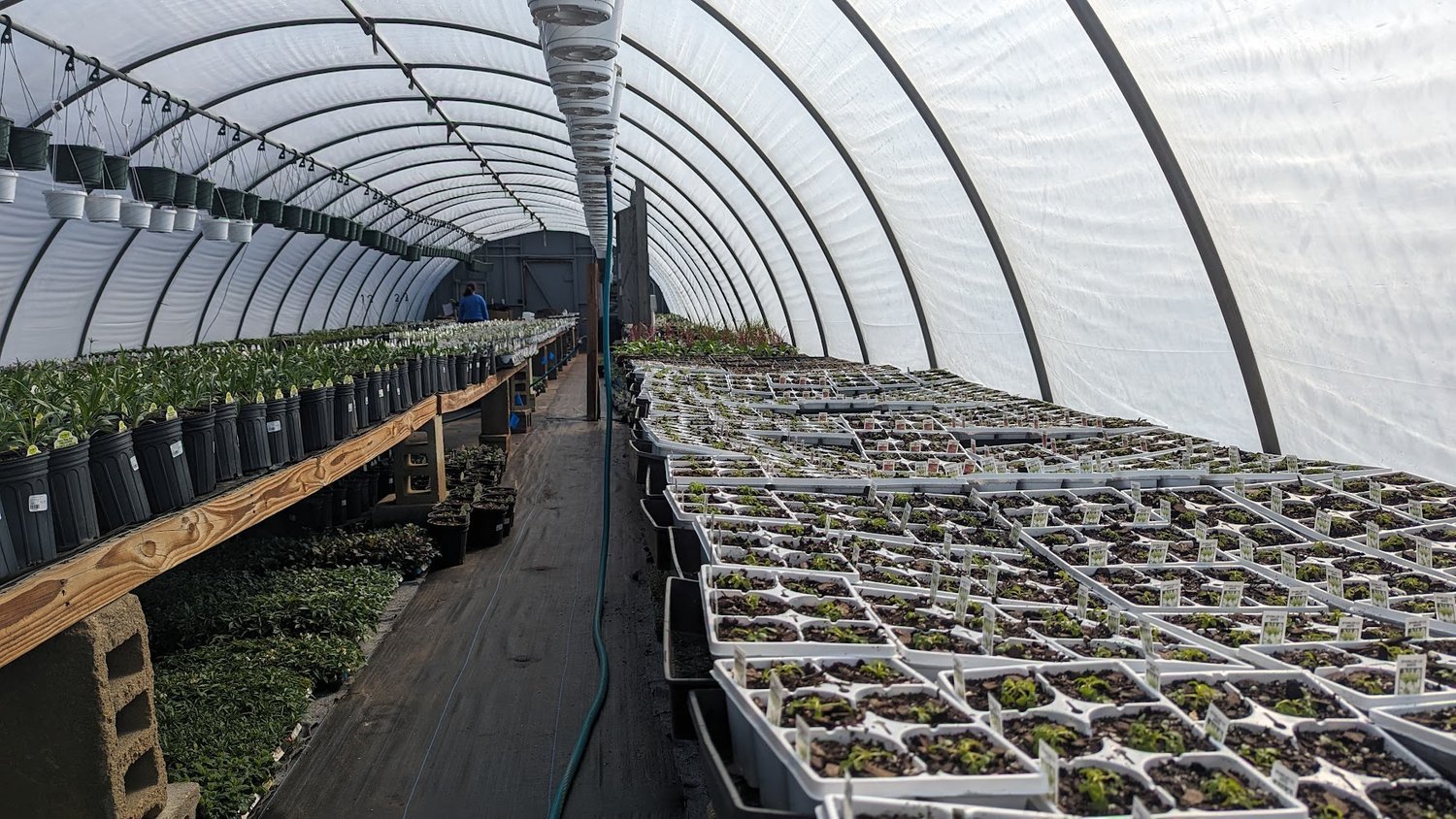
Vineyard Gardens Nursery, located in West Tisbury, is a five-acre botanical paradise featuring ten thriving greenhouses. Established over 30 years ago with just a single greenhouse, it has grown into an island staple, a flourishing nursery and landscaping hub.

Rooted in deep horticultural expertise, Chris and Chuck Wiley, along with their two sons Alan and Andrew, have nurtured what began as a modest landscaping company into a full-scale plant production center. Their passion for growing healthy, hardy plants has driven them to cultivate many plants from seed, ensuring the highest quality for their customers.

From Seed to Sprout: The Magic Behind the Scenes

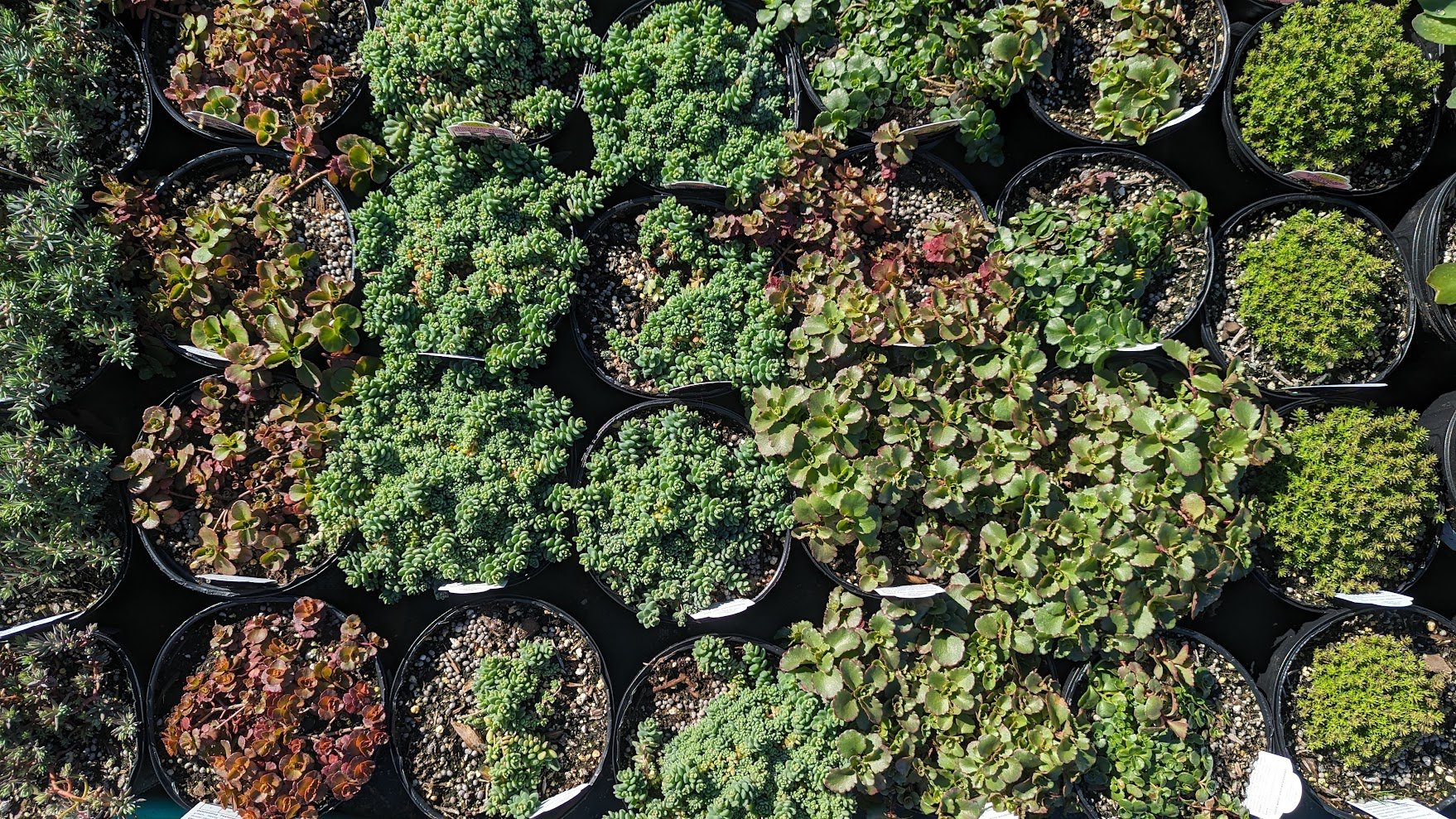
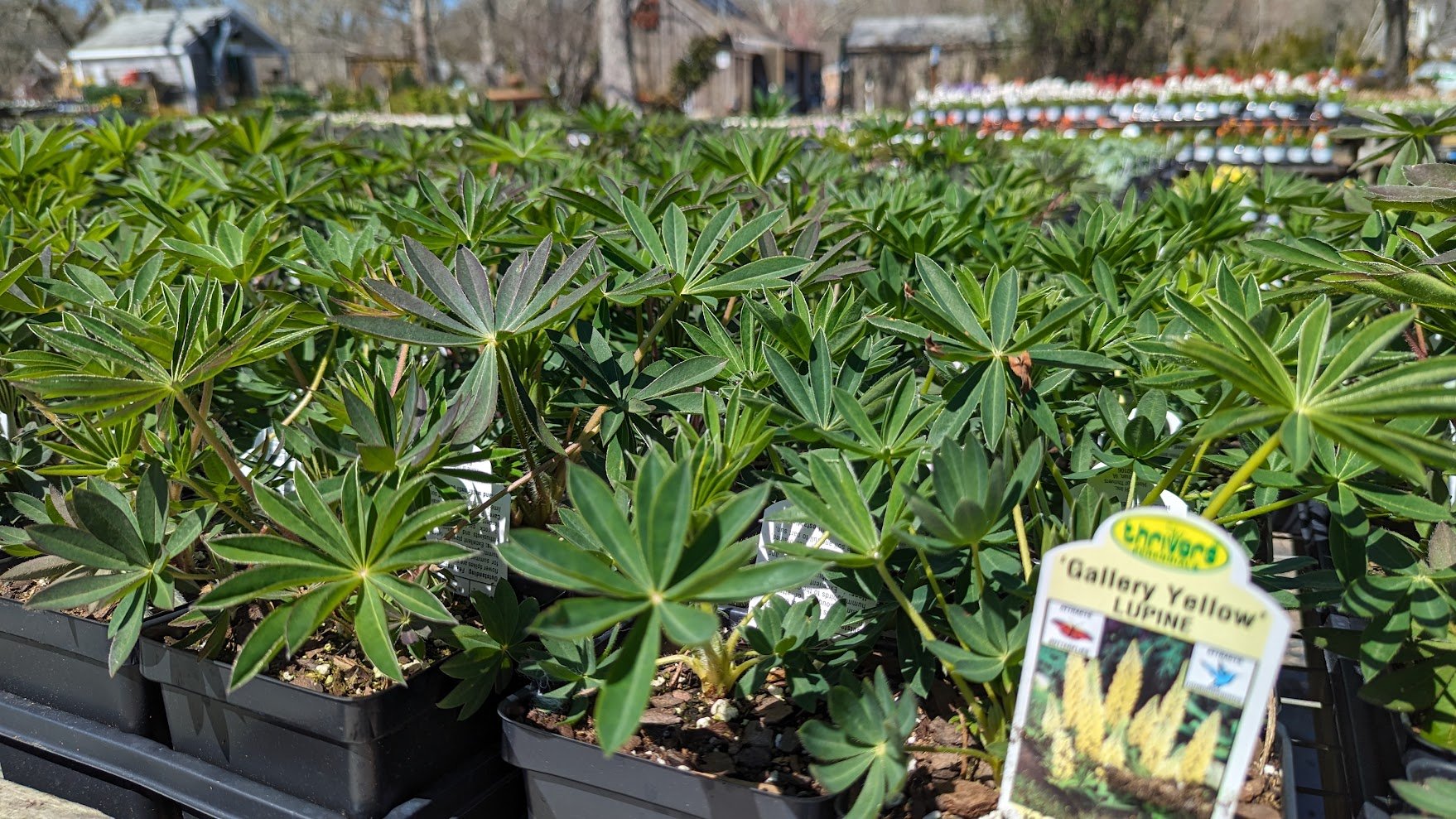
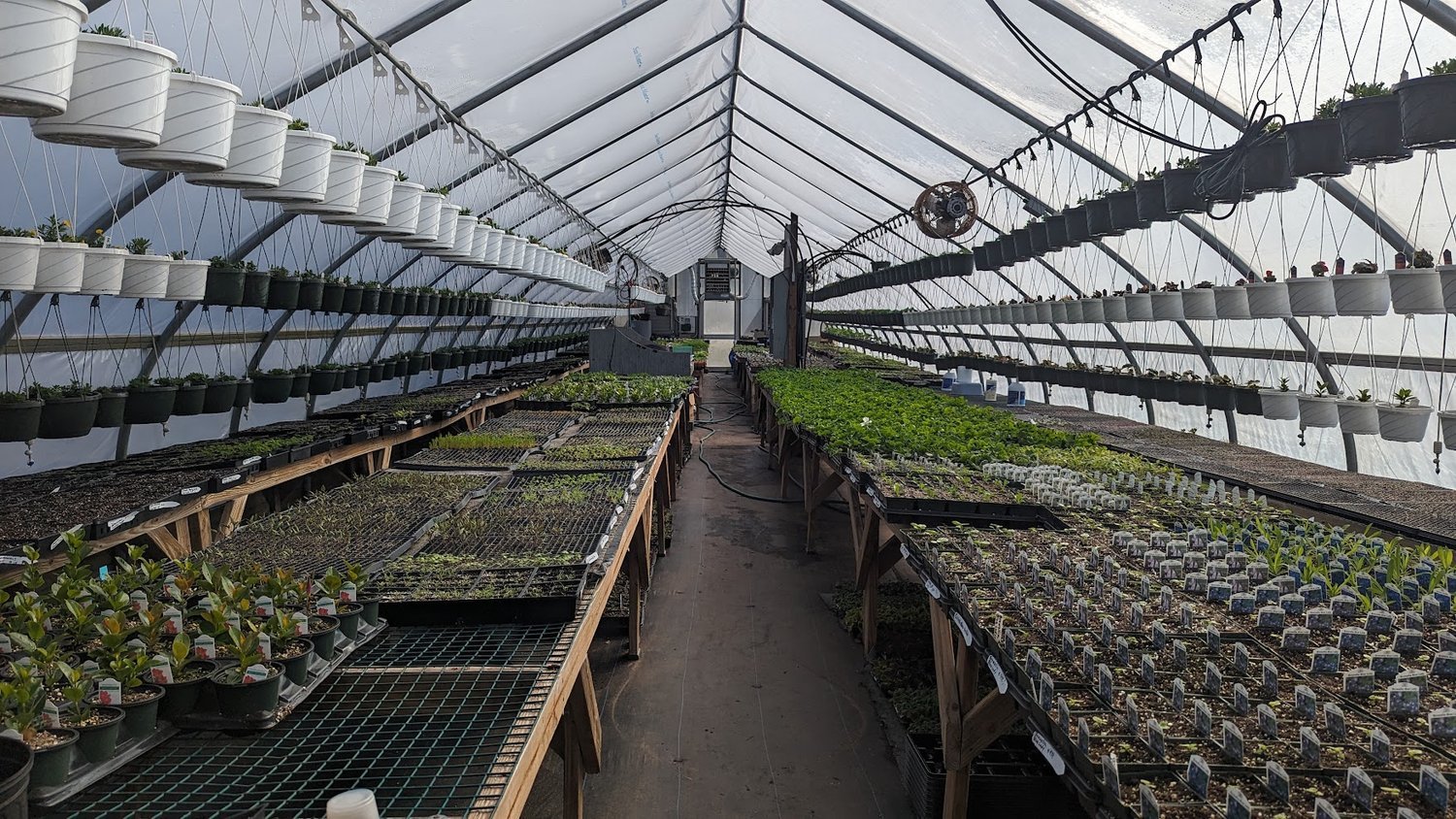
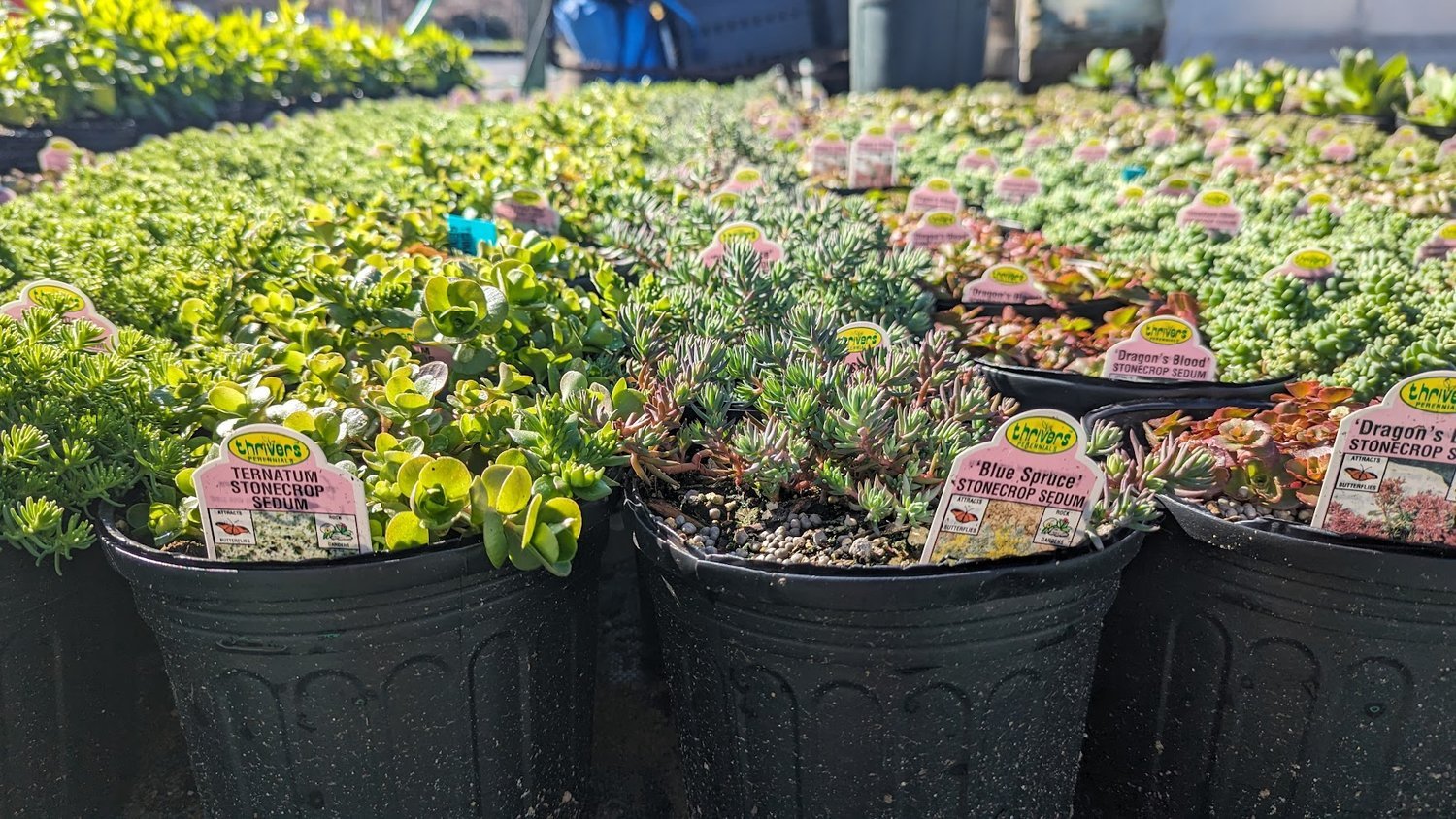
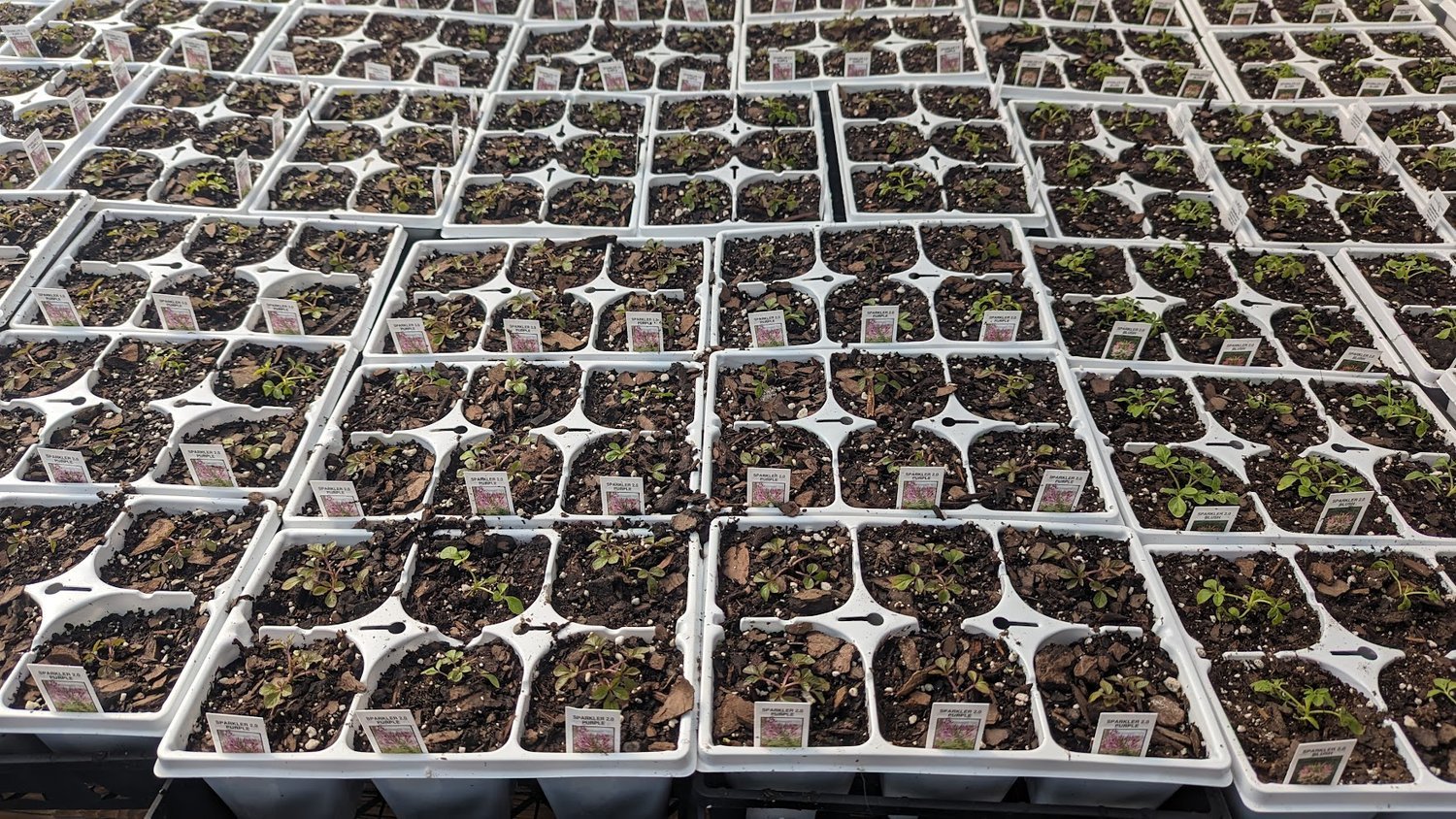
To support this in-house production, the Wileys developed VG2, a dedicated five-acre growing site. Equipped with both indoor and outdoor growing spaces, it features four expansive 100-foot greenhouses. One of these is specially designed for seed germination, where temperature, humidity, and automated mist-watering systems create the perfect environment for new life to take root. This is where the majority of our vegetables, herbs, annuals, and perennials begin their journey.

“The range of plants we germinate at VG2 is extensive,” Chris explains. “We start a few hundred varieties, mostly annuals, but we always seed a dozen or more perennials, trees, and shrubs as well. The biggest challenge is timing, having crops ready at the right moment and in the right quantities. Sometimes we overproduce, but more often, we sell out quickly!” Thanks to this dedicated production site, Vineyard Gardens Nursery remains stocked with beautiful, healthy plants all season long.

PXL_20240416_131709350.jpg
PXL_20240416_131816851.jpg
stonecrop.jpg
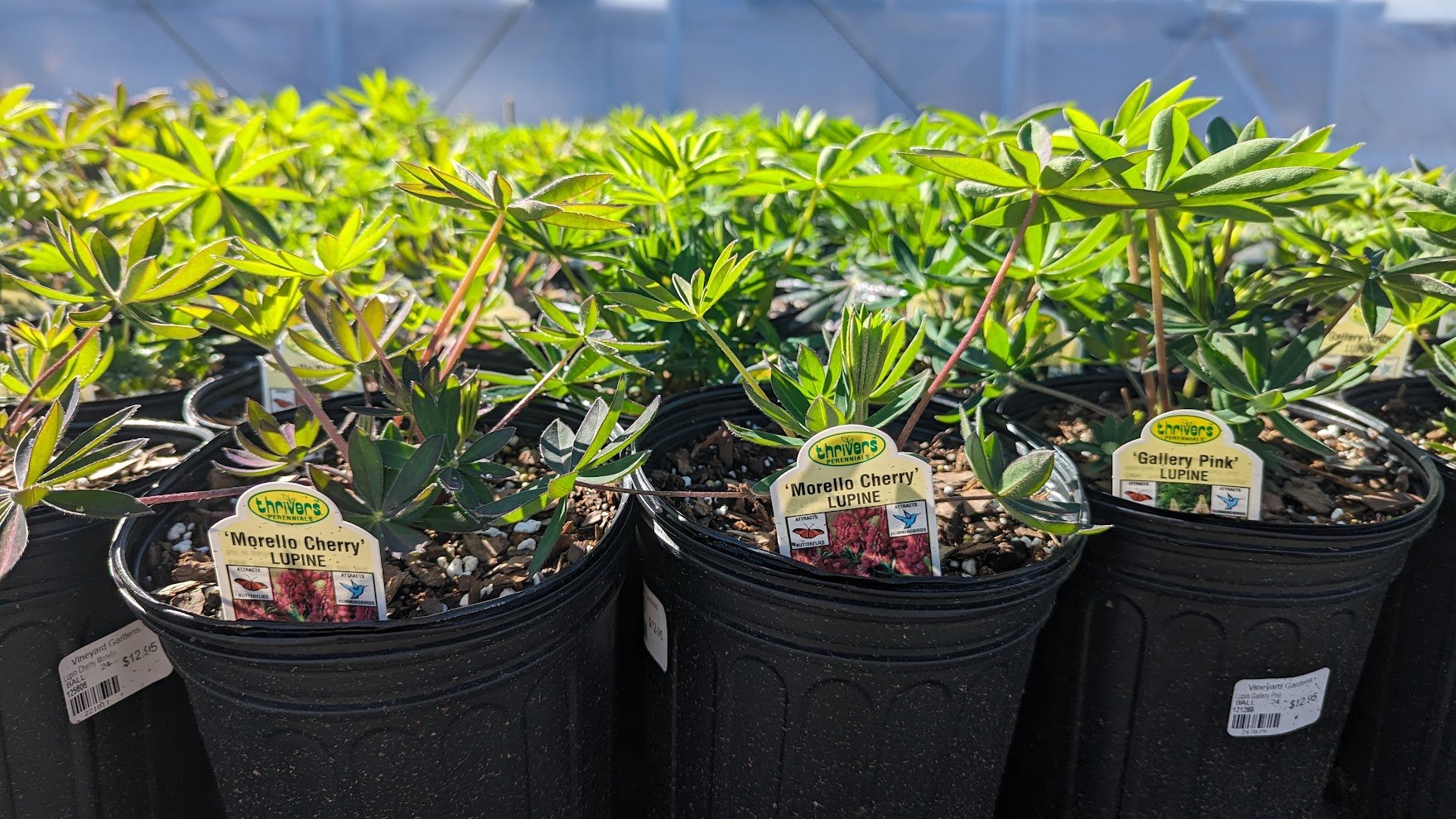
lupine.jpg
mixed greens.jpg
PXL_20240416_131850910.jpg
PXL_20240416_132308278.jpg
PXL_20240416_155408951.jpg
PXL_20240416_155420545.jpg
PXL_20240416_131850910.jpg
PXL_20240416_132208441.jpg
PXL_20240416_132233584.jpg
sedumsa1.jpg
VG+grown+sparkler+purple.jpg
vineyard+gardens+grown+seedlings1.jpg
PXL_20240416_131709350.jpg PXL_20240416_131816851.jpg stonecrop.jpg lupine.jpg mixed greens.jpg PXL_20240416_131850910.jpg PXL_20240416_132308278.jpg PXL_20240416_155408951.jpg PXL_20240416_155420545.jpg PXL_20240416_131850910.jpg PXL_20240416_132208441.jpg PXL_20240416_132233584.jpg sedumsa1.jpg VG+grown+sparkler+purple.jpg vineyard+gardens+grown+seedlings1.jpg

A Passion for Growing, A Love for Edibles

Chris speaks about plant production with the enthusiasm of a proud parent. She can effortlessly discuss the diverse array of plants she cultivates in English, Latin, and Spanish, her excitement making you want to dig in and start growing yourself.

“But our proudest moment is in spring,” she beams, “when we see our amazing display of vegetable packs, seeded and grown right here. This year we have moved to deeper packs for our greens because we know it’s all about an extensive root system determining the vitality of what we get above ground. More and more customers are embracing edible gardening, and we love being part of that journey. We grow a wide variety of greens, including Asian greens like Chinese cabbage, bok choy, and tatsoi. We even seed a Brazilian vegetable called Jilót and sell over 500 of them! We also grow Couve or Brazilian Collards and this year we are growing four different Brazilian peppers including, Buiquino and  Bishops Cap which did great last year.” She adds with a smile, “Right now, our cool-weather crops are thriving in the greenhouses.”

Ready to Grow? We’re Here to Help!

With decades of expertise and an ever-growing ambition to cultivate, Vineyard Gardens is ready to support you in your gardening journey. Whether you're looking for seasonal flowers, robust vegetables, or specialty greens, our team is here to help you plant, nurture, and grow with confidence.

Spring is coming, let’s get growing!

In MARCH, VINEYARD GARDENS PROJECTS, FIELD NOTES Tags Vineyard Gardens production facility, spring gardens, seedlings, greenhouses

PIERIS JAPONICA

March 7, 2026 Karen Logan

Pieris japonica illustration by karen blackerby logan

PIERIS JAPONICA

(ANDROMEDA)

Pieris japonica is a broadleaf evergreen shrub that provides multiseason interest. In early spring, their cascading, delicate, bell shaped flowers bloom for about two weeks. The blooms range in color from white to pink. Simultaneously, bright pink, red, or bronze new foliage emerges, gradually transforming into glossy, oblong evergreen leaves. Beadlike flower buds form in late summer and hold steadfast through winter against their evergreen backdrop.

Deer resistant, slow growing and shade tolerant, Pieris japonica are ideal for adding year round color to mixed borders.

Pieris japonica in late winter

*********************

GROWING CONDITIONS & CARE

Pieris japonica are beautiful year round. They are easy to grow but need to be shielded from rough weather conditions, such as intense wind or rain and do not do well in soggy soil. Keep soil moist and well drained.

  • Growth: 9–12 ft. tall, 6–8 ft. wide, slow growing

  • Light: Sun, partial shade. In Martha’s Vineyard is can be treated as a full sun plant.

  • Soil: Prefers rich, acidic, moist but well-drained soil

  • Bloom Time: Late winter, early spring

  • Flower Color: White, pink

  • Deer resistant!!

  • Good choice for foundations and shrub borders

  • Smaller dwarf varieties can also be planted in containers

 (photo credit Ray Ewing)
(photo credit Ray Ewing)
photo: Ray Ewing
photo: Ray Ewing
pieris+japonica1.jpg
PXL_20230505_173639208.PORTRAIT.ORIGINAL.jpg
Pieris japonica in late winter
PXL_20240327_143707277.PORTRAIT.jpg
PXL_20240327_150005465.jpg
PXL_20240327_150028329.PORTRAIT.ORIGINAL.jpg
 (photo credit Ray Ewing) photo: Ray Ewing pieris+japonica1.jpg PXL_20230505_173639208.PORTRAIT.ORIGINAL.jpg Pieris japonica in late winter PXL_20240327_143707277.PORTRAIT.jpg PXL_20240327_150005465.jpg PXL_20240327_150028329.PORTRAIT.ORIGINAL.jpg

*********************

SUCCESSION GARDENING
(PLANT PROFILE) NARCISSUS

HAPPY GARDENING!

In DEER RESISTANT, MARCH, PLANT PROFILES Tags pieris japonica, broad leaf evergreens, spring blooming shrub
Comment

PANSIES & VIOLAS

March 5, 2026 Karen Logan

Pansy illustration by karen blackerby logan

pansies & tulips

PANSIES & VIOLAS

“Kids love the story of the fairy that lives in the pansy flower that Lauren Crosby made up. She would tell the story to kids during field trips to Vineyard Gardens. First she would carefully peel the outer 5 petals, one at a time. Exposing the female reproductive structure standing tall in the center. This was the fairy that lived inside the pansy.” -Chris Wiley, owner&founder at Vineyard Gardens Nursery

A BRIEF HISTORY

Pansies & Violas are of the genus Viola. The original plant species was viola tricolor, a wildflower of Europe and Central Asia. To the modern horticulturist, the pansy is the larger of the two flowering cultivars. The pansy is a hybrid plant cultivated as a garden flower. The name pansy is derived from the word pensee meaning “thought” and was regarded as a symbol of remembrance.

CARE & INFORMATION

  • Both do well in full sun or partial shade and need well drained soil. They like cool weather and can survive light frosts, snow and even sometimes overwinter. They are one of the first flowers available in spring.

  • They tend to get long and leggy in the heat of summer. Dead heading will extend bloom.

  • They dry beautifully when laid flat within pages of heavy books, and once dried can be used to make cards or other art projects.

In SPRING PLANTS, MARCH, PLANT PROFILES Tags Pansies, Violas, Care for pansies violas, pansies for art, pansy symbol of rememberance
Comment

MARCH GARDENING TIPS

March 5, 2026 Karen Logan

Lilac illustration by karen blackerby logan

MARCH

GARDEN TIPS

Vineyard Gardens Landscaping is available to help with your gardening needs!

***************************************

PRUNE

  • Its a good idea to sterilize the pruning shears with a 10% bleach solution to avoid passing diseases from cut to cut

  • Good time to prune fruit trees, raspberries and grape

  • Grapes should be pruned now before the weather warms up as they will “bleed sap” if done during warmer weather

  • Fruit trees should be pruned now to maintain healthy branch structure and to reduce the total number of fruits per branch. If a branch has too many fruits they will tend to be small and often fall off. If allowed to reach maturity the branch could break from too much weight.

  • It’s easier to see the branch structure before the plant leafs out. Remove damaged or crossing branches, and especially for fruit trees waterspouts which are small branches growing straight up through the tree.

  • Prune any trees damaged by winter storms

  • Prune PG Hydrangeas but NOT macrophyllas

  • Prune Crape myrtles and any late season blooming plants, like hypericum, caryopteris

Winter or early spring is the best time to prune most deciduous trees and shrubs. Removing dead wood and reducing their size. A couple of exceptions being lilacs and Hydrangea macrophyllas.

Hydrangea arborescens ‘Annabelle’ needs to be cut back before they start to awaken in Spring, now is a good time to do it if you haven’t already.

SPRAY

  • One spray to prevent Peach leaf Curl (Sulfur or Copper based fungicides). Peaches should be sprayed with a lime sulfur solution which is organic and highly efficient at stopping peach leaf curl, a very common disease that weakens the tree.

DESIGN

  • Plan and design your plantings and garden beds

TOP DRESS

Add a 1-2 inch layer of compost, rich in organic matter, over the top of your garden beds. Plants will come up right through it. The organic matter in compost is already broken down. The nutrients will slowly leach down with the spring rains and be available to be up taken by roots when plants are ready to grow. Do not use mulch as a top dressing as the larger bark chunks rob the soil of nitrogen in the breakdown process. If you are going to mulch on top of the top dressing of organic matter, spread some fertilizer under the mulch to supply nutrients for decomposition. For new beds or vegetable gardens waiting to be planted you can add more than 1-2 inches of organic matter on top, or the organic matter can be rototilled in, mixing it a few inches into the soil.

  • Top dressing bulb areas and lightly fertilize bulb areas before they come up any further

  • Top dress your veggie garden

  • Its still a bit early to fertilize as the plants aren't actively taking up nutrients and with a lot of rain the fertilizer could leach or run off instead of being used by the plants.

SEEDLINGS

  • Start cool weather seedlings indoors to be planted out by the end of March or beginning of April.

  • Later in the month start your warm weather seedlings indoors. These will get planted out in May.

  • There is still time to order flower and vegetable seeds.

  • Do not work wet soil in vegetable gardens as that leads to compaction, the last thing you want to happen to your soil.

Vineyard Garden Greens

Giant Red Mustard

PERENNIAL PLANT OF THE YEAR
SPRING CHECKLIST
In GARDEN TIPS, MARCH, FIELD NOTES Tags spring pruning, spring top dressing bulb areas, march garden tips
Comment

WINTER PROJECTS

February 25, 2026 Karen Logan

As we prepare for spring, pouring over seed catalogs and drooling over our friends’ Instagram posts from Colombia to the Mekong Delta, it is a good time to get outside and accomplish some garden tasks that will be put aside once the bulbs begin to break ground. If the prospect of tree climbing and brush hauling is deterring you, remember that Vineyard Gardens’ landscape crew is working year round and available to help. Below are a few of the garden tasks that you could be chipping away at during these mild February days.

*************

PRUNING GRAPE VINES AND FRUIT TREES

Grapes may look a mess this time of year and it may be tempting to simply cut them back, but the process of pruning them is best demonstrated. Like riding a bike, once you’ve done it a few times it gets easier.

Fruit trees are a bit trickier due to variety, special growth patterns and fruiting strategies but the basic rule of thumb is to open up the inside allowing for good air circulation and access to sunlight. Remove dead or diseased wood and a few of the older branches and crosses. Remove about 1/3rd of the older wood but preserve a balanced structure.

Once the pruning is complete and the weather has warmed up, spray with Dormant, aka Horticultural Oil. This is a non-toxic spray that coats the stems and bark with a mild pesticide that helps control most types of pests that can plague fruit trees and plants in the Rose family.

pruning grapes

watch & learn

pruning grapes

illustrated guide

pruning fruit trees in winter

watch & learn

*************

SHAPING AND REMOVING DEAD WOOD FROM CONIFERS AND EVERGREENS

Evergreens often outgrow their allotted space. They tend to keep their foliage on the sunny side of the plant, leaving the back sparse and leggy. They also tend to hold onto old wood that can harbor mold, mildew and fungus. Thinning out the old dense branching and accumulation of discarded foliage can lighten up the overall structure and make for a healthier plant. Some evergreens have a hard time producing new growth on old, hardened off wood. Hollies and Boxwood are a couple that appreciate being cut back hard,  called “hat-racking”.  

Holly

pruning hollies

watch & learn

A "hat-racked" Holly from this year. Stay tuned to see how it looks throughout the growing season.

*************

CUTTING BACK ORNAMENTAL GRASSES

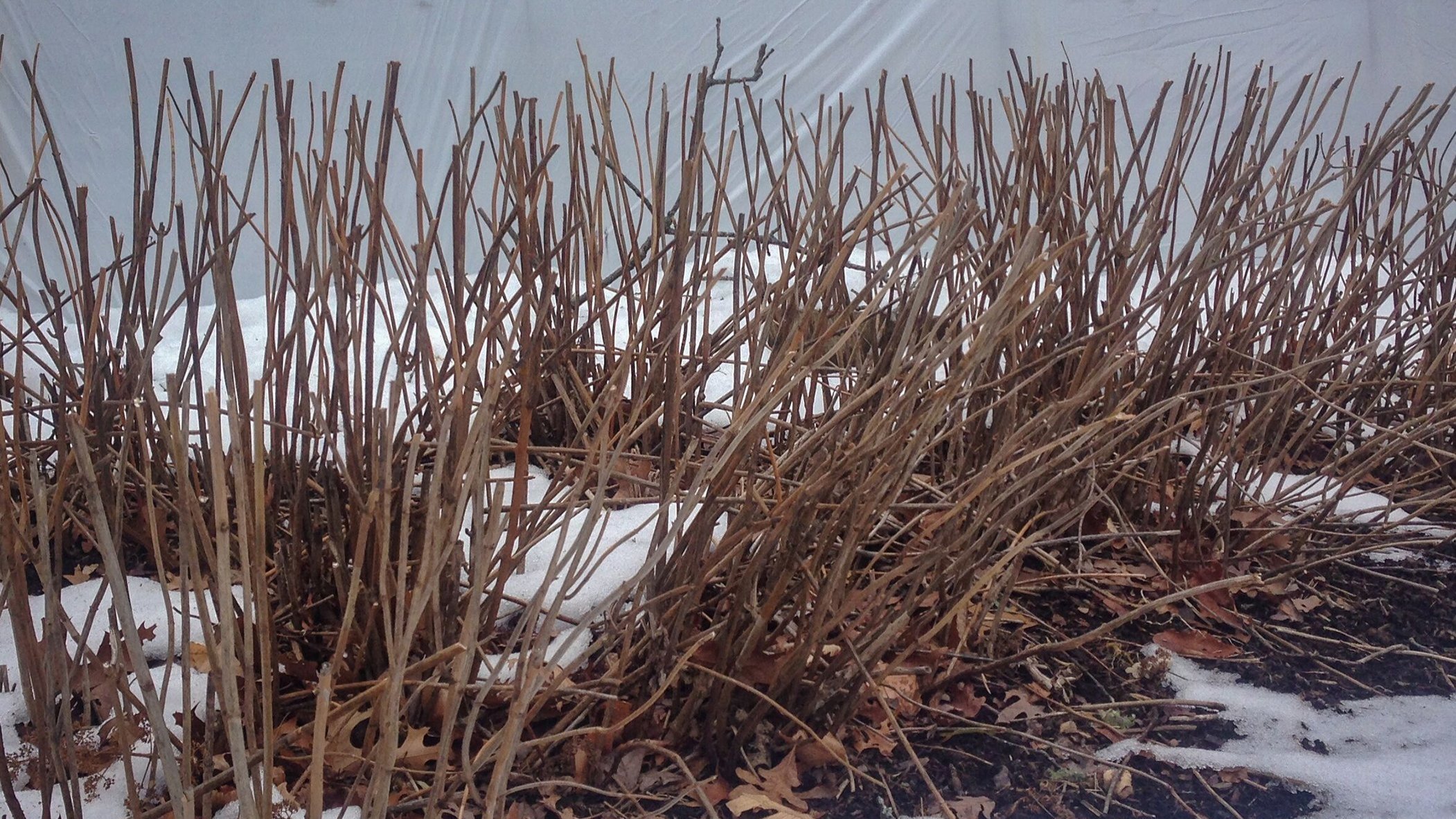
A perfect late-winter project! Ornamental grasses hold up well through most of the winter, providing volume, screening and an attractive feature in the winter landscape.  Make sure to cut them back in early Spring or you’ll end up cutting off  new growth. The grasses do not need to be flush cut, they can be cut at angles or domes, the object is to clear away old canes before  new growth begins to emerge.  A hedge trimmer or hand pruners can be used.

Karl Foerster Grass

*************

HEADING BACK LATE SUMMER FLOWERING SHRUBS

Martha's Vineyard homeowners tend to favor late summer flowering shrubs such as Pee Gee Hydrangeas, Bluebeard Caryopteris, St. John’s Wort, Butterfly Bush and Rose of Sharon. These shrubs  perform best with a hard cut back before new growth begins to emerge. Be careful not to cut back your common blue type of Hydrangea, Hydrangea macrophylla, because these hold their flowering buds at the tips of last years’ growth. Wait to prune lilacs until after they have flowered.

Winter is the best time to prune most deciduous trees and shrubs. Removing dead wood and reducing their size. A couple of exceptions being lilacs and Hydrangea macroph

These tip buds hold this season's flowers. Be careful not to trim them off

These tip buds hold this season's flowers. Be careful not to trim them off

Hydrangea bud

Hydrangea bud

Last year's cuts on a Pee Gee Hydrangea. This year leave a couple of buds beyond for a big, full flowering.

Last year's cuts on a Pee Gee Hydrangea. This year leave a couple of buds beyond for a big, full flowering.

A fall cleanup cut. Notice last year's cuts on these Annabelle Hydrangeas. The Annabelle's are very forgiving, but if you leave this much stem length on them they'll tend to flop more.

A fall cleanup cut. Notice last year's cuts on these Annabelle Hydrangeas. The Annabelle's are very forgiving, but if you leave this much stem length on them they'll tend to flop more.

*************

ROSES

This can be the time to cut out dead, broken and/or diseased wood from roses as well.

Most roses will benefit from a hard structural pruning at this time. Be sure to keep your pruners clean and sharp. Carry with you alcohol wipes to clean the blades when moving from one plant to the next. This will help prevent spreading virus and fungal spores. Always keep the area under roses clean from debris and refresh top-dressing every year. This is where pests can deposit eggs and where fungus spores collect. These steps may not eliminate black spot, Japanese beetles or aphids but it will make it easier to keep them under control. Later you can spray with Horticultural oil, as with your fruit trees.

*************

REPAIRING SETTLED STONEWORK

Now would be a good time to reset cobble edging and patio pavers that have settled and become uneven.

  1. You can get a couple buckets of sand from Keane’s or Goodale’s

  2. Pull up a section of pavers

  3. Spread out the sand. A trick when doing this is to spread the sand under the edges of the stone leaving it lower or a little hollow in the center to prevent rocking.

  4. Reset the stones. The stones can be left slightly higher than grade to allow for settling.

While doing this, observe where you have standing water and erosion problems. These can be corrected by digging a shallow trench towards lower grade and back-filling with pea stone. Plan ahead and fill some pockets at the joints with a sand/compost mix to allow for planting “Stepables” like Thyme or Blue Star Creeper Isotoma fluviatillis when they come available later in the Spring.

*************

CLEANING AND SHARPENING YOUR TOOLS

Be prepared! If you don’t have the equipment to sharpen your pruners, loppers, hedge shears and pruning saw’s you can collect them together and drop them off at the Vineyard Gardens office across from Keane’s to have them sharpened for a modest fee. You should also clean and sharpen your spades and shovels, it will make your garden tasks so much easier and safer. Its good practice to keep a 5gal. bucket with sand mixed with old, used motor oil in it around to clean your tools after using them.  This is also a good time to oil the wood stocks of any tools with wooden handles, it will give it a chance to soak in and renew the grain making them stronger and last longer.

Winter is a great time to clean and sharpen tools.

*************

CLEARING OUT GUTTERS AND LEAVES COLLECTED AROUND THE FOUNDATION OF THE HOUSE

With all the spring rains you’ll want to be sure that the gutters are running clear, even if you cleared them out after the fall leaf drop. It is best practice to check again.  It also gives you a chance to make sure there was no damage during the winter from the weight of ice and snow.

It's generally good to keep debris from accumulating around the foundation of the house as well. This is where rodents and general pests will tend to nest, protected against a nice warm foundation.

During mid-Winter mild spells we are encouraged to get out and accomplish some neglected garden chores.

............................................................................................................................
If all this seems daunting, do what you can and  Vineyard Gardens can take care of the rest. Please call the Vineyard Gardens Landscaping office at (508) 693.8512   

Time waits for no one and spring is just around the corner. The Nursery will open mid March, giving you a few weeks to prepare.

In GARDEN TIPS, FIELD NOTES

ASTERACEAE: THE ASTER FAMILY

October 10, 2025 Karen Logan

Vineyard natives, white wood aster (Aster divaricatus) and hay-scented fern (Dennstaedtia punctilobula), pair nicely in the late-season garden.

ASTERACEAE

THE ASTER FAMILY

by Patrick Best

Asters are the hallmark of the late-season garden. While many associate plants like the native white wood aster (Aster divaricatus) or the long-blooming Monch aster (Aster frikartii) with the term “aster”, you may be surprised to learn that the aster family encompasses a huge variety of late-blooming perennials. From goldenrods (Solidago) to sunflowers (Helianthus), and from black-eyed Susans (Rudbeckia) to mums (Chrysanthemum), asters are everywhere!

Blue wood aster (Aster cordifolius) is a native aster that is well adapted to partial shade, unlike most asters which prefer sunny conditions.

Morphology

Looking closely at an aster flower, you can see that these compound flowers are actually made up of many smaller, individual florets. Disk flowers make up the center of the bloom and lack petals, while ray flowers encircle the central disk and have one petal each. Not all asteraceous plants have blooms consisting of both disk and ray flowers, but their presence is a helpful way to tell that you’re looking at a species in the aster family.

Aster ‘Raydon’s Favorite’ exhibits the dual-floret morphology typical of the family, with the yellow disk flowers in the center and the purple ray flowers around the edge.

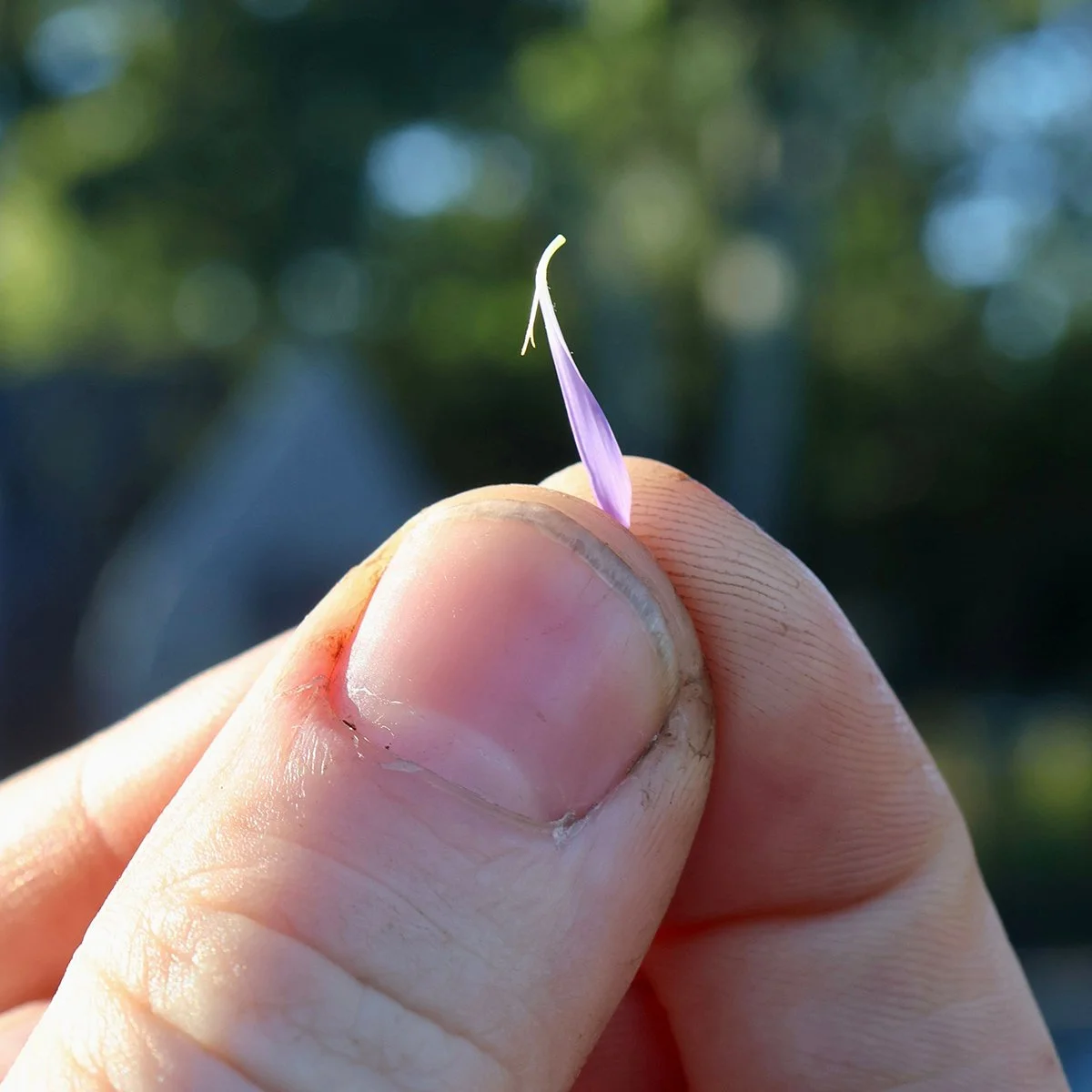
A close-up of a single ray flower.

Ecosystem

In the ecosystem, these nectar-rich plants provide forage for a host of insects, especially the pollinators and bees looking for their final meals before the cold weather sets in. Native asters are far more valuable to the wider ecosystem than annual mums. Next time you walk by a mum, notice the absence of pollinators and then consider planting native asters in your fall pots!

Single-flowered annual mums offer the nectar-rich disk flowers valuable for late-season pollinators. The double-flowered mums only consist of ray flowers and are ecologically inert.

Dahlias are a popular late-season bloomer in the aster family and are well-suited to bouquets.

Garden Uses

Generally starting in August, the asters commonly grown on Martha’s Vineyard bloom well into October, allowing the Vineyard gardener to enjoy a profusion of flowers into the fall.

Zinnias, an aster-family annual, provide a long season of color in the landscape

In the garden, it is vital to ensure that a plant’s habit matches the goals you have for that space. Some plants are more useful for their clumping habit, others for their freely-seeding nature, and still others for their rhizomatous spread, more commonly thought of as groundcover behavior, which allows for colonization of larger spaces. As there are a host of beautiful native plants in the Aster family, it is nice to know that any accidental spread of these plants into the wildlands is an act of ecosystem restoration, and not a sign of invasiveness.

Helen’s Flower (Helenium autumnale) blooms throughout the summer in the Vineyard Gardens display bed.

This fall at the nursery, we have a large variety of Asteraceous plants available:

True Asters:

  • Twilight (rhizomatous spread)

  • Little Carlow (clumping)

  • Blue wood aster (clumping)

  • White wood aster (rhizomatous spread)

  • Vasterival (rhizomatous spread)

  • Prof. Anton von Kippenberg

  • Aster novi-angliae Alma Potschke (clumping)

  • Winston Churchill

Familiar Annuals:

(Dahlia, Cosmos, Marigold, Ageratum, Zinnia)

  • Coreopsis

    • Zagreb

    • Moonbeam

    • C. tripteris Gold Standard

  • Echinacea

    • E. pallida

  • Eupatorium/Eutrochium

    • Joe Pie Weed

    • Boneset

  • Helenium

    • Moerheim Beauty

    • Sombrero

    • H. autumnale

  • Helianthus

    • Lemon Queen (rhizomatous spread)

    • Maximillian (rhizomatous spread)

  • Heliopsis

    • Summer Sun

    • Summer Nights

    • Bleeding Hearts

  • Leucanthemum/Nipponanthemum

    • Shasta Daisies (cvs.)

    • Montauk Daisies

  • Liatris

    • L. microcephala

    • Kobold

    • Floristan White and Purple

  • Solidago

    • Loysden Crown

    • S. canadensis ‘Crown of Rays’

    • Little Lemon

  • Rudbeckia

    • R. triloba Prairie glow (short-lived, seeds around non-aggressively)

    • R. subtomentosa Little Henry (clumping)

    • R. laciniata Autumn Sun/Herbstsonne (clumping)

  • Vernonia

    • V. noveboracensis

  • Chrysanthemum

    • Hardy (Claire Curtis, Igloo Series, Matchstick…)

    • Annuals

In PLANT PROFILES, OCTOBER, FALL PLANTS Tags asters, dahlias, mums, fall blooming plants, late blooming pollinators
Comment

AUTUMN GARDEN

September 8, 2025 Karen Logan

Cornus kousa (Asian dogwood) fruit at Polly Hill Arboretum

AUTUMN GARDEN

by Keith Kurman / Updated by Patrick Best

Martha’s Vineyard has long, warm falls that can often linger into December, allowing the ambitious year-round gardener to extend the traditional summer bloom season by months. With insightful planning, you, too, can engineer a full and floriferous garden from early spring straight through the first frost and beyond. Indeed, as the climate continues to warm, the Vineyard gardener need only suffer a few weeks in the dead of winter without something in bloom. However, a garden like this takes careful planning. Some plants don’t begin flowering until September or later, so space must be provisioned such that they may perform to their fullest potential that late in the growing season, when other plants are competing for space. Yielding space in the middle and back of your borders can allow late-blooming perennials to lend texture and substance alongside earlier flowering annuals and bulbs and space to grow into gaps left vacant by the late spring perennial displays. Take this space allocation into consideration when planning your garden beds. Distribute your late flowering plants evenly through the border and stagger height and depth, allowing space for earlier flowers.

Autumn tones in the display gardens at Vineyard Gardens

Challenges With Late-Blooming Plants:

1. STAKING or HEADING BACK: Chrysanthemums (hardy mums), Asters, Phlox paniculata (garden phlox), Nipponanthemum nipponicum (Montauk daisy), and other late-season perennials need pinching back before early July. The extent to which this is done can vary from a conservative tip-out to a more drastic cutting back by one-third to one-half. The Anglophiles among us may know this as the “Chelsea Chop,” in reference to the Chelsea Flower Show, which is held in late spring each year. It’s important to provide support for some of the tall growing perennials early in the season to allow them to grow into your staking system. Bamboo stakes and jute twine are probably the most straightforward approach, but peony hoops and tomato cages can be very effective as well. Staking may seem a little fussy and early in the season, but you’ll be glad you did when the late season storms return.

2. DROUGHT: Irrigation requires constant monitoring, and gardens often require supplemental water during long dry spells, as we had this August. Over the course of the gardening year, any number of things can happen to disturb a basic irrigation system: from root blockage to punctured lines.

3. HERBIVORY: Across the island, it seems that few gardeners are safe from the animals who would make your garden their dinner. From deer to rabbits and chipmunks to avians, there is no shortage of hungry animals as wild habitats are consumed by new development. Regular applications of Bobbex can help dissuade deer from browsing your plants, but I have heard many reports that rabbits are unfazed by the stench and continue munching. For bunny damage, I recommend hot pepper wax (capsaicin), available as a spray and applied regularly to lower growing plants. In areas where repellants fall short, physical barriers such as caging and fencing are the best options. Sorry, up-islanders, I’m talking to you.

4. CATEPILLARS (and other insects): Many native plants play host to the caterpillar larvae of some fantastic moths and butterflies. Considering this, I always recommend doing some research before impulsively reaching for insecticide. If the damage isn’t widespread, I urge you to accept this as a sign that your garden is a part of the wider ecosystem, which is surely something to celebrate! If treatment is necessary, organic options such as Safer Soap, Neem Oil, Pyrethrum, or Bt are best.

Lespedeza thunbergii (bush clover) and Pycnanthemum muticum (mountain mint) at Polly Hill Arboretum

September border with Crape Myrtles, Vitex, and Rudbeckia

PLANTS THAT ARE LOOKING FANTASTIC IN THE GARDENS RIGHT NOW

PERENNIALS:

Asters, Eupatorium/Eutrochium (Boneset/Joe Pie Weed, both lovely natives), Vernonia (Ironweed), Chrysanthemum/Dendranthema (Hardy Mum), Agastashe (Anise Hyssop), Phlox, Anemone, Tricyrtis (Toad Lilies), Late-Blooming Hostas, Helianthus (Perennial Sunflowers), Hibiscus moscheutos (Rose Mallow), Rudbeckia (Black Eyed Susan and relatives), Kirengeshoma palmata (Yellow Wax Bells), Aconitum (Monkshood), Chelone (Turtlehead), Patrinia scabiosifolia, Pycnanthemum (Mountain Mint), Physostegia (not-so Obedient Plant), Solidago (Goldenrod), Ceratostigma plumbaginoides (Hardy Plumbago), Garden Sage (Salvia glabrescens, Salvia koyamae, Salvia uliginosa), Hardy Plectranthus/Rabdosia species, Dicentra ‘White Diamonds’ and ‘Bacchanal’ (Everblooming Bleeding Hearts), Geranium (Cranesbill), Eucomis (Pineapple Lily), Nipponanthemum (Montauk Daisy), Begonia grandis (Hardy Begonia), Persicaria, Colchicum (Fall Crocus), some Sedum, Caryopteris divaricata

View fullsize Autumn Crocus, Colchicum ‘Waterlily’
Autumn Crocus, Colchicum ‘Waterlily’
View fullsize Rudbeckia hirta, self-seeding annual
Rudbeckia hirta, self-seeding annual
View fullsize Hardy Mum, Chrysanthemum ‘Clara Curtis’
Hardy Mum, Chrysanthemum ‘Clara Curtis’
View fullsize Kirengeshoma palmata, Dryopteris marginalis
Kirengeshoma palmata, Dryopteris marginalis
View fullsize New England Aster (Aster novae-angliae)
New England Aster (Aster novae-angliae)
View fullsize Patrinia scabiosifolia
Patrinia scabiosifolia
View fullsize Ginger Lily (Hedychium gardinerianum)
Ginger Lily (Hedychium gardinerianum)
View fullsize Japanese Anemone and Impatiens balfourii
Japanese Anemone and Impatiens balfourii

ANNUALS: 

Tropical Salvias (Salvia guaranitaca, Salvia leucantha, etc), Chrysanthemums, Dahlias, Cosmos, Marigolds, Rudbeckia hirta, Tithonia (Mexican Sunflower), Arctotis, Petunias, Celosia, Browallia, Ricinus, Coleus, Hedychium (Ginger Lilies)… and oh so many more!

Petunia and Coleus

Coleus and Tithonia ‘Torch’

Dahlias with Salvia guaranitaca ‘Black and Blue’

Petunia violacea

FLOWERING SHRUBS:

Hydrangea paniculata (Panicle Hydrangea), Buddleia (Butterfly Bush) and Spirea (if dead- headed throughout the season), Caryopteris x clandonensis (Bluebeard), Lespedeza thunbergii (Bush Clover), Lagerstroemia (Crape Myrtle), Vitex (Chastetree), Abelia x grandiflora, Fall-Blooming Camellias (like ‘Winter’s Snowman’), some Illicium (a highly deer-resistant evergreen for shade, look for ‘Orion’), Mahonia x media (‘Winter Sun’, ‘Charity’, and ‘Arthur Menzies’ are common), some Daphne (Daphne x transatlantica blooms through November), Hibiscus syriaca (Rose of Sharon), Hamamelis virginiana (native witch hazel blooms fragrant yellow flowers)

A yellow-leafed selection of Bluebeard (Caryopteris x clandonensis ‘Aurea’)

The fading flowers of Hydrangea macrophylla add moodiness to the garden

Hydrangea paniculata ‘Tardiva’ with Hydrangea arborescens ‘Annabelle’ in the foreground

Abelia x grandiflora

PLANTS for FOLIAGE:

Fothergilla (bottlebrush), Itea virginica (sweetspire), Clethra (sweet pepperbush) Parthenocissus quinquefolia (Virginia creeper), Rhus sp. (sumac), Hamamelis/Parrotia (witch hazel family), Grasses (Hakonechloa, Panicum, Schizachryium, Andropogon, Carex, Calamagrostis, Pennisetum, etc.), Ferns (Dryopteris, Athyrium, Osmunda, Onoclea, Polystichum, Dennstaedtia, etc.), Nyssa (tupelo), Acer (maples), Lindera benzoin (spicebush)

Viburnum dilatatum ‘Michael Dodge’ and Virginia Creeper

Northern Sea Oats (Chasmanthium latifolium)

PLANTS for FRUIT:

Viburnum, Ilex (winterberry and hollies), Callicarpa (beautyberry), Roses, Crabapples

Tea roses will continue flowering well past first frost

Japanese Beautyberry (Callicarpa dichotoma)

These lists are just a starting point and there are so many more wonderful plants to choose from. Fall is a great time to plant and many of the plants listed above are available for sale at the nursery, including many specialty plants. Come explore the late bloomers and extend your garden’s bloom season today!

In SEPTEMBER, FALL PLANTS, EVENTS, FIELD NOTES Tags Fall Gardens, Cornus Kousa, Fall perennials, Fall Annuals, Fall shrubs, Asters, Mums, Rudbeckia, Autumn Crocus, Japanese Anemone, Salvias, Petunia, Coleus, Dahlias, Caryopteris, Hydrangea, Roses, Beauty Berry

SUMMER SALE

August 27, 2025 Karen Logan

Monarda

SUMMER

SALE SERIES

*************

STARTING MONDAY AUGUST 25TH

Agastache 50% off

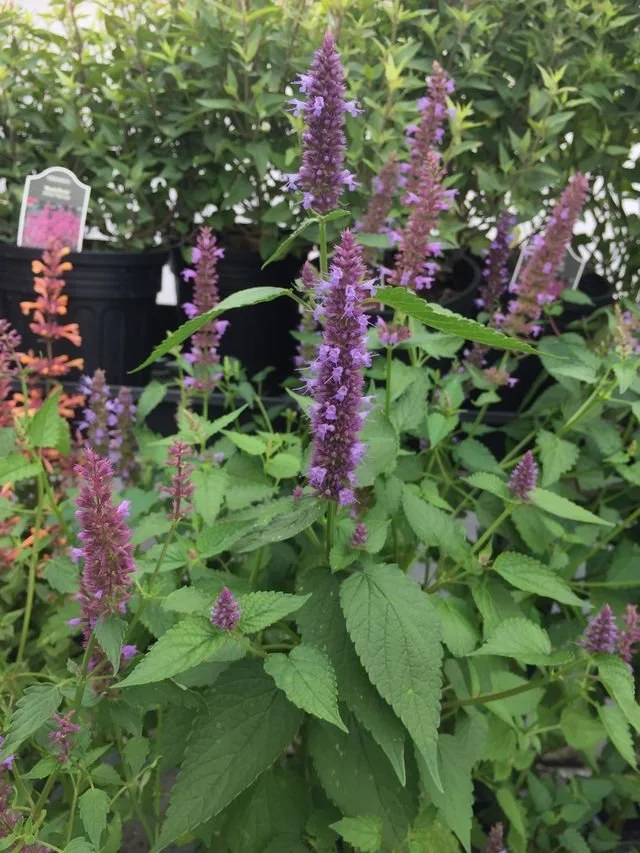
View fullsize Agastache foeniculum
View fullsize Agastache Mango Tango
View fullsize Agastache Apricot Sprite
View fullsize Agastache Little Adder

**************

CURRENT SALES AT THE NURSERY


We have a variety of plants marked 35%–50% off right now - Rose of Sharons, viburnum, roses, rhododendrons, fruit trees and a variety of perennials. If you’ve been thinking about adding something new and filling any holes in your garden, this is a perfect time to stop by and take a look.

Check out our current list of plants on sale.

SUMMER SALE


In AUGUST Tags summer sale, Agastache foeniculum, monarda
Comment

AUGUST GARDEN TIPS

August 1, 2025 Karen Logan

(L to R) Coreopsis, Rudbeckia, Agastache & Allium

AUGUST

GARDEN TIPS

Late summer brings a shift in the garden. Some perennials begin to fade, but many late-blooming shrubs and perennials are just getting started. Here’s how to keep your landscape thriving through the month and into fall.

Annuals & Containers

  • Deadhead and lightly prune to keep annuals looking fresh.

  • Add a diluted liquid fertilizer when watering to encourage continued blooms.

Trees, Shrubs & Perennials

  • Fertilize trees and shrubs through the end of August. This helps strengthen them before dormancy.

  • Avoid fertilizing beyond August to prevent tender new growth before frost.

Garden Maintenance

  • Cut back spent perennials; some may reward you with a second flush of blooms.

  • Deadhead flowering perennials to prolong their show.

  • Stake any top-heavy or rain-weary plants.

Vegetable Gardens

  • Harvest warm-weather crops regularly to encourage more production and prevent them from going to seed.

  • Now’s the time to sow cool-season crops: lettuce, spinach, arugula, carrots, beets, beans, kale, and peas for fall harvest.

Weeding

  • Stay vigilant, crabgrass and blackberry thrive in summer heat and can spread quickly.

Enjoy the buzz of late-summer pollinators darting from bloom to bloom, it’s one of the season’s sweetest rewards!

native summer blooming shrubs
In GARDEN TIPS, AUGUST, FIELD NOTES Tags summer blooms, august garden maintenance
Comment

ECHINACEA

July 30, 2025 Karen Logan

Echinacea purpurea illustration by karen blackerby logan

ECHINACEA

CONEFLOWER

Echinacea comes from the Greek word echinos meaning hedgehog or sea-urchin in reference to the spiny central cone.

Echinacea purpurea

Natives vs. Hybrids: A Closer Look at Echinacea

Beauty, Biodiversity, and What to Plant

Walk through any summer garden center and it’s hard to miss the bright, joyful faces of Echinacea, or coneflowers. From fiery oranges to soft whites and vibrant reds. Beyond their colorful appeal, coneflowers tell an important story about biodiversity, adaptability, and the relationship between native plants and modern hybrids.

Native Coneflowers: Built for Resilience

At our nursery, we grow several species of Echinacea from seed, including:

  • Echinacea purpurea – the classic purple coneflower

  • Echinacea pallida – with pale, drooping petals

  • Echinacea paradoxa – a rare yellow species

Starting plants from seed introduces new genetic combinations, which increases the plant’s ability to adapt to changing conditions and resist disease. These natives offer long-term benefits to pollinators, wildlife, and the resilience of the garden itself.

Their color palette is more limited, primarily pinks and yellows, but their ecological value is profound. Native coneflowers are also long-lived, drought-tolerant once established, and deeply rooted in local ecosystems.

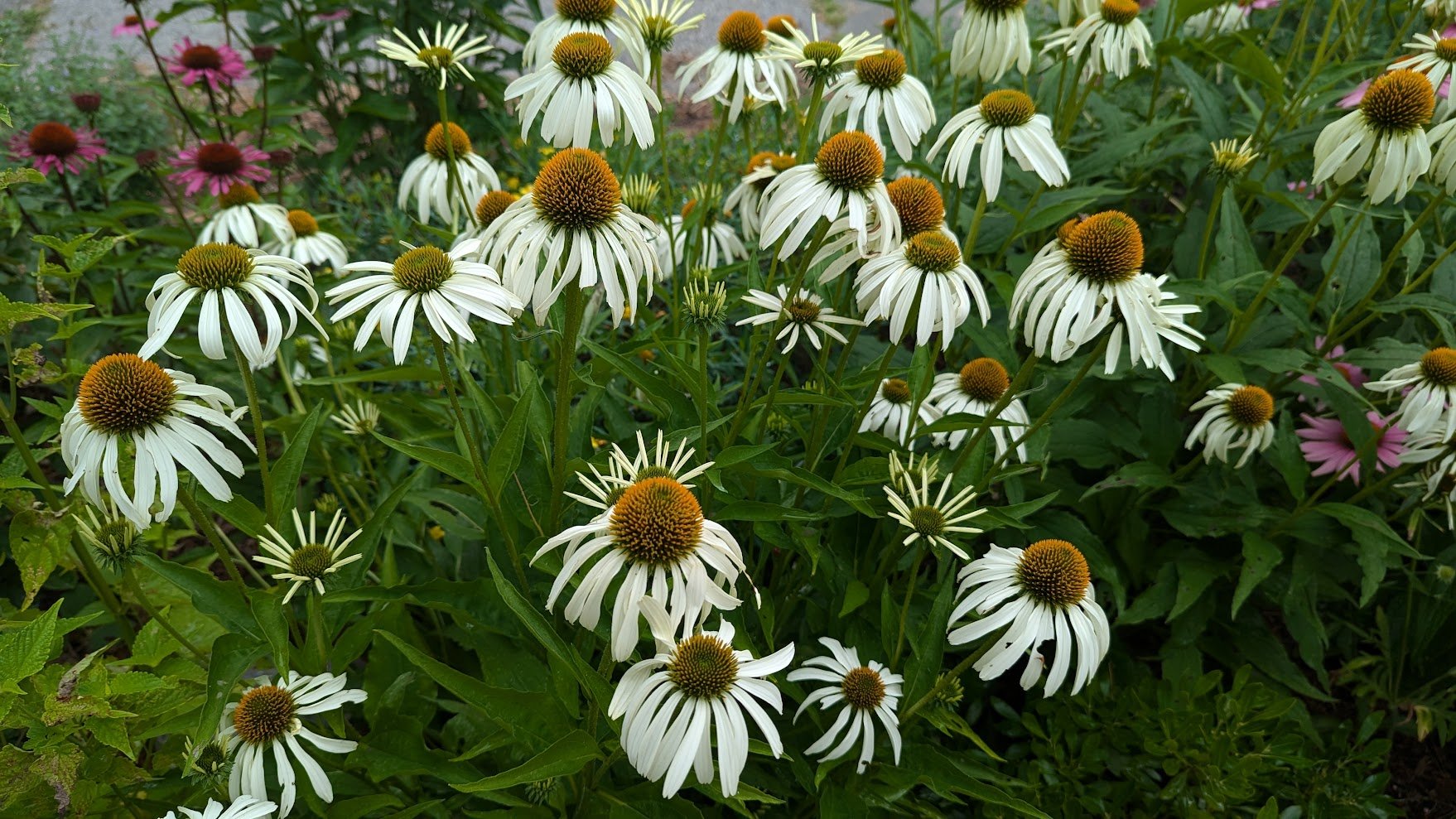
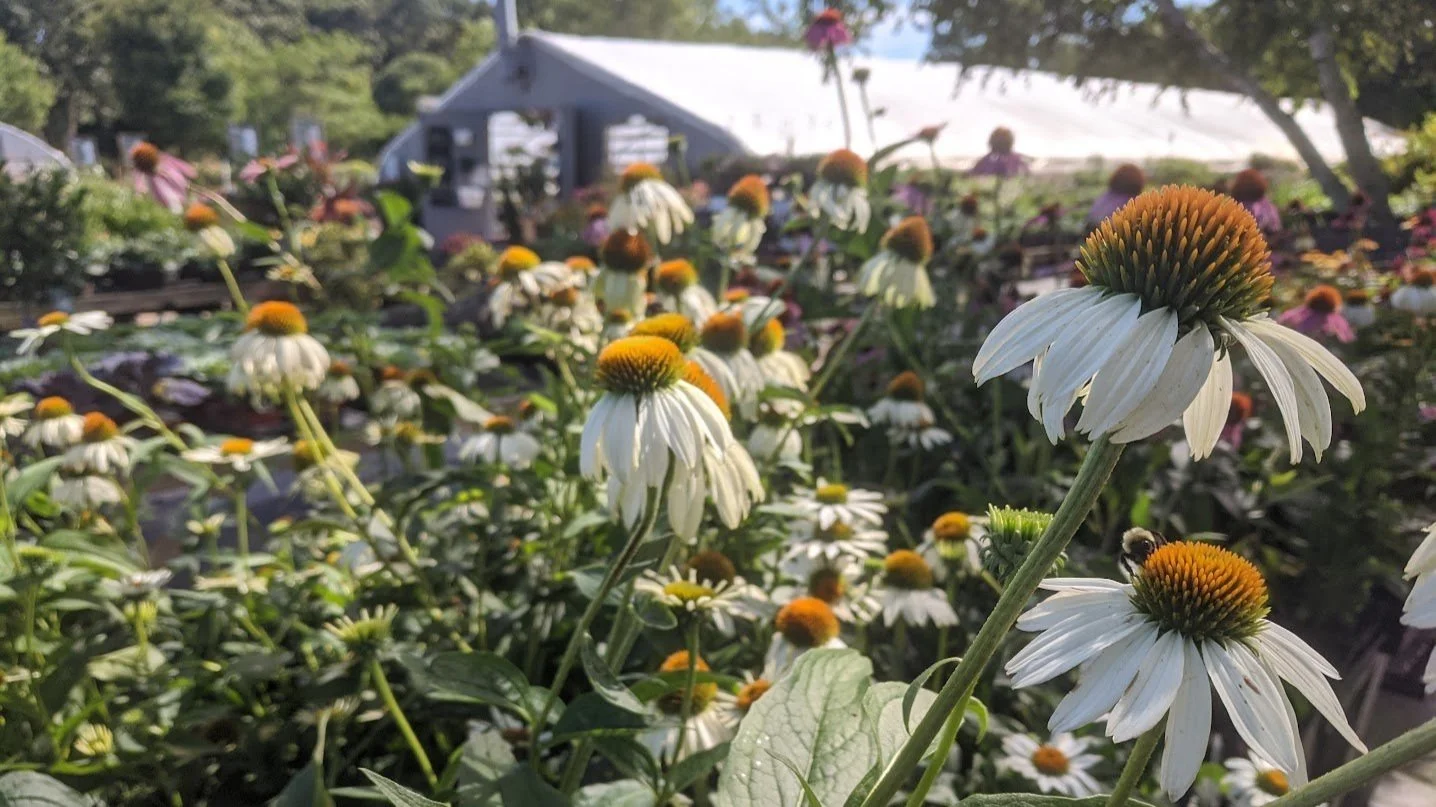
Echinacea White Swan

Echinacea Sombrero Salsa & Sangrita

Hybrid Coneflowers: Stunning & Sophisticated

The other side of the spectrum are the hybrids. These cultivars, mostly derived from Echinacea purpurea, have been carefully bred for color, size, and form. Today, you’ll find Echinacea in shades of:

  • Reds (Salsa Red)

  • Oranges (Adobe Orange)

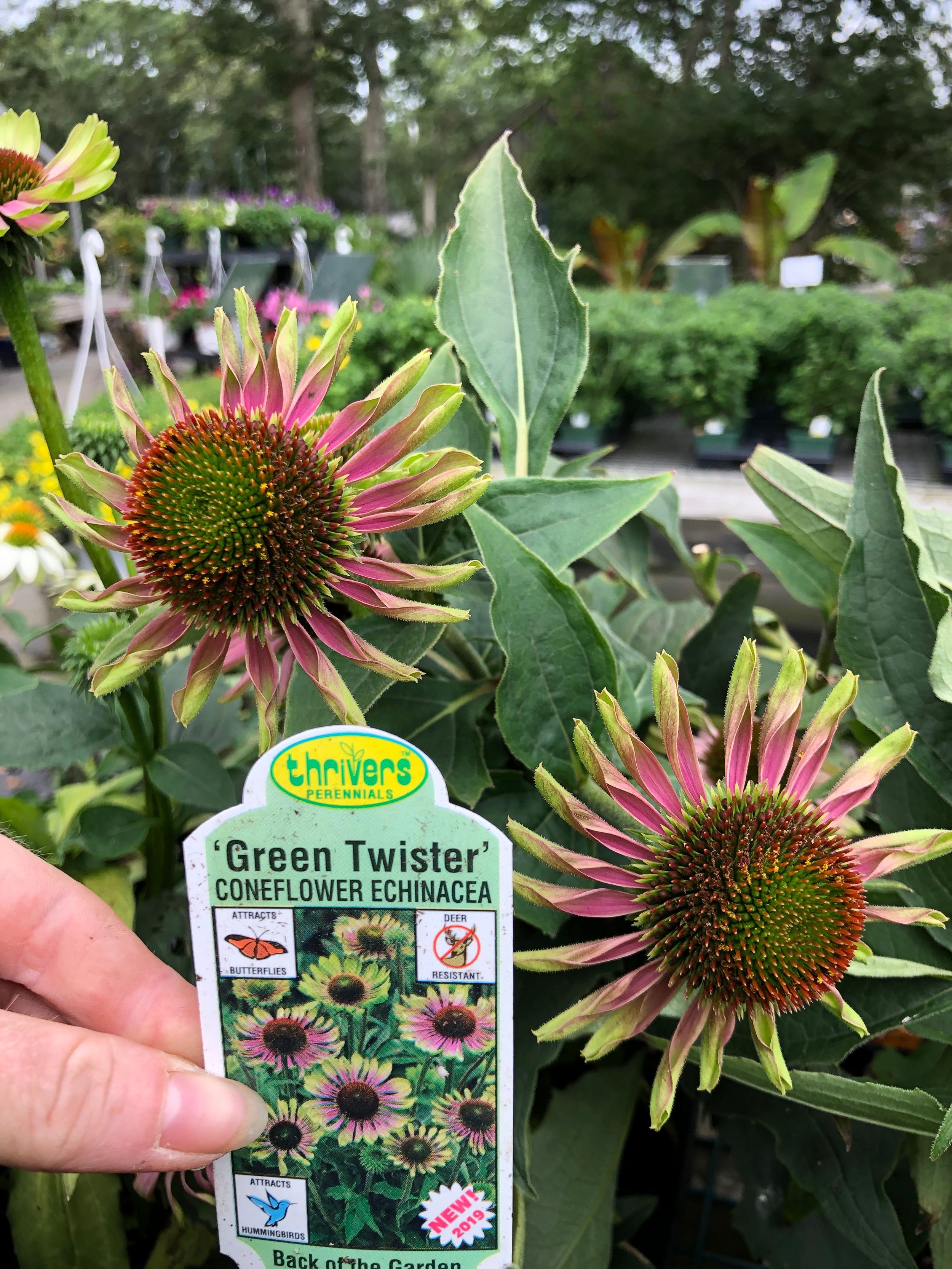
  • Greens (Green Twister)

  • Whites (White Swan)

  • And even bicolors that blend two tones in a single bloom

We sell countless hybrids that the horticultural industry has created from mostly Echinacea purpurea. Hybrids are typically propagated asexually through cuttings or tissue culture to maintain consistency in appearance. This can make them less genetically diverse, and potentially less adaptable, especially under stress from disease or climate extremes but boy are they beautiful. When carefully sited and well-maintained, they’re a stunning and reliable part of any garden design.

We carry the Sombrero series, like Salsa Red and Adobe Orange which are two of our favorites. We love many of the Echinacea hybrids like Green twister and White Swan.

*If food for pollinators is your number one reason for planting Echinacea, either plant the native species or pick the single hybrids. The doubles are not believed to be good food for pollinators. Many of the doubles are sterile and produce no seed.

Coneflowers come in a rainbow of colors!

View fullsize 1a-echinacea.jpg
View fullsize PXL_20240731_150715410.jpg
View fullsize PXL_20240724_151611318.jpg
View fullsize Screenshot 2024-08-01 141922.jpg
View fullsize PXL_20240719_162142209 (1).jpg
View fullsize echinacea sombrero salsa red and sangrita2.jpeg
View fullsize qyHrJ-OA.png
View fullsize Screenshot 2024-08-01 141720.jpg
View fullsize Screenshot 2024-08-01 141903.jpg
View fullsize DK3anngI.jpeg
View fullsize Echinacea green twister.jpeg
View fullsize echinacea sombrero salsa red and sangrita5.jpeg
View fullsize PXL_20240714_132513259.jpg
View fullsize Echinacea lemon yellow.jpeg
View fullsize eCs4Q8GY.jpeg
View fullsize 4_echinacea in border.jpg

****************

ECHINACEA AVAILABLE AT VINEYARD GARDENS

***************

SOMBRERO SERIES

(Continues to be one

of our favorites!)

Salsa Red

Adobe Orange

Hot Coral

Lemon Yellow

Rosada


Summer Solstice

Tres Amigos

Sangrita

***************

***************

SUNSEEKER SERIES

(Tall with beautiful flowers that

often transition to other colors as

they mature. Some can be

double.)

Rainbow

Salmon

Perfection

***************

***************

Green Wizard

(The flower petals are

yellow-green

on the tips and

bleed into a pale

pink closer to

the cone.)

***************

Old Fashioned Hybrid

Ruby Giant

(Quite tall with

large pink flowers)

***************

***************

Ruby Giant

Green Twister

(Very hardy)

***************

New this year!

We are testing for hardiness.

Dark Shadows Wicked


 Orange You Awesome

The Fuschia is Bright


One in a Melon

Summer Song

Fire Finch

Baja Burgundy

***************

USES

  • Pollinator Magnet: Coneflowers attract a wide variety of butterflies, bees, birds, and other beneficial pollinators, making them a valuable addition to any ecologically minded garden.

  • Winter Interest & Wildlife Support: Leave the spent flower heads standing through winter. Their signature seed-filled cones provide an important food source for birds, especially finches. In early spring, simply cut the stems back to the ground to encourage fresh growth.

  • Medicinal Tradition: Long used in herbal medicine, Echinacea is believed to support the immune system and may help reduce the duration of colds and flu. Their distinctive blooms are often associated with healing and wellness in both gardens and apothecaries.

GROWING CONDITIONS

A hardy herbaceous perennial, Echinacea is native to the Midwestern prairies of the United States and thrives in a wide range of conditions.

  • Adaptable and resilient, it tolerates drought, heat, humidity, and even poor soils once established.

  • Best grown in full sun with average to dry, well-drained soil, it doesn’t need rich soil to flourish.

  • Coneflowers are low-maintenance and rarely troubled by pests or disease. They require little to no fertilizer.

  • Expect a vibrant display of blooms in mid-summer, with some varieties continuing into fall.

An excellent, long-blooming flower for massing in the border, meadow, native plant garden, naturalized area or wildflower garden. Often massed with black-eyed Susans.

NATIVE SUMMER BLOOMING SHRUBS
In AUGUST, NATIVE PLANTS, PLANT PROFILES Tags echinacea purpurea, echinacea, coneflower, perennial plant, pollinator plant, native perennials
Comment
← Newer Posts Older Posts →

484 State Rd. West Tisbury, MA 02575

Mon - Fri : 8am - 4pm / Sat : 8am-1pm

Closed Sundays

(508) 693.8512